

Best Teeth Whitening for Sensitive Teeth: Safe Options
You’ve got a wedding, job interview, family photos, or maybe you’re tired of seeing tea and coffee stains every time you smile in the mirror. You want whiter teeth. Then the doubt kicks in.
Maybe you tried a whitening strip once and felt that sharp little zing afterwards. Maybe a friend told you whitening “hurts like crazy”. Maybe your teeth are already sensitive to cold water, so the idea of bleaching them sounds like asking for trouble.
That concern is reasonable. Sensitive teeth and whitening can be a difficult combination if you choose the wrong method, rush the process, or use a product that isn’t suited to your mouth. The good news is that sensitivity doesn’t automatically rule whitening out. It usually means you need a gentler plan, better product selection, and proper supervision.
For many people in Tamworth, the best result comes from slowing down and choosing comfort first. If you’re weighing your options, it helps to start with a professional overview of teeth whitening treatments so you can tell the difference between what works fast, what works safely, and what tends to create problems.
Want a Whiter Smile But Fear the Pain
A lot of patients say the same thing in different words. “I’d love whiter teeth, but I can’t deal with the sensitivity.” That’s not overreacting. It’s a practical concern, especially if you already avoid ice water, cold air, or sweet foods because your teeth react.
In everyday practice, the pattern is familiar. Someone wants a brighter smile for an event, buys a pharmacy product on impulse, uses it exactly as the box says, then spends the next day regretting it. Another person avoids whitening for years because they assume every method feels the same. Neither situation is ideal.
The best teeth whitening for sensitive teeth usually isn’t the strongest product or the fastest promise on the packet. It’s the method that balances visible whitening with control. That often means looking at your enamel, existing restorations, gum health, and history of sensitivity before choosing anything at all.
> Whitening should feel planned, not guessed.
When whitening is matched to the person, the process is more predictable. Some patients do well with gradual dentist-supervised trays. Others need a remineralising or desensitising phase first. Some aren’t good candidates until other dental issues are treated.
That’s why it helps to understand what causes the pain in the first place. Once you know why whitening can trigger sensitivity, the options become much easier to sort through.
Understanding Why Teeth Get Sensitive From Whitening
Whitening sensitivity starts with basic tooth anatomy. Enamel is the outer layer. Under it sits dentin, and dentin contains tiny channels that lead towards the nerve. When those pathways are irritated, you feel that quick, sharp response many people describe as a zap or zing.
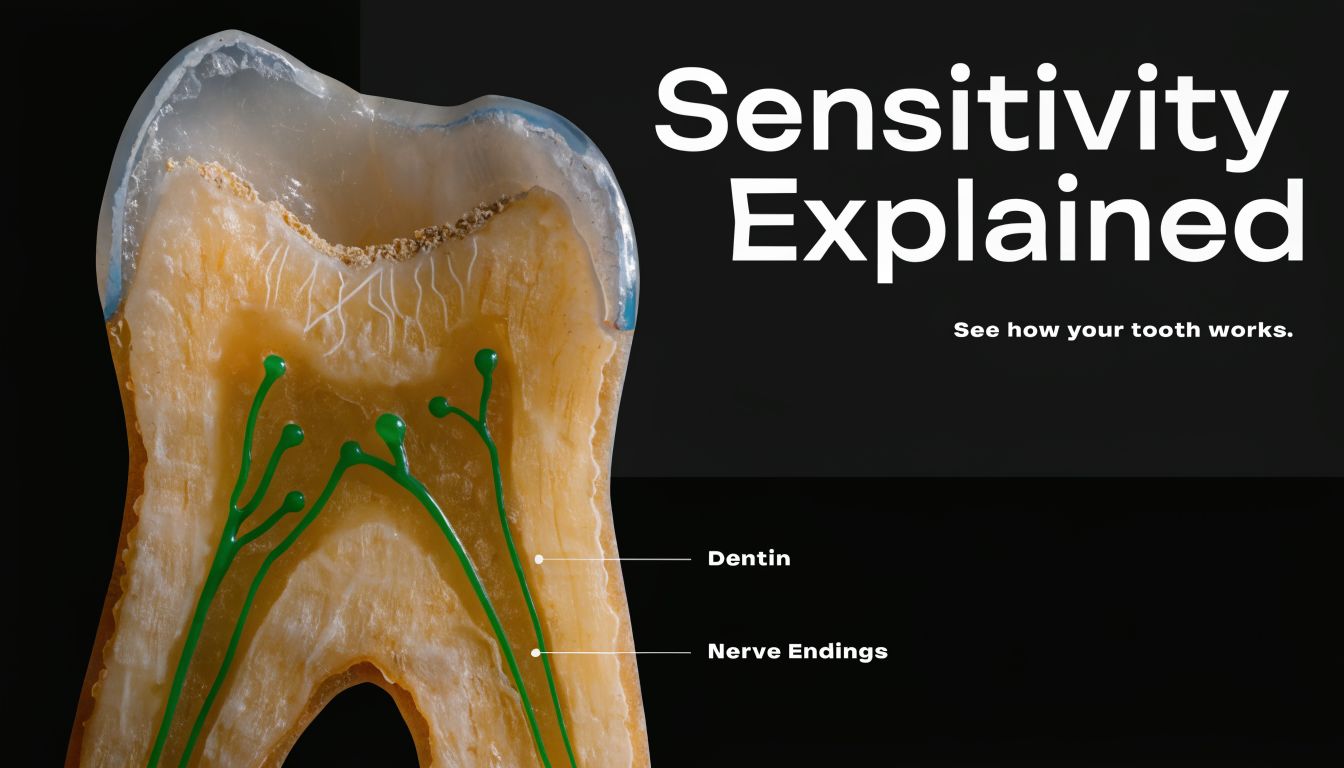
What peroxide is doing inside the tooth
Most whitening systems rely on peroxide. It moves through the enamel to break down stain molecules. That’s how teeth become brighter, but it’s also why sensitivity can happen. During the process, the tooth can become temporarily more reactive.
Think of dentin like a wall full of tiny open tubes. If whitening ingredients reach those tubes, the nerve inside the tooth can become irritated. The problem is usually temporary, but it can still be uncomfortable if the product is too strong, worn too long, or applied to a mouth that already has exposed dentin, gum recession, worn enamel, or restorations.
In Australia, whitening-related tooth sensitivity affects 30% to over 78% of patients, and 35% to 40% hydrogen peroxide used in some in-chair treatments caused sensitivity in 100% of cases in the research summary cited by clinical data on whitening effectiveness and sensitivity incidence. That same summary also notes greater pain on restored teeth.
Why some mouths react more than others
Not all sensitivity comes from whitening alone. Existing problems often make the response stronger.
A few common reasons include:
- Thin or worn enamel means there’s less protection between the whitening gel and the inner tooth.
- Gum recession exposes root surfaces that are naturally more sensitive.
- Fillings, crowns, veneers, or bonding can change how whitening behaves across the smile.
- Untreated inflammation can make gums and teeth more reactive. If that sounds familiar, it’s worth dealing with issues such as gum disease treatment and prevention before you even think about whitening.
> Practical rule: The more reactive your teeth are before whitening, the more conservative the whitening plan should be.
The reassuring part is that sensitivity is common, usually short-lived, and often manageable. The important decision isn’t whether whitening can cause sensitivity. It can. The key question is which whitening method gives you the best chance of a brighter result without pushing your teeth too far.
Comparing Your Whitening Options for Sensitive Teeth
If you’ve got sensitive teeth, the right whitening choice comes down to trade-offs. Speed matters. Comfort matters more. Fit matters more than commonly appreciated.
Here’s a simple side-by-side view before we dig deeper.
| Whitening option | How it works | Comfort for sensitive teeth | Whitening result | Best for | |---|---|---|---|---| | Professional in-chair whitening | High-strength whitening applied at the dental clinic | Often the riskiest option for very sensitive teeth unless carefully modified | Fast visible change | People who want speed and tolerate stronger treatment | | Dentist-supervised take-home trays | Custom trays with lower concentration gel used gradually at home | Usually the best balance of comfort and control | Strong, even improvement over days to weeks | People who want reliable whitening with less sensitivity | | Over-the-counter strips | Preloaded strips applied at home | Variable, often less predictable because fit can be poor | Moderate change | Mild staining and budget-led choices | | Whitening toothpaste | Surface stain removal with daily brushing | Usually the gentlest option | Limited change | Maintenance and very mild discolouration | | Non-peroxide remineralising products | Gentle brightening support while calming sensitivity | Good for people who can’t tolerate peroxide well | Subtle, gradual change | Very sensitive teeth and maintenance |
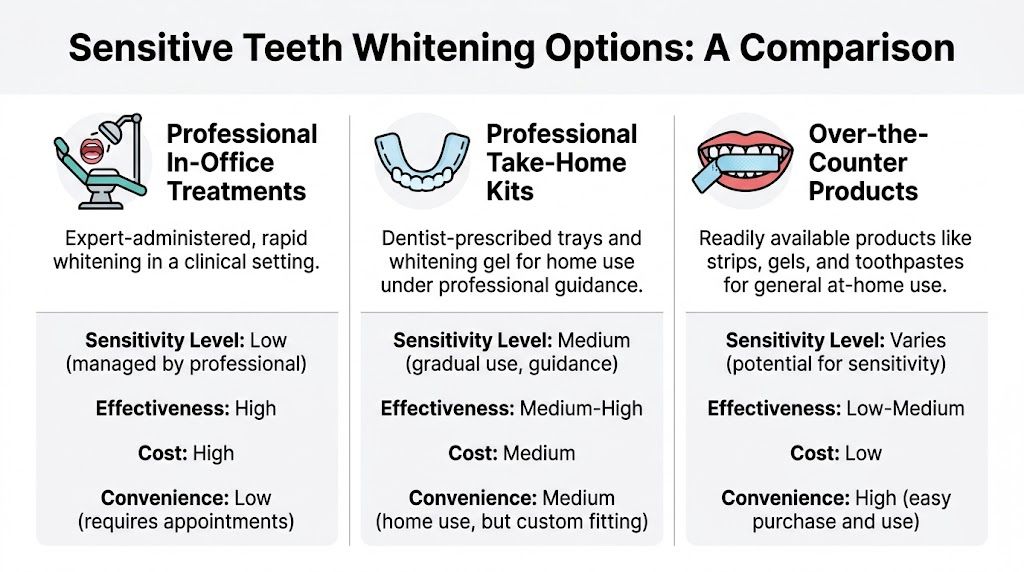
Professional in-chair whitening
This is the option many people think of first because it’s quick and done in a clinical setting. The appeal is obvious. You come in with stained teeth and leave with a noticeably brighter smile.
But for sensitive teeth, this isn’t always the easiest road. Stronger peroxide can create a sharper response, especially if you’ve got exposed dentin, old fillings on front teeth, or a history of sensitivity after previous whitening. In-chair treatment can still be suitable for some patients, but it usually needs careful case selection and adjustments.
What it does well: - Fast turnaround if time is your main priority. - Professional isolation of gums and soft tissues. - Close monitoring during the appointment.
Where it can fall short: - Less forgiving for sensitive teeth because stronger gels act quickly. - Not ideal for restored teeth when comfort is already an issue. - Pressure to get maximum change fast can work against a sensitive mouth.
Dentist-supervised take-home trays
For many sensitive patients, this is the benchmark option. It gives you control without guesswork. The trays are made to fit your teeth properly, so the gel stays where it should and is less likely to flood onto the gums.
According to data on custom whitening options for sensitive teeth, custom-fitted professional trays using 10% to 16% carbamide peroxide can achieve an average improvement of 6 to 8 VITA shades over 1 to 2 weeks, and adding 5% potassium nitrate can reduce post-treatment hypersensitivity by up to 70%. That’s why this approach is so often preferred for people who want real results without a rough recovery.
The main reason it works well is pacing. Carbamide peroxide releases more gradually than many strip-based options. That slower delivery tends to be easier on sensitive teeth.
#### Why custom trays outperform generic strips
A proper tray changes more than comfort. It improves precision.
- Closer fit means less gel leakage onto gums.
- Controlled concentration lets the dentist choose a strength your teeth can tolerate.
- Flexible wear time means treatment can be shortened, paused, or spaced out.
- More even contact often gives a smoother result across the visible teeth.
> If your teeth are sensitive, gradual whitening is usually better dentistry than aggressive whitening.
This is also where digital dentistry helps. A digital scan can produce trays that match your teeth more accurately than a one-size-fits-all product. Better fit usually means a tidier application and fewer soft tissue complaints.
Over-the-counter strips and shop-bought kits
These products are easy to buy and easy to start. That convenience is why they’re popular. For mild staining and low sensitivity, they can be useful. For a sensitive mouth, the experience is more mixed.
The challenge is fit. A strip doesn’t know where your gumline sits, which teeth are rotated, or whether one canine sits further out than the rest. If the strip lifts, bunches, or overlaps onto the gums, irritation becomes more likely. If the contact is uneven, the colour result can be patchy as well.
These products tend to suit people who: - Have only mild staining - Aren’t highly sensitive - Understand they may need to stop if symptoms increase
They tend not to suit people who: - Already react to cold - Have a lot of visible restorations - Want personalized advice during treatment
Whitening toothpaste and other low-intensity options
Whitening toothpaste has a place, but it’s important to have realistic expectations. It mainly helps with surface stain. It won’t usually create the same shift you’d expect from tray whitening.
That said, it can be useful in two situations. First, as a starting point for very sensitive patients who want to brighten gradually. Second, as a maintenance tool after professional whitening.
Which option works best for most sensitive patients
If someone asks for the best teeth whitening for sensitive teeth, the answer is usually not “the strongest.” It’s “the most controlled.”
A sensible ranking often looks like this:
- Dentist-supervised custom trays for the best balance of whitening and comfort
- Non-peroxide or desensitising-led approaches for people who struggle with peroxide
- Selected in-chair treatment only when the mouth and goals make sense
- Over-the-counter products for mild cases and modest expectations
The key point is simple. Sensitive teeth don’t need more bravery. They need a better plan.
Exploring Non-Peroxide Alternatives and Desensitisers
Some people don’t need a stronger whitening gel. They need a different category of treatment altogether. That’s where desensitisers and non-peroxide products become useful.
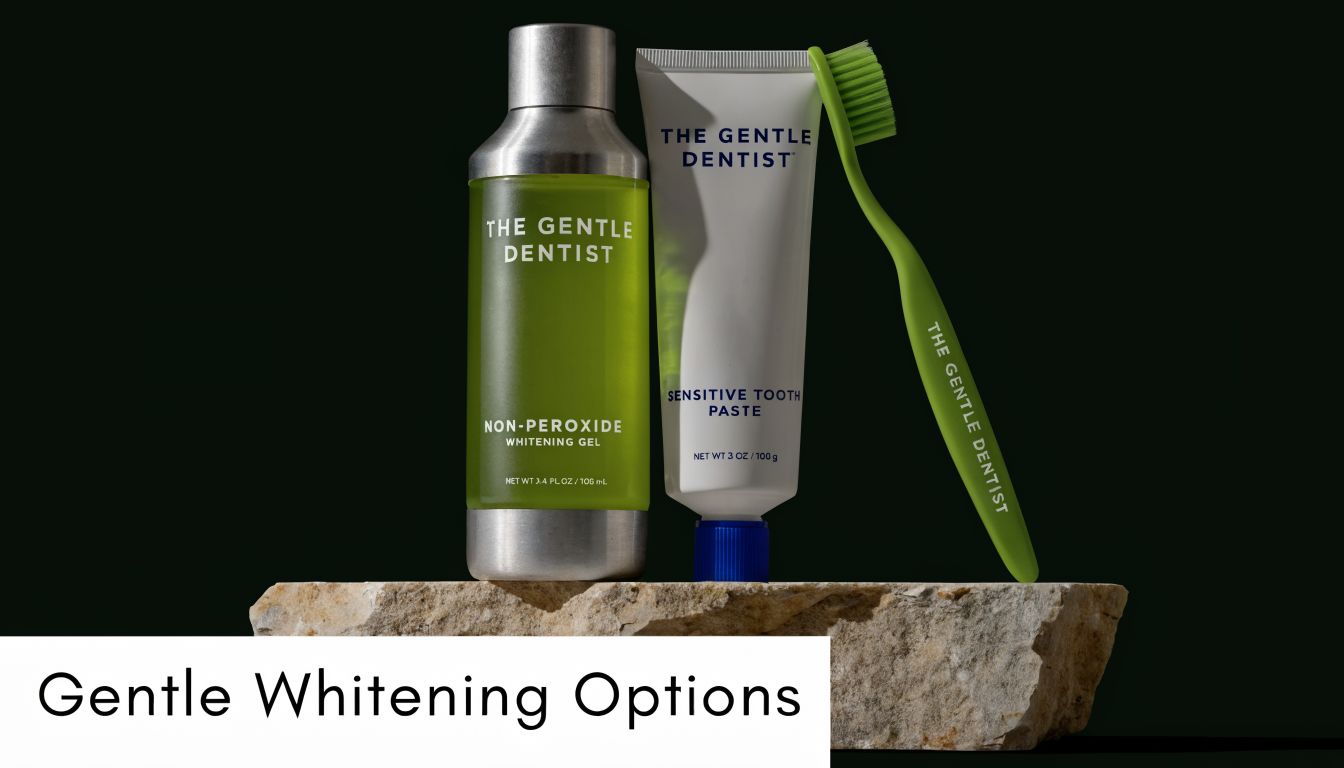
Desensitising ingredients that actually help
The most practical support products are the ones that lower reactivity before, during, or after whitening. Potassium nitrate is a widely recognized ingredient, and for good reason. It’s commonly used to calm nerve response in sensitive teeth.
Fluoride also matters. It helps strengthen enamel and can reduce how reactive teeth feel after whitening. For some patients, using a sensitivity toothpaste before whitening makes the difference between tolerable and unpleasant.
A simple support plan often includes:
- Potassium nitrate toothpaste before treatment if your teeth already react to cold or sweets
- Fluoride-based products to support enamel
- Shorter whitening sessions instead of pushing through discomfort
- Rest days if sensitivity starts building
The newer non-peroxide option getting attention
Not everyone wants peroxide, and not every mouth handles it well. Recent Australian developments have increased interest in nano-hydroxyapatite as a whitening-adjacent option for sensitive teeth.
According to coverage of whitening approaches for sensitive teeth that includes the recent Australian hydroxyapatite development, a 2025 to 2026 Australian development involving BioMin F+ Whitening Toothpaste showed promise, with a University of Sydney trial finding a 52% reduction in sensitivity after 4 weeks, while also remineralising dentin. The same verified data notes it outperformed potassium nitrate alone.
That matters because hydroxyapatite isn’t just about colour. It’s also about rebuilding and smoothing vulnerable surfaces. For a patient with sensitivity, that dual purpose is appealing. The whitening effect is generally gentler and more gradual than peroxide bleaching, but the comfort profile may make it a better starting point for some people.
> Some patients shouldn’t begin with bleaching. They should begin with strengthening.
Who may benefit from non-peroxide whitening support
This category is worth discussing if you fit into any of these groups:
- You’ve had painful sensitivity from whitening before
- You’ve got restorations and want a lower-risk approach
- Your enamel is worn and your teeth already feel reactive
- You want maintenance between professional whitening cycles
- You’re more interested in subtle improvement than rapid change
Hydroxyapatite products won’t replace every peroxide system. They serve a different purpose. In practical terms, they’re often best for the patient who needs comfort, remineralisation, and a modest brightening effect rather than a dramatic jump in whiteness.
Your Pre-Whitening and Post-Whitening Care Plan
Whitening goes better when you prepare for it. The people who struggle most are often the ones who start too quickly, skip the dental check, or keep pushing through sensitivity instead of adjusting the plan.
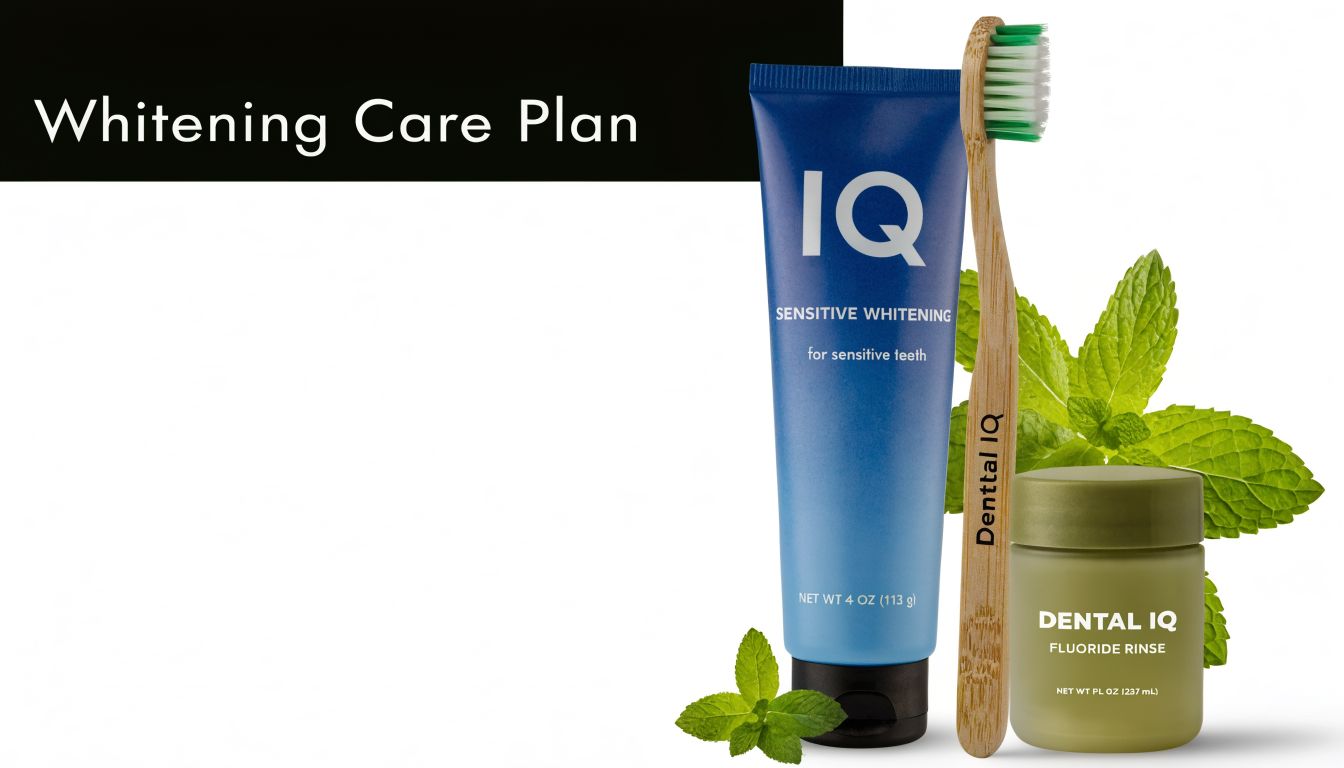
Before you whiten
The first step is making sure whitening is safe for your mouth as it is today. That means a dental check-up, and often a clean, before any gel goes near your teeth. If there’s decay, gum inflammation, cracked enamel, or exposed root surface, whitening can become uncomfortable fast.
A practical preparation checklist looks like this:
- Book a dental exam first
- Start a sensitivity toothpaste beforehand
- Choose the gentlest effective option
- Understand your restorations
If you’re unsure where to start, patient guidance on what to expect before and after dental treatment can help you feel more prepared for the appointment and the aftercare.
While you’re whitening
This is the phase where patience matters most. Don’t treat discomfort as a sign the product is “working better”. That’s a common mistake.
Use these rules instead:
- Reduce wear time if your teeth start reacting
- Skip a day if sensitivity builds
- Avoid very hot and very cold foods during the active whitening period
- Use the amount of gel advised rather than overfilling trays
> Home rule: If sensitivity is increasing each day, slow the process down instead of pushing through it.
After you whiten
Freshly whitened teeth can be more prone to picking up stain. This is the period when habits matter.
For the first couple of days, it’s smart to be cautious with intensely colored foods and drinks such as coffee, red wine, berries, and strongly pigmented sauces. If you do have them, rinse with water afterwards.
For comfort and maintenance: - Keep using your sensitivity toothpaste - Brush gently with a soft toothbrush - Stay consistent with fluoride support - Top up only when advised, not every time you notice minor staining
Good whitening aftercare isn’t fancy. It’s mainly about protecting the result and keeping your teeth calm.
Is Teeth Whitening Actually Suitable for You
Whitening is popular, but it isn’t suitable for everyone at every moment. A lot of disappointment and discomfort could be avoided if more people asked one question first. “Should I whiten now?”
Times to postpone whitening
If you have untreated dental problems, whitening should wait. Cavities, cracked teeth, active gum disease, and exposed roots can all make the process far more uncomfortable. Whitening gel doesn’t fix those issues. It often highlights them.
It’s also wise to postpone whitening if you’re pregnant or breastfeeding, or if the patient is under 18 and the teeth are still developing. In those cases, caution comes first.
When expectations need adjusting
Whitening works on natural tooth structure. It does not change the colour of crowns, veneers, fillings, or other restorations. That matters if your front teeth already have dental work, because you can end up with uneven colour if the natural teeth brighten but the restorations stay the same.
If you’ve got existing restorations, especially in visible areas, it helps to read about dental crowns and how they compare with natural tooth colour before planning any whitening.
A quick self-check
Whitening may be suitable if: - Your teeth and gums are healthy - Your sensitivity is mild or manageable - Your expectations are realistic - Most of the visible smile is natural tooth enamel
Whitening may not be suitable right now if: - You’ve got untreated decay or gum problems - Your pain is already severe - You expect old crowns or fillings to whiten - You want a very fast result despite a sensitive mouth
That last point matters. Sometimes the safest answer is not “yes now”. It’s “yes later, after we stabilise the mouth first.”
Begin Your Whitening Journey at Oasis Smiles Dental
For people in Tamworth and the New England region, whitening is safest when it starts with a proper assessment rather than a product purchase. That’s especially true if your teeth are already sensitive, you’ve got restorations, or you’ve had a bad experience before.
At Oasis Smiles Dental, the process starts with listening. The team looks at your current shade, checks for decay, gum irritation, enamel wear, and visible restorations, then recommends the option that best fits your comfort level and goals. That might be custom trays, a slower desensitising-first approach, or advice to delay whitening until other dental concerns are sorted out.
Technology also makes a difference. Trios digital scanners help create accurate custom trays that fit neatly and reduce gel spread onto the gums. That matters for comfort. If you’re anxious about treatment, the practice also offers support for nervous patients, including sleep dentistry options where appropriate.
Oasis Smiles Dental has served Tamworth and the New England community for over 20 years. You’ll find the clinic at Shop 15/1 Piper Street, Tamworth NSW, near Northgate Shopping Centre. To book an appointment, call (02) 6766 2128 or arrange a visit through the Oasis Smiles Dental online booking page.
Frequently Asked Questions About Sensitive Teeth Whitening
Will my crowns or fillings whiten too
No. Whitening changes natural tooth enamel, not restorations such as crowns, veneers, or tooth-coloured fillings. If those restorations sit in visible areas, the final result can look uneven unless the full cosmetic plan is discussed first.
How long do whitening results last
That depends on your habits. Coffee, tea, red wine, smoking, and strongly coloured foods tend to shorten the life of the result. Good brushing, regular cleans, and careful top-ups help maintain it.
Is charcoal toothpaste a good idea for sensitive teeth
Usually no. Charcoal products are often too abrasive for people who already have sensitivity. They may remove some surface stain, but they can also wear enamel and leave sensitive teeth feeling worse.
What if my teeth feel sore after whitening
Mild sensitivity can happen. Slow the treatment down, use a sensitivity toothpaste, avoid extreme temperatures, and contact your dentist if the discomfort feels strong, lingers, or doesn’t settle.
---
If you want a brighter smile without guessing which products might trigger pain, Oasis Smiles Dental can help you choose a whitening plan that matches your teeth, your comfort level, and your goals. Book a consultation to find the safest path to a whiter smile in Tamworth.