

How to Whiten Teeth Naturally: A Dentist's Guide
So, you’re curious about how to get whiter teeth naturally. It's a question we hear all the time at the clinic. The idea of getting a brilliant smile without using strong chemicals is incredibly tempting, but there’s a lot of misinformation out there.
Before you go raiding your pantry, let's have an honest chat about what “natural whitening” really means.
What Can You Realistically Expect from Natural Teeth Whitening?
Everyone dreams of a sparkling, white smile, but it's important to set realistic expectations right from the start. Most of the natural methods you see online are focused on stain management—that is, lifting the surface stains that build up over time. They won't fundamentally change the natural colour of your teeth.
Think of it this way: your teeth have two main layers. The outer layer, the enamel, is strong and semi-translucent. Underneath it lies the dentine, which is naturally a pale yellow. The shade of your dentine is what determines the core colour of your teeth, and that's something natural remedies simply can't alter. What they *can* do is help scrub away the discolouration from coffee, tea, and red wine, revealing the true, healthy colour underneath.
The Hidden Dangers in Popular DIY 'Hacks'
The promise of a quick, cheap fix has made at-home whitening incredibly popular. In fact, a recent Australian survey showed a staggering 22% of adults have tried some form of teeth whitening, which is an 8% jump since 2017.
The problem is, many of these trendy methods you see on social media—like using lemon juice, apple cider vinegar, or even mashed strawberries—are downright dangerous for your teeth. They might seem to work at first, but that's because their high acid content is literally eating away at your enamel. You can explore more about these Australian dental trends and their surprising truths for a deeper dive.
> As a dental professional, my biggest concern is the myth that ‘natural’ automatically means ‘safe’. It doesn’t. Using acidic or abrasive ingredients can cause permanent enamel erosion, which leads to sensitive teeth and, ironically, can make them look even more yellow in the long run.
Gentle Maintenance vs. Damaging 'Hacks'
So, how do you know which methods are safe and which could land you in the dental chair for repairs? It all comes down to one thing: protecting your enamel.
Safe, effective habits are all about prevention and good oral hygiene. In contrast, the risky 'hacks' often rely on harsh abrasion or acid to scrape off stains, taking a thin layer of your precious enamel with them.
Keep these simple guidelines in mind:
- Prevention is your best tool. The easiest way to keep your teeth looking bright is to stop stains from setting in. That means consistent brushing and flossing, and rinsing your mouth with water after you’ve had staining foods or drinks.
- Stay away from acids and harsh abrasives. Don't use anything highly acidic (like citrus fruit) or overly abrasive (like raw baking soda or some charcoal powders) as your go-to whitener.
- Keep your expectations in check. Natural approaches will give you subtle, gradual improvements by cleaning the surface of your teeth. They won’t give you the several-shades-lighter transformation that professional treatments can.
Getting this balance right is the first step toward a brighter, healthier smile. In the sections below, we’ll walk you through the daily habits that actually work, the home remedies that are safe when used correctly, and the dangerous trends you should avoid at all costs.
Build a Whiter Smile with Daily Habits
The real secret to a naturally bright smile isn't a quick fix. It's something you build, day by day, through the small choices you make. In my experience, the most powerful way to whiten your teeth naturally is to stop stains from ever taking hold.
Think of it as your first line of defence. By weaving a few simple habits into your routine, you can maintain your smile’s natural brightness and give your overall oral health a serious boost.
Master Your Brushing and Flossing
I know it sounds basic, but a solid oral hygiene routine is absolutely non-negotiable for fighting off yellowing. Plaque, that sticky film that builds up on your teeth, doesn’t just cause cavities—it's also a magnet for stains.
Your goal should be to brush twice a day for a full two minutes. Make sure you’re using a soft-bristled brush and a gentle, non-abrasive toothpaste to polish away surface stains without damaging your precious enamel. And don't skip the floss! Flossing daily clears out the plaque and food debris from between your teeth, which is a prime spot for stains to start. For a deeper dive, you can explore our expert tips on preventive care routines.
Neutralise Stains Immediately
That morning coffee, a glass of red wine, or even a healthy berry smoothie can leave their mark. They contain pigments called chromogens that latch onto your enamel, and over time, this causes surface staining. The good news? You don’t have to give them up. You just need to be smart about it.
One of the most effective habits you can adopt is to simply rinse your mouth with water right after you eat or drink something dark or acidic. A quick swish is all it takes to wash away those staining compounds before they get a chance to settle in.
> Rinsing with water after your morning coffee is one of the easiest and most impactful habits you can adopt. It neutralises staining acids and rinses away pigments, significantly reducing the daily discolouration that builds up over time.
For instance, if you enjoy a black coffee every morning, just keep a glass of water handy. Once you're done, take a sip of water, swish it around for about 30 seconds, and you're set. It’s a tiny action that makes a massive difference.
Eat Your Way to a Brighter Smile
Did you know some foods can act like natural toothbrushes? We often call them "detergent foods" because they literally help scrub your teeth clean while you're eating.
Adding more of these foods to your diet is a fantastic way to manually remove surface stains. They also get your saliva flowing, which is your mouth's own natural cleaning service.
- Crisp Apples: The fibrous texture is brilliant for scrubbing your teeth and gums. Plus, all that chewing boosts saliva production.
- Crunchy Carrots and Celery: These raw veggies are just abrasive enough to help polish your tooth surfaces as you chew.
- Hard Cheeses: Cheese is a powerhouse. It stimulates saliva and is packed with calcium and phosphates that help strengthen tooth enamel.
Try finishing a meal with a few slices of apple or some carrot sticks. It’s a healthy and easy way to give your teeth a quick clean when you can't brush right away, helping you maintain a whiter smile with almost no extra effort.
Safe At-Home Whitening Remedies to Actually Try
While most "natural" whitening fads you see online are best left alone, there are a couple of gentle methods that can give you a subtle lift—but only if you do them the right way. It's important to go in with realistic expectations. These remedies are designed to gently lift surface stains, not fundamentally change your natural tooth colour.
Think of them as a helping hand for your daily oral hygiene routine, never a replacement for it. The real secret is moderation and knowing what these methods can and can't do.
Using Bicarb Soda for Gentle Stain Removal
You've probably heard of this one. Bicarb soda (or sodium bicarbonate) is a very mild abrasive, which means it can help scrub away surface stains from things like coffee and tea. It's certainly less harsh than many other DIY hacks out there.
The catch? Using it too often or too aggressively can gradually wear down your precious enamel. You have to be gentle and, most importantly, infrequent.
Here’s a safe way to give it a go:
- Make a watery paste. Mix a very small amount of bicarb soda—about half a pea-sized scoop—with a few drops of water. You’re aiming for a thin, runny consistency, not a thick, gritty paste.
- Apply with care. Use your fingertip or a super-soft toothbrush to gently rub the paste on your teeth. A minute is all you need. No hard scrubbing!
- Rinse it all out. Spit and rinse your mouth thoroughly with water to make sure no bicarb soda is left behind.
- Finish with your usual brush. Now, you can go ahead and brush your teeth properly with your regular fluoride toothpaste.
> Crucial Tip: You absolutely must limit this to once or twice a week at most. Overdoing it is the biggest risk with bicarb soda. Its abrasive quality can thin your enamel over time, leading to sensitivity and ironically, making your teeth look more yellow.
Exploring Oil Pulling with Coconut Oil
Oil pulling is an ancient oral hygiene practice that’s gained a lot of modern attention. It involves swishing oil around your mouth, and while it's often promoted for whitening, its real strength lies in reducing plaque and bad bacteria.
The idea is that the lauric acid in coconut oil has antimicrobial effects that help cut down on the bacteria that form plaque. With less plaque, your teeth have a cleaner surface that’s less likely to grab onto stains, which can help them appear brighter over time.
If you'd like to dive deeper into your overall oral health, our patient resources section is packed with useful information.
How to Try Oil Pulling:
- Start small. Take about one teaspoon of a high-quality, cold-pressed coconut oil.
- Swish gently. For 5 to 10 minutes, swish the oil around your mouth, pulling it between your teeth. Be sure not to swallow it!
- Spit, don’t sink. When you’re done, spit the milky-looking liquid into a rubbish bin. It can clog your pipes if you spit it down the sink.
- Rinse and brush. Give your mouth a good rinse with warm water, then follow up with a proper tooth brushing session.
Oil pulling won’t bleach your teeth, but it's a great habit for a cleaner, healthier mouth—and that’s a fantastic foundation for a brighter smile. Ultimately, both of these home remedies are minor players. Your best results will always come from a solid routine of daily brushing, flossing, and regular professional care.
The Dangers of Popular DIY Whitening Hacks
It’s hard to miss those viral videos promising a movie-star smile with something from your kitchen pantry. Whether it's a fruit paste or a charcoal powder, these DIY whitening trends are everywhere, sold as cheap and "natural" shortcuts. As dentists, however, we see the other side of the story—the real-life damage these hacks can cause.
While a few gentle methods might lift some minor stains, many of the most popular tricks you see online are downright harmful. Most of them fall into two dangerous categories: they either rely on acid erosion or harsh abrasion. Knowing how these work is the first step to protecting your smile from damage that can't be undone.
The Myth of Acidic "Whiteners"
One of the most stubborn myths we hear about is using acidic fruits and vinegars to whiten teeth. You’ll find countless posts recommending pastes made from lemon juice, mashed strawberries, or even swishing with apple cider vinegar. On the surface, it almost makes sense—the acid seems to eat away at stains, making teeth look brighter.
But here’s what’s really happening. That acid doesn't just target stains; it dissolves your tooth enamel. Your enamel is the tough, protective outer layer of your teeth. It's also the hardest substance in the human body. But because it contains no living cells, once it’s gone, it’s gone for good. It can never grow back. This leads to a whole host of problems you don't want.
- Painful Sensitivity: As the enamel thins, the sensitive layer of dentine underneath becomes exposed. Suddenly, hot coffee or a cold drink can cause a sharp, shooting pain.
- The Unfortunate Irony: Yellower Teeth: As you wear away the translucent, white enamel, you reveal more of the naturally yellow dentine beneath. The very thing you’re doing to whiten your teeth actually makes them look more discoloured in the long run.
- Leaving Your Teeth Defenceless: Enamel is your teeth's first line of defence against bacteria. When it's weakened, your risk of developing cavities skyrockets.
Here at our Tamworth clinic, we've treated patients who’ve developed chemical burns on their gums and irreversible enamel damage from following these exact trends. This is why professional guidance is so important, yet so many Australians are taking a gamble.
> A shocking report found that only 1 in 3 people who whiten their teeth—that's just 7% of all Australian adults—do so under professional supervision. The other 64% are using DIY options, including 'natural' kits from online sellers that often contain unregulated levels of peroxide well above the safe limit. You can read more about these Australian whitening habits on bitemagazine.com.au.
The Problem with Abrasive Scrubs
Another trend that makes dentists cringe is using gritty substances like activated charcoal to scrub away stains. The idea is that the rough texture will polish away surface discolouration, and to a small extent, it might. But that temporary brightness comes at a serious cost.
Simply put, these materials are far too abrasive for your teeth. Using them is like taking sandpaper to a finely polished surface—it creates scratches and permanently wears down your enamel. What’s more, those fine black charcoal particles can get lodged in the tiny crevices of your teeth and along the gum line. This not only causes irritation but can leave you with unsightly black lines that are a real headache to remove.
Before you try any whitening method, it’s always best to have a professional make sure your teeth and gums are healthy enough for it. That's a key part of our routine dental check-ups.
When It's Time to See a Dentist for a Whiter Smile
So, you’ve been brushing with bicarb soda, avoiding coffee, and eating all the crunchy veggies. That's a fantastic start, and these habits are brilliant for your overall oral health!
But what if you look in the mirror and feel your smile is still not quite as bright as you’d hoped? That’s a common story. The reality is, natural methods can only do so much. They're great at scrubbing away surface stains – the ones from your morning latte or that glass of red wine – but they can't change the actual, deep-set colour of your teeth.
If you feel like you've hit a plateau with at-home remedies, it doesn't mean you've failed. It just means you've reached the limit of what these methods can do. For a truly noticeable, brilliant white smile, it’s time to chat with a professional.
Your Professional Whitening Options
When you come into the clinic, we move beyond surface polishing and into treatments that safely lighten the intrinsic shade of your teeth. These are methods backed by dental science, designed for effectiveness and, most importantly, your safety.
- In-Chair Whitening: This is the fast track to a dazzling smile. It’s perfect if you have a big event coming up, like a wedding or a job interview. We apply a powerful but safe whitening gel and often use a special light to activate it. You can walk out in about an hour with teeth that are several shades lighter. It’s a real wow-factor treatment.
- Custom Take-Home Kits: Forget those flimsy, one-size-fits-all trays from the chemist. We take a precise mould of your teeth to create custom-fitted trays that feel comfortable and secure. This ensures the professional-grade whitening gel goes exactly where it's needed—on your teeth—and not on your sensitive gums. It's a professional treatment you can do in the comfort of your own home.
This simple flowchart breaks down the decision perfectly.
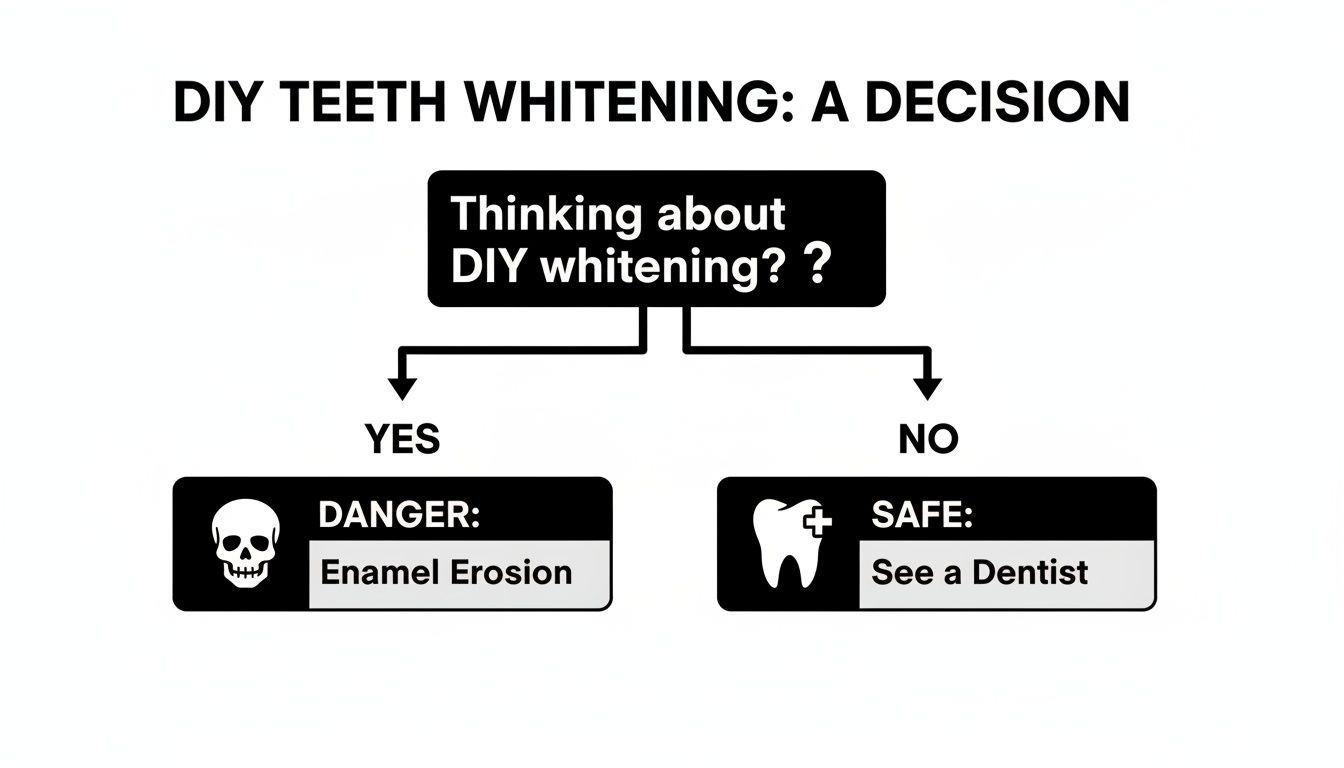
As you can see, jumping into some DIY methods without understanding the risks can lead to permanent damage like enamel erosion. Choosing to see a dentist first puts your safety and oral health front and centre.
To help you see the full picture, here’s a quick comparison of what to expect from both approaches.
DIY Natural Methods vs Professional Whitening
| Feature | DIY 'Natural' Whitening | Professional Dental Whitening | | :--- | :--- | :--- | | Effectiveness | Lifts minor, recent surface stains only. | Whitens teeth by several shades; removes deep-set stains. | | Safety | High risk of enamel erosion and gum irritation if done incorrectly. | Safest method; supervised by a dental professional to protect teeth and gums. | | Speed | Very slow; results are subtle and may take weeks or months to appear. | Immediate results with in-chair whitening (about 1 hour); noticeable results within days with take-home kits. | | Cost | Low initial cost, but can become costly if damage occurs. | Higher initial investment for predictable, lasting, and safe results. | | Results | Unpredictable and minimal change in tooth colour. | Predictable, even, and significantly whiter results. |
Ultimately, while the low cost of DIY can seem appealing, it often comes with hidden risks and underwhelming results. Professional whitening is an investment in a smile that's not only brighter but also healthy.
The Dentist-Led Advantage
Choosing to have your teeth whitened with us isn't just about getting better results; it’s about a smarter, safer process from start to finish.
> The biggest advantage we offer is peace of mind. We use carefully controlled whitening agents and take every precaution to protect your gums, ensuring you get the bright smile you want without risking your oral health.
Before we even talk about whitening, we’ll do a thorough check-up. We need to make sure your teeth and gums are healthy enough for the treatment. Whitening gel can seriously irritate existing problems like cavities or gum disease, so we always address those first.
This professional oversight takes all the guesswork out of the process. We can help you achieve a beautiful, even result that’s tailored just for you.
Ready to explore what’s possible for your smile? You can learn more about our professional teeth whitening services in Tamworth and book a consultation. Let an expert help you get a smile you’ll feel truly confident about.
***
Your Brighter Smile Starts at Oasis Smiles Dental
If you’ve been following along, you now have a solid foundation of healthy habits to keep your teeth looking their best. That’s fantastic! But if you’re looking for that next-level brightness, the kind that truly makes you feel confident, the safest and most reliable path is with a dental professional.
For over 20 years, our team at Oasis Smiles Dental has been a part of the Tamworth and New England community. We've helped countless people just like you achieve a smile they’re proud to show off. We’re not here to push treatments; we’re here to give you honest advice and help you reach your goals without ever risking the health of your teeth.
> Here’s the bottom line: for whitening results that are not only noticeable but also completely safe, a clinical setting is always your best bet. We have the right tools and deep experience to brighten your smile while keeping your enamel and gums perfectly protected.
Let’s Chat About Your Smile
We'd love for you to come in for a consultation. Think of it as a friendly, no-pressure chat where we can really listen to what you’re hoping for, check on your oral health, and figure out the best approach for you.
- Professional Whitening: We can discuss powerful in-chair treatments for fast results or custom-made take-home kits that let you whiten on your own schedule.
- Porcelain Veneers: If you’re dealing with stains that won’t budge, or even chips and gaps, veneers can offer a total smile transformation.
- Full Cosmetic Care: From simple bonding to a complete smile redesign, we create a plan that’s tailored specifically to you.
You can find our modern, comfortable clinic at Shop 15/1 Piper Street, Tamworth, just a stone's throw from the Northgate Shopping Centre. We’ve designed our space to make you feel relaxed the moment you walk through the door.
Ready to take the next step? Give our friendly team a call or book your appointment online. Let's work together to bring out your best smile.
Common Questions About Natural Teeth Whitening
At our Tamworth clinic, we get a lot of questions about the different ways to whiten teeth at home. It’s a popular topic! Let's clear up a few of the most common things people ask.
How Long Does It Take to Whiten Teeth Naturally?
This is probably the number one question we hear. When you're using natural approaches like changing your diet or being extra diligent with your brushing, you're mostly playing a defensive game—preventing new stains from setting in.
Remedies like bicarb soda might lift some very light surface stains over several weeks, but honestly, the results are often minimal and vary from person to person. If you're looking for a genuinely noticeable, brighter smile, you really need to look at professional whitening.
Is Oil Pulling Really Effective for Whitening?
There's a lot of buzz around oil pulling. While it can help reduce plaque and bacteria in your mouth, which might make your teeth *look* a bit cleaner, there is no scientific evidence that it actually whitens them.
Oil pulling simply can't alter the deep, intrinsic colour of your teeth. Think of it more as a supplement to your regular oral hygiene routine, not a whitening solution.
> For anyone with sensitive teeth, it's especially important to steer clear of abrasive or acidic DIY remedies like activated charcoal or lemon juice. These can easily wear down your already vulnerable enamel and make sensitivity much worse.
The safest first step is always to chat with your dentist. We can figure out what's causing the sensitivity and recommend professional treatments that are designed to be both gentle and effective.
---
Ready to stop guessing and find a safe way to a truly brighter smile? The expert team at Oasis Smiles Dental is here to guide you. Book your consultation online or give our clinic a call today.