

Teeth whitening side effects: What to expect and how to protect your smile
Everyone wants a whiter, brighter smile, but it's smart to know what to expect from the process, including any potential teeth whitening side effects. The good news is that when whitening is handled by a professional, it's very safe. The most common things people notice are temporary tooth sensitivity and some mild gum irritation, both of which usually disappear within a few days.
Is Teeth Whitening Safe and What Are the Risks?
This is the number one question we get, and the short answer is yes—when done correctly, teeth whitening is a safe and reliable cosmetic dental treatment. But that doesn't mean it's always a completely sensation-free experience. Side effects are possible, but they’re almost always minor and don't last long.
Most whitening treatments rely on a peroxide-based gel to do the heavy lifting. This gel works by gently opening up the microscopic pores in your tooth enamel to lift out stains. This is what makes your teeth whiter, but it's also the source of the most common side effect: tooth sensitivity.
Why Side Effects Occur
By temporarily making your enamel more porous, the whitening agent allows things like cold air or a sip of a hot drink to get closer to the nerve of your tooth. This can cause that little "zing" of sensitivity that many people feel. It's a totally normal reaction and just means the gel is working. This feeling usually fades within 48 hours as your enamel naturally remineralises and seals back up.
The other thing you might notice is a bit of gum irritation. This can happen if the whitening gel accidentally touches the soft tissues in your mouth. It might feel a little uncomfortable, but this too is temporary and resolves on its own.
> The key takeaway is that major teeth whitening side effects are rare, especially under professional guidance. A dentist's main priority is to ensure the process is not only effective but also safe for your long-term oral health.
This is where understanding the difference between professional treatments and over-the-counter kits really matters. If you'd like to see how we put safety first, you can learn more about the professional whitening services we offer at Oasis Smiles Dental.
To make it even clearer, here’s a quick summary of the common issues you might come across.
Quick Guide to Common Whitening Side Effects
This table breaks down the most frequent side effects, why they happen, and what to expect.
| Side Effect | Commonness | Typical Cause | What to Expect | | :--- | :--- | :--- | :--- | | Tooth Sensitivity | Very Common | Peroxide making enamel temporarily porous | A sharp, temporary pain or ache with hot/cold stimuli that fades after 1-3 days. | | Gum Irritation | Common | Whitening gel contacting the soft tissues of the gums | Mild redness, slight soreness, or a temporary white appearance on the gums. | | Uneven Colour | Less Common | Whitening not affecting crowns, veneers, or fillings | Natural teeth become whiter, creating a colour mismatch with dental restorations. | | Enamel Damage | Very Rare | Overuse or use of unregulated, high-strength products | Permanent damage to the tooth surface, often associated with dangerous DIY kits. |
As you can see, the most common issues are mild and short-lived. The more serious risks are almost exclusively linked to improper use or unregulated products, which is why professional supervision is so important.
The Most Common Side Effect Explained
If you've ever had your teeth whitened, you might be familiar with that sudden, sharp ‘zing’ that can catch you by surprise. It’s a feeling that’s hard to miss, and it’s by far the most common side effect of the process: tooth sensitivity. While it can be a bit unnerving, the good news is that it’s usually a completely normal and temporary reaction.
So, what's actually happening? Think of your tooth enamel as a protective shield. The active ingredients in whitening gels—usually hydrogen peroxide or carbamide peroxide—work by making this shield temporarily more porous. This is exactly what we want, as it lets the gel get into the tooth to break down those stubborn, deep-set stains that cause discolouration.
The trade-off is that this increased porosity also opens up tiny, microscopic channels that lead directly to the sensitive layer underneath, called the dentine. This is where the nerve endings of your tooth live. When triggers like a blast of cold air or a sip of hot tea can suddenly reach this layer, they stimulate the nerves and cause that familiar sensitivity.
Why Does Tooth Sensitivity Happen?
The science behind it is pretty straightforward. As the peroxide works to lift stains, it gently demineralises the enamel surface, which exposes those microscopic tubules within the dentine. You can picture these tubules as tiny straws that connect the outside of your tooth directly to the nerve-rich pulp at the very centre.
This process is a necessary step for achieving a whiter smile, but it's also what's directly responsible for that fleeting discomfort. The bright side is that your body has a natural fix. Your saliva goes to work remineralising your teeth, effectively sealing these tubules back up within a day or two. For most people, any sensitivity from whitening is completely gone within 24 to 48 hours.
In fact, data from Australian dental practices shows that tooth sensitivity is the number one side effect reported, with nearly one in three adults feeling it after a whitening treatment. It's almost always a short-term issue that resolves on its own. If you're curious about the specifics, you can read more about the key side effects of teeth whitening treatments.
Factors That Increase Your Risk of Sensitivity
Not everyone gets the same 'zing' from whitening. Some people feel nothing at all, while others are more prone to sensitivity. That’s why a chat with your dentist beforehand is so important.
A few things can make you more likely to experience sensitivity:
- Pre-existing Sensitivity: If your teeth are already a bit touchy with hot or cold things, you’ll probably notice it more after a whitening session.
- Thin Enamel: Some of us just naturally have thinner enamel. This means the dentine layer is closer to the surface and more easily irritated by whitening agents.
- Gum Recession: When gums pull back, they can expose the root of the tooth. This surface isn't protected by enamel and is incredibly sensitive.
- High Peroxide Concentration: Using products with a very high percentage of peroxide, especially some of the unregulated kits you can buy online, is a major culprit for increased sensitivity and discomfort.
> A professional dental exam before whitening is your best line of defence. A dentist can assess your enamel thickness, check for gum recession, and identify any cracks or cavities that could lead to severe pain if exposed to whitening gel.
How to Manage and Prevent Whitening Sensitivity
Luckily, you don’t have to just grit your teeth and bear it. There are some simple and very effective things you can do to reduce or even prevent sensitivity altogether. A little bit of prep work and aftercare can make a huge difference in how comfortable your experience is.
Here are a few tips I always give my patients:
- Use a Desensitising Toothpaste: For about two weeks *before* your treatment, switch to a toothpaste made for sensitive teeth. These contain ingredients like potassium nitrate or stannous fluoride that work by blocking those tiny tubules in your dentine.
- Avoid Temperature Extremes: For the first 48 hours after whitening, give your teeth a break. Stick to room-temperature foods and drinks. That means steering clear of icy water, steaming hot soups, and even brisk, cold air.
- Choose Professional Treatment: This is a big one. A dentist will use the right concentration of gel for your specific teeth and can apply a protective barrier to shield your gums and other sensitive spots.
By taking these simple steps, you can get the brilliant results you want without the wincing. It's all about making sure your journey to a brighter smile is a smooth and happy one.
Understanding Gum Irritation and Other Tissue Issues
While sensitive teeth usually steal the spotlight, they aren't the only potential side effect of teeth whitening. Your mouth's soft tissues, especially your gums, can have a say in the matter, too. If you’ve ever noticed your gums looking a bit red, feeling sore, or even having a slight burning sensation after a treatment, you’ve experienced this firsthand.
This is what we call gum irritation, and it’s a temporary chemical burn that happens when the peroxide whitening gel makes contact with your delicate gum tissue. Like sensitivity, it’s almost always mild and short-lived. Your gums might look a little white or feel tender for a day or two, but they heal remarkably quickly.
Why Professional Whitening Protects Your Gums
The difference between a comfortable whitening session and a painful one often boils down to a single word: precision. This is exactly where professional treatments shine, leaving one-size-fits-all DIY kits in the dust. A dentist takes very specific steps to shield your gums from irritation.
> Think of it like trying to paint a detailed picture. You wouldn't use a sloppy, oversized roller, would you? You'd choose a fine-tipped brush. DIY whitening trays are like that roller—they can't help but get "paint" (the whitening gel) everywhere, including all over your gums.
In our clinic, we take a much more controlled approach. Before we even think about applying the whitening gel, we carefully place a protective barrier over your gums. This special resin acts like a perfect shield, making sure the powerful whitening agents stay right where they belong: on your teeth, and only on your teeth.
On top of that, a dentist creates custom-fitted whitening trays that are moulded to the unique shape of your teeth. Unlike the generic boil-and-bite trays you find in shops, these custom trays form a snug seal. This stops the gel from leaking out and bothering your gums, cheeks, and tongue. That precision is a huge part of why professional treatments are so much safer and more comfortable. If gum irritation just won't go away, it's always a good idea to check for underlying problems; you can learn more about the signs of gum disease and its treatment in our detailed guide.
Comparing Gum Safety: DIY vs. Professional
There’s no getting around it: the risk of gum irritation is much higher with at-home products. The main culprits are usually poorly fitting trays and the simple fact that it's hard to control where the gel ends up.
DIY Kits: * One-Size-Fits-All Trays: These rarely provide a good fit, leaving gaps where gel can easily escape and sit directly on your gums. * Whitening Strips: While they seem convenient, strips can easily overlap onto your gums, causing irritation right along the gumline. * User Error: It’s tricky to apply gel evenly and avoid your soft tissues, especially when you’re trying to reach your back teeth.
Professional Treatment: * Protective Barriers: A liquid dam is painted right onto the gums, creating a physical, custom shield. * Custom Trays: Designed from a mould of your own teeth, they guarantee a perfect, leak-proof fit for at-home professional kits. * Expert Application: A trained dental professional applies the gel with precision, ensuring it only touches the tooth enamel during an in-chair session.
Rarer but More Serious Tissue Issues
While a little bit of redness is fairly common and no cause for alarm, more serious tissue problems can happen, especially with unregulated products. Using gels with dangerously high peroxide levels—often found in illegal kits sold online—can lead to much more severe chemical burns.
These can show up as painful white patches, blisters, or even ulcers on your gums and the inside of your cheeks. These are not typical teeth whitening side effects and are a clear sign that the product used was far too strong or was applied incorrectly for too long. This really underlines how important it is to stick with regulated, professionally supervised treatments to ensure your journey to a brighter smile is a safe one.
DIY vs. Professional Whitening: What Are the Real Risks?
It’s hard to miss them these days—do-it-yourself whitening kits promising a dazzling smile for a fraction of the cost of a dental visit. And while getting professional results from your own bathroom sounds tempting, there's a huge difference in safety between these over-the-counter products and a treatment managed by your dentist. Understanding that gap is key to protecting your teeth from real, and sometimes permanent, harm.
The active ingredient in almost all whiteners is peroxide. It's the engine that lifts stains, but it’s also a powerful chemical. To keep people safe, Australian regulations draw a clear line in the sand on how much peroxide can be in any product you buy off the shelf. These rules aren't just red tape; they exist to prevent the very side effects people worry about.
Australian Safety Standards for Peroxide
Here in Australia, the rules are straightforward and exist for your protection. Any whitening product sold directly to the public is legally capped at:
- 6% Hydrogen Peroxide
- 18% Carbamide Peroxide (which is a slower-release compound that breaks down into about one-third hydrogen peroxide)
These limits were set to minimise the risk of chemical burns to your gums, painful sensitivity, and damage to your tooth enamel. When you grab a kit from a reputable Aussie chemist, you can feel confident it's playing by these rules. The real gamble comes from products bought online from overseas or unregulated sellers, which often completely ignore these vital safety standards.
The Problem with Unregulated DIY Kits
Ordering an unregulated whitening kit is a bit like playing Russian roulette with your oral health. You have absolutely no idea what concentration of peroxide is actually in that little tube, and often, it's dangerously high. This is where the most severe teeth whitening side effects pop up, turning a cosmetic wish into a painful, and sometimes irreversible, dental problem.
An investigation by the Australian Competition and Consumer Commission (ACCC) found some truly alarming things. They discovered numerous kits being sold to Australians containing peroxide levels way over the legal safety limit. The injuries they documented were serious and widespread, including chemical burns on the gums, mouth blistering, and even permanent enamel damage. As a result, the ACCC had several of these dangerous products pulled from the market. You can read more about the ACCC’s action on unsafe teeth whiteners to see just how big the problem was.
> The biggest risk with DIY whitening isn't that it might not work—it's that it could cause lasting damage. When you're on your own, you're the one managing a powerful chemical right next to the delicate tissues of your mouth.
Why Professional Whitening is the Safest Way Forward
A professional whitening treatment at the dentist, on the other hand, is a completely different ball game. It’s all about safety and control. From the second you settle into the chair, every single step is managed by a trained expert whose first priority is protecting your health.
We always start with a thorough check-up to make sure whitening is even right for you. We look for cavities, tiny cracks, gum recession, or thin enamel—all things that could lead to serious pain if they were exposed to a whitening gel. This is a critical safety step you just don't get with a DIY kit.
Plus, dentists have access to TGA-approved products and equipment designed for a safe, effective procedure. At Oasis Smiles, for instance, we use modern tools to deliver precise, comfortable results. You can learn more about how our advanced dental technology helps us put patient safety and brilliant outcomes first.
Let's break down the key safety differences:
| Feature | Professional Whitening (In-Clinic) | DIY Whitening Kits | | :--- | :--- | :--- | | Peroxide Level | Safely controlled and adjusted by a dental professional. | Often unknown, unregulated, and potentially dangerous. | | Gum Protection | We apply a protective barrier to shield all your soft tissues. | You’re relying on ill-fitting trays or strips that often leak. | | Application | A trained expert applies the gel precisely, only to your teeth. | Messy, uncontrolled application often irritates gums and cheeks. | | Supervision | You're monitored constantly throughout the entire procedure. | No professional supervision to manage any bad reactions. |
When you choose professional whitening, you aren't just paying for a brighter smile. You're investing in peace of mind, knowing the entire process is being handled safely, effectively, and with your long-term health as the number one priority.
How to Achieve a Brighter Smile Safely
Everyone wants a brilliant smile, but it's easy to get lost in the sea of whitening products out there. The absolute safest way to get the results you want, without risking your dental health, is to see a professional. A dentist isn't just focused on looks; their first priority is always your long-term oral wellbeing.
Let's pull it all together. We've talked a lot about the potential teeth whitening side effects, and now it's about how to avoid them. Putting your smile in the hands of a professional is, without a doubt, the smartest move you can make.
This infographic lays out the two main paths you can take: going pro or doing it yourself.
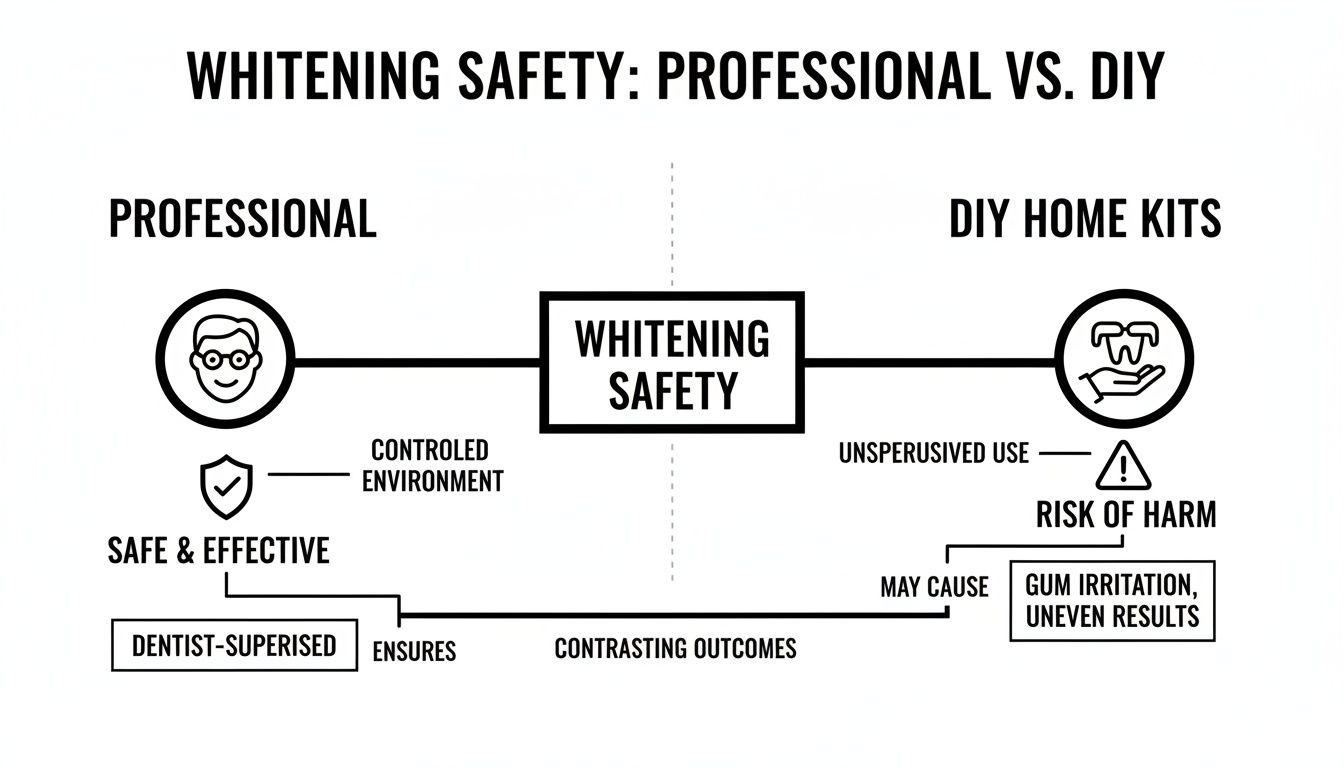
As you can see, the controlled, safety-first approach with a dentist is worlds apart from the risks that come with unsupervised DIY kits.
What to Expect During a Professional Consultation
Your first stop on the road to a whiter smile should always be a dental consultation. This isn't just a quick chat—it's a critical safety check. Your dentist will do a full exam to catch any underlying problems that could make whitening a bad idea, such as:
- Hidden cracks or cavities where the whitening gel could seep in and cause serious pain.
- Signs of gum disease or recession that need to be treated first.
- Existing dental work like crowns, fillings, or veneers that won’t change colour with the whitener.
This check-up makes sure whitening is actually a good and safe choice for you. If you get the green light, your dentist will use TGA-approved materials and proven methods, like in-clinic treatments with protective gum barriers or custom-fitted take-home trays that keep the gel exactly where it needs to be—and off your gums.
> A professional consultation is your roadmap to a brighter smile. It identifies what you need, sets realistic expectations, and puts your health and safety at the centre of the whole process.
It’s worrying how many people skip this step. Research from the Australian Dental Association found that while over 22% of Australian adults have whitened their teeth, about two-thirds of them went the DIY route instead of seeing a professional. That’s a risky trend, especially since many are using unregulated products without knowing the dangers. You can read the full findings on Australian whitening habits to see why getting an expert opinion is so important.
Sometimes, whitening isn't the best tool for the job. If you have deep-set discolouration that won’t budge or you’re also hoping to change the shape of your teeth, you might find other cosmetic options are a better fit. For instance, it could be worth looking into the benefits of porcelain veneers.
There's no need to guess. The best first step you can take is booking a consultation to talk with a dental professional about your goals. That way, you get advice that’s right for your specific situation and can achieve the beautiful, healthy smile you deserve—safely.
Common Questions About Teeth Whitening
It’s completely normal to have questions before starting any new dental treatment. To help you feel confident about your decision, we’ve put together some straightforward answers to the most common queries we hear about teeth whitening.
Will Whitening Work on My Crowns or Fillings?
This is a really common question, and the short answer is no. The whitening agents we use are designed specifically for natural tooth enamel and won't change the colour of any dental work like crowns, veneers, or fillings.
It’s something we always check for during a consultation. If we whiten your natural teeth, any existing dental work might suddenly stand out, creating an uneven look. We can plan for this by discussing options like replacing older restorations *after* you’ve reached your ideal shade, ensuring your whole smile looks seamless and natural.
Can I Whiten My Teeth If They Are Already Sensitive?
Yes, you absolutely can, but we strongly recommend you do it with a dentist's guidance. If you already struggle with sensitivity, trying a one-size-fits-all kit from the chemist can be a pretty uncomfortable experience.
When you see a professional, we can tailor the entire process to you. This might mean: * Using a whitening gel with a lower peroxide concentration that's much gentler. * Spacing out your treatments to give your teeth plenty of time to recover. * Prescribing special desensitising toothpastes or gels to use before and after your appointments.
> Pre-existing sensitivity doesn’t mean you can't have a whiter smile. It just means we need to take a more careful, personalised approach to get you there comfortably.
How Do I Make My Whitening Results Last Longer?
The first 48 hours after whitening are the most critical for locking in your new, brighter shade. Your enamel is a little more porous during this window, so it’s best to steer clear of anything that could easily stain your teeth.
Try to avoid things like: * Coffee and tea * Red wine * Dark soft drinks * Berries and other colourful fruits * Tomato-based sauces
For long-term success, nothing beats good old-fashioned oral hygiene. Daily brushing and flossing, paired with your regular professional cleans, will keep new stains from settling in. Many of our patients also find that a professional take-home kit is perfect for a quick touch-up every now and then to keep their smile looking its best.
Is Whitening Safe During Pregnancy or Breastfeeding?
The Australian Dental Association recommends holding off on elective cosmetic treatments like teeth whitening during pregnancy and breastfeeding.
While the risk is thought to be extremely low, there just isn’t enough solid research to give it the all-clear. When it comes to the health of your baby, it’s always best to be cautious. We’ll be ready to help you get that sparkling smile once this special time is over.
--- At Oasis Smiles Dental, your safety and comfort are at the heart of everything we do. If you're thinking about whitening and want advice you can trust, our friendly team is here to help. Book a consultation today to chat about your goals and find the best way to achieve a smile you’ll love. Find out more at https://www.oasissmilesdental.com.au.