

What Is Sleep Dentistry? A Simple Guide to Relaxing Dental Care
First things first, let's clear up a common misconception. When we talk about sleep dentistry, we don't mean you'll be completely "put under" like in a hospital operating theatre. It’s much more subtle than that.
Think of it as hitting the snooze button on your anxiety and awareness. You’re not unconscious, but you are in a state of such deep relaxation that the dental work happens without you really noticing.
What Is Sleep Dentistry Really?
Sleep dentistry, or sedation dentistry, uses carefully controlled medication to help you enter a calm, dream-like state. It’s a fantastic way to make essential dental care possible for people who are nervous, have a sensitive gag reflex, or simply need a lot of work done in one go.
The main aim is to take fear and discomfort completely out of the picture. While you’re sedated, you’ll be conscious enough to respond to simple instructions from your dentist, but you'll be so relaxed that you likely won’t remember much, if anything, about the treatment afterwards.
More Than Just Calming Nerves
While it’s a game-changer for anyone with dental phobia, the benefits of sleep dentistry go much further. When a patient is perfectly still and relaxed, it allows the dentist to work more efficiently and with greater precision. This often leads to better results, especially for complex treatments.
It’s also an incredibly practical tool for consolidating treatment. Instead of multiple stressful appointments, we can often complete everything in a single, relaxed session.
Sleep dentistry is often the perfect solution for patients who: * Suffer from high levels of dental fear or anxiety. * Have a strong gag reflex that interferes with treatment. * Find it difficult to get fully numb with local anaesthetic alone. * Need several procedures done at once, like multiple fillings or crowns. * Have health conditions that make it hard to sit in the chair for a long time.
> In essence, sleep dentistry bridges the gap between needing dental work and feeling able to go through with it. It ensures fear never stands in the way of your health.
By creating a calm and stress-free environment, both you and the dental team can focus on the real goal: achieving a healthy, beautiful smile. It transforms what could be a dreaded appointment into a simple, straightforward process. You can learn more about how our dedicated team provides sleep dentistry services in Tamworth to help every patient feel safe and comfortable. It's a proven and incredibly safe way to get the care you need, without the stress.
The Different Types of Sedation Dentistry Explained
Thinking about sleep dentistry isn't about choosing to be completely "knocked out". In fact, it's not a one-size-fits-all solution at all. It's more like a spectrum of relaxation options, each carefully matched to your comfort level and the dental work you need.
Let’s walk through the main types of sedation we use, starting with the mildest and working our way up. This will help you get a clear picture of what to expect and what might be right for you.
A Quick Comparison of Sedation Options
To help you see the differences at a glance, here’s a simple breakdown of the sedation methods we offer.
| Sedation Type | Level of Relaxation | How It's Administered | Best For | | :--- | :--- | :--- | :--- | | Nitrous Oxide | Mild & floaty | Inhaled through a nose mask | Mild anxiety, shorter procedures | | Oral Sedation | Moderate to deep drowsiness | A prescribed pill taken before your visit | Moderate fear, longer treatments | | IV Sedation | Deep "twilight" sleep | Administered directly into a vein | Severe phobia, complex/extensive work |
Each path leads to a comfortable experience, but the journey there is a little different.
Nitrous Oxide (Or 'Laughing Gas')
This is the gentlest form of sedation available. If you've ever felt a little nervous but not truly terrified, this could be perfect for you. You'll simply breathe a blend of nitrous oxide and oxygen through a small, soft mask that rests on your nose.
Within just a few minutes, a feeling of light, airy relaxation washes over you. You're still completely aware, but the dental chair suddenly feels a lot less intimidating. One of the best things about nitrous oxide is how quickly it wears off. Once we're done, the effects fade in minutes, and you can safely drive yourself home.
Oral Sedation
For those with more pronounced dental nerves, oral sedation offers a step up in relaxation. It’s as simple as taking a prescribed sedative pill—often in the same family as Valium—about an hour before you’re due to arrive.
By the time your treatment begins, you’ll feel very calm and drowsy. While you're still awake enough to communicate with your dentist, many patients find their memory of the procedure is foggy, or they don't remember it at all. Because the effects are longer-lasting, you absolutely must arrange for a trusted friend or family member to drive you home afterwards.
> The core purpose of sleep dentistry is to create a state of conscious relaxation, making treatment feel effortless and anxiety-free.
This approach is all about putting your wellbeing first, ensuring you feel safe and in control.
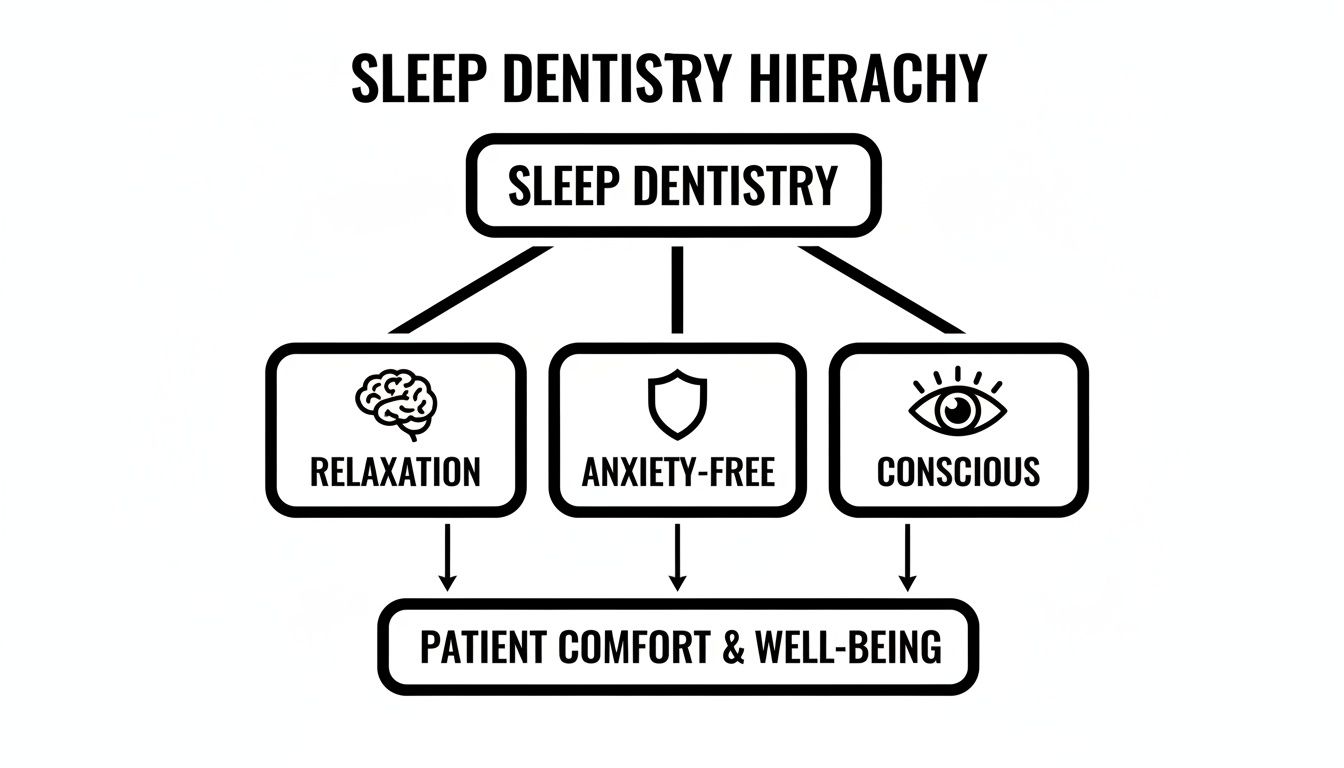
As you can see, every method is designed to keep you conscious and safe while eliminating the stress that can come with dental work.
Intravenous (IV) Sedation
When dental phobia is severe, or the work required is quite extensive—like removing multiple wisdom teeth or placing several dental implants—IV sedation is often the best choice. This method provides the deepest level of conscious relaxation.
Here, the sedative is delivered directly into your bloodstream by a trained anaesthetist. This allows for precise, moment-to-moment control of your sedation level. You'll drift into a peaceful "twilight sleep" where you feel like you're napping through the whole thing. You will have absolutely no memory or awareness of the treatment.
This makes it possible to complete complex dental work in a single, entirely stress-free appointment. Given the profound effects, we have very strict safety protocols, which include fasting beforehand and having a responsible adult escort you home.
Could You Be a Good Candidate for Sleep Dentistry?
When people hear ‘sleep dentistry’, they often picture someone with an extreme dental phobia. And while it’s a game-changer for those with severe anxiety, the reality is that a huge range of people can benefit. You might be surprised to find your own experiences put you in the perfect position to consider it.
If the very idea of a dental appointment makes your heart pound, or if you’ve put off necessary care because of fear, sedation dentistry was designed with you in mind. It helps you break that cycle of avoidance that, left unchecked, almost always leads to bigger problems down the road.
Who Benefits Most from Sedation?
Many different things can make a standard dental appointment feel anywhere from uncomfortable to downright impossible. That's where sleep dentistry comes in, offering a practical way to get past some very common hurdles.
See if any of these situations sound familiar:
- A Very Strong Gag Reflex: For some of us, even just taking a simple X-ray can trigger an intense gag reflex, making treatment incredibly difficult. Sedation works by calming this reflex, so your dentist can work efficiently and you can relax.
- Difficulty Getting Numb: Ever feel like local anaesthetic just doesn't work for you? High levels of anxiety can actually fight against the numbing agent. Sedation helps your body relax, allowing the anaesthetic to do its job properly and keep you completely comfortable.
- Extensive or Complex Dental Work: Facing a long list of procedures like multiple fillings, crowns, or implants can feel overwhelming. Sleep dentistry allows your dentist to complete hours of work in a single session while you rest comfortably, often with little to no memory of the treatment itself.
What might have been several stressful appointments can be turned into one calm, productive visit. That saves you a lot of time and worry.
> Sleep dentistry is ultimately a tool for accessibility. It removes physical and psychological barriers, ensuring every patient can receive the high-quality care they deserve without distress.
Beyond Anxiety and Long Procedures
But it’s not just about managing fear. Sometimes, the issue is purely physical comfort, and this is another area where sedation can make a huge difference.
For instance, patients with jaw pain (TMJ issues) might find it genuinely painful to hold their mouth open for a long time. Others with chronic back pain or physical disabilities can find it hard to stay comfortable in the dental chair for an entire procedure.
In these cases, sedation is less about anxiety and more about making the treatment physically achievable. It allows your whole body to relax, taking the strain off your jaw, back, and neck. And while sedation is fantastic for ensuring comfort *during* a procedure, we also believe in looking at the bigger picture. For example, if you're dealing with related issues, you can learn more about how specialised oral appliances can help with conditions like sleep apnoea treatment on our blog. Our goal is to provide truly supportive care that addresses both your immediate comfort and your long-term health.
Understanding the Benefits and Risks of Sedation

It’s completely normal to want to understand both the good and the bad before committing to any kind of medical treatment. When it comes to sleep dentistry, it opens the door to essential care for people who might otherwise avoid the dentist due to fear or discomfort. But, of course, it's wise to weigh up the pros and cons.
At its heart, the greatest benefit of sedation dentistry is simple: it can turn what feels like a scary ordeal into a completely calm and stress-free experience. This shift makes all the difference in your treatment journey.
The Clear Advantages of a Calm Approach
Think about it—when you’re relaxed in the chair, your dentist can focus entirely on the task at hand, working more efficiently and precisely. This isn't just about getting things done faster; it’s about achieving a higher quality result. And that efficiency leads to perhaps the biggest practical perk of all.
We call it treatment consolidation. Instead of spreading out multiple fillings, a root canal, and crown preparations over several stressful appointments, we can often get it all done in one comfortable visit. It saves you time, cuts down on anxiety, and lets you get on with your life.
Other key benefits we see every day include:
- Anxiety No More: It tackles the biggest hurdle that stops so many people from getting the dental care they need.
- Taming a Strong Gag Reflex: For patients who struggle with gagging, sedation relaxes the reflex, making treatment not just easier, but possible.
- Amnesia Effect: Most patients remember very little, if anything, about the actual procedure. For anyone with a dental phobia, this is a huge relief.
Ultimately, this approach means fear no longer has to be in charge of your oral health.
Acknowledging and Managing the Risks
While the benefits are significant, we absolutely must talk about the risks. The good news is that when sedation is managed by a properly trained and experienced professional, the risks are extremely low. Your safety is, without question, our top priority.
The most common side effects are mild and don’t last long, usually fading within a few hours after your appointment.
> The cornerstone of safe sedation is a thorough work-up beforehand. We start with a detailed review of your medical history—it's the most important step we take to minimise any potential risks.
As the medication wears off, some people might feel a bit off for a short while. This can include:
- Grogginess or drowsiness
- A little bit of nausea or feeling light-headed
- A mild headache
- Dry mouth
Before we even consider sedation, we’ll do a complete review of your medical background, including any medications you’re taking and any allergies you have. This helps us choose the safest, most effective sedation option just for you. During the procedure itself, we continuously monitor your vital signs—like your heart rate, blood pressure, and oxygen levels—to ensure you are safe from beginning to end.
Your Sleep Dentistry Journey from Start to Finish
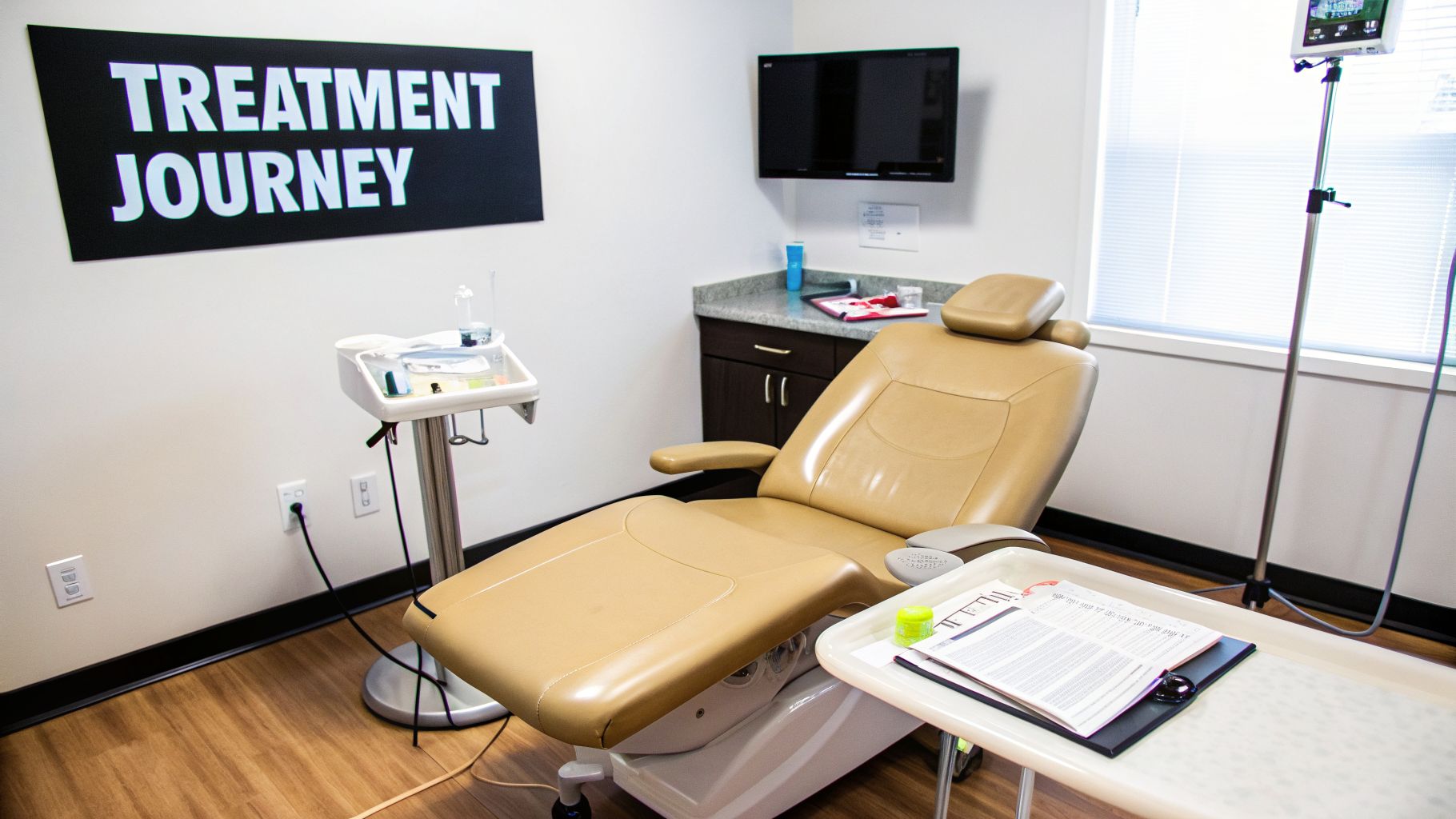
Knowing what’s going to happen can make all the difference, especially if you’re feeling a bit anxious. The good news is that the whole sleep dentistry process is very straightforward. We’ve broken it down into three simple stages—before, during, and after—so you know exactly what to expect.
Think of it as a clear roadmap. It’s all built around your safety and comfort, starting with a detailed chat to make sure your visit goes off without a hitch.
Before Your Appointment: The Preparation
It all begins with a thorough consultation. This isn't just a formality; it's our chance to sit down, review your medical history, talk about any medications you’re on, and really listen to your concerns. This conversation is key to helping us choose the safest and most effective sedation plan just for you.
Once we’ve settled on the best approach, we’ll give you a simple set of instructions to follow before your appointment. Following these is crucial for a smooth and safe procedure.
Depending on your type of sedation, we might ask you to:
- Fast before your visit: You'll likely need to avoid food and drink for at least 6-8 hours beforehand. This is an essential safety step, especially for IV sedation, as it prevents any risk of nausea.
- Organise a lift: For any sedation stronger than the mild "happy gas," you'll need to arrange for a trusted friend or family member to drive you here, take you home, and stay with you for a few hours.
- Dress for comfort: We always suggest wearing loose, comfy clothes to your appointment. Short sleeves are particularly helpful if you're having IV sedation.
During Your Procedure: The Relaxation
On the day of your treatment, our entire team is focused on you. Once you’re settled comfortably in the dental chair, we’ll administer the sedation. Whether it’s an oral tablet, nitrous oxide, or an IV drip, we wait until you are completely relaxed before we start any dental work.
You’ll drift into a calm, dream-like state often called a "twilight sleep." You’ll remain completely unaware of the sounds, smells, and sensations of the procedure.
> Throughout the entire treatment, your wellbeing is our number one priority. Our team continuously monitors your vital signs—like your heart rate, blood pressure, and oxygen levels—to ensure you’re safe and comfortable from beginning to end.
This constant monitoring allows us to keep your sedation at the perfect level, so you can rest peacefully while we get your dental work done. It’s how we can complete complex treatments, like tricky extractions, in a single, stress-free visit. You can learn more about what to expect with our guide to a wisdom teeth removal procedure.
After Your Appointment: The Recovery
When your treatment is complete, we’ll gently ease you out of sedation. You can relax in our quiet recovery area until you feel ready for your escort to take you home. It’s perfectly normal to feel quite groggy and sleepy at this point.
We’ll give you and your companion clear, written instructions for your after-care. The most important thing is to head straight home and take it easy for the rest of the day. You must avoid driving, using any machinery, or making important decisions for at least 24 hours.
Frequently Asked Questions About Sleep Dentistry
It's completely natural to have a few more questions running through your mind. To help put you at ease, we've gathered some of the most common queries we hear from patients just like you.
Will I Be Completely Asleep During the Procedure?
This is the number one question we get, and the answer surprises most people: probably not! For most types of sleep dentistry, you’ll be in a state of conscious sedation.
Think of it as an incredibly deep, peaceful relaxation. You're still technically awake and able to respond to simple instructions, but you'll be so comfortable that you likely won't remember a thing afterwards. Many patients describe it as a hazy, dream-like experience.
Is Sleep Dentistry Safe for Everyone?
When managed by a specially trained and certified dental team, it is exceptionally safe. Your wellbeing is our absolute top priority, which is why we always start with a thorough review of your medical history to make sure sedation is the right choice for you.
> Throughout the procedure, your vital signs—including your heart rate, blood pressure, and oxygen levels—are constantly monitored by our team to guarantee your safety from start to finish.
This continuous, careful monitoring is the cornerstone of sleep dentistry’s excellent safety record.
How Will I Feel After the Sedation Wears Off?
You can expect to feel a bit drowsy and tired for a few hours following your appointment. It's essential that a responsible adult drives you home and stays with you for a while until the effects fully subside.
We advise taking it easy for the rest of the day. Plan to rest up and avoid driving, strenuous activity, or making any big decisions for at least 24 hours. You can find more detailed advice in our general patient information and post-op care advice.
Does My Health Fund Cover Sleep Dentistry?
Coverage really comes down to your individual health fund and your specific level of cover. Many insurance plans do offer benefits for sedation, particularly for IV sedation performed in a proper clinical setting.
The best way to know for sure is to check directly with your provider. We can give you the correct item numbers to make that conversation easier. We also offer flexible payment plans to help ensure you can get the care you need without financial stress.
--- Ready to finally put dental anxiety behind you? The team at Oasis Smiles Dental is here to help you feel comfortable and relaxed every step of the way. Book your consultation online or call us today!