

After Hours Dentist Hobart: Emergency Dental Guide 2026
It’s 6:20 pm, the rain is coming sideways across Hobart, dinner’s half-made, and then your tooth starts throbbing. Or your child trips, comes inside crying, and you see a chipped front tooth and blood on their lip. At that point, the immediate reaction is often the same. They reach for the phone, search after hours dentist hobart, and hope someone answers.
The hard part isn’t just the pain. It’s the uncertainty. You’re trying to work out whether this can wait until morning, whether the hospital is the right place, whether your child needs urgent care, and what the bill is likely to look like if you do find a dentist open late.
That stress is understandable. In Hobart, urgent dental problems do spill into hospital care. A study of the Royal Hobart Hospital Emergency Department recorded 454 dental-related presentations in one year, making up nearly 1% of all ED visits (Royal Hobart Hospital emergency dental study). That tells you something important. Dental pain after hours is common, and many people are left looking for help when standard clinics are shut.
A calm plan helps. The right first aid can protect a tooth, reduce swelling, and buy time while you find proper treatment. The right phone questions can save you from driving across town only to learn a clinic can’t treat your problem. And if cost is one of your biggest worries, asking clearly and early usually prevents the worst surprises.
That Sudden Dental Pain When All Clinics Are Closed
A genuine dental emergency rarely arrives at a convenient time. It’s usually after work, on a Saturday afternoon, or just as you’re trying to settle a child for bed. The pain can feel overwhelming because teeth don’t give you much room to ignore them. A small crack, a swelling under a tooth, or a filling that gives way can become very hard to manage once regular clinics have closed.

In that moment, people often make one of two mistakes. They either panic and head straight to the emergency department for a problem a dentist is better equipped to treat, or they try to push through the night with no plan at all. Neither option is ideal.
What usually needs urgent dental attention
Some problems can wait for the next available appointment. Others shouldn’t.
The situations that usually need prompt after-hours advice include:
- A severe toothache that doesn’t settle and keeps building despite simple pain relief
- A facial swelling or gum swelling, especially if it’s spreading
- A knocked-out tooth
- A broken tooth with sharp edges or exposed inner tooth structure
- Bleeding that won’t stop
- A child with a dental injury, even if the damage looks small at first
> If pain is waking you, swelling is changing the shape of your face, or bleeding won’t settle, treat it as urgent and call for professional help.
Why Hobart patients often need a backup plan
Many people assume there’ll be a late-night dental roster similar to a GP service. In practice, after-hours dental access is more patchy than that. You may find clinics with extended weekday hours, Saturday appointments, or an emergency phone line, but not every clinic will be equipped for every problem.
That’s why a useful guide shouldn’t just list clinics. It should help you decide what to do in the first few minutes, how to search efficiently, and what questions to ask before you get in the car.
Immediate First Aid for Your Dental Emergency
Before you find a dentist, deal with the problem in front of you. Good first aid won’t replace treatment, but it can reduce pain, limit damage, and improve the chance of saving a tooth.
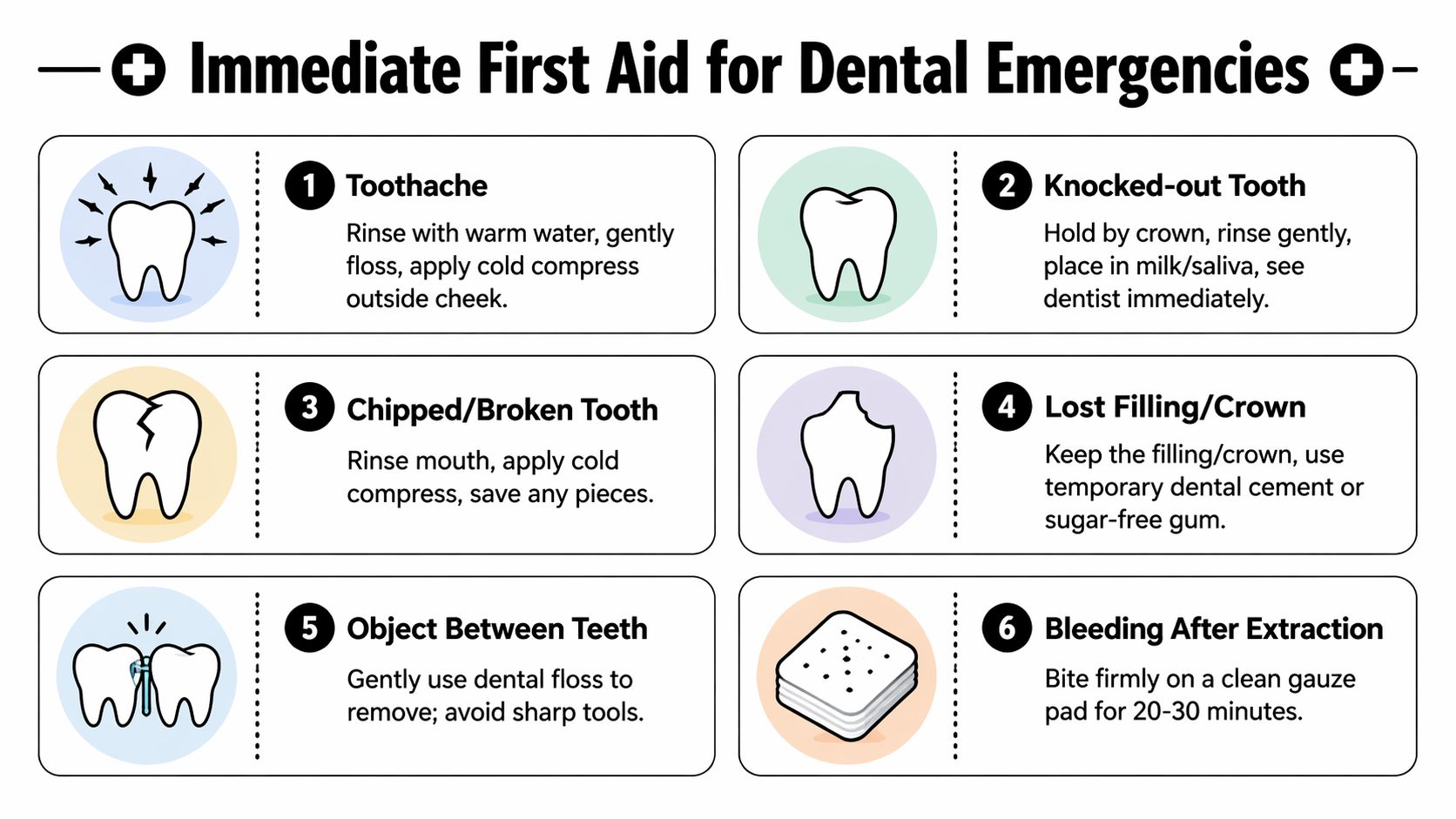
Severe toothache
A throbbing toothache often comes from decay, infection, a cracked tooth, or a gum problem. The immediate goal is to reduce irritation and keep pressure off the area.
- Rinse with warm water. This clears food debris and lets you see whether the gum is swollen.
- Use floss gently. Sometimes trapped food is the main trigger, especially around a back molar.
- Apply a cold compress to the outside of the cheek. Keep it external. Don’t put ice directly on the tooth.
- Avoid chewing on that side. Even soft food can sharply increase pain.
- Keep upright if possible. Lying flat can make a throbbing tooth feel worse.
> Do not do this: Don’t place aspirin or other tablets directly onto the gum or tooth. It can irritate or burn the soft tissue.
Knocked-out tooth
This is the one problem where handling matters a great deal. If it’s a permanent adult tooth, time and technique both matter.
- Pick the tooth up by the crown only. That’s the part you normally see in the mouth.
- Don’t scrub it. If it’s dirty, rinse it gently.
- If safe to do so, place it back in the socket. Bite gently on clean gauze or cloth to hold it in place.
- If you can’t reinsert it, keep it moist. Milk or saliva is commonly used while you travel.
- Get to a dentist immediately.
If the tooth belongs to a young child and you’re not sure whether it’s a baby tooth or an adult tooth, don’t force it back in. Call for advice first.
Broken or chipped tooth
A chipped tooth can range from cosmetic to urgent. If the break is large, painful, or bleeding, act quickly.
- Rinse the mouth carefully to clear blood and fragments.
- Save any broken pieces if you can find them.
- Use a cold compress on the cheek to help with swelling.
- Cover sharp edges if needed with temporary dental material from a pharmacy, if available, or avoid contact with the area until you’re seen.
- Stick to soft foods and avoid hot or very cold drinks if the tooth is sensitive.
A broken tooth can look minor and still expose the inner tooth. If air, cold water, or even breathing through the mouth causes pain, you need an urgent dental review.
Suspected abscess or swelling
An abscess isn’t something to watch casually overnight. Infection can spread, and pain often escalates quickly.
Look out for: - A swelling on the gum - A pimple-like spot near a painful tooth - Facial swelling - A bad taste or fluid draining into the mouth - Pain when biting
What helps right away:
- Rinse gently with warm salty water
- Apply a cold pack to the outside of the face
- Avoid pressing, squeezing, or poking the swelling
- Seek urgent dental care the same day if possible
If you’ve recently had a tooth removed and the bleeding won’t settle, this can also need prompt review. If you’re trying to understand when a tooth may need removal or follow-up care after serious pain, this page on tooth extractions and related dental treatment gives general background.
When a child has a dental injury
For parents, the stress is different. You’re trying to comfort a frightened child while deciding how serious the injury is. That uncertainty matters because dental injuries are the leading cause of hospital visits for Australian children aged 0 to 14, and Tasmania records over 1,200 paediatric dental emergency admissions annually (paediatric dental emergency reference).
Keep your response simple:
- Check for bleeding first. Use clean gauze or cloth and gentle pressure.
- Look for lip, tongue, and cheek injuries. Soft tissue cuts can bleed heavily even when the tooth damage is small.
- Check whether a tooth is loose, displaced, or missing.
- Use a cold compress wrapped in cloth on the outside of the mouth or cheek.
- Keep the child calm and don’t let them keep touching the tooth.
> Children often cope better when you give short instructions. “Hold this cloth.” “Keep your lips closed.” “We’re going to get your tooth checked.”
If the child has had a hit to the mouth and now won’t bite together normally, can’t close comfortably, or seems unusually distressed, seek urgent help.
How to Find a Hobart Dentist After Hours
Searching well matters. If you’re in pain, the goal isn’t to read ten websites. It’s to find a clinic that is reliably open, readily taking emergencies, and competently able to treat your problem.
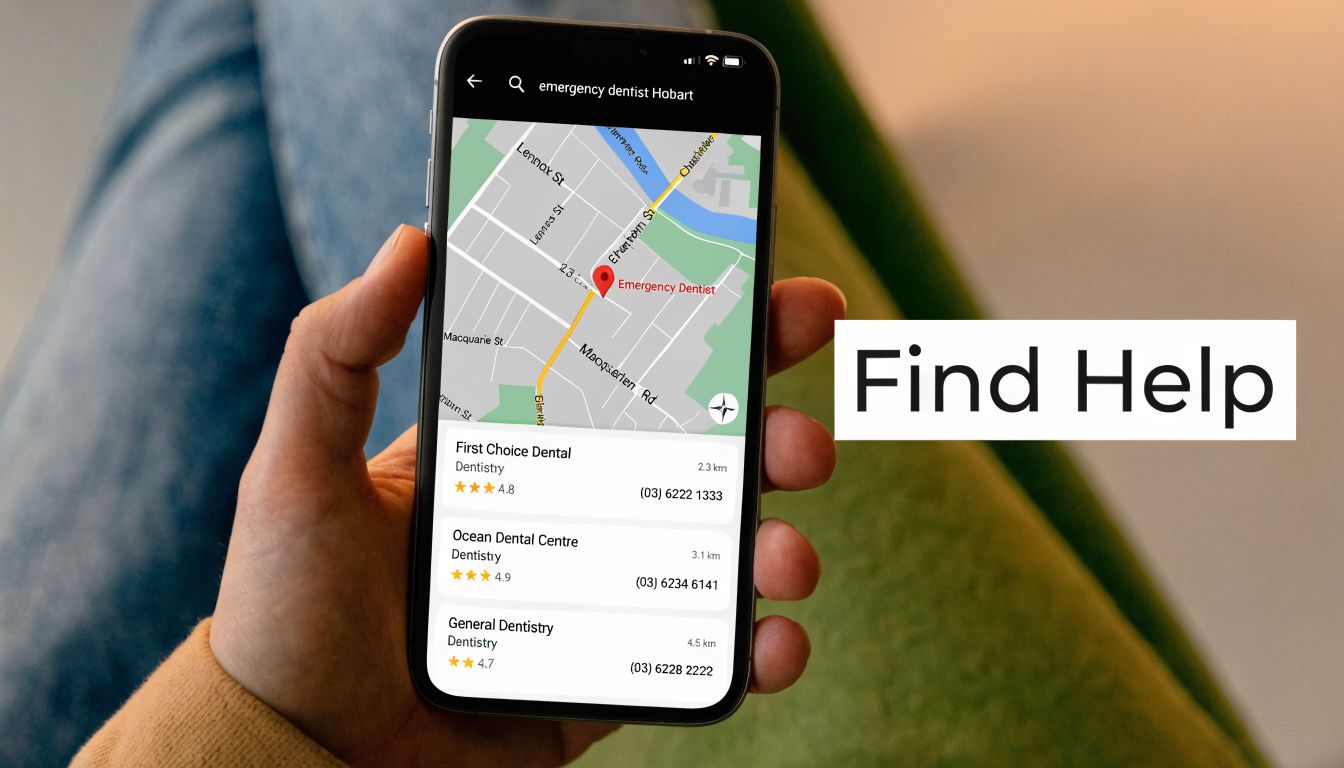
A useful starting point is to assume that “after hours” in Hobart often means extended weekday care until 6:00 p.m. and some Saturday appointments, rather than a guaranteed late-night service (Hobart after-hours clinic overview). That changes how you search and how quickly you need to call.
What to search for first
Use specific search terms rather than broad ones. These usually work better:
- after hours dentist hobart
- emergency dentist hobart
- Saturday dentist hobart
- dentist open now hobart
- child emergency dentist hobart if the injury involves a child
Then check the clinic’s own website, not just the map listing. Opening hours on listings can be out of date. A website may also say whether the clinic handles trauma, swelling, broken teeth, or children’s emergencies.
What to look for on the clinic website
Some websites are clear. Others make every problem sound routine. You need to know whether they can help tonight or whether they’re inviting you to leave a form.
Look for these signs:
| What to check | Why it matters | |---|---| | Same-day emergency wording | Suggests they keep space for urgent cases | | A phone number shown clearly | You need direct contact, not a contact form only | | Specific mention of swelling, trauma, or broken teeth | Indicates practical emergency experience | | Saturday hours or extended hours | Helpful when weekday options are gone | | Information for families or children | Useful if the emergency is paediatric |
Call before you travel
This saves time, frustration, and sometimes money. A receptionist or on-call team member can tell you whether the dentist is available, whether your problem fits what they can manage, and what you should do before arrival.
If you need a direct point of contact for a clinic, make sure you use a page that lists current details clearly, such as a dental clinic contact page with phone and booking details.
Here’s a practical phone script you can use:
- “I’ve got severe tooth pain and facial swelling. Are you seeing emergencies today?”
- “My child has chipped or knocked a tooth. Do you treat paediatric emergencies?”
- “What’s the next available appointment time?”
- “What should I do before I come in?”
- “What are your after-hours fees, and is there an additional emergency call-out charge?”
- “Do you accept my health fund, Medicare for eligible children, or DVA?”
> The best call is a short one. State the problem, the age of the patient, the swelling or bleeding if present, and ask for the soonest safe appointment.
Private dentist or hospital
Often, people hesitate. A private emergency dentist and the hospital don’t serve exactly the same role.
A private dentist is usually the better first option when: - the problem is clearly dental - you need treatment for a broken tooth, lost filling, cracked crown, abscess, or toothache - you want the tooth assessed and stabilised by someone with dental equipment
The hospital is more appropriate when: - swelling is becoming severe - there’s uncontrolled bleeding - there’s a significant facial injury - the person is unwell beyond the tooth problem itself - no private dental help is available and the condition is escalating
The trade-off is straightforward. A private dentist is better set up to treat the tooth itself. A hospital is there for broader medical risk, especially when the issue goes beyond a straightforward dental procedure.
A common Hobart frustration for parents
Parents often assume a child-friendly after-hours option will be easy to find. It often isn’t. Plenty of clinics treat children during normal business hours, but that’s different from having a late-day or urgent paediatric slot when a child falls at sport or hits a front tooth after school.
That’s why the phone call matters so much. Ask directly whether the clinic is comfortable managing children’s dental trauma. Don’t assume all emergency listings mean the same thing.
Understanding the Costs of Emergency Dental Care
Pain makes people focus on the immediate problem. Cost catches up a few minutes later, usually when you’re about to book. It’s one of the biggest reasons people delay calling.
The short version is this. After-hours care usually costs more because the clinic is creating urgent access outside standard scheduling, often with shorter notice and more complex triage. That higher fee doesn’t always mean a more complicated treatment. Sometimes it reflects the timing and the disruption to the normal day.
What to expect on price
In Tasmania, after-hours visits can be significantly more expensive than standard care. Data attributed to ADA Tasmania indicates an after-hours dental visit can cost 2.5 times a standard appointment, with average costs around $450 (after-hours dental fee reference). That doesn’t tell you what your exact bill will be, because treatment still depends on the problem. It does tell you not to assume it will be priced like a routine check-up.
That’s why asking about fees upfront isn’t awkward. It’s sensible.
What to ask before you confirm the booking
A good fee conversation is direct and calm. Ask these questions before you leave home:
- Is there an after-hours consultation fee?
- Are X-rays included or billed separately?
- If the dentist provides treatment tonight, what kinds of treatment commonly change the cost?
- Will I be paying for temporary pain relief and stabilisation only, or could a larger procedure happen at the same visit?
- Do you offer payment options if treatment becomes more involved?
If the clinic can’t give an exact figure over the phone, they should still be able to explain the consultation cost and what might increase it.
> Cost rule: Ask for the consultation fee first, then ask what the dentist can realistically do in that visit.
Health funds, Medicare, and DVA
Payment support varies. Some clinics accept private health insurance claims on the day. Some can process eligible child dental items through Medicare where appropriate. DVA arrangements may also apply for eligible patients, depending on the treatment and clinic setup.
The important point is not to assume. Ask specifically: - whether your fund can be used on the day - whether a child may be eligible for Medicare-funded dental care - whether DVA is accepted for emergency treatment - whether the clinic offers staged treatment if the immediate goal is to settle pain first
For a general overview of payment pathways, accepted funding options, and what patients are usually asked to bring, a patient information page for dental visits and payment support can be helpful.
What works and what doesn’t
What works is getting the painful or infected problem assessed promptly, even if the first visit is mainly about stabilising it.
What doesn’t work is delaying for days because you’re hoping the fee might somehow disappear. Dental infections and fractures rarely become cheaper by being ignored. They usually become harder to manage.
Your After Hours Appointment What to Expect
Walking into an emergency dental appointment feels easier when you know the likely sequence. Most after-hours visits are focused, practical, and narrower than a normal general exam.
The first few minutes
The team will usually start by working out how urgent the problem is. That means checking where the pain is, whether there’s swelling, whether there has been trauma, and whether there’s any bleeding or difficulty coping.
Bring these if you can: - Photo ID and payment card - Health fund, Medicare, or DVA details if relevant - A list of medicines - Any broken tooth fragment, crown, or appliance piece - Details of when the pain or injury started
The visit is often about stabilising the problem
This is the part many patients don’t expect. An emergency appointment is often designed to get you comfortable, control infection, and prevent further damage, not necessarily to complete every final step that night.
That may mean the dentist: - smooths a sharp broken edge - places a temporary material - drains or relieves pressure where appropriate - prescribes or recommends the next steps based on the clinical finding - advises a return visit for definitive treatment
> A successful emergency visit isn’t always the one that “finishes everything”. It’s the one that makes the situation safe and manageable.
What follow-up can look like
Once the immediate problem is under control, you may need a planned appointment for full treatment. That could involve restoring the tooth, reassessing the nerve, reviewing healing, or discussing whether the tooth can be saved.
If you want a general idea of how clinics handle urgent care and follow-up planning, this overview of emergency dental care and urgent appointments explains the usual purpose of emergency treatment.
Try not to judge the whole visit by whether every last detail is completed immediately. In emergency dentistry, good triage is often the most valuable first step.
Frequently Asked Questions About Hobart Dental Emergencies
Is every painful tooth an emergency
No. Some toothaches can wait until the next business day. But if the pain is severe, constant, associated with swelling, or stops you sleeping, don’t sit on it. Increasing pain usually means the tooth or surrounding tissues need proper assessment.
A mild twinge with no swelling is different from pain that keeps building.
What if no private clinic is open
If you can’t find a private dentist and the problem is getting worse, use common-sense escalation. Significant swelling, heavy bleeding, facial injury, or a person who seems generally unwell needs medical attention. If the issue is less severe, keep using the first-aid steps above and call again as soon as clinics reopen.
The key is matching the service to the risk. A hospital can help with medical urgency. A dentist is still the right clinician for the tooth itself.
Can an after-hours dentist treat children
Some can, but don’t assume all of them do. A clinic may advertise emergency appointments and still have limited comfort with paediatric trauma, especially for very young children.
When you call, ask: - Do you see children for dental injuries? - Have you treated knocked or chipped front teeth in children? - Should I bring the tooth or broken fragment? - Is there anything my child should avoid eating or drinking before we arrive?
If your child seems very distressed, keep your language simple and calm. Children usually take their cue from the adult beside them.
Will the dentist remove the tooth straight away
Sometimes yes, sometimes no. That depends on the cause of the pain, the condition of the tooth, swelling, your medical history, and what’s safest to do at that visit.
Emergency care is often about making the problem smaller and safer first. Final treatment may happen on the same day, or it may need to be planned once the immediate pain or infection is under better control.
Is a lost filling or crown an emergency
Not always, but it can become urgent if the exposed tooth is painful, very sharp, or likely to fracture further. Keep the crown or large broken piece if you still have it. Avoid chewing on that side and seek advice promptly, especially if the tooth is sensitive to air or temperature.
How do I know if swelling is serious
Swelling deserves respect. A small gum lump is one thing. A swelling that is spreading into the cheek, changing facial shape, or making you feel increasingly unwell is another.
> Don’t wait for severe swelling to become impossible to ignore. Early treatment is usually simpler than delayed treatment.
Should I worry about cost before I book
You should ask about cost, but don’t let uncertainty stop you from making the call. A brief phone conversation can often clarify the consultation fee, possible treatment pathways, and payment options. That’s much better than guessing.
Many people cope better once they know the likely first step. Clarity reduces panic.
What’s the most useful thing to say when I call
Keep it short and concrete. State: - your age or your child’s age - the main problem - whether there is swelling, bleeding, trauma, or a knocked-out tooth - when it started - whether you need an after-hours or same-day appointment
That gives the clinic enough information to triage you properly.
---
If you need a family-friendly dental team that offers same-day emergency appointments when you call before 1 pm, accepts major health funds, Medicare and DVA, and provides flexible payment options, Oasis Smiles Dental is a trusted option for patients in Tamworth and the New England region. Their team focuses on practical, calm care that gets pain under control first and then helps you plan the next step clearly.