

24 Hour Emergency Dentist Geelong: Get Immediate Care
A dental emergency rarely happens at a convenient time. It’s usually late, you’re tired, the pain is sharp, and every minute feels longer than it should.
If you’re searching for a 24 hour emergency dentist Geelong, the most useful thing right now isn’t a long list of clinic names. It’s a calm plan. You need to know if this is a true emergency, what to do in the next few minutes, who to call, and when a hospital is safer than a dental chair.
Geelong does have a strong emergency dental network. Private clinics in the region reserve daily same-day spots, some offer weekend help, and some provide after-hours contact options, including an SMS-only hotline in Lara, as noted by Dental Hub Geelong’s emergency dentistry information. That matters because clear triage matters. Dental problems make up about 5 to 10% of hospital Emergency Department visits in Victoria, or over 40,000 cases annually, according to Totally Smiles’ emergency dentist page.
Is It a True Dental Emergency How to Know When to Panic (and When Not To)
Pain makes everything feel urgent. But not every dental problem needs the same response.
The first job is to sort your situation into one of three buckets. Hospital now, dentist urgently, or book a regular appointment. That single decision stops panic from running the show.
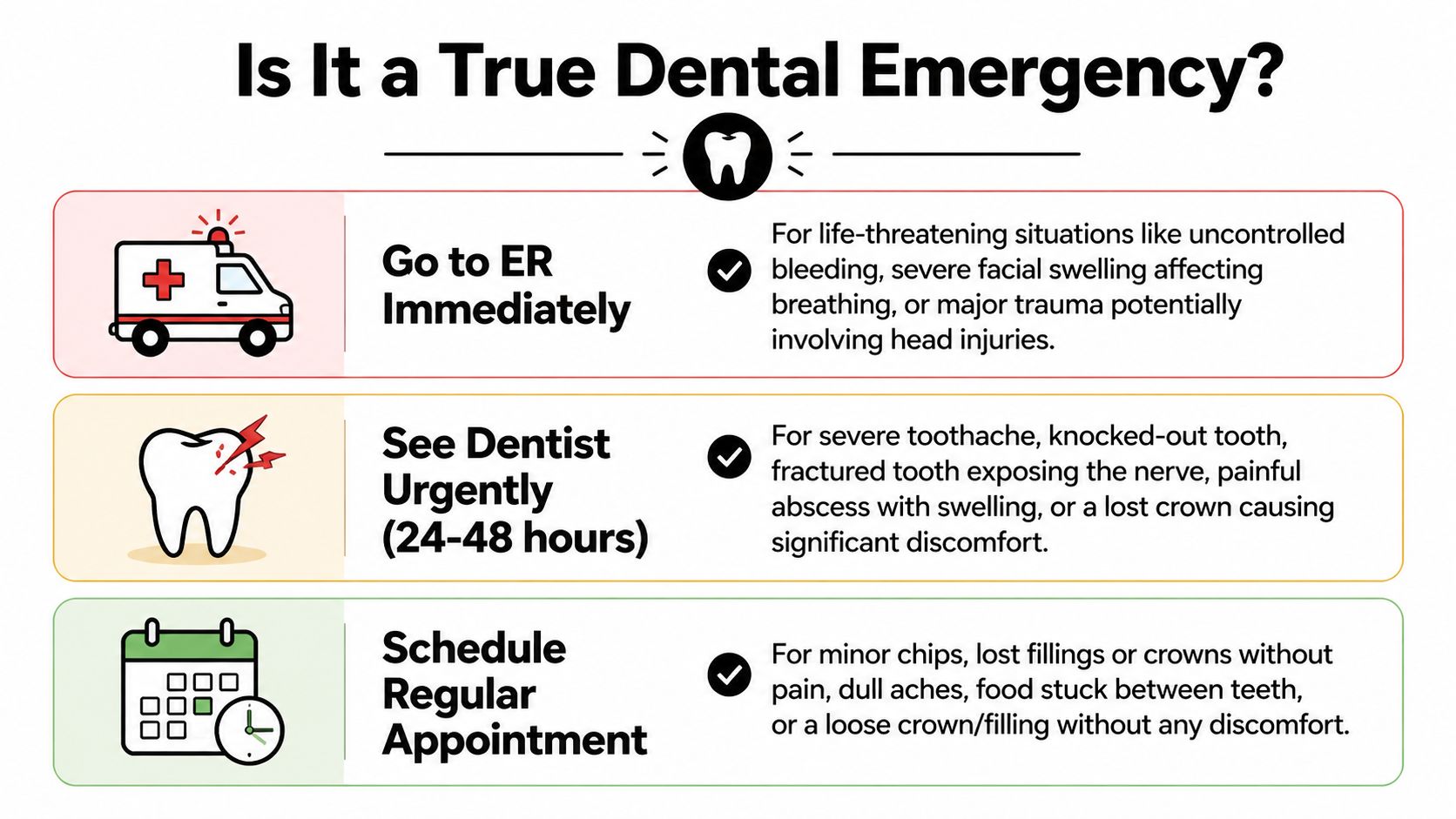
The quick rule
If the problem affects breathing, swallowing, heavy bleeding, or major facial trauma, skip the dentist and get medical help.
If it’s a tooth problem causing strong pain, swelling, or damage, you usually need an emergency dentist.
If it’s annoying but stable, it can often wait until normal hours.
Here’s a simple guide.
| Symptom | Urgency Level | Action Required | |---|---|---| | Uncontrolled bleeding from the mouth | Go to hospital immediately | Apply firm pressure with clean gauze and seek emergency medical care | | Facial swelling that is getting worse, or trouble breathing or swallowing | Go to hospital immediately | Seek hospital care urgently | | Major accident involving face, jaw, or possible head injury | Go to hospital immediately | Go to Emergency Department | | Knocked-out adult tooth | See dentist urgently | Follow first aid steps at once and call an emergency dentist | | Severe toothache that won’t settle | See dentist urgently | Call for same-day or next available emergency care | | Broken tooth with severe pain or visible nerve exposure | See dentist urgently | Keep area clean and arrange urgent dental treatment | | Abscess, gum swelling, or pus with pain | See dentist urgently | Contact a dentist quickly because infection can spread | | Lost crown or filling with strong sensitivity or pain | See dentist urgently | Protect the tooth and book urgent treatment | | Minor chip with no pain | Schedule regular appointment | Avoid chewing on it and arrange a check-up | | Lost filling with no discomfort | Schedule regular appointment | Keep the area clean and book soon | | Dull ache that comes and goes | Schedule regular appointment | Monitor and book a dental exam | | Whitening questions, routine cleans, old stains | Schedule regular appointment | Book standard care |
What counts as a true emergency
A true dental emergency is a problem where delay can mean serious harm. A knocked-out adult tooth sits in this group because time matters. So do severe infections, large fractures, and pain that becomes impossible to manage.
A useful way to think about it is this. Some dental problems are like a cracked windscreen. You should fix them soon. Others are like a flat tyre on the highway. You stop and deal with them now.
> Practical rule: If you can’t sleep, can’t eat, can’t close your mouth comfortably, or the swelling seems to be spreading, treat it as urgent.
What feels scary but can usually wait
A chipped tooth without pain often looks worse than it is. A lost filling can also wait a short time if the tooth isn’t sensitive. Food trapped between teeth can mimic a toothache too.
That doesn’t mean ignore it. It means you have enough time to stay calm, rinse gently, avoid chewing on that side, and organise care in business hours.
If the tooth is already beyond saving, a dentist may discuss options such as tooth extraction treatment. But don’t assume that’s where this ends. Many emergency visits are about stabilising the problem first and making a better long-term plan later.
Why this first decision matters
People often lose time by doing the wrong thing first. They wait too long with an abscess. Or they sit in a dental waiting room with a problem that really belongs in hospital.
Clear triage protects you. It also protects local health services. Geelong’s emergency dental system works best when people match the problem to the right place.
Your First 30 Minutes What to Do Before You Call the Dentist
The first half hour matters because small actions can stop things getting worse. You don’t need special training. You just need a clear sequence.
Start with two basics. Stay upright if there’s swelling or bleeding, and don’t poke the area with fingers, tweezers, or home repair kits.
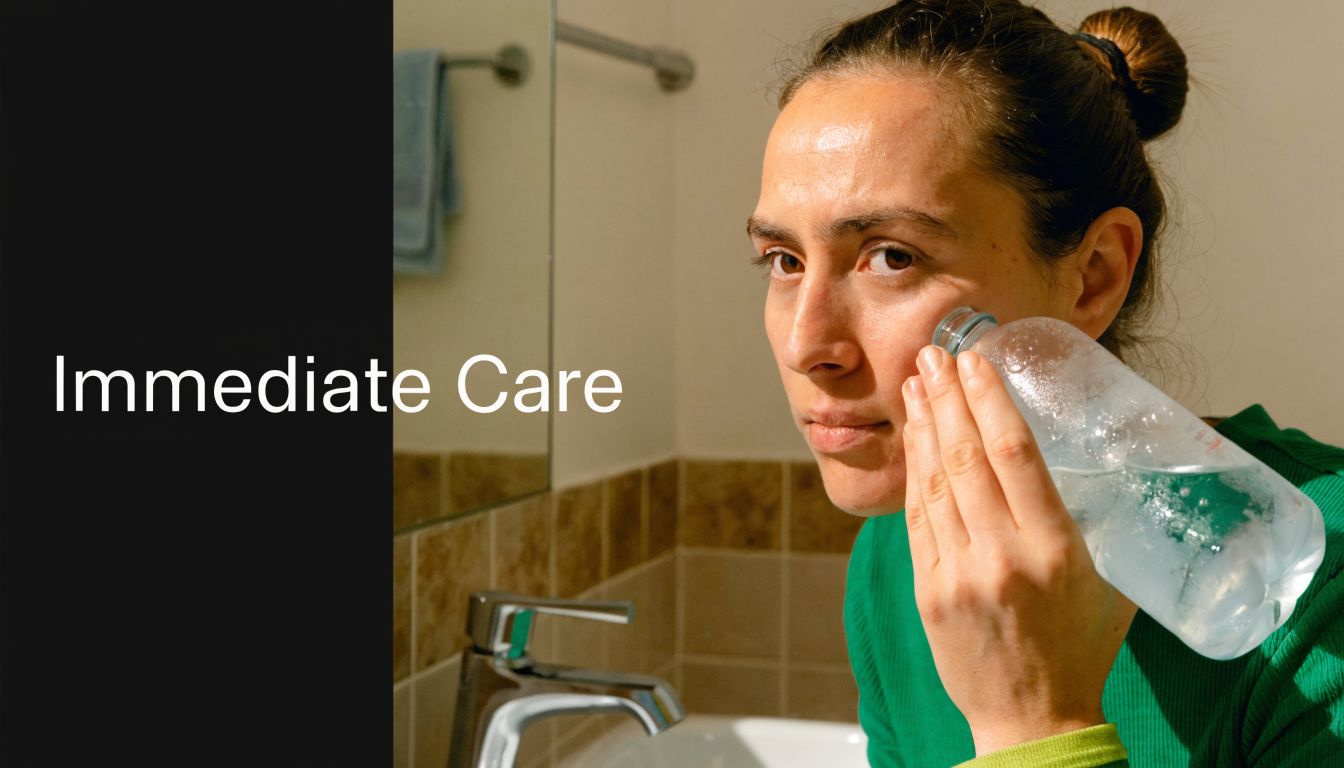
If a tooth has been knocked out
This is one of the few moments in dentistry where every minute counts. For a knocked-out tooth, an extraoral dry time over 60 minutes can cause irreversible damage to the periodontal ligament, dropping long-term reimplantation success from over 90% to less than 50%, according to Paediatric Dental Home’s emergency dentistry guidance.
Do this in order:
- Pick the tooth up by the crown only. That’s the chewing part you normally see in the mouth. Don’t touch the root.
- If it’s dirty, rinse it gently. Use milk or saline if available. Don’t scrub it.
- If possible, place it back in the socket gently. Only if it fits easily and this is an adult tooth.
- If you can’t reinsert it, keep it moist. Milk works as a temporary holding liquid. Think of it as a life-preserver, not a cure.
- Call an emergency dentist immediately.
For practical after-care guidance while you organise help, keep a trusted patient information page bookmarked on your phone so you’re not searching while stressed.
> Handle the tooth like a tiny transplant. The root surface is delicate, and rough handling can reduce the chance of saving it.
If you’ve got a severe toothache
Toothache often comes from a deep cavity, inflammation, infection, a cracked tooth, or a food trap. The goal at home is to lower irritation, not to “fix” the cause.
Try this:
- Rinse gently with warm water. This can clear debris around the sore tooth.
- Floss carefully. Sometimes something stuck between teeth is the whole problem.
- Use a cold compress on the cheek. Wrap it in cloth and apply it in short bursts.
- Take pain relief only as directed on the packet. If you’ve also got bleeding, avoid anything that may worsen that unless a medical professional has told you otherwise.
- Don’t place aspirin on the gum or tooth. It can irritate the tissue.
If a filling or crown falls out
This can feel dramatic, but the immediate risk is usually sensitivity or further breakage.
Take these steps:
- Keep the area clean.
- Avoid chewing on that side.
- Keep the crown if you still have it.
- Don’t glue it back with household products.
A lost restoration is like losing the protective cap on a bottle. The tooth underneath may be exposed, but careful handling usually buys you time until the dentist can assess it.
If you think it’s an abscess
An abscess often shows up as throbbing pain, swelling, tenderness, or a bad taste in the mouth. This is the one people most often underestimate.
Do this now:
- Rinse with warm salty water
- Stay upright rather than lying flat
- Use a cold compress on the outside of the face
- Arrange urgent dental care
- If swelling starts affecting breathing or swallowing, go to hospital
What not to do
A short list helps when you’re distressed.
- Don’t use super glue or hardware glue
- Don’t delay because the pain settled for an hour
- Don’t put heat on facial swelling
- Don’t keep testing the sore tooth with your tongue
Who to Call A Verified List of Geelong Emergency and After Hours Dentists
It is 9:40 pm. Your cheek is throbbing, your child is crying, or you are holding a tooth in a tissue and trying to decide who to call first.
This is the point where people lose time. Under stress, it helps to use a simple order, like following a fire escape plan instead of picking a route on the spot. Your goal is not to find the perfect clinic. Your goal is to reach the first appropriate service that can safely assess you.
Start with the nearest realistic option
Use this order:
- Call a local clinic that offers same-day emergency appointments.
- If it is after hours, follow that clinic’s recorded emergency instructions or after-hours process.
- If your symptoms are worsening while you search, widen the radius and call the next option straight away.
If you want one local number saved in advance, keep an Oasis Smiles Dental contact page for urgent dental help in your phone before you need it.
Verified emergency and after-hours contacts
Dental Hub Geelong Phone: (03) 4224 0066 What’s useful: accepts dental emergency bookings and offers online booking, which can help if calling is difficult.
Geelong Dentist Clinic Phone: 1300 657 033 What’s useful: open 6 days a week with early morning and late evening availability, and daily emergency appointments for same-day treatment whenever possible.
Geelong Dental Group Phone: (03) 5221 8452 What’s useful: same-day appointments including weekends, Friday and Saturday evening phone help, Sunday assistance, and an emergency list for cancellations.
Totally Smiles Geelong Phone: (03) 5229 8721 Address: 17/19 James St What’s useful: states 24/7 emergency availability on its Geelong emergency page.
Dentists & Doctors near Lara Emergency SMS hotline: 0488 811 456 What’s useful: outside standard hours, this service uses an SMS-only emergency hotline. Text your name, date of birth, and the issue so the dentist can respond.
Paediatric Dental Home Geelong West Phone: 1300 100 PDH What’s useful: prioritises children needing urgent attention. After hours, it directs urgent child cases to specialist hospital pathways.
Royal Dental Hospital of Melbourne Phone: (03) 9341 1000 What’s useful: public option for severe dental issues and after-hours referral pathways when private care isn’t suitable.
Royal Children’s Hospital Phone: (03) 9345 5522 What’s useful: after-hours option for urgent paediatric dental emergencies when directed by a child dental provider.
Bannockburn Dental Phone: (03) 5281 1899 What’s useful: phone triage for urgent wisdom tooth and swelling-related problems, with pre-arrival guidance.
How to choose quickly when several clinics appear suitable
Choose based on the problem in front of you.
A knocked-out adult tooth needs the fastest possible call. A child with facial swelling may need a paediatric pathway. A broken crown with no severe pain can usually wait for the next available urgent slot. Under pressure, this kind of sorting matters more than comparing websites.
If one clinic cannot see you, ask one direct question before hanging up: “Who should I call next based on these symptoms?”
What to say when you call
You will usually get faster triage if you give the headline first.
- State the main problem clearly. “My adult tooth has been knocked out.”
- Say when it happened. “It started about 30 minutes ago.”
- Mention swelling, bleeding, fever, trauma, or pus.
- Say if the patient is a child.
- Ask whether you should come in now or be assessed elsewhere.
If the clinic uses SMS triage, keep the message short and factual. Name, date of birth, the main symptom, and when it started.
If nobody answers
Do not spend the next hour calling the same number again and again.
Move to the next verified option. If your face is swelling, bleeding is heavy, or the injury involves major facial trauma, stop searching and get urgent medical assessment.
When to Skip the Dentist and Go Straight to the Hospital
Most dental pain belongs with a dentist. Some situations do not.
The hospital is the right place when the danger isn’t just the tooth. It’s your airway, your blood loss, or the possibility of a wider medical injury.
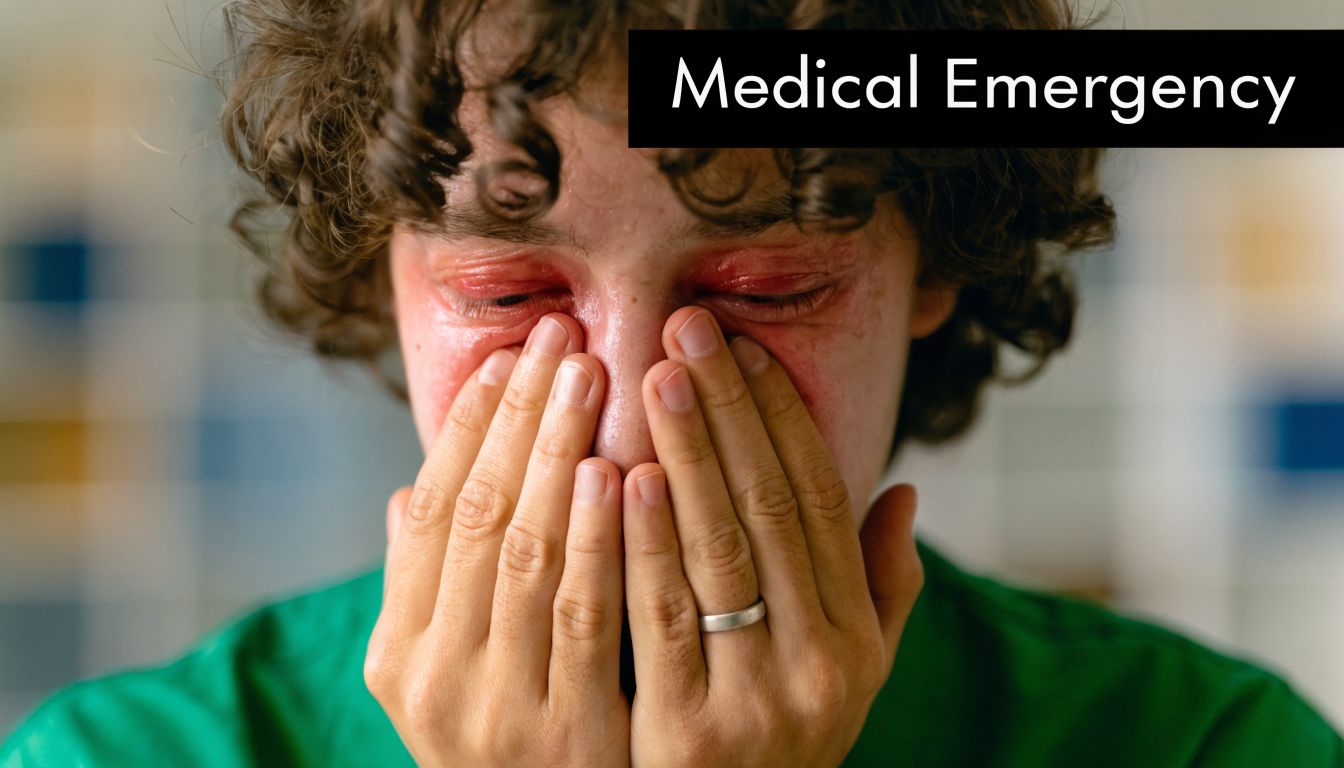
Go to hospital immediately if any of these are happening
- You’re struggling to breathe
- You can’t swallow properly
- Bleeding from the mouth won’t stop with pressure
- Facial swelling is spreading quickly
- You’ve had a major accident involving the face or jaw
- There may also be a head injury
- You feel seriously unwell with the dental problem
These aren’t “wait and see” symptoms.
Why swelling can become dangerous
A tooth infection doesn’t always stay local. Untreated dental infections can progress to Ludwig’s angina, which is a life-threatening cellulitis of the floor of the mouth and requires immediate hospital intervention, as explained by Barwon Health Community Dental Service Belmont.
That’s why severe swelling under the jaw, floor of mouth swelling, trouble swallowing, or a muffled voice should push you toward emergency medical care rather than another round of phone calls to dentists.
> Swelling near the airway is different from ordinary dental pain. In that moment, breathing matters more than the tooth.
What to do on the way
Keep it simple.
- Stay upright
- Don’t lie flat if swelling is significant
- Apply pressure with clean gauze if there’s bleeding
- Bring any knocked-out tooth or broken tooth fragment with you if you have it
- If symptoms are severe, call 000
Where people lose time
The common mistake is assuming every mouth problem belongs in a dental clinic. If the face is rapidly swelling, the jaw may be broken, or bleeding won’t stop, the issue has moved beyond routine dental management.
A dentist may still become part of your care later. The hospital is just the safer first stop.
Navigating the Cost of Emergency Dental Care in Geelong
A lot of people reach the hardest part of a dental emergency after they decide to get help. They start wondering, "How much is this going to cost?"
That question matters. Cost can delay care, especially when the problem starts at night, on a weekend, or in the middle of an already expensive week. The useful step is to break the bill into parts, the same way a mechanic separates inspection, temporary repair, and the full fix. Once you can see the pieces, the problem feels less foggy.
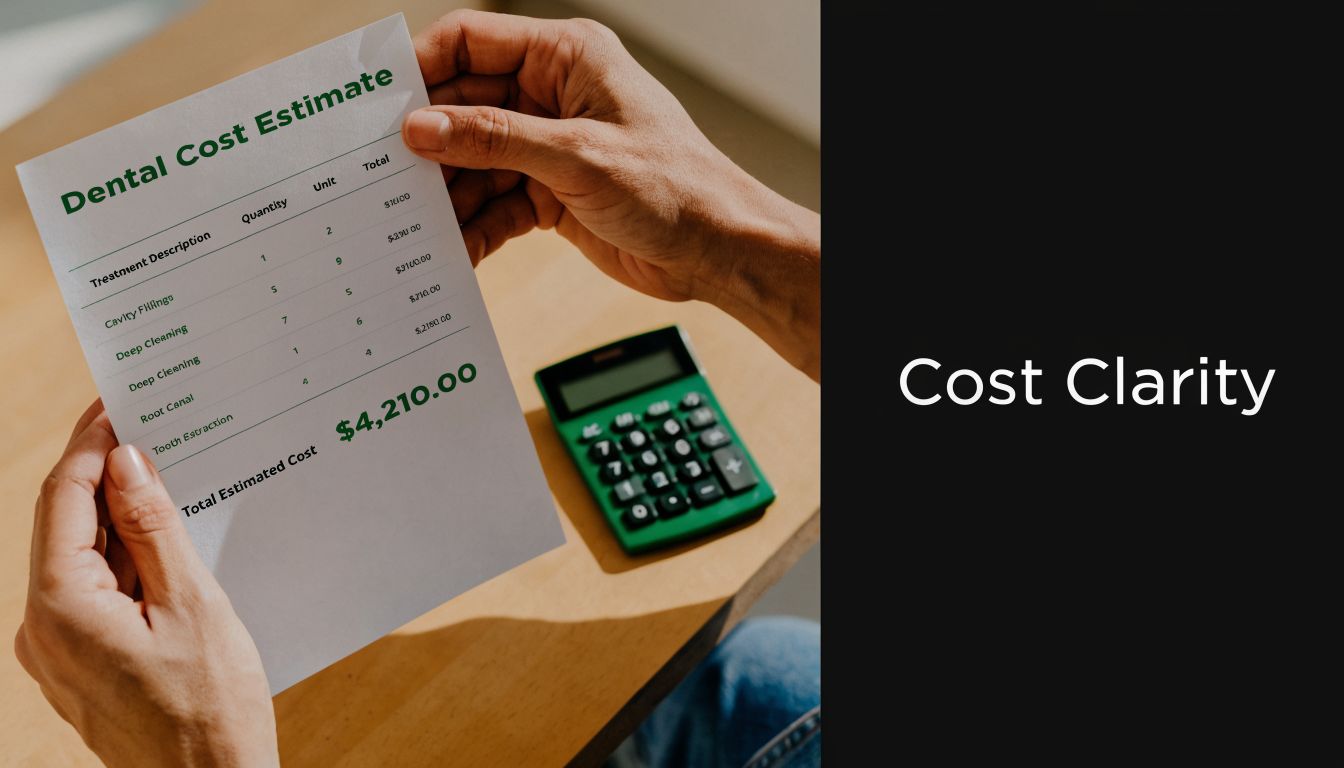
What you’re usually paying for
Emergency dental care often has several layers:
- The urgent assessment
- X-rays or imaging if needed
- Treatment to settle pain, bleeding, or infection
- A second visit if the tooth needs full repair later
That is why two people can both have "emergency dental treatment" and receive very different quotes. Smoothing a sharp broken edge is simple. Draining an infection, stabilising a damaged tooth, or starting root canal treatment is more involved.
A late-night or after-hours appointment can also cost more than a standard daytime visit. Ask that upfront, before you agree to treatment.
Ask for the plan in stages
When you are in pain, long explanations are hard to follow. Ask the clinic to split the treatment into three parts: what must happen today, what can wait a few days, and what may be needed later.
These questions help:
- What is the minimum treatment needed today
- Will today’s treatment stop the problem, or just stabilise it
- What will the next step likely cost
- Are there lower-cost temporary options
- Do you offer payment plans
- Do you accept private health insurance, DVA, or Medicare where eligible
This step matters because emergency dentistry often works like patching a leaking roof in a storm. The first job is to stop the immediate damage. The full repair may come after the situation is stable.
If money is the main barrier
Say it early. Reception staff hear this often, and it helps them guide you to the safest option.
You can use a simple script: “I need emergency dental care, but I’m worried about cost. What is the minimum safe treatment today, and do you have payment options or lower-cost pathways?”
That wording does two things. It tells the clinic you are not refusing care. It tells them you need help prioritising.
Some clinics can stage treatment. That may mean dealing with pain or infection first, then booking the full restoration later. Public dental pathways may also be relevant for eligible patients, so ask directly rather than assuming you will not qualify.
Be careful with assumptions about coverage
Adults are often surprised by what is and is not covered. Standard dental treatment is not generally covered by Medicare for many adults, though some patients may be eligible under specific programs or care arrangements. Private health insurance, DVA, and public dental services all have their own rules.
The safest move is to ask the clinic to explain your likely out-of-pocket cost before treatment starts. Plain numbers reduce panic.
For families trying to prevent the next expensive emergency
Cost is not only about today’s appointment. It is also about avoiding the next crisis. A custom sports mouthguard often costs far less than treating a broken front tooth, especially for children and teens who play contact sport. If that applies to your family, read about custom dental mouthguards for sport.
One more practical point. If you cannot afford the full fix today, do not disappear after the pain settles. Temporary care is a pause button, not the end of the problem. Returning for the planned follow-up is usually cheaper, simpler, and less stressful than waiting for the tooth to flare up again.
How to Prevent Your Next Dental Emergency
Most dental emergencies don’t begin as emergencies. They begin as something small that was easy to ignore.
A tiny crack becomes a weekend toothache. A cavity that didn’t hurt in March becomes swelling in August. Prevention is less about perfection and more about catching problems while they’re still quiet.
The habits that reduce drama later
A few basics do most of the heavy lifting:
- Keep regular check-ups. A dentist can spot decay, failing fillings, and cracked teeth before they become painful.
- Wear a mouthguard for sport. If you or your child plays contact sport, a proper custom-made mouthguard is far better than hoping for luck. If you’re comparing options, learn more about custom dental mouthguards.
- Don’t use teeth as tools. Opening packets, biting nails, and crunching ice all raise the risk of chips and fractures.
- Act early on odd symptoms. Sensitivity, a bad taste, food trapping, or a loose filling are warnings, not inconveniences.
- Keep daily care boring and consistent. Brushing and flossing won’t feel urgent today. That’s exactly why they work.
Think of prevention as maintenance
Your teeth are more like tiles than muscles. They don’t heal themselves well once they’re cracked, decayed, or infected.
That’s why prevention saves more than pain. It often saves treatment time, stress, and difficult decisions after hours.
For children and teenagers
Sport, bikes, playgrounds, and hard snacks create the classic mix for dental accidents. If your child is active, keep a small dental emergency note in your phone with your preferred clinic, after-hours numbers, and the basic knocked-out tooth steps.
That kind of preparation feels unnecessary until the day it isn’t.
Your Emergency Action Plan and Frequently Asked Questions
When a dental problem hits, keep the plan simple.
Your quick action plan
- Check if it’s hospital-level. Breathing trouble, severe swelling, uncontrolled bleeding, or major trauma means hospital.
- Protect the area. Cold compress, gentle rinse, pressure for bleeding, keep a knocked-out tooth moist.
- Call a verified clinic fast. Use the nearest realistic option, not the perfect one.
- Describe the problem clearly. Pain, swelling, trauma, child or adult, and when it started.
- Ask about cost early if needed. Don’t wait until the chair to mention financial stress.
Common questions
What if my child has a dental emergency after hours? Call a clinic that treats children if possible. If it’s after hours and the issue is serious, follow the clinic’s after-hours advice. If there’s major swelling, trauma, or your child seems medically unwell, go to hospital.
Can I wait until morning if the pain settles down? Sometimes pain eases briefly even when the underlying problem is getting worse. If there’s swelling, trauma, a broken tooth, or severe earlier pain, still get advice promptly.
What if I’m extremely anxious about treatment? Tell the clinic when you call. Many practices can adjust how they manage emergency care for anxious patients and explain options in a calmer, slower way.
What if I can’t afford treatment? Say so straight away. Ask about the minimum urgent treatment, staged care, payment options, and any subsidy or public referral pathways.
---
If you need a caring dental team for ongoing check-ups, prevention, restorative care, or same-day emergency support in Tamworth, Oasis Smiles Dental offers patient-centred treatment for families, children, anxious patients, and adults who want clear advice without pressure. Call the clinic to discuss your needs and the team can help you take the next step calmly.