

Scaling of Teeth: A Guide to Your Healthiest Smile
If you’re brushing every day and still noticing a rough patch behind your front teeth, yellowish buildup near the gums, or a clean feeling that never quite lasts, you’re not doing anything “wrong”. That’s one of the most common things patients tell us before a scale.
A lot of people in Tamworth assume brushing and flossing should remove everything. They help a lot, but they can’t always remove hardened deposits once they’ve formed. That’s where scaling of teeth comes in. It’s a professional clean designed to remove buildup that home care cannot shift.
If the word “scaling” sounds a bit intense, don’t worry. In practice, it’s a very routine part of dental care. The main job is simple. Clean away plaque and tartar, protect the gums, and make it easier for you to keep your mouth healthy at home.
Why Brushing Alone Is Not Always Enough
A patient might do all the right things. Brush morning and night. Floss most days. Use a mouth rinse. Then they run their tongue along the inside of the lower teeth and feel a hard, crusty edge that won’t budge.
That hard edge is often tartar. Once it sticks to the tooth, your toothbrush can’t scrub it off. It’s a bit like trying to polish away scale that’s hardened inside a kettle. You can clean around it, but you usually can’t remove it properly without the right tools.
What people usually notice first
The first signs aren’t always dramatic. They’re often small, everyday things such as:
- A rough texture: especially behind the lower front teeth
- Gums that bleed: when brushing or flossing
- Stains that seem stuck: even after using a whitening toothpaste
- Bad breath that keeps returning: despite regular brushing
These signs don’t automatically mean anything serious is going on. But they do mean it’s worth having someone check whether the buildup is sitting near the gumline or under it.
> A scale isn’t about making teeth look polished for a day. It’s about removing the deposits that keep irritating the gums.
Why home care has limits
Brushing is excellent for soft plaque on the surfaces you can reach. Floss helps between teeth. Neither one is designed to chip off hardened calculus.
That’s why professional scaling matters. It reaches the places that are awkward, hidden, or already hardened over. For some people, that means a routine scale and clean. For others, especially if the gums are inflamed, it may mean a deeper gum treatment.
Understanding Plaque and Tartar Buildup
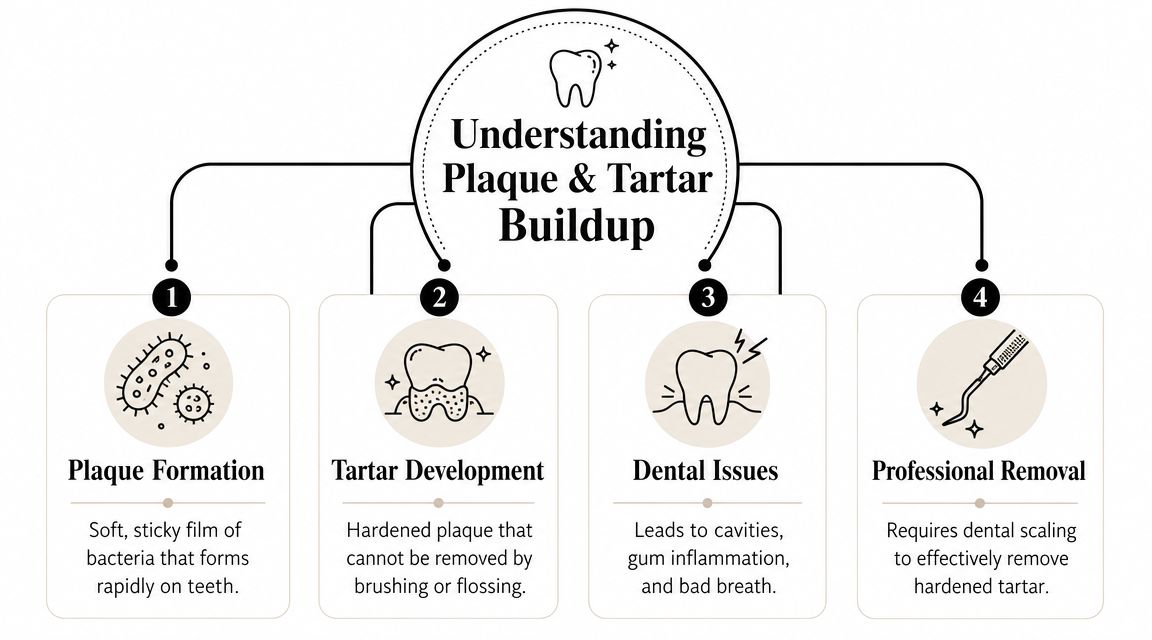
Plaque is a soft, sticky film of bacteria that forms on teeth. It starts building again not long after you brush. Because it’s soft, you can usually remove it with good brushing and cleaning between the teeth.
If plaque stays in place, it can absorb minerals from saliva and harden into tartar, also called calculus. That change matters because tartar behaves very differently. It’s firm, attached to the tooth, and far more difficult to remove.
Think of it like limescale
If you’ve ever looked inside a kettle, you’ve seen how mineral deposits harden over time. Wiping the kettle with a cloth won’t remove that scale once it’s set.
Your teeth can develop buildup in a similar way. Soft plaque is like the film you can wipe away. Tartar is like the hardened scale that needs a proper tool and a careful hand.
Why tartar causes trouble
Tartar doesn’t just sit there. Its rough surface makes it easier for more plaque to cling to the tooth. That can irritate the gums, which is why people often notice tenderness, puffiness, or bleeding around areas with buildup.
A lot of patients get confused here. They think, “If it’s hard, maybe it’s protecting the tooth.” It is the opposite. Hardened deposits near the gums give bacteria a place to hang on.
Why professional removal matters
A dental professional uses instruments designed to lift tartar away from the tooth without damaging the surface. That’s the purpose of scaling. It isn’t something to try at home with a metal pick from the internet.
If you’d like to understand how this links with gum inflammation and deeper gum problems, the gum disease information from Oasis Smiles Dental is a useful starting point.
> Practical rule: If the deposit feels hard and keeps coming back in the same spot, brushing harder usually won’t fix it. It often needs to be scaled off professionally.
Australia’s approach to preventive dental care has also become more organised over time. The first Australian dental hygienist course launched in 1976, and by 1985 all states had registration, which was followed by a 300% increase in professional scalings nationwide by 2000 according to the timeline of dental hygiene history.
The Two Main Types of Tooth Scaling
When people hear “teeth scaling”, they often picture one tool scraping the teeth. In reality, there are two main methods. Dentists and hygienists may use one or both during the same visit.
The choice depends on where the buildup is, how heavy it is, how sensitive you are, and how your gums are coping.
Manual scaling
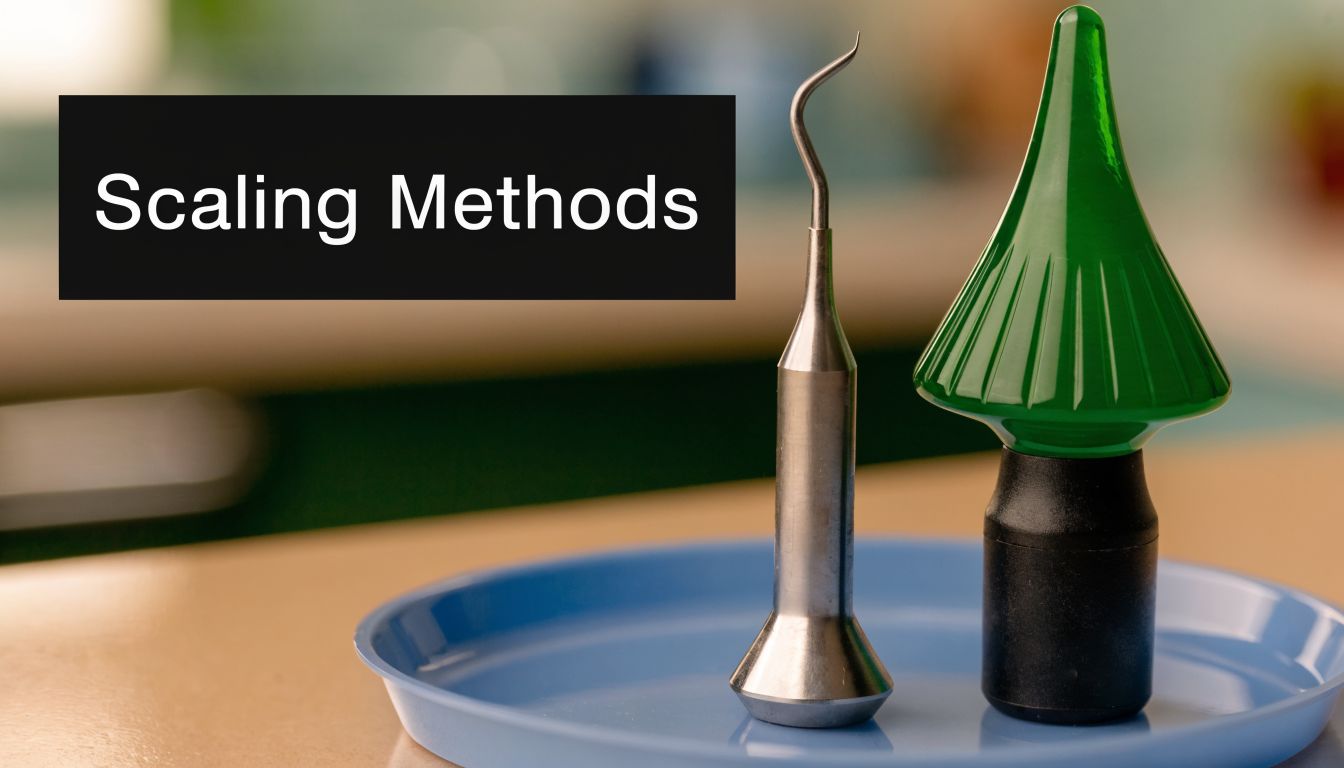
Manual scaling uses hand instruments, often called scalers or curettes. These are fine, shaped tools that let the clinician feel the tooth surface and gently remove deposits.
From a patient’s point of view, manual scaling can feel more deliberate and controlled. You may notice pressure rather than vibration. Some patients like that because the sensation is easier to predict.
Manual instruments are especially useful for detail work. If a tiny bit of tartar is left behind, hand instruments can help refine the clean.
Ultrasonic scaling
Ultrasonic scalers work differently. They use high-frequency vibrations to chip tartar away while a water spray flushes debris. This method is often quicker than manual scaling, though both achieve comparable clinical results when performed correctly, as explained in this overview of ultrasonic and manual scaling.
Patients usually describe the feeling as a buzzing or humming with cool water. It can sound dramatic, but the sound is often more noticeable than the sensation.
What the difference feels like in the chair
Here's a straightforward explanation:
- Manual scaling feels more tactile: You may feel pressure and individual strokes
- Ultrasonic scaling feels more mechanical: You may notice vibration, water, and sound
- Both can be combined: A clinician may use ultrasonic first, then hand tools for the finer areas
Which one is better
There isn’t one single answer for everyone. The “better” option depends on the person and the job that needs doing.
| Method | What it uses | What patients often notice | Typical use | |---|---|---|---| | Manual scaling | Hand instruments | Pressure, scraping sensation, steady pace | Fine detail and precise removal | | Ultrasonic scaling | Vibrating tip and water spray | Buzzing sound, water, quicker feel | Efficient removal of broader tartar buildup |
One more point matters. Cleaning below the gumline requires precision. After scaling, the clinician often checks the tooth surface with an explorer to feel for any remaining deposits. That’s how the treatment moves beyond a surface clean and becomes proper gum care.
A Step-By-Step Guide to Your Scaling Appointment
If you’re nervous about the unknown, it helps to know what usually happens from start to finish. Most scaling appointments are calmer than people expect.
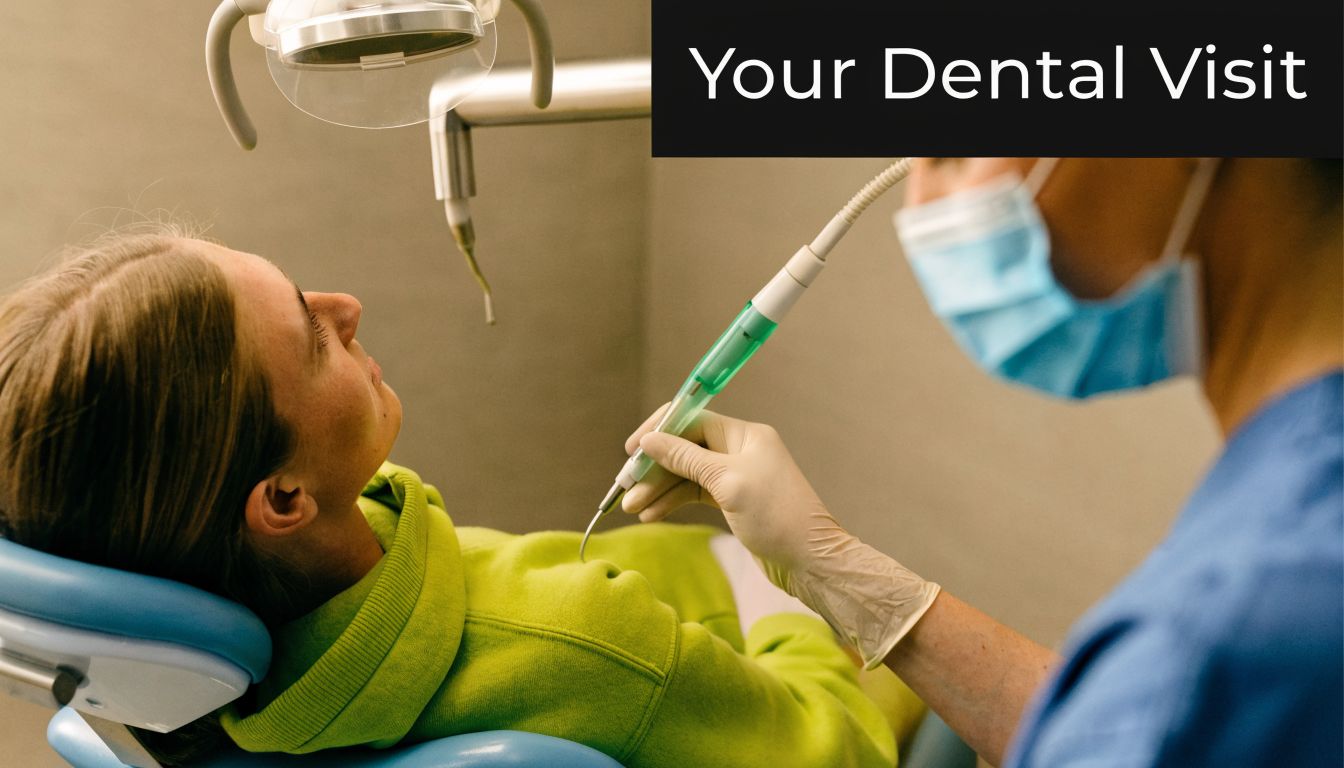
At the start, the clinician checks your teeth and gums, looks at where buildup is sitting, and works out whether you need a routine scale or something deeper. Sometimes modern imaging and digital records help with planning, especially if there are other dental needs going on at the same time.
What happens during the visit
A typical appointment often looks like this:
- Assessment first
- Comfort is discussed early
- The scaling begins
- Final checking
- Polish or follow-up advice
If you’re anxious, say it early
Dental anxiety is common, and it doesn’t always come from pain. Sometimes it’s the sound, the feeling of not being in control, or a bad past experience.
That’s why the method matters. A 2024 Australian Dental Journal study found that 35% of anxious adults preferred hand scaling for the feeling of “better control”, while sedation options at Oasis Smiles cut anxiety by 45%, as noted in this patient experience summary on scaling comfort and anxiety.
> If you’ve delayed care because you’re embarrassed or frightened, tell the team that plainly. It helps more than trying to “push through”.
For practical details before the day, including what to bring and general patient guidance, you can read the patient information page.
What if you need extra comfort
Some people manage well with reassurance and breaks. Others need local anaesthetic, especially when cleaning goes below the gumline. For very anxious patients, sleep dentistry can make treatment much more manageable.
Oasis Smiles Dental is one option in Tamworth that offers sleep dentistry alongside general preventive care. In day-to-day practice, that means nervous patients don’t have to choose between avoiding treatment and enduring an experience they dread.
Scaling Versus Root Planing Explained
People often use these terms as if they mean the same thing. They’re related, but they’re not identical.
A standard scale and clean usually focuses on removing plaque, tartar, and surface stains from around the visible parts of the teeth. Scaling and root planing goes deeper. It’s a treatment used for mild to moderate periodontitis, and it removes bacterial biofilm and calculus from below the gumline while smoothing the root surfaces to help the gums reattach, as explained by the Cleveland Clinic guide to scaling and root planing.
The simple difference
Think of a regular scale as cleaning the parts of the tooth you can mostly see.
Think of root planing as cleaning the hidden root area under the gum where bacteria have been sitting, then smoothing that surface so the gum has a better chance to heal against it.
Dental Scaling vs. Root Planing
| Feature | Standard Scaling (Scale & Clean) | Scaling & Root Planing (Deep Clean) | |---|---|---| | Purpose | Preventive removal of plaque, tartar, and surface buildup | Therapeutic treatment for gum disease | | Depth | Mainly at and above the gumline | Below the gumline and along root surfaces | | When it’s used | Routine maintenance or early buildup | Mild to moderate periodontitis | | Comfort needs | Often straightforward, sometimes mild sensitivity | Often needs local anaesthetic for comfort | | Goal | Cleaner teeth and healthier gums | Halt disease progression and support gum reattachment |
Why the distinction matters
A regular clean can make the teeth feel smooth. A deep clean is meant to treat disease.
That’s why a patient may be told they don’t need “just a clean”. They may need treatment under the gums. It can sound more serious, but the upside is clear. Treating the source of the problem early is much easier than waiting until teeth become loose or uncomfortable.
Benefits Risks and Recommended Frequency
The biggest benefit of scaling of teeth is that it removes the deposits that keep the gums inflamed. People often notice fresher breath and a smoother mouth first, but the long-term value is in protecting the teeth and the supporting tissues.
That matters in Australia. Periodontal disease affects about 30% of adults aged 25 to 44 and rises to over 70% in people aged 65 and older. Regular professional scaling can reduce the risk of tooth loss from periodontitis by up to 40%, according to this Australian evidence summary on periodontal disease and scaling.
Main benefits
- Healthier gums: Less irritation means less bleeding and swelling
- Less odour-causing buildup: Removing trapped deposits can improve breath
- Cleaner surfaces: Teeth feel smoother, which makes home cleaning easier
- Protection over time: Managing gum problems early can help you keep your natural teeth longer
Possible short-term downsides
Scaling is a routine treatment, but it can come with temporary after-effects. Most are mild and settle quickly.
You might notice:
- Sensitivity to cold: especially near the gumline
- Tender gums: usually for a short period after treatment
- A small amount of bleeding: particularly if the gums were inflamed before the appointment
> Worth knowing: If your teeth feel “more spaced” after a scale, the treatment didn’t create gaps. It removed buildup that had been sitting between the teeth or near the gums.
How often should you have it done
There isn’t a universal schedule that suits everyone. Some people do well with routine preventive visits. Others need more frequent gum maintenance because tartar forms quickly or their gums need closer monitoring.
Your best interval depends on things like your brushing habits, how your gums respond, whether you smoke, whether you have braces or crowded teeth, and how much buildup tends to return between visits. If you’re due for a check, the preventive care page explains the broader role of regular maintenance in keeping problems small.
Aftercare Costs and Common Questions
Once the scale is done, your mouth may feel very different. Smoother. Cleaner. Sometimes a little tender. That’s normal, especially if there was a lot of buildup to remove.
The first day or two should be simple. Be gentle, keep the area clean, and avoid overreacting to every sensation.
Aftercare that helps
A few practical habits make recovery easier:
- Brush gently: Use a soft toothbrush and light pressure near the gums
- Keep cleaning between teeth: Don’t stop flossing unless your clinician tells you to pause in a specific area
- Choose easy foods if tender: Soft, non-irritating meals can feel better for a short time
- Watch temperature sensitivity: Very cold drinks may sting briefly after treatment
If your gums were treated more extensively, your clinician may tailor that advice. Follow the instructions you’re given for your mouth, not someone else’s experience online.
What about cost in Australia
The cost depends on what kind of treatment you need. A routine preventive scale is different from periodontal treatment below the gumline. The number of areas treated, whether local anaesthetic is needed, and whether the treatment is completed in one visit or several all affect the fee.
Private health cover may help, depending on your extras policy and annual limits. Some patients may also be eligible for Medicare-linked or government-supported schemes in specific circumstances, and DVA support can apply for eligible veterans. The simplest approach is to ask for a written treatment plan before booking.
Common questions patients ask
Can I have scaling if I wear braces or Invisalign attachments
Yes, in many cases you can. In fact, orthodontic appliances can create extra plaque traps, so professional cleaning can be especially helpful. The clinician just needs to work carefully around brackets, wires, or attachments.
Will scaling make my teeth whiter
It can make teeth look cleaner and brighter by removing surface stain and tartar. But it doesn’t change the natural internal shade of the tooth the way whitening treatments aim to.
Is scaling safe during pregnancy
Many people can have routine dental cleaning during pregnancy, especially when gum inflammation is making home care harder. Your dentist will consider timing, comfort, and your medical history before planning treatment.
Can I scale my own teeth at home
No. Home scraping can damage enamel and gums, and it usually misses the areas that matter most. It can also push problems deeper rather than solving them.
Your Path to a Healthier Smile in Tamworth
Scaling of teeth sounds technical, but the idea is straightforward. Remove the hardened buildup. Calm the gums. Make daily cleaning more effective. Protect your teeth for the long run.
That’s especially important in regional communities. Periodontal disease rates are higher in regional Australia at 44.1% compared with 23.4% in cities, and access to care can be harder, as noted in this regional periodontal care overview. For families around Tamworth and the New England region, having local access to preventive care matters.
Why local care makes a difference
When care is close to home, people are more likely to keep up with it. That matters for parents juggling school runs, older patients wanting practical appointment options, and anxious patients who need a familiar team.
A local practice can also help you connect the dots between preventive care and the rest of your treatment. If you need ongoing gum care before restorative work, orthodontic planning, or a more complex dental procedure, it’s easier when the team already knows your history.
Taking the next step
If your teeth feel rough, your gums bleed, or it’s been a while since your last clean, don’t wait for pain to force the issue. A simple assessment can tell you whether you need a routine scale, deeper gum treatment, or just some guidance on home care.
If you’d like to organise an appointment or ask a question, the Oasis Smiles Dental contact page has the clinic details for Tamworth patients and families.
---
If you’re ready to book a dental check-up or ask about scaling, gum treatment, or options for anxious visits, contact Oasis Smiles Dental. The team supports patients across Tamworth and the New England region with family dental care, preventive treatment, and practical appointment guidance.