
Emergency Dental Frankston: Urgent Care for Tooth Pain
It usually starts at the worst time. You're eating dinner, something cracks, and suddenly one side of your mouth feels wrong. Or you wake at 2 am with a deep, throbbing toothache that won't let you get back to sleep. In that moment, you aren't thinking about dentistry in neat categories. You're wondering one thing. Do I wait, call a dentist, or go straight to hospital?
If you're looking for emergency dental Frankston advice, the first priority is to stay calm and make a clear decision. Some dental problems can wait a few hours with sensible first aid. Some need a same-day dental appointment. A smaller group needs urgent medical attention because the danger isn't the tooth itself, it's the swelling, bleeding, or trauma around it.
The hard part in Frankston is that delayed care can turn a manageable dental problem into something much bigger. Oral Health Victoria notes that dental emergencies are a major cause of preventable hospitalisations in the Frankston area, and comparable local government areas often sit 20 to 30% above state averages for these hospitalisations, showing why fast local care matters so much in practice according to Oral Health Victoria LGA oral health profiles.
That Sudden Pain A Dental Emergency Begins
A common call goes like this. "I bit on something hard. Now half the tooth feels sharp and cold air hurts." Another version is quieter but more serious. "I've had a dull ache for weeks and now my face feels puffy." Both are dental emergencies, but they don't carry the same level of risk.
What catches people off guard is how quickly dental pain can change. A cracked filling in the morning can become severe pain by afternoon. A tooth that's been sensitive on and off can suddenly flare because the nerve is involved. In some cases, what starts as pressure pain ends with treatment such as a root canal for an infected or inflamed tooth, because the problem has moved well beyond something a painkiller can settle.
Why delay causes trouble
In real life, people delay for ordinary reasons. Work. School pick-up. Cost concerns. Hoping it will settle. Dental problems rarely reward that approach.
> Practical rule: If the pain is worsening, waking you, or stopping you from eating normally, treat it as urgent even if the tooth looks normal from the outside.
Frankston residents also deal with a local access problem. It isn't always easy to tell who offers same-day care, who can see children, or who can help after business hours. That uncertainty is part of why people end up in pain for too long.
What matters most in the first hour
Focus on three questions:
- Can you breathe and swallow normally If not, this is medical urgency, not routine dental pain.
- Is there uncontrolled bleeding or major trauma If yes, hospital comes first.
- Is the problem localised to a tooth, filling, crown, gum, or jaw pain without breathing issues If yes, a dentist is usually the right first call.
Most emergencies feel frightening because they're sudden, not because they're all dangerous. The next step is sorting the urgent from the uncomfortable but treatable.
Should You Call a Dentist or Go to the Hospital
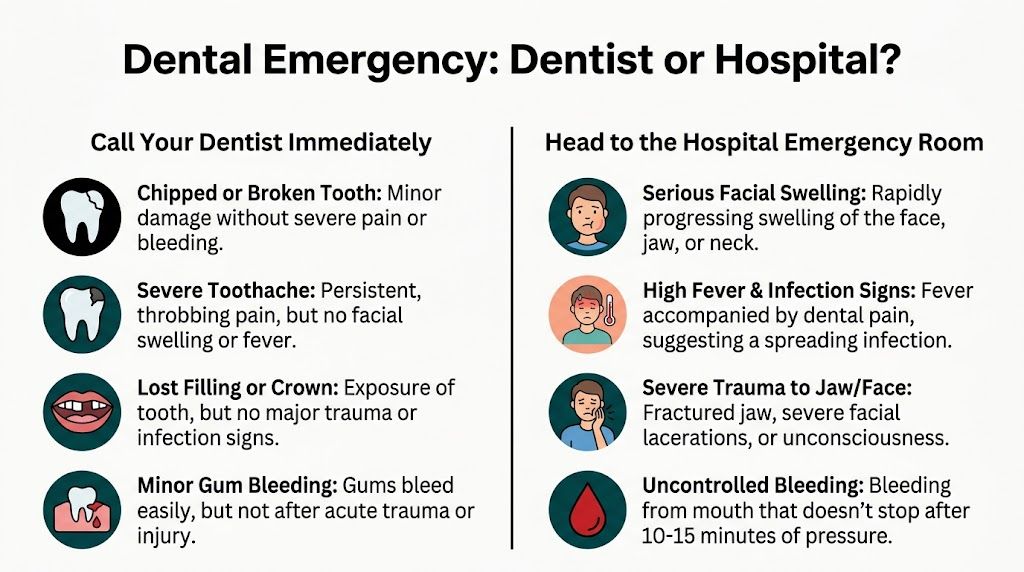
The safest way to decide is to triage by risk, not by pain alone. Some severe toothaches belong in a dental chair. Some moderate pain with spreading swelling belongs in a hospital.
If you need urgent help for a dental problem that sounds dental rather than medical, contact a clinic that offers emergency dentistry appointments and describe the symptoms clearly.
Call a dentist immediately
These problems are often urgent, but they're usually best managed by a dentist rather than a hospital emergency department:
- Severe toothache without major facial swelling Throbbing pain, pain on biting, or sensitivity that lingers can point to decay, nerve inflammation, a crack, or infection inside the tooth.
- Chipped or broken tooth If the tooth is fractured but the bleeding is minor and you can open and close normally, a dentist should assess it promptly.
- Lost filling or crown The tooth may be exposed, sensitive, and vulnerable to further fracture.
- Localised gum swelling A small, tender lump on the gum near one tooth can signal a dental abscess that needs treatment.
- Minor dental trauma A bumped tooth, loosened tooth, or lip cut without jaw injury still needs same-day advice.
Go to hospital emergency
Hospital is the right place when the problem may affect your airway, involve major trauma, or need medical support beyond dentistry.
| Situation | Why hospital is safer | |---|---| | Rapid facial swelling | Swelling in the face, jaw, or neck can spread and become dangerous | | Fever with dental infection signs | This may mean the infection isn't staying local | | Severe trauma to jaw or face | A suspected broken jaw, deep facial cuts, or loss of consciousness needs medical assessment | | Bleeding that won't stop after pressure | Ongoing bleeding after firm pressure needs urgent medical care |
> If swelling is making it hard to breathe, swallow, or speak normally, don't wait for a dental callback. Go to hospital or call emergency services.
The grey area patients struggle with
The hardest cases are the ones in between. Pain is bad, the face is a bit swollen, and it's after hours. In those cases, ask yourself whether the swelling is staying around the tooth and cheek, or whether it's spreading toward the eye, floor of mouth, or neck. A spreading pattern changes the urgency.
A hospital can help when there's a medical risk. A dentist is better equipped for the tooth itself. Hospitals generally don't provide full definitive dental treatment for a cracked tooth, lost filling, or decay-related toothache. They deal with the danger. The dentist deals with the cause.
First Aid You Can Do At Home Right Now
Before you get professional care, the goal is simple. Reduce pain, limit further damage, and avoid making the problem worse. That's especially important because the most common dental emergencies are usually related to tooth fractures and decay. Military dental data, used as a practical benchmark for emergency patterns, found that tooth fractures and caries account for 38.6% of emergencies, while pain needing endodontic treatment and stress-related tooth pain each make up about 16% in this PubMed indexed study.
For a severe toothache
This is the emergency people most often try to "push through". That rarely works well.
- Rinse gently with warm salty water. This can help clear debris around the tooth and calm irritated tissue.
- Floss once around the area. Food trapped between teeth can mimic or worsen severe pain.
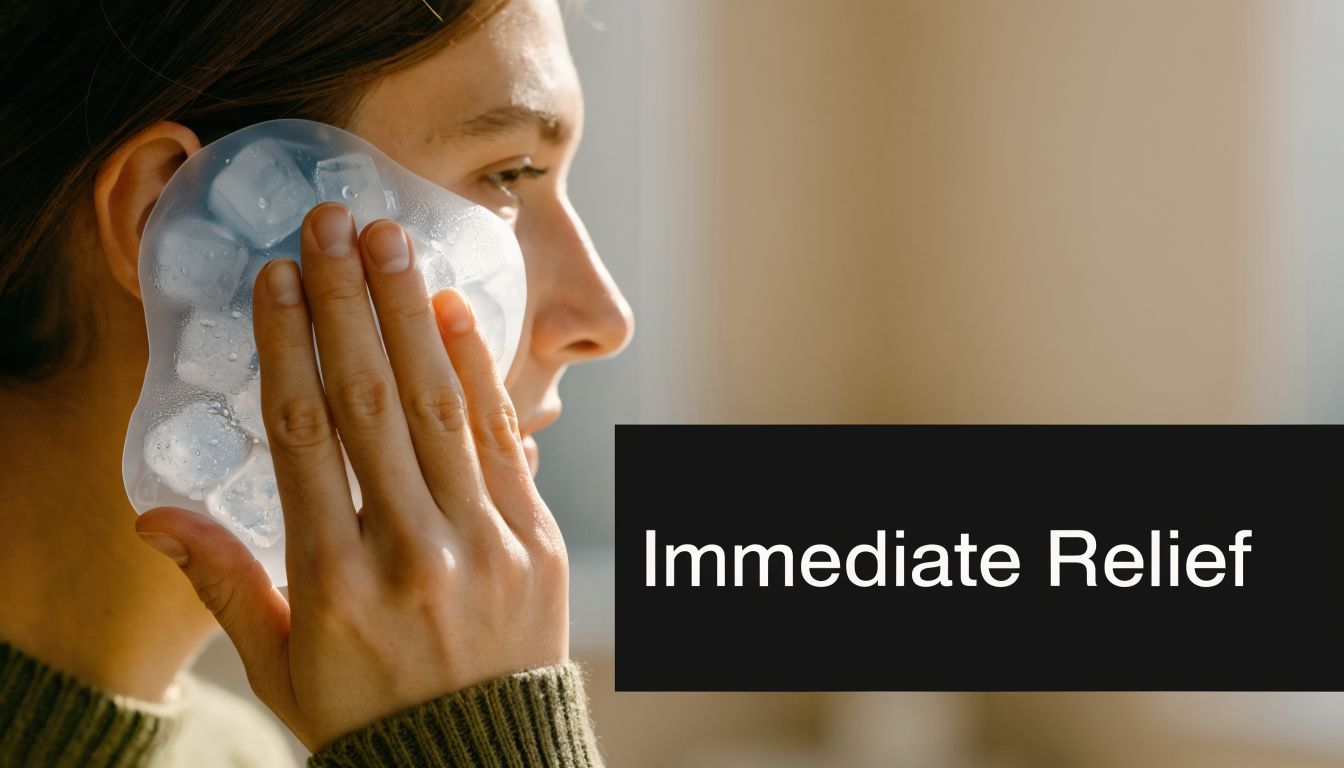
- Use a cold pack on the cheek. Hold it on the outside of the face in short intervals.
- Keep your head raised. Lying flat often makes throbbing pain feel stronger.
- Don't place aspirin on the gum or tooth. It won't fix the cause and can irritate or burn soft tissue.
If the pain is sharp when biting, avoid chewing on that side. That pattern often suggests a crack, inflamed nerve, or infection around the tooth root.
For a chipped or broken tooth
A broken tooth can range from a rough edge to a deep fracture.
- Rinse your mouth carefully to remove loose fragments.
- Keep any broken piece if you can find it. Bring it with you.
- Cover a sharp edge with sugar-free chewing gum or dental wax if it's cutting your tongue or cheek.
- Avoid hot, cold, and biting pressure because exposed inner tooth structure can be very sensitive.
A small chip may not look dramatic, but if it has exposed deeper layers of the tooth, it can become painful quickly.
For a knocked-out tooth
Time matters here, and handling matters just as much.
#### Do this carefully
- Pick the tooth up by the crown, not the root.
- If it's dirty, rinse it briefly with milk or saline if available. Don't scrub it.
- If safe, try to place it back in the socket. Only do this gently and only if the person is alert and cooperative.
- If you can't reinsert it, keep it moist. Milk is commonly used for transport. If that's not available, keep it in the mouth beside the cheek only if there's no risk of swallowing it.
> Hold the tooth by the part you normally see in the mouth. The root surface is delicate and easy to damage.
For a lost filling or crown
This often feels less urgent than it is. Once the tooth is exposed, sensitivity can ramp up fast.
#### What helps
- Keep the area clean. Rinse after eating.
- Avoid sticky or hard foods. They can fracture the remaining tooth.
- If a crown has come off, store it safely and bring it in.
- Chew on the other side until you're assessed.
Don't try to glue a crown back with household adhesive. That's one of the more common mistakes after-hours.
For swelling or a gum abscess
A dental abscess can look like a pimple on the gum or feel like pressure around one tooth.
| What to do | What to avoid | |---|---| | Rinse with warm salty water | Don't squeeze or lance the swelling | | Use a cold pack on the cheek | Don't place heat on the face | | Seek same-day advice | Don't assume pain fading means it's fixed |
Pain can ease when pressure shifts or drainage starts. That doesn't mean the infection is gone.
For jaw pain from clenching or stress
Not every dental emergency is decay. Some people wake with intense tooth or jaw pain from grinding and clenching.
If your teeth feel sore, your jaw muscles are tight, and the pain is worse on waking, stick to soft foods, avoid chewing gum, and use a cold pack over the jaw joint or tender muscles. A dentist still needs to check whether the pain is muscle-related, crack-related, or coming from the tooth nerve itself.
How to Find Same-Day Emergency Dental Care in Frankston
The search itself can feel chaotic when you're in pain. A smart approach saves time. Don't ring ten clinics with a vague message. Call early, describe the problem plainly, and ask direct questions.
A real issue in Frankston is the lack of clear after-hours information. That gap matters because delayed care outside business hours contributes to preventable hospitalisations, and Victoria's southeast suburbs were 20% above the state average in 2023 to 2024 for these hospitalisations as discussed in this article on after-hours access and delayed care.
What to say on the phone
Reception teams can triage faster if you give useful details immediately. Lead with the symptom, not your whole dental history.
Try this:
- "I have swelling on one side of my face and it's getting worse."
- "I broke a back tooth and can't bite on it."
- "My child has a knocked-out tooth."
- "I lost a crown and the tooth is very painful to cold."
Then ask the practical questions that change your next move.
Questions worth asking
Use a short checklist. It keeps the call focused.
- Same-day availability Ask whether they hold emergency appointments that day.
- Type of treatment Ask whether they can provide assessment, X-rays, temporary stabilisation, and definitive treatment if appropriate.
- Children or adults Not every clinic handles both.
- Payment options Ask what they accept and whether they can explain fees before treatment starts.
- After-hours advice If they can't see you, ask where they direct urgent patients after closing.
If you need to make contact quickly, use a clinic's contact page with phone and location details rather than a general homepage that may bury urgent information.
The after-hours problem in practice
Weekends and evenings are where people get stuck. Many clinics list emergency care but don't make it obvious what happens after 5 pm, whether phones are monitored, or how urgent patients should proceed. That's why people either wait too long or go to hospital with problems that are dental but painful.
> The best after-hours plan is made before you need it. Save the number of a clinic you trust and know where your nearest hospital is if swelling or bleeding escalates.
If the problem starts after hours and you don't have red-flag symptoms, keep the tooth or area protected, use the first-aid steps above, and call as soon as lines open. If swelling spreads, bleeding won't stop, or trauma is significant, hospital becomes the safer choice.
Preparing for Your Emergency Dental Appointment
By the time you arrive, patients are often tense, tired, and expecting the worst. The appointment is usually much more structured than patients imagine. The first aim is to work out whether the problem is coming from the tooth, the gum, the bite, the jaw, or an infection spreading beyond the mouth.
What to bring
You don't need a perfect folder of documents. A few basics make the visit smoother.
- Photo ID and health fund card if you have one
- A list of medicines especially blood thinners, antibiotics, or medicines that affect healing
- Any broken tooth fragment, crown, or denture piece
- Relevant medical details such as allergies, pregnancy, recent surgery, or major health conditions
If you're in a lot of pain, write a short note in your phone before you go. Include when the pain started, what makes it worse, and whether you've had swelling, fever, or trouble sleeping.
What usually happens in the chair
Most emergency visits follow a predictable sequence.
| Stage | What it involves | |---|---| | History | Where it hurts, how long it's been happening, and what changed suddenly | | Examination | Looking at the tooth, gums, bite, and nearby tissues | | X-rays if needed | Checking decay depth, infection, fracture, or root issues | | Immediate treatment | Aimed at pain relief and stabilising the problem | | Plan for next steps | Temporary repair, review, or definitive treatment |
That last step matters more than many patients realise. The first emergency appointment often isn't the finish line. It's the point where pain is controlled and the tooth is made safe enough to move to proper treatment.
Why follow-up matters
The biggest practical problem in emergency dentistry isn't getting people to accept initial help. It's getting them back to finish the job. Data cited on emergency dental follow-up shows that 93.3% of patients accept initial emergency treatment, but only 40.1% return for follow-up care, even though the emergency visit often only relieves pain rather than solving the underlying issue in this review of emergency treatment and follow-up patterns.
> Pain relief is not the same as definitive treatment. If a tooth settles after emergency care, that's good news, not a reason to disappear.
A temporary filling can break down. An opened tooth may still need root canal treatment or extraction. A drained abscess can flare again if the source remains. Before you leave, make sure you understand the plan, the warning signs, and when to return. Helpful clinics usually provide this through their patient information and appointment guidance.
Understanding the Costs of Emergency Dental in Frankston
Cost is often the reason people hesitate, and hesitation can make treatment larger and more stressful. The practical way to handle this is to ask for a clear explanation before treatment begins. Not every emergency needs the same treatment on the day. Sometimes the priority is an exam, X-rays, and pain relief. Sometimes it's a temporary repair. Sometimes the tooth can be definitively treated straight away.
That means the trade-off isn't 'cheap versus expensive'. It's often short-term relief versus complete treatment. A patient may choose to stabilise the problem today and schedule the final restoration later. That's reasonable, as long as the plan is clear and the review isn't ignored.
Payment questions to ask upfront
These questions help avoid surprises:
- Consultation and diagnostics Ask what the emergency assessment usually includes.
- Treatment on the day Ask whether the quote changes if the dentist needs to place a temporary filling, smooth a fracture, or treat an infection source.
- Health fund claiming Ask whether on-the-spot claiming is available.
- Staged treatment Ask what can be done now and what may need a second visit.
Help that patients often miss
Accessibility is a real issue in Frankston. Guidance is often poor, especially for patients who may qualify for support but don't know how to use it. Information relevant to the area notes that many local veterans are eligible for DVA dental services, yet awareness gaps mean prompt emergency access is still missed, and Community Dental Vouchers are also underused as described in this overview discussing access and support options.
For patients, that means it's worth asking directly about:
- DVA eligibility and claiming
- Community dental voucher pathways
- Medicare related dental support where applicable
- Accepted health funds and payment arrangements
What works better than guessing
Call before you attend if you can. Tell the clinic whether you're using private health, DVA, a voucher, or paying directly. Ask what proof or cards to bring. If you're unsure what you qualify for, say that plainly. Staff can often tell you what documents they need to check.
The worst approach is silence. Patients sometimes assume they won't be eligible for help, delay care, then arrive with a larger problem and fewer options. Early questions usually lead to better decisions.
---
If you need prompt, calm guidance for a dental emergency, Oasis Smiles Dental offers same-day emergency appointments for calls made before 1 pm, with support for major health funds, Medicare, and DVA. If you're in pain, have broken a tooth, or aren't sure whether your situation can wait, contact the clinic and explain exactly what's happening so the team can help you take the right next step.