

Bad Credit Dental Payment Plans: Your AU Guide
A sore tooth has a way of making everything else feel urgent. You might be trying to get through work, sort out the kids, or sleep through the night, but the bigger worry sits behind the pain. How am I going to pay for this if my credit isn't great?
That fear is common, especially in regional areas where money pressure, travel, and timing all pile up at once. A lot of people assume bad credit means they have to put treatment off, settle for the bare minimum, or avoid calling the dentist altogether.
The good news is that bad credit dental payment plans are designed for exactly this kind of situation. In Australia, the options can look different from the US advice you see online. Centrelink income, DVA support, Medicare, private health rebates, and local clinic payment arrangements all change what’s possible.
Don't Panic About Dental Costs and Bad Credit
Sarah is a good example of the sort of patient we speak with every week. She wakes up with a cracked molar, knows it can't wait, and also knows her credit file isn't ideal after a rough stretch a few years ago. Her first thought isn't about the tooth. It's, "They'll probably say no to me."
That reaction makes sense. Dental problems already make people feel vulnerable. Add money stress, and many patients delay care until the pain gets worse, the treatment gets bigger, and the bill becomes harder to manage.

There’s a reason this happens so often. AIHW figures summarised here show that 1 in 3 Australians have untreated dental decay, and cost is a major reason. For regional Australians, the problem is worse. They are 1.5 times more likely to avoid dental care due to cost than people in urban areas.
> You don't need a perfect financial history to ask about treatment. You need a clear plan, honest information, and a clinic willing to talk through your options properly.
If you're in Tamworth or the New England region, this matters because local families often need practical answers, not generic finance talk. You want to know whether a clinic understands regional life, government support, and that many households can't pay a large dental bill all at once. That's part of why people look for a practice with a strong local background, like the team described on the Oasis Smiles Dental about page.
What this means for you right now
A bad credit score doesn't automatically shut the door on care. In many cases, the first step isn't applying for finance at all. It's getting the tooth checked, finding out what treatment is needed, and then matching the cost to the most realistic payment path.
That might mean a clinic payment plan. It might mean using a rebate first and financing only the gap. It might mean splitting urgent treatment from elective treatment so the cost feels manageable.
The important thing is this. Don't assume you're out of options before you've had the conversation.
Demystifying Dental Payment Plans for Bad Credit
A dental payment plan is basically a way to spread treatment costs over time instead of paying the full amount upfront. If you've ever used lay-by for a household item, the idea is similar. The main difference is that dental care often needs to happen sooner, so the plan is built around treatment timing and repayment timing.
For patients with bad credit, the confusing part is usually the approval process. Many people think every finance option works like a bank loan. It doesn't.
What makes these plans different
Traditional lenders often focus heavily on your past credit behaviour. Some dental finance options, especially flexible ones, put more weight on whether you can manage the repayments now.
That’s where the term soft check comes in. A soft check usually looks at affordability without the same kind of full credit application people worry about. By contrast, a hard credit check is the sort of deeper application people often associate with mainstream loans and credit products.
This overview of dental financing options notes that approval rates can be as high as 90% for people with credit scores below 600, largely because these options use soft checks that assess affordability rather than focusing only on past credit performance.
A simple way to think about it
Bad credit dental payment plans usually ask a more practical question:
- Can you manage regular repayments now
- Do you have income coming in
- Can the total treatment be structured sensibly
- Is there a deposit or reduced balance after rebates
They are not always asking, "Have you ever had a financial problem before?"
That distinction matters. A person can have a rough credit history and still be perfectly capable of handling a manageable repayment plan today.
> Practical rule: If a payment option seems possible only because the monthly amount looks tiny, stop and ask about the total cost, the term, and what happens if you miss a payment.
What patients often get wrong
Some readers mix up three different things:
- A clinic payment plan
- A third-party finance provider
- A government rebate or health fund claim
That last point is important. If you can claim part of the treatment through Medicare, DVA, or private health, the smartest move is often to reduce the balance first, then look at finance only for what remains.
Why people find these plans helpful
The value isn't just about approval. It's about timing. Dental issues don't always wait until payday. A payment plan can help you deal with pain, repair damage early, or go ahead with restorative work before a smaller problem turns into a bigger one.
If you're feeling embarrassed about asking, don't be. Practice managers hear these concerns every day, and the better conversations usually start with honesty.
Comparing Your Dental Financing Options in Australia
Australian patients usually have three broad paths when they're trying to manage a dental bill with a tight budget or a bruised credit history. Each one works differently, and each suits a different kind of situation.
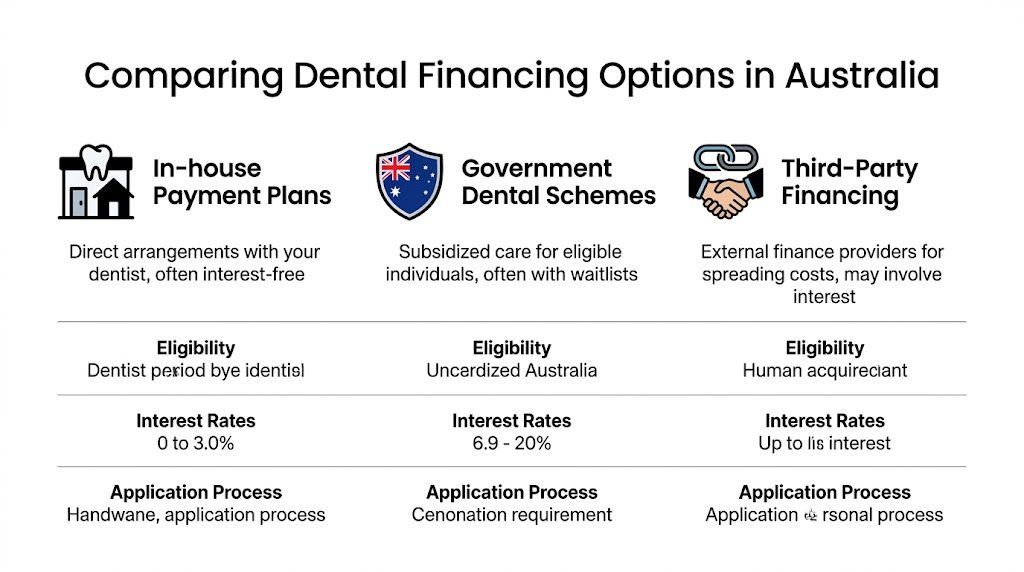
In-house plans from the clinic
An in-house payment plan is arranged directly with the dental practice. Instead of borrowing through a bank-style lender, you and the clinic agree on how the treatment will be paid over time.
This option can be more flexible, especially when the practice is willing to look at your real circumstances instead of treating you like a number on a file. This Australian-focused finance guide points out that in-house plans can bypass traditional credit hurdles, but clinics must provide clear terms to comply with the NCCP Act. The same source also notes that using DVA or Medicare rebates first can reduce the amount that needs financing.
That last point is where many patients save themselves stress. If part of the treatment is claimable, the financed amount may end up being much smaller than expected.
Third-party lenders and BNPL providers
Third-party options include providers that let you spread the cost through instalments. These can be convenient because approval is often quick, and the practice gets paid while the provider manages the repayment process.
They can suit people who want a faster application or who prefer not to manage a direct arrangement with the clinic. But they also need careful reading. Terms, fees, repayment schedules, and consequences for missed payments can vary a lot.
US-based articles often lead Australians astray. A plan described online might rely on products, rules, or score systems that don't match what happens here. The structure may sound familiar, but the fine print, consumer protections, and eligibility can be different in Australia.
Government support and health fund help
This category isn't really borrowing. It's cost reduction.
You might be able to use: - Medicare-linked support, such as the Child Dental Benefits Schedule if eligible - DVA entitlements, depending on your status and approved treatment - Private health insurance rebates for covered services
These options don't replace payment plans, but they can make them far more manageable. If a rebate covers part of the bill, you only need to finance the gap.
> Start by asking, "What can I claim first?" before asking, "How much do I need to borrow?"
That approach is especially useful for patients considering bigger restorative work. If you're exploring treatments such as crowns, bridges, or implant-related care, it helps to understand the clinical side at the same time, which is why many patients read up on restorative dentistry options before discussing payment.
Comparison of Dental Payment Plan Options
| Feature | In-House Plan | Third-Party Lender (BNPL) | Government/Health Fund Support | |---|---|---|---| | Who manages it | The dental clinic | An external provider | Medicare, DVA, or your health fund | | Main purpose | Spreads out your payment | Spreads out your payment | Reduces your out-of-pocket cost | | Credit approach | Often more flexible and case-by-case | May use soft checks or provider-specific criteria | Not a credit product | | Best for | Patients who need a more personal review of circumstances | Patients who want a quick external finance option | Eligible patients wanting to lower the balance first | | Watch for | Contract clarity, repayment dates, missed payment terms | Fees, penalties, provider rules, default terms | Eligibility limits, item coverage, annual caps or scheme rules | | Good question to ask | Can you assess my situation based on current income? | What happens if I miss a payment? | What can I claim before any finance is arranged? |
How to choose the right one
The best option depends on your situation, not on what sounds most convenient.
Choose an in-house plan if: - You need flexibility: Your income pattern is regular enough to repay, but your credit history may not look strong. - You want a human conversation: Some patients prefer dealing directly with the clinic rather than a finance company. - You have mixed income sources: This can matter if your household income includes wages, Centrelink, or family support.
A third-party plan may suit you if: - You want a fast application: Some people value speed and a clear digital process. - You prefer separate administration: The provider handles the payment side after approval. - You understand the terms well: This option works better when you've read the agreement carefully.
Government support or health fund claiming should come first if: - You're eligible for benefits: This can reduce the gap straight away. - The treatment includes claimable items: Not every service will be covered, so ask specifically. - You want to minimise debt: Less financed balance usually means less pressure later.
There isn't one universal winner. The right answer is the one that gets you treated safely, keeps the repayments realistic, and doesn't leave you surprised later.
A Practical Guide to Getting Approved for Dental Care
When patients feel overwhelmed, it helps to break the process into small, concrete steps. Approval isn't usually about saying the perfect thing. It's about being organised, asking direct questions, and making sure the numbers fit your real life.
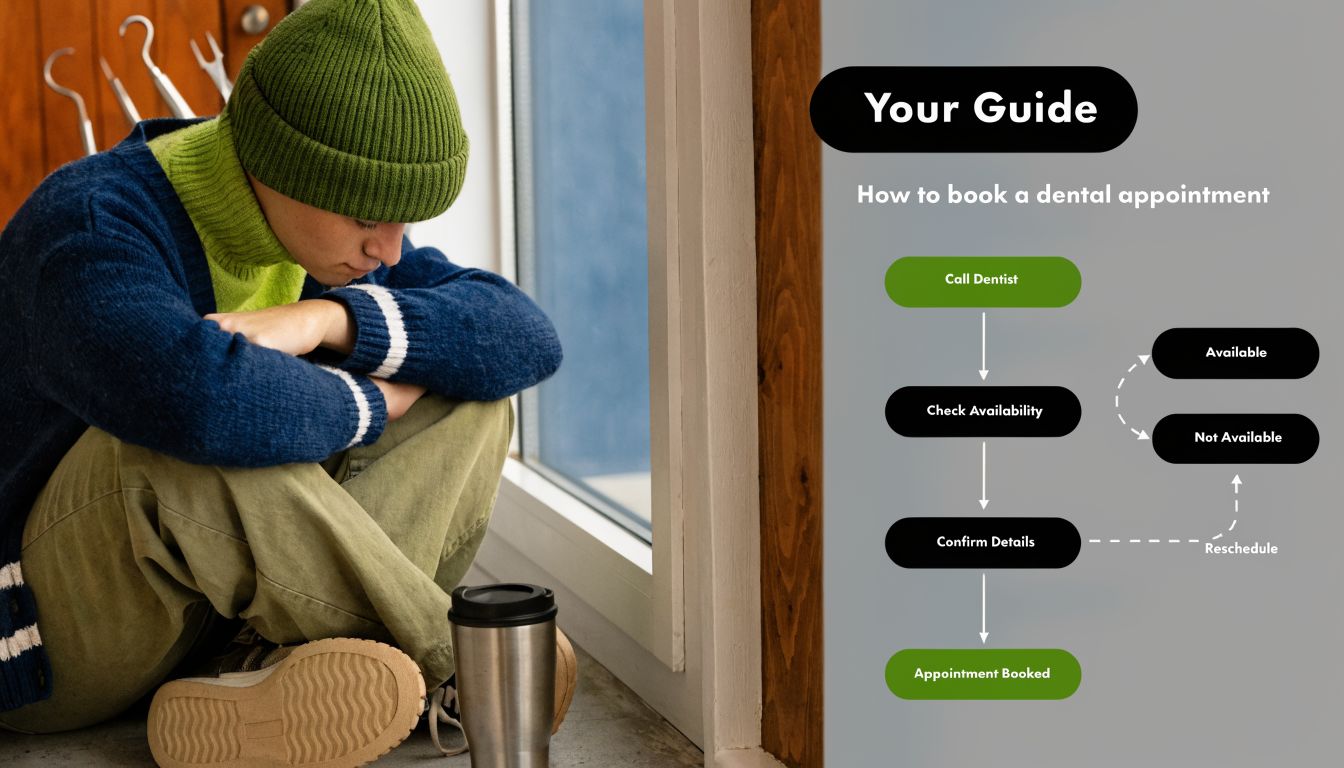
Step one, get the treatment plan first
Before you think about finance, get a proper examination and written quote. A lot of anxiety comes from guessing. Once you know whether you need a filling, crown, extraction, root canal, denture repair, or staged treatment, the money conversation becomes much clearer.
Ask for the dentist to explain: - What needs doing urgently - What can wait if needed - Whether treatment can be split into stages - What the full estimated cost looks like
Financing a smaller urgent phase is often easier than trying to solve the whole treatment journey in one go.
Step two, gather the documents that show your real position
Many patients often get stuck. They think bad credit means the answer is already no, so they don't prepare properly.
If your income includes wages, casual work, Centrelink, a pension, or family benefits, have documents ready that show how money comes into your household. This discussion of Centrelink and dental finance highlights an important issue. Some third-party lenders may reject applicants on certain benefits, while flexible in-house plans can look at a family's real cash flow, which matters for the 25% of regional households relying on government payments.
A simple document checklist might include: - Photo ID: To confirm your identity - Income evidence: Payslips or recent statements - Centrelink statements: If benefits form part of your household income - Health fund details: So rebates can be checked early - DVA or Medicare information: If relevant to your eligibility
Step three, tell the practice manager the truth early
You don't need to overshare. You do need to be clear.
Say something like, "My credit history isn't great, but I can manage regular repayments if we keep them realistic." That gives the clinic or finance team something useful to work with. It also avoids wasting your time on options that were never a good fit.
> If Centrelink is part of your income, say so upfront. It won't help to hide it, and in some cases it points you toward a better option rather than a worse one.
Step four, read the agreement like a checklist
Most problems with payment plans don't start with bad intentions. They start with rushed paperwork and assumptions.
Before you agree to anything, check: 1. Repayment amount Does it fit your normal fortnight, not your best fortnight?
- Repayment dates
- Fees and charges
- Missed payment process
- Early payout
If the language feels slippery or vague, slow down. Ask for it in plain English. Ask someone to walk you through it line by line if needed.
Step five, keep the plan realistic
Approval is only the beginning. A good plan should help you get treatment without creating fresh financial stress a month later.
A realistic plan usually has three qualities: - It leaves room for normal life: groceries, fuel, rent, school costs - It accounts for irregular weeks: regional families often deal with variable hours or seasonal income - It has a backup idea: knowing what you'll do if a payment date becomes difficult
You can also review practical details before the visit by checking a clinic’s patient information page, which can make the first call feel less intimidating.
Your Local Partner in Accessible Dental Care in Tamworth
For regional families, trust often comes down to one thing. Can the clinic explain costs clearly enough that you know what you're agreeing to?
That matters because hidden terms and confusing finance language can turn a helpful payment arrangement into a long headache. This article discussing contract transparency notes that ADIA guidelines support plain English contracts so patients can understand the terms and avoid hidden fees or harsh penalty structures.
What local patients should expect from a good clinic
A good clinic doesn't just hand you a form and tell you to sort it out. It should help you understand: - What part of treatment is urgent - Which items may be claimable through Medicare, DVA, or your health fund - Whether an in-house arrangement is available - What happens if circumstances change during repayment
That kind of conversation is especially valuable in Tamworth and the wider New England region, where families may be balancing farm schedules, shift work, travel time, school costs, and fixed household bills all at once.
Why technology can help with affordability
Patients don't always connect clinical technology with cost control, but the link can be practical. When a clinic uses tools that improve planning and efficiency, it can reduce delays, extra visits, and uncertainty.
For example, digital scanning, 3D imaging, and same-day restorative workflows can make treatment planning more precise and easier to organise. For some patients, fewer appointments and a clearer treatment sequence make the financial side easier to manage too.
> The most helpful payment plan is attached to a treatment plan that is accurate, staged properly, and explained in words you can actually understand.
What reassurance should feel like
Real reassurance isn't "Don't worry about it." Real reassurance is hearing, "Let's check your eligibility, reduce the balance where we can, explain the contract clearly, and only proceed with a plan you can manage."
If you're choosing a clinic, look for one that treats payment questions as normal healthcare questions. You shouldn't feel judged for raising them. You should feel informed.
When you're ready to talk to someone local about treatment, rebates, and payment options, the simplest next move is to contact the Tamworth team at Oasis Smiles Dental.
Take the First Step Towards a Healthy Smile Today
Bad credit can feel like a stop sign. For dental care, it often isn't. It's just one part of the picture.
You may have more options than you think. Some patients do better with an in-house plan. Others reduce the bill first through Medicare, DVA, or private health, then finance only the remaining amount. Some need urgent care now and a staged approach for the rest later.
The key is not to self-reject before a dentist has even looked at the problem. Tooth pain, infection, broken teeth, and worn restorations usually don't improve by waiting. They tend to become more expensive and more disruptive.
If you're worried about money, start with a conversation, not an apology. Ask for a written treatment plan. Ask what support applies to you. Ask what happens if your income includes Centrelink or other benefits. Ask for the finance terms in plain English.
A calm, practical discussion can turn a problem that feels impossible into one you can manage.
Frequently Asked Questions About Dental Payment Plans
Will applying hurt my credit score
It depends on the type of application. Some dental finance options use a soft check, which is generally designed to assess affordability without the same kind of impact people associate with a full credit application. Always ask the clinic or provider which type of check they use before you apply.
Can I still get a plan if I receive Centrelink
Possibly, yes. Some lenders are stricter about how they assess benefit income. Others, especially flexible in-house arrangements, may look more closely at your overall household cash flow and whether the repayments are realistic for you.
What if I have private health insurance
Use it first where possible. A rebate can reduce the amount you need to pay yourself, which may make a payment plan much easier to manage. Ask the clinic to explain which parts of treatment may attract a rebate and what the out-of-pocket gap is after claiming.
What happens if I miss a payment
That depends on the contract. Some arrangements may involve reminders and an opportunity to catch up. Others may trigger fees or move the debt into a more formal recovery process. This is why you should read the missed payment section carefully before signing and ask what the actual process looks like.
Are in-house plans safer than BNPL
Not automatically. In-house plans can be more flexible, but they still need clear terms. BNPL can be convenient, but convenience doesn't always mean better value. The safer option is usually the one with the clearest contract, the most manageable repayment amount, and the fewest surprises if life gets in the way.
Can I combine government support with a payment plan
Often, yes. If you're eligible for Medicare, DVA, or a private health rebate, those supports can lower the bill first. A payment plan may then cover only the remaining balance. That's usually a more comfortable setup than financing the full amount.
Should I delay treatment until my credit improves
Usually not if the problem is painful, worsening, or likely to become more complex. Dental issues can escalate while you wait. A better approach is to ask whether the treatment can be prioritised in stages and whether the cost can be matched to a realistic payment option now.
---
If you'd like a straightforward chat about treatment costs, rebates, and payment options, Oasis Smiles Dental can help you talk it through in plain English. A consultation is often the easiest first step because it gives you a clear diagnosis, a written plan, and a realistic idea of what support or payment pathway may suit your situation.