

Finding the Best Night Guards for Teeth Grinding in Australia
If you’re waking up with a sore jaw or a dull, persistent headache, you’re not alone. Millions of Australians are doing the exact same thing, often without realising they’re grinding their teeth at night. When it comes to finding relief, the best night guards for teeth grinding are almost always the ones professionally fitted by a dentist. A custom guard just offers a level of protection and a perfect fit that over-the-counter options can't match.
Your Guide to Finding the Best Night Guard
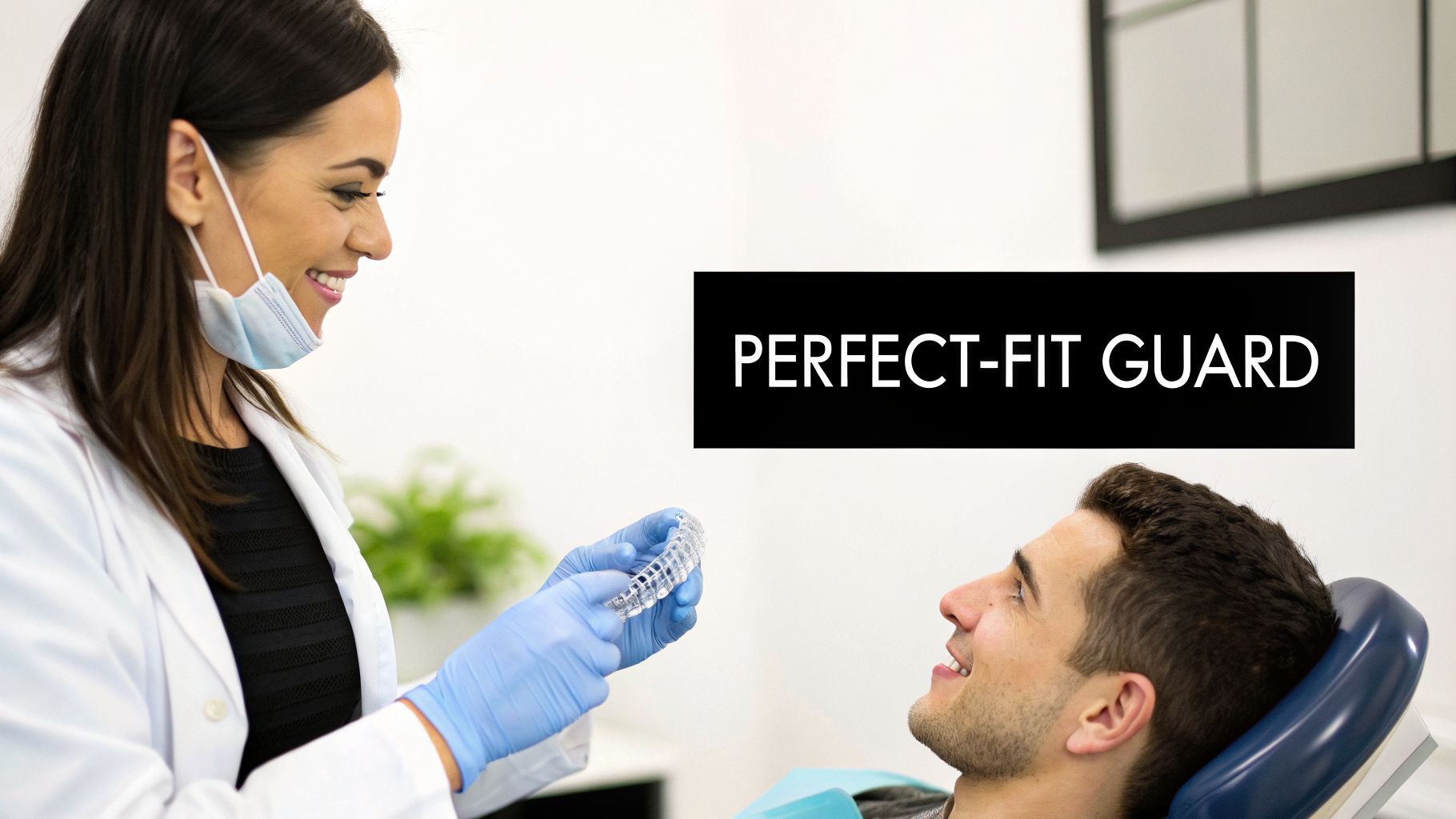
Waking up to unexplained jaw pain, sensitive teeth, or nagging headaches is a frustrating way to start the day. The likely culprit is something you’re doing in your sleep: bruxism. That's the clinical term for grinding your jaw and clenching your teeth.
This nightly habit puts an incredible amount of force on your teeth and jaw joints. Without any protection, your teeth can suffer some serious wear and tear over time, leading to cracked enamel, fractured teeth, and even long-term jaw problems.
Why a Proper Diagnosis Is Crucial
Before you run out and buy a solution, the first and most important step is getting a proper diagnosis. While you might suspect you’re a grinder, only a dentist can spot the tell-tale signs of wear on your teeth and confirm it. This ensures you're getting the right treatment for your specific situation, not just guessing.
> A night guard acts as protective armour for your teeth. It creates a barrier that absorbs the immense force of grinding, preventing your upper and lower teeth from wearing each other down while you sleep.
It might surprise you to learn that a staggering 85-90% of Australians grind their teeth to some degree. That’s how common bruxism is, making night guards an essential tool for protecting smiles right across the country, including here in Tamworth and the New England area. You can learn more about how common teeth grinding is from this detailed overview.
The Different Types of Night Guards Available
Once we’ve confirmed bruxism is the issue, it’s time to talk about your options. There are a few different types of night guards out there, and they all offer different levels of comfort, protection, and durability. Knowing the difference is key to making a smart choice.
Your main choices really come down to two categories: * Custom-Fitted Guards: These are the ones we make for you here at the practice. We take a precise digital scan of your teeth to create a guard that fits you perfectly. * Over-the-Counter (OTC) Guards: You can find these at the chemist. They include "boil-and-bite" models that you try to shape at home, or even basic one-size-fits-all trays.
While the low price of an OTC guard can be tempting, a custom-fitted device is truly the gold standard for a reason. It provides a secure, comfortable fit that won’t slip during the night or, worse, create new jaw alignment issues. It’s about ensuring your teeth are properly shielded, every single night.
Understanding the Hidden Dangers of Teeth Grinding
Before we can talk about a solution, it's crucial to understand what you're up against. Teeth grinding, which dentists call bruxism, is one of those sneaky problems. It usually happens when you're fast asleep, but the damage it causes is very real. It’s not just a bad habit—it's a destructive force that can seriously compromise your oral health over time.
Think about the sheer force involved. The pressure you exert when grinding your teeth at night is far greater than what you use for chewing food. Night after night, this immense pressure wears down your teeth. At first, you might not even notice it, but the cumulative effect is undeniable.
This relentless force doesn't just damage your teeth, either. It creates a ripple effect, sending tension through your jaw and facial muscles, which can lead to a whole host of painful symptoms that spill over into your daily life.
What Triggers Nightly Teeth Grinding?
Bruxism rarely just happens on its own. More often than not, it's your body's way of reacting to other issues. Getting a handle on what’s causing the grinding is the first step to managing it.
So, what are the usual suspects?
- Stress and Anxiety: This is the big one. The pressures of modern life—work deadlines, money worries, personal stress—have a nasty habit of showing up while we sleep. Your jaw ends up taking the brunt of it.
- Lifestyle Factors: Your daily habits play a role, too. Stimulants like caffeine, especially later in the day, can get in the way of deep, restful sleep and trigger jaw muscle activity. Alcohol can also disrupt your sleep cycle and make grinding worse.
- Sleep Disorders: Conditions like sleep apnoea are very closely linked to bruxism. As your body struggles to breathe, it can set off a jaw-clenching reflex.
- A Misaligned Bite: Sometimes, the problem is mechanical. If your teeth don't fit together quite right, your jaw might grind and shift around during the night, searching for a comfortable place to rest.
This is a really common problem here in Australia. It's estimated that around 15% of Australians grind their teeth in their sleep, often waking up with a tight jaw or noticing little chips on their back teeth. We’ve seen a definite rise in grinding-related damage in recent years, which just goes to show how important it is to be proactive. You can read more about the increase in bruxism-related issues from this health summary.
The Long-Term Consequences of Ignoring Bruxism
Putting off dealing with teeth grinding is a big risk. The damage builds up slowly but surely, and it can lead to some complex and expensive dental work down the track. Protecting your teeth now is a smart investment against future pain and cost.
Without a protective barrier between your teeth, you’re leaving yourself open to serious issues like:
- Cracked or Fractured Teeth: The constant, intense pressure can create tiny cracks that eventually become full-blown fractures. A broken tooth often needs a crown, or in some cases, might even need to be removed.
- Worn-Down Enamel: Grinding literally sands away the hard, protective outer layer of your teeth. This exposes the softer, more sensitive layer of dentine underneath, which is why many grinders experience pain with hot and cold foods.
- Chronic Jaw Pain and TMJ Disorders: All that strain takes a toll on your jaw joint (the temporomandibular joint, or TMJ). This can lead to inflammation, painful clicking, a locked jaw, and persistent soreness. If this sounds familiar, you might want to learn more about TMJ disorders and their treatment.
- Persistent Headaches: That tension in your jaw has to go somewhere. For many people, it travels upwards, causing chronic morning headaches, neck pain, and even earaches.
> Think of it this way: not wearing a night guard when you grind is like driving your car with the handbrake partially on. You might not break down immediately, but you're causing guaranteed, expensive wear and tear on crucial parts.
At the end of the day, dealing with bruxism isn't just about stopping a noisy habit. It's about protecting the health and function of your smile for years to come. Once you understand the risks, the value of finding one of the best night guards for teeth grinding becomes incredibly clear.
Choosing Your Guard: Custom vs. Over-the-Counter Options
So, you’ve realised you’re grinding your teeth at night. The next question is, what do you do about it? A quick trip to the chemist or an online search will show you a dizzying number of night guards, but they are far from being the same.
You’re essentially looking at two very different paths: a professionally made guard from your dentist, or a generic, one-size-fits-most option from a shop. Understanding what sets them apart is key. This isn't just about price—it’s about getting real protection, being comfortable enough to actually wear the thing, and looking after the long-term health of your teeth and jaw.
The Custom-Fitted Guard: A Professional Solution
A custom-fitted night guard is what we, as dentists, consider the proper medical device for treating bruxism. It’s not a generic product pulled off a shelf; it’s crafted in a dental lab based on a perfect model of your teeth.
To get this done, we take a super-accurate digital scan of your mouth. There’s no goopy impression material involved anymore. We use that precise 3D model to create a guard that clips perfectly onto your teeth, fitting every unique groove and contour. The end result is something that’s not only highly effective but also surprisingly comfortable.
While they do cost more upfront, the advantages are clear:
- Superior Fit and Comfort: Because it's made just for you, it snaps securely into place. You don't have that bulky, gag-inducing feeling you get with generic guards.
- Maximum Protection: The perfect fit ensures grinding forces are spread evenly across the guard, offering the best possible defence against cracks, chips, and wear.
- Exceptional Durability: These are made from high-quality, tough materials designed to withstand serious grinding forces. A single custom guard can last for many years.
> Think of it like this: using an over-the-counter guard is like running a marathon in a cheap pair of one-size-fits-all shoes. You might make it a few kilometres, but you’ll end up with blisters and could even injure yourself. A custom guard is like a pair of running shoes fitted by a specialist—it gives you the right support to go the distance safely and comfortably.
This personalised fit is exactly why dentists recommend them as the best night guards for teeth grinding. You can learn more about how we design these protective custom night guards at Oasis Smiles Dental and see for yourself what a difference a professional approach makes.
Over-the-Counter Guards: The Chemist Aisle Options
You’ll find over-the-counter (OTC) night guards in any local chemist. They’re tempting because they’re cheap and you can get one straight away. These usually come in two main types: the basic "one-size-fits-all" trays and the slightly more advanced "boil-and-bite" guards.
The boil-and-bite kind asks you to heat the plastic in hot water and then bite down to leave a rough impression. While that sounds better than nothing, the fit is almost always loose and uneven. The material is also much softer, feels incredibly bulky in your mouth, and just doesn't last.
Unfortunately, that low price tag comes with some serious trade-offs:
- Poor and Bulky Fit: They rarely fit well. This means they can be uncomfortable, make you gag, or even fall out while you’re asleep, leaving you with no protection at all.
- Inadequate Protection: A loose guard can shift around, failing to shield all your teeth from damage. Worse, a bad fit can sometimes throw your bite out of alignment and increase jaw pain.
- Low Durability: The soft materials they're made from wear out incredibly fast, especially if you’re a heavy grinder. You could end up buying a new one every few months, and those costs add up.
- Can Encourage Chewing: For some, the soft, spongy texture of an OTC guard can actually stimulate the chewing reflex, making you clench and grind *more*, not less.
A Head-to-Head Comparison
To make the choice clearer, it helps to see how the different types of guards directly compare. Not all OTC guards are the same, so we’ve broken them down into the two main categories you’ll find at the chemist.
#### Night Guard Comparison: Custom-Fitted vs. Over-the-Counter
| Feature | Custom-Fitted Guard (From a Dentist) | Boil-and-Bite Guard (From a Chemist) | One-Size-Fits-All Guard | | :--- | :--- | :--- | :--- | | Fit & Comfort | Excellent. Perfectly moulded to your teeth for a secure, slimline fit that stays put all night. | Poor to Fair. Bulky and often loose, even after moulding. Can cause gagging or discomfort. | Poor. Extremely bulky and loose-fitting. The least comfortable option by far. | | Protection | High. Creates a rigid, even barrier that absorbs force and protects all teeth from damage. | Low to Moderate. A loose fit may not cover back molars. Can sometimes worsen jaw alignment. | Low. Offers minimal protection and can shift easily, leaving teeth vulnerable. | | Durability | Very High. Made from strong, medical-grade materials. Lasts 3-10+ years. | Low. The soft thermoplastic wears down quickly, often needing replacement within months. | Very Low. Wears out extremely fast and is not designed for moderate or heavy grinding. | | Effect on Jaw | Helps ease jaw strain by providing an ideal, stable bite position that reduces muscle tension. | Can sometimes make jaw pain worse or create new TMJ issues due to an improper fit. | High risk of worsening jaw pain or bite problems due to its generic, ill-fitting shape. |
At the end of the day, the decision is between a quick, cheap fix and a long-term investment in your health. While a chemist guard might seem like an easy starting point, only a custom-fitted device from a dentist provides the safety, comfort, and reliable protection you need to truly stop the damage from bruxism.
How We Make Your Custom Night Guard
Ever wondered how we create a dental guard that fits your teeth so perfectly? It’s a pretty neat process that combines a dentist’s eye for detail with some really impressive modern tech. It's worlds away from the old, goopy impression trays you might be imagining.
It all starts with a proper chat and a thorough check-up. Before we do anything else, we need to be sure that teeth grinding (bruxism) is actually what’s causing your troubles. We’ll have a look at your teeth for the classic signs of wear and tear and talk about any jaw pain or headaches you’re having. This diagnosis step is crucial—it tells us if a night guard is truly the right fix for you.
Once we’ve confirmed bruxism, we get to the fun part. And don't worry, the days of biting down on a tray of cold, messy putty are well and truly over at our practice.
The Digital Impression: A Scan, Not a Mould
Instead of those old-school physical moulds, we use a sleek intraoral scanner. It’s a small, handheld wand that we simply guide around your teeth. In just a couple of minutes, it captures thousands of tiny images and stitches them together into a hyper-accurate 3D model of your mouth right there on the screen.
For you, this means no gagging, no weird taste, and no mess. It’s quick, clean, and far more comfortable. For us, it creates a perfect digital blueprint of your teeth and gums, ready for the next step.
If you're still weighing up your options, this chart can help clarify when a custom guard is the best path forward.
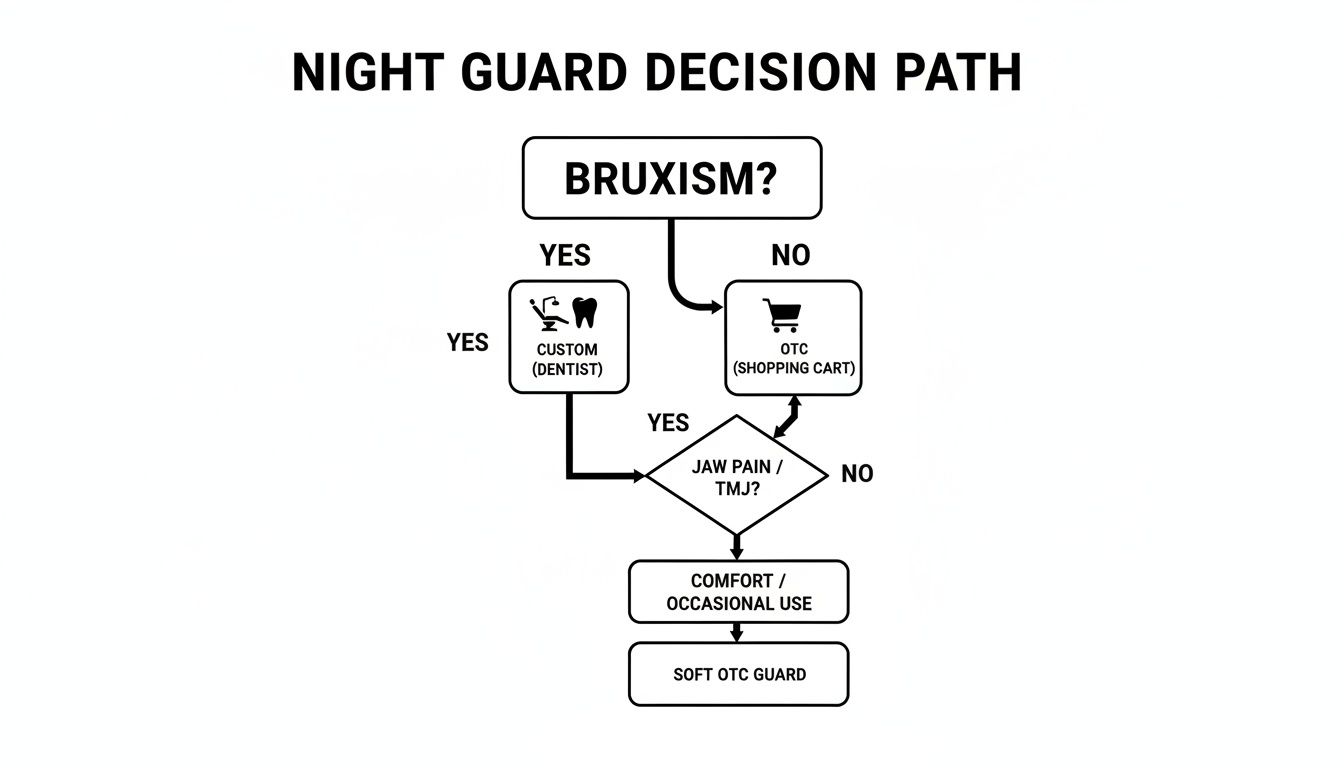
As you can see, while over-the-counter guards have their place, getting a professional opinion is always the recommended first step for finding real, long-term relief.
From Digital Blueprint to Physical Guard
With your exact 3D scan in hand, our work begins. We load this digital file into special design software, where your dentist can map out the night guard with incredible precision. This is where we determine the exact thickness and shape needed to protect your enamel and encourage your jaw to rest in a healthier, less strained position.
> A custom night guard isn't just a piece of plastic; it's a precisely engineered medical device. The process ensures every contour of the guard matches your teeth perfectly, delivering a snug fit that provides optimal protection and comfort.
Once the design is locked in, we bring it to life with 3D printing. A high-tech printer builds your night guard, layer by meticulous layer, using a tough, biocompatible acrylic. This method means the final product is a perfect physical copy of the digital design—there’s zero guesswork.
This modern approach is what makes a custom-fit guard so different. It results in a device that is: * Perfectly Fitted: It snaps securely onto your teeth and won't slip around at night. * Highly Durable: It’s built to withstand the serious forces of clenching and grinding. * Comfortably Slim: We design it to be as low-profile as possible, so you barely notice it’s there.
Tools like digital scanners and 3D printers have been a game-changer for patient care. You can learn more about the dental technology we use at Oasis Smiles Dental and how it helps make your visits faster and more comfortable.
The Final Fitting: Your Shield Is Ready
After your guard is printed and hand-finished by a skilled technician, we’ll have you pop back in for a final fitting. We'll place the guard in your mouth, check how it feels, and make any tiny adjustments needed to get the fit absolutely perfect.
This last step is non-negotiable for us. We want to be sure the guard is comfortable, your bite feels balanced, and that you know exactly how to look after it. You’ll walk out of the clinic with one of the best night guards for teeth grinding you can get—a personalised shield built to protect your smile for years to come.
Looking After Your Night Guard (and Your Wallet)
A custom-fitted night guard is one of the best things you can do for your long-term dental health. So, once you've made that investment, two practical questions always pop up: "How do I clean it?" and "What's the real cost?"
Let's break down the simple habits that will make your guard last for years, and get clear on the costs involved.
Simple Steps for Daily Night Guard Care
Think of your night guard like any other dental appliance—it lives in your mouth, so it needs daily cleaning to stop bacteria from having a party. A dirty guard can lead to stale breath or other oral health issues. Thankfully, keeping it spotless is easy.
Here are a few simple tips to build into your morning routine:
- Rinse It Right Away: As soon as you take the guard out, give it a good rinse under lukewarm water. This washes away saliva and plaque before it has a chance to dry and harden.
- Brush Gently: Use a separate, soft-bristled toothbrush (not the one you use for your teeth) and a bit of non-abrasive soap or gentle toothpaste to give it a light scrub. Avoid harsh, gritty toothpastes, as they can create tiny scratches on the surface.
- Let It Air Dry Completely: After cleaning, pop it on a clean, dry surface. Never store it wet! A damp, sealed case is the perfect environment for bacteria to thrive.
> A custom night guard can last anywhere from 3 to 10 years. Its lifespan really comes down to two things: how severely you grind and how well you look after it. Daily cleaning is the single best way to protect your investment.
Once it's fully dry, store it in the ventilated case we provide. This keeps it safe from being dropped, chewed by a curious pet, or accidentally thrown out, while still allowing air to circulate.
Understanding the Cost of a Custom Night Guard
When you're looking for the best night guards for teeth grinding, it's natural to wonder about the price. A custom guard from a dentist costs more upfront than one from the chemist, and for good reason—it’s a professionally made medical device designed for a perfect fit, maximum protection, and years of use.
In Australia, you can expect a custom-made night guard to cost between $500 and $900. The final price can vary a little based on factors like the material we use (for example, a hard acrylic versus a softer dual-laminate) and the complexity of your bite.
This one-off cost covers the entire professional process: * The initial consultation and thorough diagnosis. * The precise digital scans of your teeth—no messy impressions! * The high-quality, biocompatible materials used to make your guard. * The lab fabrication and the final fitting appointment to ensure it’s perfect.
While it's an initial investment, it can save you thousands of dollars down the track by preventing the need for major restorative work like crowns, veneers, or root canals to fix worn-down or cracked teeth.
Will My Health Fund Help Cover the Cost?
Here’s the good news: you likely won't have to cover the entire cost yourself. Most private health funds in Australia with ‘extras’ or ‘ancillary’ cover provide rebates for occlusal splints (the technical term for night guards).
This is usually found under your "Major Dental" cover. The specific item number to quote your health fund is 965. We always recommend giving your fund a quick call with this number to confirm your exact rebate amount, as it depends entirely on your level of cover.
At Oasis Smiles Dental, we accept all major health funds and use HICAPS for on-the-spot claims. We’re here to make the process as smooth as possible. For more details on payments and insurance, you can find everything on our patient information and payment options page. We believe that being upfront about costs is a vital part of providing great care.
Answering Your Top Questions About Night Guards
It's one thing to read about night guards, but it's another to actually decide if one is right for you. We find that most people have a handful of very practical questions once they start considering a custom-made guard. And that's a good thing!
We've put together answers to the most common questions we hear in our practice. Our goal is to give you the clear, straightforward information you need to feel confident about protecting your smile.
How Do I Know If I Need a Hard or Soft Night Guard?
This is a great question, and the answer really comes down to the severity of your grinding or clenching. Your dentist is the only one who can make the final call, but the general idea is to match the material's strength to the force of your bite.
Here’s a quick guide to how we usually approach it: * Soft Guards are best suited for people with mild clenching. They offer a nice, comfortable cushion. The only catch is that for some, the squishy texture can actually trigger a chewing-like reflex, which isn't ideal for heavy grinders. * Hard Acrylic Guards are our go-to for moderate to severe grinding. They are incredibly durable and create a tough, smooth barrier that your teeth can't wear down. They feel firm and unfamiliar at first, but almost everyone gets used to them within a few nights. * Dual-Laminate Guards give you the best of both worlds. They have a soft liner that rests comfortably against your teeth and gums, plus a hard outer shell that provides the serious protection needed for heavy-duty grinding.
When you come in, we’ll take a close look at the wear on your teeth and chat about your symptoms. This helps us pinpoint exactly which material will work best for you.
Will a Night Guard Actually Stop Me from Grinding My Teeth?
This is probably the most common misunderstanding about night guards. A guard’s main job isn't to cure the habit of bruxism, but to protect your teeth from its destructive effects. It acts as a shield, taking the full force of the grinding so your teeth don't have to.
That said, many patients find that wearing a guard does help reduce the *intensity* of their grinding. By slightly propping your jaw open, it encourages the jaw muscles to relax a little, taking them out of their hyperactive state.
> Think of a night guard less as a cure and more as essential personal protective equipment (PPE) for your teeth. It may not stop the grinding habit cold, but it absolutely stops the damage—and that’s what truly matters for your long-term health.
To get to the root of the problem, we might also explore things like stress management techniques or simple lifestyle tweaks, like cutting back on caffeine, which can make a real difference.
How Long Will a Custom-Fitted Night Guard Last?
A professionally made night guard is built to last. With the right care, you can expect it to serve you well for anywhere from 3 to 10 years, sometimes even longer.
How long yours lasts really depends on two things: 1. The Material: Hard acrylic guards are the marathon runners—they typically last the longest. Softer materials are more like sprinters and may wear down a bit faster. 2. Your Grinding Habits: Someone who grinds with a lot of force will naturally put more wear on their guard than a person who clenches lightly.
Proper care makes a huge difference, too. Cleaning it every day and storing it in its case will significantly extend its lifespan. We'll check its condition at your regular dental check-ups and let you know when it’s starting to look worn and ready for a replacement.
Is Sleeping with a Night Guard Uncomfortable?
It’s completely normal for a night guard to feel a little strange for the first few nights. After all, it's something new in your mouth. But that bulky or foreign feeling almost always disappears within a week or so.
Because a custom guard is made from a precise digital scan of your mouth, it’s designed to snap into place perfectly. It fits snugly without being tight, and it won’t shift around or make you gag—common complaints we hear about over-the-counter options.
Most patients adapt so well that they quickly feel more uncomfortable sleeping *without* it, especially once they start waking up without jaw pain or headaches. That perfect, secure fit is exactly what makes a custom appliance one of the best night guards for teeth grinding you can get.
--- Ready to put an end to jaw pain and protect your smile from the effects of teeth grinding? The team at Oasis Smiles Dental is here to help. We combine advanced digital technology with a patient-first approach to create custom night guards that offer superior comfort and protection. Book your consultation online or call us today to start your journey toward a healthier, pain-free smile.