

Finding the Best Toothpaste for Sensitive Teeth
If you're hunting for the *best toothpaste for sensitive teeth*, you've probably seen ingredients like potassium nitrate or stannous fluoride on the label. These are proven workhorses, designed to either soothe the nerve inside your tooth or block the pathways that lead to it. The trick is, they don't work overnight. Real relief comes from consistent use, which gradually builds up a shield against that sharp, sudden pain.
Why Your Teeth Hurt and What You Can Do About It
Ever get that sharp, electric zing from a cold drink or a spoonful of ice cream? It’s not just a passing irritation—it’s your teeth sending out an SOS. Getting to the bottom of *why* this happens is the first step toward enjoying your favourite foods again without wincing.
Think of your tooth's outer layer, the enamel, as a tough, protective helmet. Just beneath it lies a softer, more porous material called dentine. This layer is riddled with thousands of microscopic channels that lead straight to the tooth’s nerve centre.
When that enamel helmet gets worn down or your gums recede, those tiny channels are left exposed. Suddenly, things like hot coffee, cold air, or even sweet treats have a direct hotline to the nerve. The result? That all-too-familiar jolt of pain we call tooth sensitivity.
Common Culprits Behind Tooth Sensitivity
More often than not, a few common habits or conditions are to blame for wearing away that protective enamel and exposing the sensitive dentine. Pinpointing the cause is key to stopping sensitivity in its tracks.
Here are a few things that might be contributing:
- Over-enthusiastic Brushing: Scrubbing your teeth with a hard-bristled brush or simply using too much force can wear away enamel and encourage your gums to recede.
- Acidic Foods and Drinks: A diet high in soft drinks, citrus fruits, or wine can slowly dissolve tooth enamel, leaving your teeth undefended and weak.
- Teeth Grinding (Bruxism): Many people grind or clench their teeth, especially at night while they sleep. This immense pressure can gradually wear down enamel and sometimes even cause tiny fractures.
- Gum Recession: Gums can pull away from the teeth due to things like gum disease or just the natural ageing process. This leaves the root surface exposed, which isn't covered by hard enamel and is extremely sensitive. You can learn more about managing gum disease to help protect your smile.
> Understanding the 'why' behind your pain is the first step toward finding lasting relief. It's not just about managing a symptom; it's about addressing the root cause to protect your oral health for the long term.
It’s All Part of Your Overall Oral Health
While sensitivity itself is often manageable, it can sometimes be a red flag for other dental issues that need attention. For instance, untreated dental decay is a major public health concern for Australian adults. Research shows just how widespread this problem is, reinforcing why regular dental check-ups are so crucial for catching problems early. You can read more about the prevalence of dental decay in Australia in this detailed study.
When you know what’s causing your sensitivity, you can start making real changes. It might be as simple as switching to a softer toothbrush or cutting back on soft drinks. These small adjustments, combined with using the best toothpaste for sensitive teeth, can make a world of difference to your daily comfort.
Decoding the Ingredients in Sensitive Toothpaste
Walking down the toothpaste aisle can be a bit dizzying, especially when you’re dealing with sensitive teeth. Every box seems to promise instant relief, but the real magic is in the science behind the active ingredients. If you want to find something that actually works, you need to look past the marketing and understand what’s inside the tube.
Think of it this way: you wouldn’t use a band-aid for a broken arm. The right solution depends on the problem. The *best toothpaste for sensitive teeth* for you will depend entirely on *why* your teeth are sensitive in the first place. Some ingredients work by calming the tooth’s nerve, while others focus on building a protective barrier.
Let’s get into what these key ingredients do and which one might be right for you.
Potassium Nitrate: The Nerve Calmer
One of the most common and trusted ingredients you’ll see is potassium nitrate. It’s been a go-to for years, and for good reason.
Imagine the tiny channels in the softer layer of your tooth (the dentine) are like direct phone lines to the nerve. When something cold or sweet hits them, a pain signal shoots straight to the nerve centre. Potassium nitrate works by essentially cutting the phone line. It calms the nerve down, making it less excitable and unable to send that sharp ‘zing’ of pain to your brain.
The catch? It doesn't work overnight. You need to use it consistently, usually twice a day for a couple of weeks, for the calming effect to build up. It’s a fantastic option for that general, widespread sensitivity to hot, cold, or sugary foods.
> Key Takeaway: Potassium nitrate is all about managing the symptom. It stops the nerve from firing, providing great relief with consistent use, but it doesn't plug the source of the exposure.
Stannous Fluoride and Arginine: The Shield Builders
While potassium nitrate quiets the nerve, other ingredients take a more direct approach by physically blocking the problem. This is where the ‘shield builders’ like stannous fluoride and arginine come into play. They tackle the issue of exposed dentine head-on.
Stannous Fluoride is a true multi-tasker. It strengthens your tooth enamel and fights cavities just like regular fluoride, but it has a special trick for sensitivity. It creates a thin, protective layer over the openings of those tiny dentine channels, effectively sealing them off. If outside triggers can't get in, they can't cause pain.
Arginine, an amino acid, often works in a team with calcium carbonate. Together, they form a calcium-rich layer that plugs those same channels. Think of it like a professional plasterer expertly filling in cracks on a wall. It builds a solid barrier that can offer both immediate and lasting relief from sensitivity.
This is exactly why building a shield is so important. Once that hard outer enamel wears thin, the sensitive inner part of the tooth is left exposed.
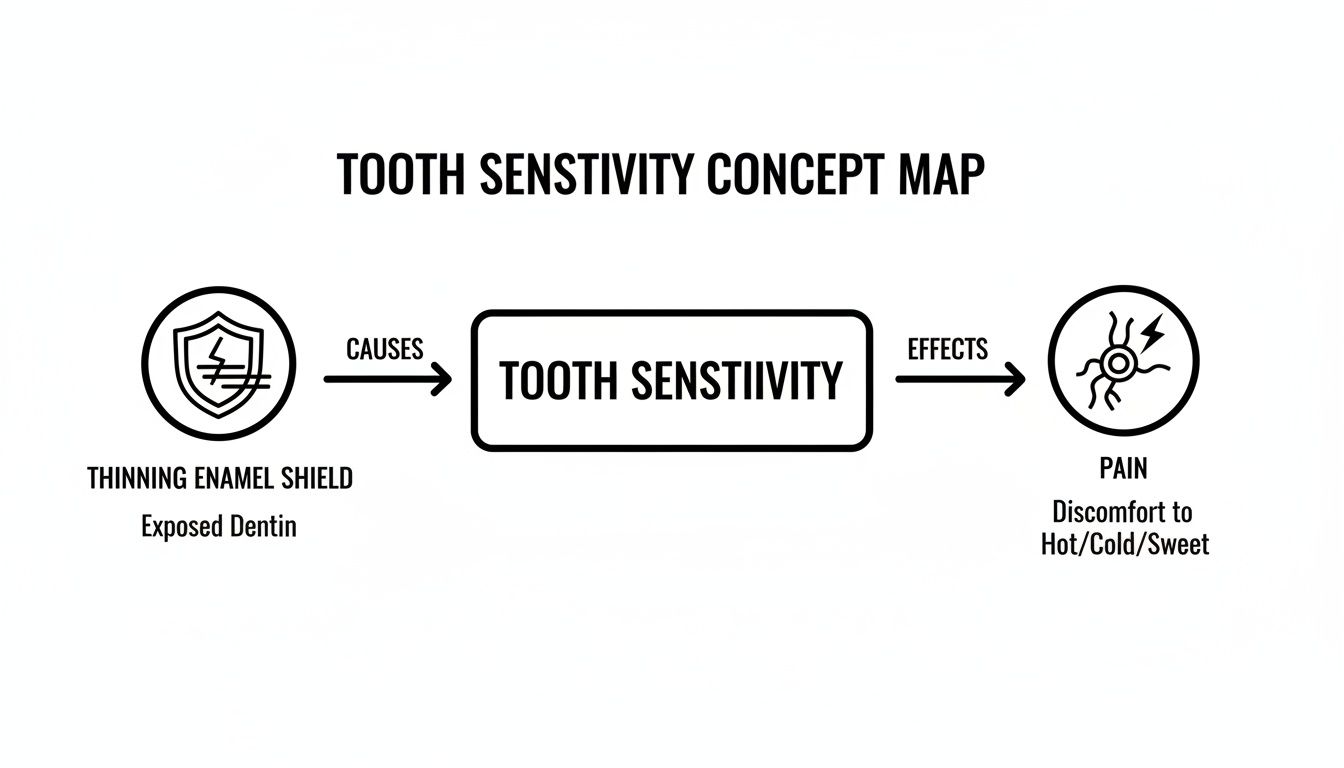
As you can see, a compromised enamel shield opens up a direct path to the nerve. Ingredients that can block these pathways are crucial for stopping sensitivity at its source.
Nano-hydroxyapatite: The Enamel Patcher
A newer player in the sensitivity game is nano-hydroxyapatite (n-HA), and it's incredibly clever. Why? Because it’s a synthetic form of the very mineral that makes up 97% of your natural tooth enamel.
Instead of just covering up the problem, n-HA acts like an ‘enamel patch’. The tiny particles bond directly to your tooth structure, filling in the microscopic gaps and worn-down areas that cause sensitivity. This process is known as remineralisation—it’s literally rebuilding your enamel.
By reinforcing the tooth’s natural defence layer, n-HA not only reduces sensitivity but also helps restore a smoother, healthier surface. It’s a brilliant choice if your sensitivity is coming from enamel erosion caused by acidic foods or general wear and tear.
How Active Ingredients Soothe Sensitive Teeth
To help you decide, here’s a quick comparison of how these ingredients work. Each takes a different angle on the problem, so matching the ingredient to your symptoms is the key to finding real comfort.
| Active Ingredient | How It Works (The Analogy) | Best For | | :--- | :--- | :--- | | Potassium Nitrate | The Nerve Calmer | General, sharp sensitivity to hot, cold, or sweet things. It directly manages the pain signal. | | Stannous Fluoride | The Shield Builder | Sensitivity from exposed dentine. It forms a protective barrier over tubules and also strengthens enamel. | | Arginine | The Tubule Plugger | Similar to stannous fluoride, this is great for blocking dentine channels and often gives fast relief. | | Nano-hydroxyapatite| The Enamel Patcher | Sensitivity caused by enamel erosion or wear. It rebuilds and repairs the tooth surface from the outside in. |
Ultimately, choosing the right toothpaste is about matching the solution to your specific problem. If a sudden jolt from an icy drink is your main complaint, a potassium nitrate formula might be the perfect fit. But if you know your enamel is feeling thin, a nano-hydroxyapatite toothpaste could offer more comprehensive repair. By understanding what’s in the tube, you can make a much more informed choice that leads to genuine, lasting relief.
How to Choose the Right Toothpaste for Your Needs
Knowing the science behind sensitive toothpastes is one thing, but standing in a supermarket aisle staring at a wall of options is another. So, how do you pick the right tube? Finding the best toothpaste for sensitive teeth isn't about grabbing the first box you see labelled ‘sensitive’. It's about matching your specific symptoms to the right active ingredient.
Think of yourself as a detective for your own mouth. The kind of pain you feel is a major clue, and that clue points straight to the ingredient most likely to bring you relief. Once you understand what your teeth are trying to tell you, choosing the right toothpaste becomes a whole lot simpler.
Pinpoint Your Type of Pain
First, let's get specific about what your sensitivity actually feels like. Is it a sharp, sudden shock when you sip a cold drink? Or is it more of a dull, lingering ache that hangs around? The answer will help guide your choice.
Here’s how to connect your symptoms to the ingredients we’ve already covered:
- For Sharp, Sudden ‘Zings’: If you get that lightning-bolt pain from cold air, icy drinks, or even a sweet treat, your tooth’s nerve is probably a bit over-excited. In this case, an ingredient like potassium nitrate is your best bet. It works by calming the nerve down, making it less likely to fire off those painful signals.
- For Aches from Enamel Wear: If your pain is a duller, more widespread sensitivity, especially after acidic or sugary foods, your enamel might be getting thin. A reparative ingredient like nano-hydroxyapatite is an excellent choice here. It essentially "patches up" the tiny holes and worn-down spots, rebuilding your tooth’s natural shield.
- For Sensitivity Near the Gums: Do you feel the pain right at the gumline, where the tooth root might be exposed? You need something that can block off the exposed pathways to the nerve. Ingredients like stannous fluoride or arginine are perfect for this. They create a physical barrier over the dentine, sealing it off from triggers.
By figuring out which type of pain you experience most, you’re already halfway there. This targeted approach is far more effective than just hoping a generic sensitive toothpaste will do the trick.
Check the Abrasion Level
Once you’ve got an idea of the active ingredient you need, there's one more crucial factor: abrasiveness. All toothpastes contain mild abrasives to help polish teeth and remove plaque. But for sensitive teeth, a formula that’s too gritty can do more harm than good.
It's like trying to clean a delicate pair of glasses with sandpaper—you'll just end up with more scratches. Using a highly abrasive toothpaste on teeth with thin enamel can actually speed up the wear and tear, making your sensitivity worse over time.
> A toothpaste’s grittiness is measured by its Relative Dentin Abrasivity (RDA) score. For daily use with sensitive teeth, you should ideally look for a toothpaste with an RDA value below 70. This ensures you’re getting a good clean without stripping away precious enamel.
Unfortunately, most brands in Australia don't print the RDA value on the box. As a general rule, stick to formulas marketed as ‘gentle’ or ‘enamel safe’. Be wary of toothpastes that promise heavy-duty stain removal or intense whitening, as these tend to be much more abrasive.
Should You Avoid Whitening Toothpastes?
This is a question we hear all the time: "Can I still whiten my teeth if they're sensitive?" The short answer is yes, but you need to be smart about it. Many whitening toothpastes you buy at the chemist rely on harsh abrasives or chemicals like hydrogen peroxide to scrub away stains, which can seriously aggravate sensitivity.
If you have sensitive teeth but still want a brighter smile, here’s a simple game plan:
- Prioritise Relief First: Start with a dedicated sensitive toothpaste for a few weeks. Give the active ingredients time to calm the nerves and build up a protective layer.
- Look for a Dual-Action Formula: Once your teeth feel better, you can switch to a toothpaste designed for both sensitivity and gentle whitening. These formulas use less aggressive methods to lift surface stains while still providing the desensitising ingredients you need.
- Consider Professional Options: If at-home products just aren't giving you the results you want, have a chat with your dentist. Professional whitening treatments at a clinic like Oasis Smiles Dental are often much safer and more effective for sensitive teeth because we can carefully control the entire process.
Ultimately, choosing the right toothpaste is a personal journey. By matching your symptoms to the right ingredients and keeping an eye on things like abrasiveness, you can find a product that not only stops the pain but also protects your smile for the long run.
Your Complete Oral Care Routine for Lasting Relief
While finding the best toothpaste for sensitive teeth is a huge step, it’s really just one piece of the puzzle. Real, lasting relief comes from building a complete oral care routine where every habit works together to protect your smile. These supportive habits are your best defence against that familiar twinge of pain and are key to stopping it from coming back.
Think of it this way: your desensitising toothpaste is doing the heavy lifting, but a great routine creates the perfect environment for it to work. It’s all about creating a daily regimen that protects your teeth from the triggers that cause sensitivity in the first place.
Perfect Your Brushing Technique
How you brush is often more important than what you brush with. One of the most common things we see causing sensitivity is simply brushing too hard. Aggressive scrubbing wears away precious enamel and can cause your gums to recede, exposing the sensitive layers beneath. It’s time to trade that force for a bit of finesse.
- Choose a Soft-Bristled Brush: A hard-bristled brush is like taking a scouring pad to your teeth. It can literally scratch your enamel and push your gums back. Always grab a brush labelled ‘soft’ to clean gently but effectively.
- Use Gentle, Circular Motions: Forget that back-and-forth sawing motion. Hold your brush at a 45-degree angle towards your gums and use small, gentle circles to clean every surface. This method is brilliant at removing plaque without causing any harm.
- Don’t Apply Too Much Pressure: You only need enough pressure to feel the bristles on your teeth. A dead giveaway you’re pushing too hard? The bristles on your brush are flattened and splayed out.
> The goal is to *massage* your teeth and gums clean, not scrub them into submission. This gentle approach is your best friend for protecting enamel and keeping your gums healthy.
Add a Desensitising Mouthwash
A desensitising mouthwash can be a fantastic teammate for your toothpaste. It helps deliver those same sensitivity-fighting ingredients to all the little nooks and crannies your toothbrush might not reach.
Swishing with a mouthwash designed for sensitivity gives your teeth an extra layer of protection, reinforcing the barrier your toothpaste is building. It’s a simple way to top up your protection throughout the day. Just make sure to pick an alcohol-free formula, as alcohol can cause a stinging sensation and dry out your mouth.
Don’t Skip the Floss
Flossing every single day is non-negotiable, especially if you have sensitive teeth. When plaque builds up between your teeth and along the gumline, it leads to inflammation and gum disease, which causes the gums to pull away from the teeth.
This process, called gum recession, exposes the tooth's root surface. This part of the tooth has no hard enamel to protect it, making it incredibly sensitive. By flossing once a day, you stop this problem before it starts, helping your gums stay firm, healthy, and right where they should be. For more tips, you can explore our dedicated preventive dental care approach.
Make Smart Dietary Tweaks
What you eat and drink has a massive impact on your tooth enamel. Acidic foods and drinks are the biggest culprits, softening enamel and leaving your teeth exposed and vulnerable to sensitivity.
You don't need to cut out everything you love, but a few small changes can make a world of difference:
- Limit Acidic Culprits: Try to cut back on soft drinks, sports drinks, citrus fruits, and wine.
- Rinse with Water: After having something acidic, simply swish your mouth with plain water. This helps neutralise the acid and wash it away.
- Wait to Brush: This is a big one. Never brush your teeth right after an acidic meal or drink. Your enamel is temporarily softened, and brushing at this time can scrub it away. Give your saliva at least 30 minutes to work its magic and remineralise the tooth surface before you brush.
When to See Your Dentist for Tooth Sensitivity
A good sensitive toothpaste and careful brushing can be a game-changer for many people. But sometimes, that zinging pain is your mouth’s way of sending up a flare, signalling a deeper issue that home care alone can't resolve.
Knowing when to manage it yourself and when to call us is key. Think of it this way: you might handle a mild headache with water and rest, but a severe, persistent one means it's time to see a doctor. The same logic applies to your teeth. While a specialised toothpaste is a great first step, a professional diagnosis is the only way to be sure you're treating the real problem, not just masking the symptoms.
Key Warning Signs to Watch For
It's time to book a check-up if your sensitivity is more than just a fleeting twinge from an ice cream. Certain symptoms strongly suggest an underlying problem that needs our attention.
You should give us a call if you're experiencing any of these:
- Lingering Pain: If the ache from hot or cold lasts for more than 30 seconds after the trigger is gone, it could mean the nerve inside your tooth is inflamed.
- Sensitivity Focused on One Tooth: Generalised sensitivity across all your teeth is one thing. But intense pain coming from a single tooth? That’s often a red flag for a crack, a new cavity, or a problem with an old filling.
- Pain When Biting Down: A sharp pain when you chew is a classic sign of a cracked tooth. This isn’t typical dentine sensitivity and definitely needs to be looked at.
- Swollen or Bleeding Gums: If your gums are puffy, red, or bleed easily, you could be looking at the early stages of gum disease, which is a major cause of gum recession and the sensitivity that follows.
Ignoring these signs is a gamble. A small, treatable cavity can quickly become a bigger headache, potentially leading to more complex procedures. For instance, a badly inflamed tooth nerve might need specialist care, and you can discover how a root canal can save a damaged tooth and put an end to the pain for good.
Why a Professional Diagnosis Matters
Trying to figure out the cause of tooth sensitivity on your own is tricky. You might think you just have thin enamel when, in reality, a hidden cavity is brewing between your teeth. Only a dentist has the expertise and diagnostic tools to pinpoint the exact cause of your discomfort.
At Oasis Smiles Dental, we’ll perform a thorough examination to rule out or identify common culprits, such as:
- Dental Cavities
- Cracked or Chipped Teeth
- Gum Disease (Gingivitis or Periodontitis)
- Worn-Down Fillings or Crowns
- Teeth Grinding (Bruxism)
> A dental professional provides certainty. Instead of guessing, you’ll get a clear diagnosis and a treatment plan aimed at delivering genuine, long-term relief.
It's also worth remembering that timely access to dental care is so important for your long-term health. Studies often highlight how dental outcomes in Australia can vary depending on where you live. This just underscores why it’s best to seek professional advice as soon as you notice a problem. You can read more about these regional dental health snapshots and see why proactive care is so vital.
Here at Oasis Smiles Dental, we're ready to get to the bottom of your tooth sensitivity. We can confirm if a sensitive toothpaste is the right path for you, or if a different treatment is needed to get you comfortable and protect your smile for the long run.
Common Questions About Sensitive Teeth
It’s completely normal to still have questions, even when you think you’ve got a handle on your sensitive teeth. With so much conflicting advice out there, it’s easy to feel a bit lost. We hear these questions all the time in our clinic, so we’ve put together some straightforward answers to help clear the air.
Think of this as a myth-busting chat, giving you the clear, practical advice you need to manage that troublesome twinge.
How Long Does Sensitive Toothpaste Take to Work?
This is always the first question we get asked: when will the pain finally stop? It's important to know that you won’t feel complete relief after just one or two brushes. For a sensitive toothpaste to really do its job, you have to use it consistently.
Most people start to notice a real difference within one to three weeks of brushing twice daily. The active ingredients need time to build up. Think of it like this: ingredients like potassium nitrate work by gradually calming the tooth’s nerve, while others like stannous fluoride or nano-hydroxyapatite are busy building a protective shield over the exposed parts of your tooth. Neither happens overnight.
> If you’ve been using a desensitising toothpaste twice a day for over a month and see no improvement, that’s your cue to book a dental visit. Something else might be going on, and we can help you figure it out.
Can Whitening Toothpaste Make My Teeth More Sensitive?
Yes, it certainly can. In fact, this is one of the most common complaints we hear about over-the-counter whitening products. Many whitening toothpastes use harsh abrasives or chemicals like hydrogen peroxide to scrub away surface stains.
While they might make your teeth look a bit brighter, they can also strip away your enamel or aggravate the tooth nerve, kicking your sensitivity into overdrive. If you have sensitive teeth but still want a whiter smile, the trick is to get the sensitivity under control first.
Here’s the approach we recommend:
- Comfort First: Start by using a dedicated sensitive toothpaste until the pain subsides and your teeth feel stable.
- Choose a Gentle Whitener: Once you're comfortable, switch to a dual-action toothpaste designed for "gentle whitening" and sensitivity. These are far less abrasive.
- Talk to Your Dentist: The safest and most effective way to brighten sensitive teeth is with professional guidance. We can create a plan that gives you the results you want without the pain.
Is Tooth Sensitivity a Sign of a Serious Problem?
Not always, but you should never ignore it. Often, sensitivity is just a sign of gradual enamel wear or minor gum recession, both of which can be managed at home with the right toothpaste and a gentler brushing habit. It’s more of an inconvenience than a dental emergency.
However, that sharp pain can also be your mouth’s early warning system for a bigger issue. Pay close attention if the pain is severe, lingers long after you eat or drink something hot or cold, or seems to come from just one tooth. These could be red flags for:
- A cavity that needs a filling
- A cracked or chipped tooth
- An old filling that has started to leak
- A brewing infection inside the tooth
The only way to know for sure is to get it checked out. A quick visit can give you peace of mind and prevent a small problem from becoming a big one. You can find out more about what to expect on our general patient information page.
Are 'Natural' Toothpastes Good for Sensitivity?
The word ‘natural’ can be a bit of a marketing buzzword, as there’s no official regulation for it on toothpaste. A toothpaste's real value—whether it’s labelled ‘natural’ or not—is all in its active ingredients.
Some ‘natural’ brands use fantastic, science-backed ingredients. For instance, a toothpaste with arginine or nano-hydroxyapatite is a great choice for sensitivity because these ingredients work by physically plugging the tiny tubes that cause the pain.
On the other hand, some formulas rely on botanical extracts like clove oil. While clove oil can provide a temporary numbing sensation, there’s very little scientific proof it offers a long-term fix for sensitivity in the way proven ingredients like potassium nitrate or stannous fluoride do.
Our best advice? Always flip the box over and read the ingredient list. Look for a proven desensitising agent to make sure you’re getting a product that will truly manage your pain, not just mask it for a few minutes.