

How to Clean Invisalign: Easy Tips for Aussies
When you get your Invisalign aligners, keeping them clean is just as important as wearing them. The best approach is simple: rinse your aligners every time you take them out, then give them a gentle brush with a soft toothbrush and some clear, unscented soap. This quick habit is your best defence against the plaque and bacteria that can turn your aligners cloudy.
Why a Daily Clean Is So Important
Think of your aligners like a second skin for your teeth. You wear them for up to 22 hours a day, which creates a warm, moist space that bacteria absolutely love. If you skip cleaning, you're not just risking foggy aligners—you're putting your oral health on the line.
I've seen it happen many times. A patient comes in wondering why their breath isn't fresh or why their "invisible" trays have a yellowish tinge. It almost always comes down to skipping the daily clean.
Without a consistent routine, you'll quickly notice: * A Funky Smell: Stagnant saliva and bacteria create a distinct, unpleasant odour. * Cloudy, Stained Aligners: Food particles and drinks like coffee or tea will quickly discolour the plastic, making them far from invisible. * Plaque and Buildup: That fuzzy film you feel on your teeth? It will build up on your aligners, too, potentially leading to cavities and gum irritation.
Your Simple and Effective Daily Routine
Building a good cleaning habit from day one is the secret to a smooth Invisalign journey. It doesn't have to be complicated. The goal is to prevent bacteria and plaque from getting a foothold in the first place.
Always start by rinsing your aligners under lukewarm water the second you take them out. This washes away fresh saliva and any lingering food particles before they have a chance to dry and harden on the surface.
This simple visual breaks down what you should be doing every single day.
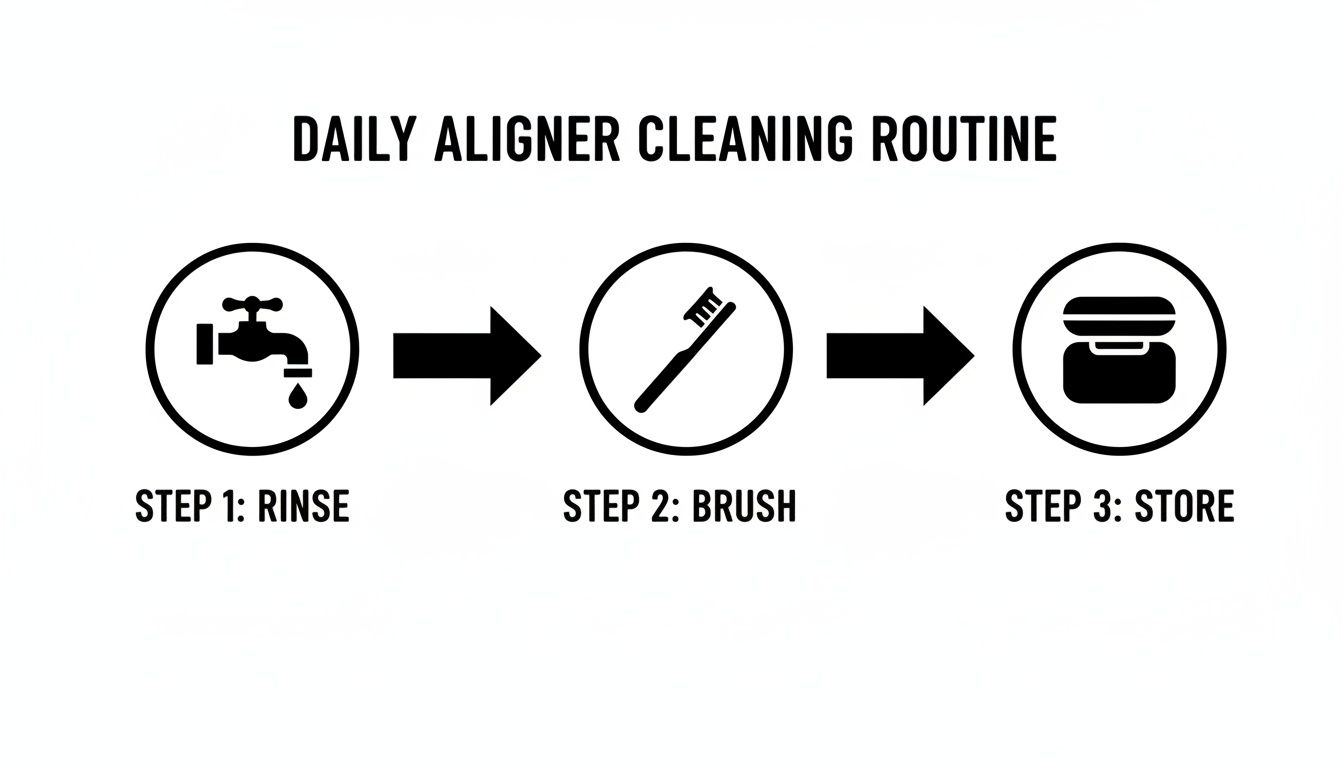
The key takeaway is that daily care is a quick, three-part process: rinse immediately, brush gently, and always store your aligners safely in their case. It takes less than a minute.
To keep things crystal clear, here’s a quick reference table summarising the daily do's and don'ts. Getting these habits right is a cornerstone of effective preventive care during orthodontic treatment.
> A clean aligner isn't just about looks—it's a sign of a healthy mouth. Skipping your daily cleaning is like inviting plaque to a party right on your teeth.
Daily Invisalign Cleaning At a Glance
Here’s a quick summary of the essential habits you'll want to build to keep your aligners fresh and your treatment on track.
| Action | Best Practice (The 'Do') | Common Mistake (The 'Don't') | | :--- | :--- | :--- | | Rinsing | Rinse with lukewarm water every time you remove them. | Leaving them to dry with saliva and food particles on them. | | Brushing | Use a dedicated soft-bristled brush and clear, unscented soap. | Brushing with abrasive toothpaste, which creates scratches. | | Storing | Always keep them in their protective case when not in use. | Wrapping them in a napkin or leaving them on a counter. |
Following these simple steps ensures your aligners stay comfortable, clear, and hygienic from the day you get them to the day you switch to your next set.
Deep Cleaning Methods to Banish Stubborn Buildup
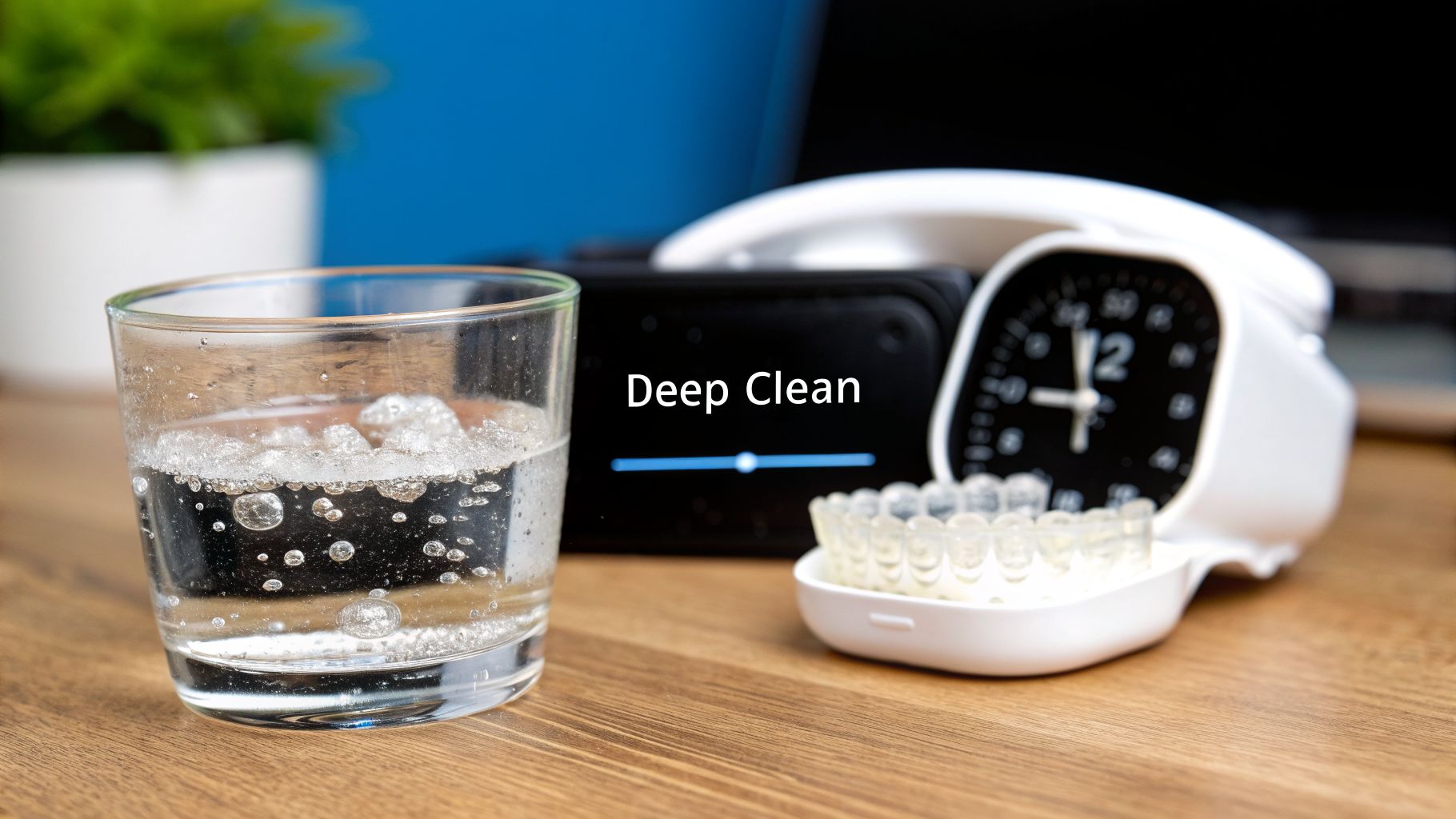
While your daily brush-and-rinse is a great start, it's not always enough to keep your aligners perfectly clear and fresh. Think of it this way: your daily routine handles the surface-level gunk, but a regular deep clean is what truly gets into all the tiny grooves and sanitises your aligners.
Without it, you might start to notice a cloudy film or a stubborn odour that just won’t go away. This deep clean targets the microscopic bacteria clinging to the SmartTrack™ material, preventing the build-up of plaque and keeping your aligners looking invisible.
Using Specialised Cleaning Solutions
Honestly, the safest and most effective way to deep clean your aligners is by using products made specifically for them. These have been formulated to be tough on bacteria but gentle on the aligner plastic.
- Invisalign Cleaning Crystals: These are the official cleaning product straight from Invisalign. You dissolve the crystals in water to create a sanitising bath that works wonders on plaque and odours. A quick 15-minute soak a few times a week is all you need.
- Retainer Cleaning Tablets: You've probably seen these in the dental aisle at the chemist or supermarket. They’re effervescent tablets that fizz away, lifting build-up from your aligners without using harsh chemicals that could damage them. They work much like denture cleaners but are formulated for orthodontic plastics.
With either option, the process is simple. Just pop your aligners into the solution while you eat a meal. Afterwards, give them a quick, gentle brush and a really good rinse before putting them back in your mouth.
> Don’t underestimate the power of a good soak. A study found that soaking aligners in a specialised cleaning solution can reduce bacteria by over 99%, significantly improving oral hygiene during treatment.
Safe At-Home Soaking Remedies
In a pinch? If you've run out of your usual cleaners, you can turn to a couple of household items. Just remember, these are best used as an occasional backup, not your go-to deep cleaning method.
A diluted white vinegar solution is one of the better home remedies. The natural acidity is great for breaking down those chalky, white mineral deposits (calcium) that can make your aligners look hazy.
Here’s the right way to do it: 1. Mix the solution: Grab a small cup and mix one part white vinegar with three parts lukewarm water. Don't use hot water! 2. Soak your aligners: Make sure your trays are fully submerged and let them sit for about 20-30 minutes. 3. Brush and rinse: Once the soak is done, use your soft-bristled toothbrush to gently scrub away any loosened film. 4. Rinse thoroughly: This is important! Rinse your aligners under cool running water until any hint of a vinegar taste or smell is completely gone.
This is a fantastic trick for tackling cloudiness now and then, but it doesn't replace daily brushing or a proper soak with an approved cleaner. Keeping your teeth and gums healthy is just as important, which is something we always focus on during your regular check-ups at Oasis Smiles Dental.
Of course. Here is the rewritten section, crafted to sound completely human-written and natural, with all your requirements in mind.
***
Common Cleaning Mistakes That Can Wreck Your Aligners
Knowing the right way to clean your Invisalign is great, but knowing what *not* to do is just as critical. I've seen so many patients with the best intentions accidentally damage their aligners, which can be a real setback for their treatment. A few simple slip-ups can turn those crystal-clear trays into a cloudy, warped, or smelly mess.
One of the biggest culprits? Hot water. It feels like it should give a deeper clean, but for Invisalign, it’s a disaster waiting to happen.
> Your aligners are made from a special medical-grade plastic, precision-moulded to your teeth. When you hit them with hot water, that plastic can warp. A warped aligner is a useless aligner.
It won’t just feel weird in your mouth; it simply won't move your teeth correctly. This can slow down your progress or, in some cases, even start to undo the work you’ve already done. Stick to lukewarm or cool water, always.
Ditch the Abrasives and Harsh Cleaners
Another classic mistake is reaching for your regular toothpaste. It’s perfect for your teeth, but it’s terrible for your aligners. Most toothpastes have tiny abrasive particles in them that are meant to scrub stains off your tooth enamel. On the softer plastic of your trays, those particles are like fine-grit sandpaper.
All that scrubbing creates thousands of microscopic scratches, which leads to two big problems: * Your aligners lose their clarity and start to look dull and cloudy—not exactly the "invisible" look you're going for. * Those scratches become perfect hiding spots for bacteria and plaque, which is what causes bad odours and a general feeling of "ick."
On that note, stay away from coloured or scented soaps. The dyes can easily stain the clear plastic, giving your aligners a permanent yellow or blue hue. Plus, nobody wants their mouth to taste like soap for hours.
The same goes for most heavy-duty denture cleaners. They might seem like a smart idea, but many are formulated for the tough acrylic in dentures and are far too aggressive for Invisalign's specific material. Using them can make the plastic brittle and more likely to crack over time.
Why Your Daily Habits Matter So Much
Proper aligner care isn't just a suggestion; it’s a crucial part of making sure your treatment works. This is something dentists keep a close eye on. A 2024 survey of Australian dentists revealed that 61.2% use Invisalign in their practice, and many—like the 23.4% who schedule 8-week progress checks—use these appointments to check that patients are keeping their aligners clean.
Simply rinsing your aligners every single time you take them out is a non-negotiable first step. Your aligners spend up to 22 hours a day in your mouth, a warm and moist environment where bacteria thrive. Skipping these simple habits is a recipe for trouble. You can see more on how dentists are tracking patient care by reviewing these findings on Invisalign hygiene standards.
How to Fix Stains, Odours, and Haziness
Even when you’re a pro at your daily cleaning routine, life can get in the way of perfectly clear aligners. That morning coffee stains faster than you realise, a strange odour appears from nowhere, or a hazy, chalky film just won’t budge. Don’t panic—these are incredibly common issues and, thankfully, completely fixable.
It’s a problem I see all the time, and it often just comes down to a simple awareness gap. Believe it or not, a staggering 87% of Invisalign users in Australia aren't entirely sure about the best ways to clean their aligners. This little blind spot is what often leads to the very stains and odours you might be noticing. You can read more about these common aligner care gaps on kellyvillesmiles.com.au if you're curious.
Tackling Stubborn Yellow Stains
Yellowing is hands down the most frequent complaint, and the culprits are usually pigmented foods and drinks. Things like coffee, tea, red wine, and curries are notorious for leaving their mark. While the best defence is always to take your aligners out before indulging, sometimes life happens.
For a light yellow tinge, a quick soak in a specialised retainer cleaning tablet can often lift the discolouration right out. If the stains are a bit more set in, you can try a targeted approach with hydrogen peroxide. Just create a mix of one part hydrogen peroxide (3% solution, which you can find at most chemists) and one part lukewarm water.
Let your aligners sit in this solution for about 30 minutes. The peroxide is a gentle bleaching agent that's safe for the aligner plastic. Once they’re done soaking, give them a gentle scrub with your soft-bristled brush and rinse them really well before popping them back in.
Getting Rid of Unpleasant Odours
What about that funky smell you sometimes notice in the morning? That’s a dead giveaway that bacteria are building up. Saliva and tiny food particles create the perfect environment for them to thrive, which results in that distinct, not-so-pleasant odour.
> Key Takeaway: An aligner odour is more than just unpleasant; it's a warning sign of bacterial buildup. Tackling it quickly is a must for your oral health.
The most effective way to banish smells is with a soak using official cleaning crystals or a good retainer tablet. These products are specifically designed to kill odour-causing bacteria, not just cover up the scent. A 15-minute soak is usually all it takes to make them feel and smell brand new again.
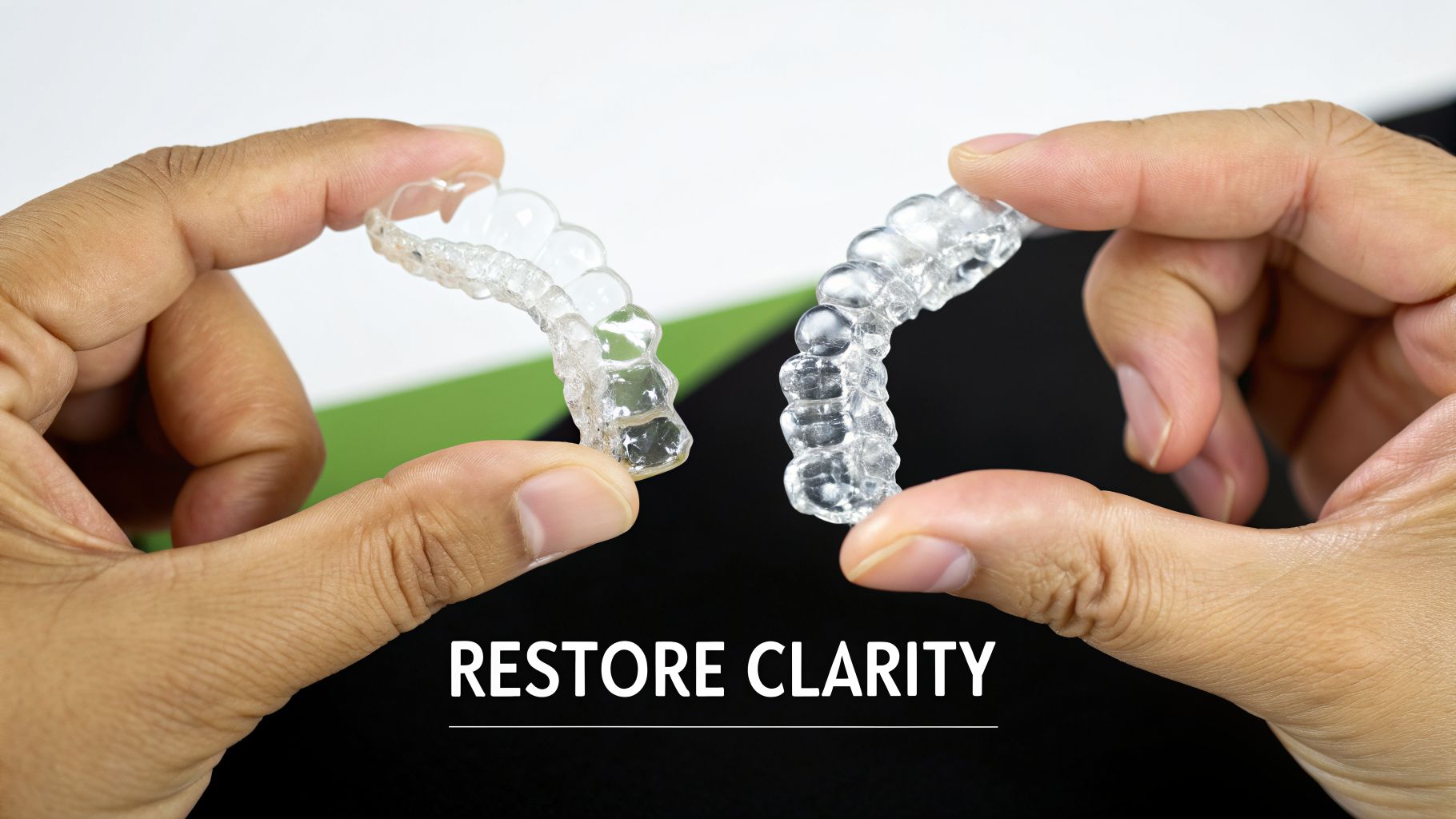
Banishing the Hazy, White Film
Ever pull out your aligners and see a cloudy, chalky white film that won’t brush off? That’s calcium buildup, also known as tartar. It’s the exact same hardened plaque that can form on your teeth, and it comes from the minerals naturally present in your saliva.
To dissolve this stubborn film, you need a little help from a mild acid, and a diluted white vinegar soak is the perfect home remedy for the job.
- Mix one part white vinegar with three parts lukewarm water. Don't be tempted to use more vinegar; this ratio is all you need.
- Let your aligners soak for about 20-30 minutes.
- After soaking, gently brush them with a soft toothbrush. You’ll find the film comes away much more easily now.
- Finally, rinse them thoroughly under cool running water until there's no trace of vinegar smell left.
This little trick is fantastic for restoring your aligners' crystal-clear appearance. Knowing how to troubleshoot these specific problems means you can keep your smile journey discreet and confident from start to finish.
Looking After Your Teeth and Gums During Treatment
Keeping your aligners clean is one thing, but what about the teeth and gums underneath? It’s a crucial piece of the puzzle. When you wear your aligners for up to 22 hours a day, you’re creating a sealed environment in your mouth, which makes your daily oral hygiene more important than ever.
Think of it this way: your aligners fit perfectly over your teeth, which is fantastic for straightening them. The downside? Anything left on your teeth—tiny food particles, sugar from a drink—gets trapped right against your enamel. Saliva can't get in to do its usual job of washing things away, giving bacteria the perfect chance to thrive.
Your Must-Do Oral Hygiene Routine
To keep your smile healthy throughout your Invisalign journey, you need a rock-solid routine. This isn't just a suggestion; it's the best way to prevent cavities and gum irritation from developing while your teeth are covered.
Before your aligners go back in your mouth, no exceptions: * Brush Your Teeth: Give them a thorough two-minute brush, getting into every nook and cranny. This clears out all the plaque and food debris that would otherwise be locked in. * Floss or Use Interdental Brushes: Don't skip the floss! It's the only way to clean between your teeth, a prime spot for cavities to start when aligners are involved.
> The bottom line is, anything left on your teeth when you pop your aligners back in gets trapped. It essentially becomes a prolonged acid attack on your tooth enamel. Those extra two minutes you spend brushing and flossing are your best defence.
The Importance of Professional Dental Care
Even with the most diligent at-home care, regular visits to your dentist are non-negotiable during your Invisalign treatment. We can spot potential issues long before you can see or feel them. These appointments are about much more than just tracking your teeth's movement; they’re about protecting your overall oral health.
At Oasis Smiles Dental, we keep a close eye on the gum health of all our Invisalign patients. We watch for the earliest signs of inflammation or gingivitis, which can sometimes be made worse by aligners if hygiene isn't perfect. A professional clean is the only way to remove hardened plaque (tartar), ensuring your gums stay healthy and firm. Without this professional oversight, you could run into problems that might delay your treatment. You can learn more about how to spot and manage the early signs of gum disease in our detailed guide.
By pairing a meticulous daily routine with regular professional check-ups, you can be confident that when your treatment is finished, your new smile will be as healthy as it is straight.
Your Local Invisalign Support in Tamworth
Figuring out the best way to clean your Invisalign aligners is a big part of getting a great result, but you shouldn't have to do it alone. Think of it as a partnership between you and your dental team. Here at Oasis Smiles Dental, we guide our Invisalign patients in Tamworth and across the New England region through every single step.
From the very beginning, we use advanced tools like our Trios digital scanners to get a perfectly accurate 3D map of your teeth—no more goopy, uncomfortable impressions. From that point on, we're with you for every check-up to make sure your teeth are moving correctly and your aligners are staying crystal clear.
We Are Here to Help
Have you spotted a stubborn stain that just won’t lift? Or maybe you're worried you're not cleaning your aligners quite right? That's exactly what we're here for.
Our dentists are always happy to answer your questions or help you solve any little problem you might run into with your aligner care. Our job doesn't stop once you walk out the door.
> Expert help makes all the difference. Having a local team you can trust for quick advice ensures small problems with aligner care don't turn into big ones that could affect your treatment.
You can find us conveniently located near the Northgate Shopping Centre, where we love serving local families with friendly and reliable dental care. We’re here to help you get the best possible results. You can learn more about our Invisalign process and see how we support our patients from start to finish.
If you have any questions or you’re ready to schedule your next check-up, please get in touch. We welcome everyone with a warm, patient-first approach and offer flexible payment options to make top-quality care accessible for our community.
Your Invisalign Cleaning Questions, Answered
When you start your Invisalign journey, you'll naturally have a few questions about keeping your aligners in top shape. As dentists, we've heard them all. Here are the answers to the questions we get asked most often.
Can I Use Toothpaste to Clean My Invisalign Aligners?
This is a big one, and the answer is a firm no. It seems like it would make sense, but toothpaste is designed for tough tooth enamel, not the medical-grade plastic of your aligners. Most formulas contain tiny abrasive particles that will create thousands of micro-scratches on the surface.
These scratches make your aligners look dull and cloudy, but worse, they create the perfect hiding spots for bacteria to thrive. Always stick to a soft-bristled toothbrush and a bit of clear, unscented liquid soap, or use a cleaner made specifically for aligners.
How Often Should I Deep Clean My Aligners?
For the best results, we recommend a deep clean at least once a day. An easy way to fit this into your routine is to soak your aligners while you eat breakfast or dinner.
Using a product like Invisalign Cleaning Crystals or a specialised retainer cleaning tablet will give them a thorough sanitisation, killing bacteria and keeping buildup at bay. If you can’t manage a daily soak, even doing it a few times a week makes a huge difference.
> A quick rinse under the tap is never enough. A daily soak is your best line of defence against the plaque and bacteria that cause bad smells and staining, keeping your aligners truly invisible.
What if I Can’t Brush My Teeth After Eating?
We get it—life happens. Sometimes you're out and about and just can't get to a toothbrush right after a meal or coffee.
If you're in a pinch, the best thing to do is swish your mouth vigorously with water before putting your aligners back in. Give your aligners a quick rinse with water, too. This isn't a replacement for proper brushing, but it will help wash away loose food particles and neutralise acids. Just make sure you give your teeth and your aligners a proper clean as soon as you get the chance.
***
Keeping your Invisalign aligners clean is a crucial part of getting the smile you want. If you run into any issues or just need some personalised advice, the team at Oasis Smiles Dental is always here to support you. Schedule your next check-up or consultation with us today!