

8 Signs of Tooth Decay in Children You Shouldn't Ignore
Is that small mark on your child’s tooth something to watch, or a sign you should book an appointment now?
Early tooth decay is easy to miss. It often starts with subtle changes such as a chalky white patch, a dark line in a groove, or a child who suddenly avoids cold drinks or chews on one side. Pain is a late sign in many cases. By the time a child clearly says a tooth hurts, the decay may already have moved beyond the outer enamel.
Tooth decay is also common enough in school-aged children that parents benefit from knowing what to look for before a routine check turns into an urgent visit. The prevalence matters because early changes can often be managed with simpler, more conservative care, while deeper decay may need fillings, crowns, or treatment for infection.
This guide gives you a practical way to assess what you are seeing at home. For each sign, you’ll learn what it may mean, whether it points to an early or more advanced problem, how to check it safely, and what action makes sense next. Some changes call for monitoring and a prompt dental review. Others need faster attention because waiting can mean more pain, a larger cavity, or a higher chance of the tooth becoming infected.
The goal is clarity. Parents do not need to diagnose decay on their own, but they should know the difference between a minor change that still needs checking and a sign that deserves treatment without delay. We also connect each sign to the modern treatment options available locally at Oasis Smiles Dental, so you know what help may be recommended once your child is in the chair.
1. Brown or Black Spots on Teeth
Have you noticed a dark mark on your child’s tooth that stays there after brushing?
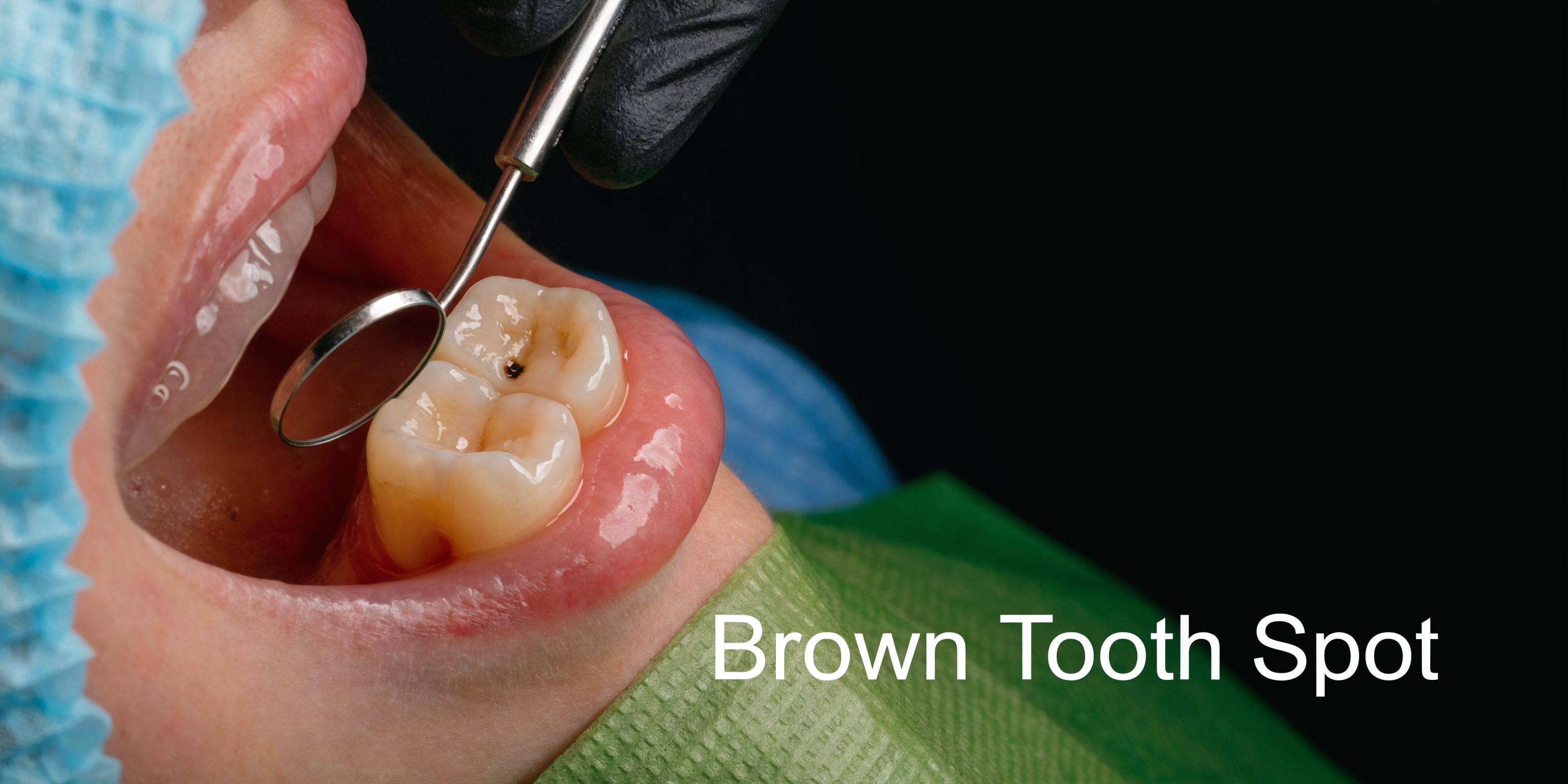
Brown or black spots are easy to spot and easy to misread. Some are harmless surface stains from food, iron drops, or plaque sitting in deep grooves. Others mark an area where the enamel has softened and decay has already started to spread. The difference matters because a stained tooth can often be monitored, while a decayed tooth usually needs treatment before the spot turns into a hole.
What it usually means
A dark spot on a chewing surface often suggests decay has moved past the earliest white-spot stage and into actual enamel breakdown. If the mark sits in a groove and feels rough, catches food, or seems to be getting darker, I treat that more seriously than a flat stain that has looked the same for months.
The location gives parents useful clues. A thin dark line in the pits of a back molar may be early decay or deep staining. A brown area between teeth is more concerning because decay commonly starts there and is hard to see fully at home. A dark patch near the gumline on a front tooth can also signal active decay, especially in younger children who still use bottles, sippy cups, or frequent sweet drinks.
Children often have no pain at this stage. That is one reason these spots get missed.
How to check it at home
Check after brushing, under a bright phone torch or bathroom light. Teeth are easier to assess when they are dry, so gently blot the area with clean gauze or tissue if your child allows it.
Look for these patterns:
- Groove spots: Dark dots or lines on the chewing surface of molars.
- Between-tooth shadows: Grey, brown, or dull areas where two teeth touch.
- Texture changes: A spot that looks matte, rough, or chipped rather than smooth and shiny.
- Food trapping: The same area catching food day after day.
- Change over time: Photos taken a few weeks apart can show whether the mark is stable or spreading.
A spot that wipes clean is less worrying. A spot that stays put, deepens, or starts to hold food needs a dental review.
What to do now
Book an appointment if the mark is new, getting darker, or hard to clean. Waiting for pain is a poor strategy because once a child feels definite discomfort, the cavity is often deeper and treatment becomes more involved.
At Oasis Smiles Dental, the next step depends on what the tooth shows on exam. Early areas may be managed with fluoride treatment, dietary advice, and close review. If the enamel has broken down, a small filling may be the best option. If the decay is larger in a baby molar, a crown is sometimes the more reliable choice because it protects the tooth better than a simple filling in a high-wear area.
The practical takeaway is simple. If a dark spot stays after brushing, treat it as a sign worth checking, not a stain to keep guessing about.
2. Tooth Sensitivity and Pain
Has your child started avoiding ice cream, sipping only on one side, or telling you a tooth feels “zingy” or sore?
That kind of complaint matters because sensitivity often signals that decay has moved past the enamel into the layer underneath. At that point, cold, sweet foods, and even a breath of air can set it off. Pain that starts on its own, lingers after eating, or wakes a child overnight suggests a deeper problem and needs prompt assessment.
What this sign can mean
Mild, brief sensitivity is often an earlier warning sign. A child may notice it with cold milk, fruit, or dessert, then seem fine a minute later. That can happen when enamel has softened or a small cavity has started to expose the inner tooth.
Stronger pain changes the picture. If your child points to one tooth repeatedly, refuses brushing in the same area, or cries when lying down at night, I treat that as more than “just sensitivity.” In practice, those are the cases where we are more concerned about inflammation inside the tooth, not just surface damage.
Some children do not describe pain clearly. They say a tooth feels funny, chew slowly, or become upset at mealtimes. Parents often notice the pattern before the child can explain it.
How to check at home
You do not need to poke the tooth to learn something useful. Watch for patterns instead.
- Cold reaction: Does your child flinch with cold drinks or ice cream?
- Sweet reaction: Do sugary foods trigger a complaint in the same spot?
- Brushing avoidance: Do they pull away when the brush reaches one area?
- Night pain: Does the tooth bother them more at bedtime or wake them from sleep?
- One-sided chewing: Are they keeping food away from one side of the mouth?
A single complaint may not tell you much. The same trigger, in the same place, over several days is more meaningful.
What to do now
Keep meals soft and lukewarm until the tooth is checked. Yoghurt, eggs, pasta, rice, and mashed vegetables are usually easier than crunchy, sticky, or very cold foods. Keep brushing with a soft toothbrush because plaque around a sore tooth tends to make the irritation worse.
Avoid trying to “test” the tooth repeatedly with cold foods. That usually adds stress without helping you decide the next step.
If the pain is mild but recurring, book a dental visit soon. If your child has facial swelling, significant pain, trouble sleeping, or cannot eat properly, call promptly rather than waiting for a routine review.
At Oasis Smiles Dental, treatment depends on how far the decay has progressed. Early areas may settle with fluoride support and close monitoring. If a cavity has formed, a tooth-coloured filling for children’s tooth decay may be the right option. If the nerve is involved, the plan can become more involved, which is exactly why early review matters.
Pain is a useful warning sign. Once a child starts reacting to hot, cold, or sweet foods regularly, it is time to stop watching and get the tooth assessed.
3. Visible Holes or Pits in Teeth
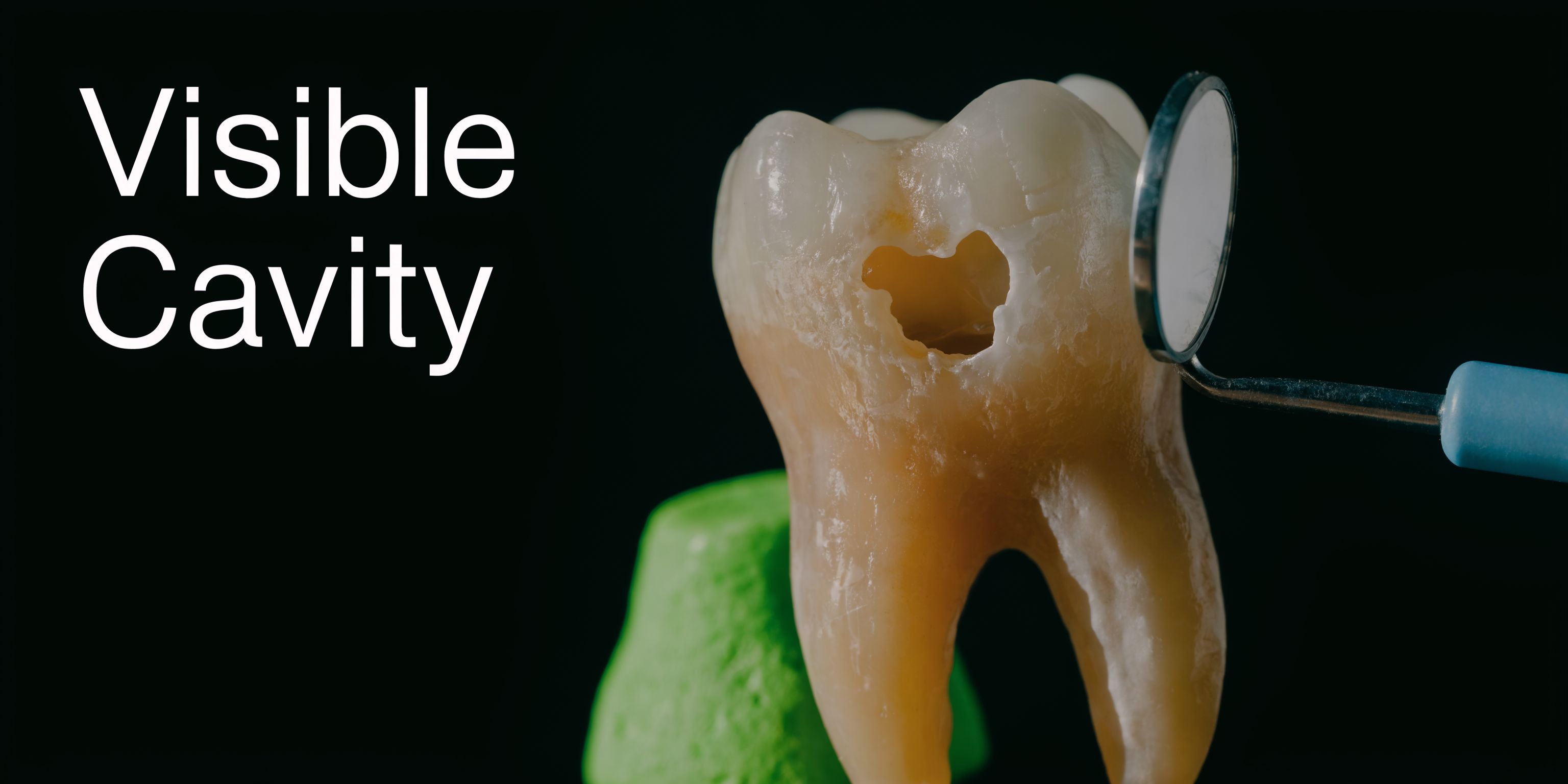
Can you see a dip, hole, or rough patch in your child’s tooth? If the answer is yes, decay has usually moved past the earliest warning stage and into a true cavity.
A cavity changes the shape of the tooth. The surface may look sunken, chipped, crumbly, or pinched in around a small opening. Baby teeth are more vulnerable because their enamel is thinner, so a small-looking defect can still hide deeper damage underneath. Once tooth structure has been lost, brushing and fluoride still help protect the surrounding areas, but they do not rebuild the missing part of the tooth.
What this usually means
Visible pits on the biting surface often start in the natural grooves of molars, where food and plaque sit longer. A small hole near the front of a tooth can spread quickly if the enamel around it has already softened. In practice, once a parent can see a defect clearly in normal light, I treat that as a sign to book an assessment rather than keep watching it at home.
This is the point where the question shifts from "Is this early decay?" to "How much of the tooth is still strong enough to save?""
How to check at home
Look in good light after brushing, with the tooth as dry as your child will allow. A true cavity usually stays visible from more than one angle. It may catch the edge of a fingernail, trap food repeatedly, or look darker in the centre than the surrounding enamel.
Avoid pressing sharp objects into the area. That can break weakened tooth structure and make a small problem worse.
What to do now
Book a dental visit soon. If the area is broken, painful, or catching food every day, don’t leave it for a routine review months away. If your child develops swelling, increasing pain, or you are worried the tooth may have fractured further, arrange urgent dental care for children.
While you wait:
- Brush the area gently: Plaque around an open cavity speeds further breakdown.
- Offer lower-sugar meals and snacks: Frequent sugary drinks or grazing give cavity-causing bacteria more chances to feed.
- Make a quick note of changes: Has the hole grown, started trapping food, or become sore with chewing?
- Skip DIY temporary fixes: Pharmacy repair kits can cover the opening, but they do not remove decay or treat infection.
At Oasis Smiles Dental, the treatment depends on what the examination and X-rays show. A smaller cavity may be managed with a dental filling. A tooth that is badly broken down may need a more protective restoration or, in some cases, a different plan altogether. The trade-off is simple. Earlier treatment is usually smaller, easier, and more comfortable for children than waiting until the tooth starts breaking apart.
4. Swelling, Redness, or Abscess Formation
This is one of the signs parents should treat as urgent.
A swollen cheek, a red puffy gum near one tooth, or a pimple-like lump on the gum can mean the infection has moved beyond the tooth itself. At this point, the body is reacting to bacteria in the nerve space or surrounding tissues.
When decay has become an infection
Children don’t always say, “My tooth is infected.” They might say their face feels funny, refuse food, become clingy, or point vaguely to one side of the mouth.
A child with a primary molar abscess may wake with a fuller-looking cheek or complain that biting hurts. Sometimes the pressure builds and then eases when the abscess starts to drain. That temporary relief can fool families into thinking the problem is improving. It isn’t.
In rural and regional communities, delayed care can compound problems. National and NSW-linked oral health data in the verified material also notes higher burdens in disadvantaged and non-metropolitan groups, which is one reason early intervention matters so much for families across areas like Tamworth and New England.
What to do right away
Don’t squeeze the lump. Don’t put aspirin on the gum. Don’t wait to see whether it settles over the weekend.
Seek urgent dental care. Oasis Smiles provides emergency dentistry, and same-day emergency appointments may be available when you call before 1pm.
While arranging care:
- Rinse gently with warm salt water: If your child is old enough to swish and spit safely, this can help soothe the area.
- Offer suitable pain relief: Follow the product instructions or pharmacist advice.
- Watch the whole child: Fever, increasing swelling, or a child who becomes very flat needs prompt attention.
> A gum boil or swollen cheek linked to a sore tooth isn’t a routine check-up issue. It’s an urgent problem.
What works is fast treatment and follow-up. What doesn’t work is relying on antibiotics alone without dental assessment. If the tooth remains infected, the source often persists.
5. Persistent Bad Breath Halitosis
Morning breath is normal. Bad breath that lingers through the day, returns soon after brushing, or smells unusually foul can point to a dental problem.
Parents often think of stomach issues first. In children, the mouth is a much more common place to start looking.
Why decay can affect breath
Deep cavities trap food and bacteria. Infected teeth and inflamed gums can also produce a noticeable odour. If the smell improves only briefly after brushing, there may be something hiding where a toothbrush can’t reach well, such as between teeth or inside a cavity.
This sign deserves extra attention in children who don’t report discomfort clearly. Verified material provided for this article notes that a 2025 Australian Dental Journal study reported bad breath as the primary detectable sign in many autistic children in rural Australia, particularly where brushing avoidance made other signs harder to identify. That’s a useful clinical reminder even beyond that group. Sometimes halitosis is the first clue families notice.
How to tell if it’s likely a mouth issue
Look for patterns:
- Breath that stays unpleasant after brushing
- Food packing between teeth
- Bleeding when brushing or flossing
- A child who resists cleaning one area
A practical example is the child with a cavity between two back teeth who has no obvious hole from the front, but consistently has foul breath and complains that meat or bread gets stuck.
What helps is improving brushing and flossing, encouraging water, and checking the tongue as well as the teeth. What doesn’t help is masking the smell with mouthwash and assuming the problem is solved.
If bad breath persists, a dental exam is sensible. Decay isn’t the only possible cause, but it’s one that should be ruled out early.
6. Difficulty Eating or Favouring One Side
Does your child suddenly chew on one side, avoid crusty foods, or take far longer to finish a meal?
Parents often notice these changes before a child can explain what hurts. Biting pressure can make a decayed tooth sore well before there is visible swelling or a clear complaint of pain. A child may cope by shifting food to the other side, choosing softer foods, or refusing foods they previously ate without trouble.
What this usually means
Favouring one side is often a functional sign of dental discomfort. In the earlier stages, a child may only avoid hard, cold, or chewy foods. If the decay is deeper, even normal chewing can trigger pain, and eating becomes slow, frustrating, or inconsistent.
This matters in regional communities as well. The Australian Institute of Health and Welfare reports poorer oral health outcomes and higher levels of potentially preventable dental hospitalisations outside major cities, which supports taking changes in eating habits seriously rather than writing them off as a phase.
How to check at home
Look for a pattern over a few meals, not just one difficult dinner.
- Notice which foods cause trouble: Crunchy, chewy, cold, or hot foods often expose the problem first.
- Watch the chewing side: Consistently using the same side is more concerning than occasional preference.
- Ask simple questions: “Does it hurt when you bite?” works better than “Do you have tooth pain?”
- Check for food avoidance: A child may still be hungry but avoid the foods that put pressure on one tooth.
One common example is the child who will eat yoghurt, pasta, or banana happily but leaves meat, toast, or apple slices untouched. That pattern often points to pain on biting rather than ordinary fussiness.
What to do straight away
Keep meals comfortable while you arrange care.
- Offer soft, nutritious foods such as eggs, porridge, soup, yoghurt, avocado, and well-cooked rice or pasta.
- Avoid very hot, very cold, or hard foods if those seem to trigger pain.
- Do not test the sore side repeatedly by asking your child to chew there “just to see”.
- Book a dental check-up for children with eating discomfort if the pattern lasts more than a day or two.
At Oasis Smiles Dental, what happens next depends on the cause and how advanced it is. Early decay may be managed with preventive care and close review. A tooth with a cavity affecting biting pressure may need a filling. If the nerve is involved or the tooth is badly broken down, more involved treatment may be the better option. The goal is simple: make eating comfortable again and stop the problem from progressing.
7. White Spots or Chalky Appearance on Teeth
Have you noticed a dull white patch on your child’s tooth that does not brush away?
That change is easy to dismiss, but it often matters. A white, matte, chalky area can be an early sign that enamel is losing minerals. At this stage, the tooth surface may still look intact and your child may have no pain at all. That is exactly why parents miss it.
These spots commonly show up near the gumline, around crowded teeth, or in areas where plaque sits undisturbed. They can also appear after a period of frequent snacking, bedtime milk or juice, or inconsistent brushing. In practice, I treat white spot lesions as an early warning. They are often the point where we still have a good chance to slow or stop the process before a cavity forms.
Australian health guidance recognises early childhood caries as a significant problem for young children, particularly where preventive factors such as fluoride exposure and regular dental care are harder to access. For parents, the practical takeaway is simple. A chalky patch is worth checking early, especially in a preschool child or on newly erupted teeth.
How to check what you are seeing at home
Dry the tooth gently with a clean tissue or gauze and look in natural light or a bright bathroom mirror. Early enamel changes often stand out more clearly when the tooth is clean and dry.
A few clues help: - Flat, chalky, matte white areas suggest early mineral loss. - Shiny cream or light white enamel is more often a normal colour variation. - Spots near the gumline that stay visible over several days deserve closer attention.
Do not scrape at the area or keep pressing on it to test it. A photo on your phone can help you track whether it is changing.
What to do straight away
- Keep brushing twice daily with fluoride toothpaste and pay extra attention to the area without scrubbing harshly.
- Cut down frequent sugary drinks and snacks between meals, because repeated sugar exposure feeds the decay process.
- Offer water after snacks or milk feeds if your child is old enough.
- Arrange a review with a dentist who provides children’s preventive dental care if the spot is new, spreading, or sitting near the gumline.
At Oasis Smiles Dental, treatment depends on whether the enamel change is early and inactive or whether it is starting to break down. Early white spot lesions may respond well to fluoride treatment, better plaque control, diet changes, and close monitoring. If the area is softening or progressing, we may need to step in more actively to protect the tooth. Acting at the white-spot stage often means simpler care, less discomfort, and a better chance of avoiding drilling later.
8. Behavioural Changes and Irritability Related to Dental Discomfort
Not every sign of tooth decay in children is visible inside the mouth.
Some children show it in their behaviour first. They become irritable late in the day. They sleep poorly. They wake overnight. They resist toothbrushing more than usual. They stop concentrating well at school. Younger children may rub their face, dribble more, or become unusually clingy.
When the mouth hurts but the child can’t explain it
This matters most in very young children and children who don’t easily describe pain. Verified material supplied for this article notes that children with developmental disabilities in regional NSW can have much higher untreated caries rates than the general child population, and they may not report classic symptoms reliably. In those children, a parent may notice sleep disruption, bad breath, or brushing refusal long before a direct pain complaint.
A very ordinary example is the preschooler who becomes distressed when the toothbrush reaches one back corner, but says nothing is wrong the rest of the day.
How to make sense of the pattern
Keep a short note on your phone for a few days. Record when the behaviour happens.
Look for links such as:
- After meals: Possible pressure or temperature sensitivity
- At bedtime: Toothache often feels worse when things are quiet
- During brushing: A sore area may be the trigger
- At school or daycare: Ask whether carers notice chewing changes or irritability too
If there’s a pattern, don’t dismiss it as “just a phase”. It may be, but it may also be dental discomfort. Oasis Smiles provides children’s dentistry with a family-focused approach, which is especially helpful when the signs are subtle.
What works is combining behavioural observations with an oral check. What doesn’t work is waiting for a child to use adult-style pain language before acting.
8-Sign Comparison: Childhood Tooth Decay
| Sign / Indicator | 🔄 Detection Complexity | ⚡ Resource Requirements | 📊 Expected Outcomes | 💡 Ideal Action / Use Case | ⭐ Key Advantages | |---|---:|---:|---:|---|---| | Brown or Black Spots on Teeth | Moderate, visible but can be hidden between teeth | Low–Moderate, home inspection, dental exam, mirror/torch; imaging if uncertain | Early-stage decay; reversible with fluoride/diet if caught early | Preventive intervention, monitor changes, schedule 6‑monthly check | Early warning allows non‑invasive reversal and monitoring | | Tooth Sensitivity and Pain | Low, symptomatic and localised but needs exam to pinpoint | Moderate–High, clinical exam, radiographs, pain management; possible restorative or endodontic care | Likely progressed decay; may require fillings, crowns or root treatment | Urgent dental evaluation and pain control; emergency appointment if severe | Prompts immediate care; symptom clarity accelerates treatment | | Visible Holes or Pits in Teeth | Low, visually obvious on inspection | Moderate, dental assessment, radiographs, restorative materials; possible sedation | Moderate–advanced decay; requires fillings or crowns to prevent pulp involvement | Schedule restorative treatment promptly; consider same‑day restorations | Clear evidence guiding definitive, targeted treatment | | Swelling, Redness, or Abscess Formation | Low, often obvious with systemic signs | High, emergency care, imaging, antibiotics, possible extraction or root canal, sedation | Serious infection; risk of systemic spread and tooth loss if untreated | Immediate emergency dental care and antibiotics; do not delay | Urgent sign that compels rapid intervention to protect health | | Persistent Bad Breath (Halitosis) | Moderate, subjective and multifactorial | Low–Moderate, clinical exam, possibly imaging if decay suspected; hygiene interventions | May indicate hidden decay/gum disease; improves with targeted treatment | Dental evaluation to identify cause; improve hygiene and treat lesions | Non‑invasive symptom that often leads to early detection and behaviour change | | Difficulty Eating or Favouring One Side | Moderate, observed behaviour, may be subtle | Low–Moderate, exam, radiographs, pain management, restorative care | Suggests pain-related decay; can cause nutritional/functional impact | Evaluate tooth, manage pain, plan timely restorative/sedation treatment | Observable by caregivers; prompts timely care to restore function | | White Spots or Chalky Appearance on Teeth | Moderate, subtle, may require specific lighting or tools | Low–Moderate, professional exam, fluoride therapy, monitoring, possible sealants | Earliest demineralisation stage; reversible with preventive care | Apply fluoride treatment, dietary/hygiene changes, 3‑month monitoring | Optimal window for non‑restorative reversal and prevention of cavitation | | Behavioural Changes & Irritability Related to Dental Discomfort | High, non‑specific; may mimic other conditions | Moderate, history-taking, caregiver logs, dental exam, coordination with schools/caregivers | May indicate chronic or hidden pain; treatment often improves wellbeing | Consider dental evaluation when behaviours persist; document patterns | Reveals hidden problems in non‑verbal children and improves overall wellbeing after treatment |
Your Partner in Protecting Your Child's Smile
Most tooth decay doesn’t begin with a dramatic emergency. It starts small. A chalky patch that looks harmless. A dark spot in a groove. A child who suddenly takes tiny bites or avoids cold water. Those are the moments when early action can save a lot of stress.
That’s especially important in Australia, where the burden is still high. The verified material for this article notes that decay remains one of the most prevalent chronic conditions in children, and that rural disadvantage can significantly increase the risk. For families in Tamworth and across the New England region, knowing the signs of tooth decay in children isn’t about becoming a dentist at home. It’s about recognising when your child’s mouth is asking for help.
The good news is that not every early sign leads to a major procedure. White spot lesions and very early enamel changes can sometimes be managed conservatively when they’re caught in time. Even when a cavity has already formed, prompt treatment is usually simpler, more comfortable, and less disruptive than leaving it to progress.
What helps most is a practical approach. Check your child’s teeth in good light now and then. Pay attention to changes in eating, sleep, and brushing behaviour. Take photos if you’re watching a suspicious area. Don’t assume that no complaint means no problem. And don’t feel guilty if you’ve only just noticed something. Decay can be easy to miss, especially in back teeth and between teeth.
At Oasis Smiles Dental, families have access to modern tools that can make diagnosis and care easier, including digital scanning, CBCT 3D imaging, and CEREC same-day restorations where appropriate. Those tools matter because they help the team see problems earlier and plan treatment more precisely. Just as important, the practice takes a warm, family-centred approach that helps children feel safe and parents feel informed.
If you’ve noticed any of the signs above, or you want reassurance that your child’s teeth are on track, it’s worth booking in. Oasis Smiles Dental is conveniently located at Shop 15/1 Piper Street, near the Northgate Shopping Centre in Tamworth. A proactive visit now can prevent pain, infection, and bigger treatment later. Protecting a child’s smile is rarely about one perfect habit. It’s about small, timely decisions made with the right support.
---
If you’ve noticed a spot, sensitivity, bad breath, swelling, or changes in how your child eats or sleeps, book a visit with Oasis Smiles Dental. The team welcomes local families from Tamworth and the New England region with caring, modern dental care designed to catch problems early and treat them comfortably.