

How to Fix a Chipped Tooth A Guide for Tamworth Families
A chipped tooth usually happens at the worst time. You bite into something hard at lunch, your child cops an elbow at sport, or you notice a rough edge while brushing before work. The first reaction is often panic, especially if you can feel a sharp corner with your tongue or you’re worried the tooth might keep breaking.
Most chips can be managed well when they’re assessed promptly. The key is knowing what to do straight away, what not to try at home, and which treatment suits the amount of damage. In a regional area like Tamworth, that matters even more because extra travel and limited after-hours availability can turn a manageable problem into a bigger one if you wait too long.
That Sickening Crunch What to Do in the First 30 Minutes
It often starts with a very ordinary moment. A crusty roll. A popcorn kernel. A footy collision on a Saturday. Then you feel it. A hard fragment in your mouth and a tooth that suddenly doesn’t feel like your own.
The first half hour matters because it sets you up for a smoother repair and less discomfort. Panic makes people do strange things. They poke the tooth, keep biting on it to “check it”, or throw away the broken piece. Slow down instead.
Start with the basics
Do these things first:
- Rinse your mouth gently with lukewarm water to clear away blood, food and any loose fragments.
- Check for the broken piece. If you can find it, keep it.
- Use a cold compress on the outside of the cheek if there’s swelling or you’ve had a knock to the face.
- Avoid chewing on that side until a dentist has checked the tooth.
If the fragment is intact, handle it carefully. In some cases, the fit and condition of the original piece can influence whether reattachment is possible. The highest reimplantation success is seen when fragments are preserved in milk within 30 minutes, as noted in this guide on fixing a chipped tooth and emergency dental repairs.
What people around Tamworth often face
In town, some patients can get seen quickly. Outside town, it’s different. If you’re coming in from the wider New England region, the problem isn’t just the chip. It’s trying to judge whether you can safely wait until tomorrow, whether the road trip is worth it, and whether your child will make the school day with a jagged front tooth.
That’s why the safest move is to contact a clinic that provides emergency dental care as soon as you can. Even when the chip looks small, the visible part doesn’t always tell the full story.
> A chipped tooth can be minor on the surface and still need prompt treatment if the crack runs deeper than expected.
What not to do
A few common mistakes create more trouble:
- Don’t keep testing the tooth by biting down.
- Don’t scrub the fragment if you’ve found it.
- Don’t ignore sensitivity just because the tooth “still looks okay”.
- Don’t delay the call if the tooth was chipped in a fall or sporting hit.
If you act calmly in that first half hour, you give your dentist more options. That’s the main goal.
Chipped Tooth First Aid and Emergency Red Flags
When people search how to fix a chipped tooth, they’re usually asking two questions at once. What can I do right now, and how do I know if this is urgent?
Start with first aid that protects the tooth and keeps you comfortable while you organise care.

First aid that actually helps
- Rinse gently with warm salt water. This helps clean the area and is a sensible first step if the tooth chipped during a meal or after a fall.
- Control bleeding with clean gauze if the lip or gum has also been cut.
- Keep the broken fragment moist. Milk is the usual practical option at home. If that’s not available, saliva is better than leaving the piece dry.
- Cover a sharp edge if needed with dental wax or sugar-free chewing gum until you can be seen.
- Stick to soft foods and chew on the other side.
These steps won’t repair the tooth. They protect the area and lower the chance of making things worse before treatment.
Why timing matters more in regional areas
Emergency same-day repair options matter in rural Australia because access isn’t always immediate. In the New England region, residents can face 20 to 30% longer wait times for non-urgent repairs, and a 2024 AIHW report noted that 1 in 5 rural Australians delay emergency dental care, which can increase infection risks by 25%, according to this summary on chipped or cracked teeth and rural access pressures.
That local reality changes the advice a bit. If you live outside Tamworth and you’re weighing up whether to “see how it goes”, it’s usually smarter to call early and get proper guidance than lose a day and end up needing more involved treatment.
Red flags that mean you should call immediately
> Emergency signs: severe pain, ongoing bleeding, a large missing section of tooth, visible pink or dark inner tooth structure, swelling, or a chip caused by major trauma.
Treat it as urgent if any of the following apply:
- The tooth hurts without touching it. That can mean the crack is deeper than a simple enamel chip.
- Cold air or water causes a strong jolt. Sensitivity can point to dentine or pulp involvement.
- The piece missing is large. Larger fractures often need more than a quick polish or small resin repair.
- You can’t bite properly. A shifted bite after trauma can signal a more complex fracture.
- There’s facial swelling. That raises concern about inflammation or infection.
- The tooth changed colour after the injury. That needs professional review.
If the nerve may be involved
Sometimes a chipped tooth also needs treatment to the inside of the tooth before it can be rebuilt. If deep damage reaches the pulp, a dentist may discuss options such as a root canal for an injured tooth before final restoration.
What matters most is not guessing. First aid is useful. Self-diagnosis isn’t.
Can I Fix a Chipped Tooth at Home Temporarily
Yes, you can sometimes manage a chipped tooth at home for a short period. No, you can’t safely repair it yourself in any lasting way.
That distinction matters. A temporary home measure can reduce irritation from a sharp edge or help you get through the night before your appointment. It doesn’t replace a proper examination, and it shouldn’t give you a false sense that the tooth is “sorted”.
What temporary home options can do
Chemist products have a narrow role. They’re for comfort, not repair.
A simple comparison helps:
| Temporary option | What it can help with | What it cannot do | | --- | --- | --- | | Dental wax | Covers a sharp edge | Restore strength or seal a crack fully | | Temporary filling material | Can protect a small rough area for a short time | Match the bite properly or last under chewing forces | | Soft diet | Reduces pressure on the damaged tooth | Stop the crack from spreading if the tooth is unstable | | Salt water rinse | Keeps the area cleaner and soothes irritated tissue | Fix the chip or treat internal damage |
If the chip is very small and not painful, these measures may be enough to keep you comfortable until you’re seen. That’s their job.
What doesn’t work and can make things worse
The internet is full of terrible advice for chipped teeth. The worst offender is household glue.
Never use superglue, nail glue, craft adhesive, or any home repair product on a tooth. These products aren’t made for oral tissues. They can irritate the gums, trap bacteria, interfere with proper bonding later, and make the dentist’s job harder.
Other poor ideas include:
- Filing the tooth yourself with a nail file or emery board
- Packing random materials into the chip to “fill the gap”
- Using whitening products on a recently damaged tooth
- Ignoring a chip because it doesn’t hurt yet
> Practical rule: if the plan involves a hardware drawer, beauty drawer, or toolbox, it doesn’t belong anywhere near your tooth.
Why DIY often misses the real problem
The visible chip is only part of the assessment. A dentist may need to check for hidden cracks, nerve involvement, unsupported enamel, or whether the bite now lands heavily on the damaged area.
For bonding, proper treatment depends on careful preparation. The process can include X-ray assessment, selective removal of unsupported enamel, bevelled edges to improve the bonding mechanism, cleaning to prevent contamination, shade matching, sculpting the composite to natural tooth shape, and hardening it with UV light, as outlined in this clinical explanation of dental bonding for chipped teeth.
That’s why home kits are limited. They can’t assess the crack. They can’t control moisture properly. They can’t shape the repair so your bite is balanced.
When a temporary measure is reasonable
A short-term at-home step is reasonable if all of these are true:
- The chip is small
- There’s no significant pain
- There’s no swelling or ongoing bleeding
- You already have an appointment booked
- You’re only trying to protect the area until then
If any of those aren’t true, skip the DIY idea and get the tooth checked properly. Temporary comfort is fine. Temporary confidence that everything is okay can be the risky part.
Professional Treatments to Repair Your Chipped Tooth
The right treatment depends on one thing above all else. How much sound tooth is left.
A tiny edge chip on a front tooth is a very different problem from a back tooth that’s lost a corner, or a fracture that runs close to the nerve. That’s why a good repair starts with diagnosis, not with choosing the prettiest option online.
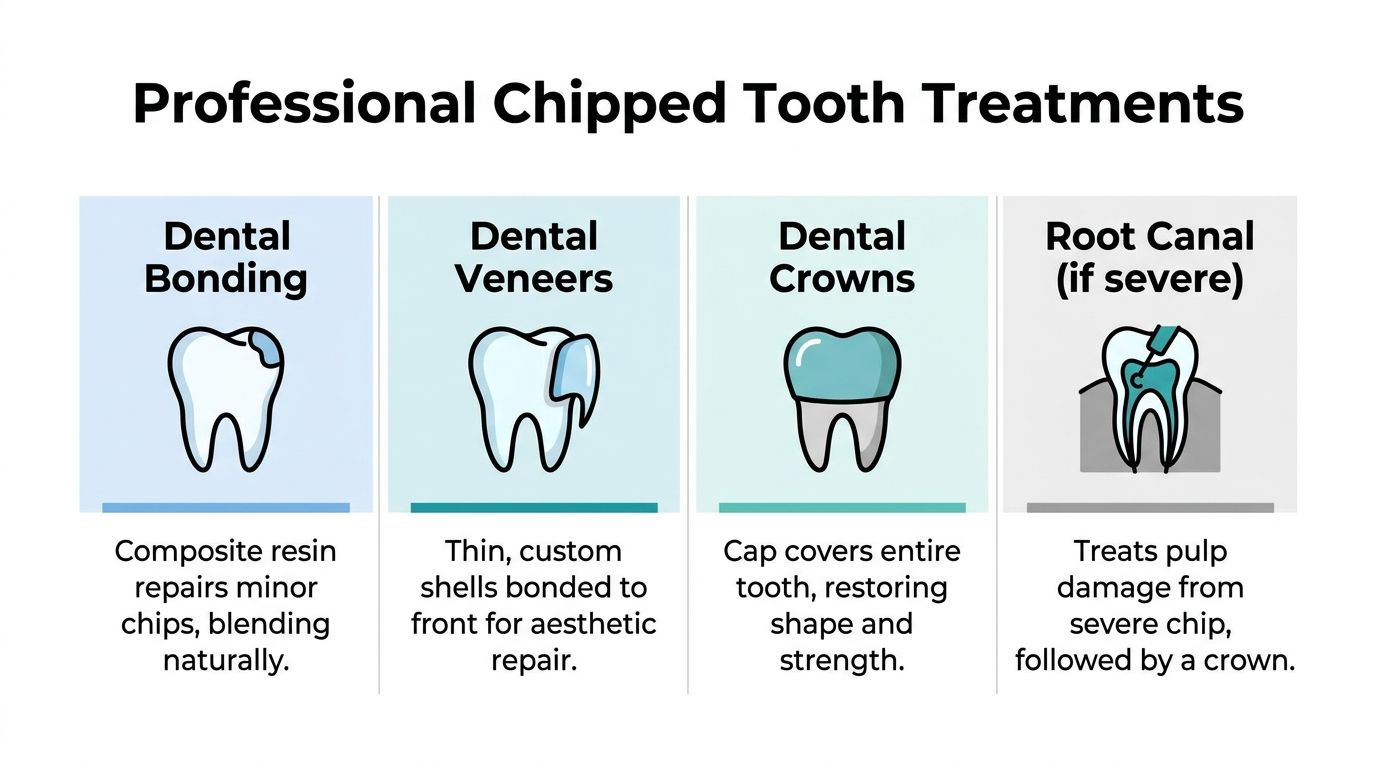
Chipped tooth repair options at a glance
| Treatment | Best For | Durability | Visits Required | Estimated Cost (AU) | | --- | --- | --- | --- | --- | | Dental bonding | Small enamel chips, minor cosmetic repairs | Typically 3 to 5 years | Usually one visit | Varies by tooth and extent of repair | | Porcelain veneers | Visible front teeth with larger cosmetic damage | More durable than bonding qualitatively | Usually two visits | Varies by case | | Dental crowns | Larger fractures, weakened teeth, heavy-bite areas | Long-term structural option qualitatively | Usually two visits, though same-day systems may reduce this in some clinics | Varies by material and complexity | | Root canal plus crown | Severe chips involving the pulp | Depends on final restoration and tooth condition | Multiple stages or combined treatment plan | Varies by tooth and complexity | | Implant | Non-restorable tooth | Long-term replacement option qualitatively | Multi-stage treatment | Varies significantly by case |
Only one row above has a precise durability figure because that’s the only verified lifespan provided in the source material. The rest should be discussed individually during an examination.
Dental bonding
For minor chips, dental bonding is often the fastest fix.
It works by attaching a tooth-coloured composite resin directly to the damaged area. The clinician shapes it to restore the missing edge or corner, then hardens it with UV light and polishes it so it blends with the natural tooth.
A proper bonding procedure is more technical than many patients expect. The tooth may need etching, careful isolation from moisture, cleaning, and shaping that matches your natural anatomy. The result can look very natural when the chip is small and the bite is favourable.
The trade-off is longevity. Dental bonding typically lasts 3 to 5 years before needing replacement, and the process involves etching the tooth, applying a tooth-coloured resin, sculpting it to shape, and hardening it with UV light. The whole procedure can be done in under one hour, but the material is more susceptible to staining and wear than porcelain, as described in this video on dental bonding for chipped teeth.
That makes bonding a strong option when:
- The chip is small
- You want a same-visit repair
- The tooth hasn’t lost much structure
- You understand it’s a conservative but not permanent solution
After bonding, soft foods for the first day are sensible because patient compliance with post-operative dietary restrictions supports a stable result.
Porcelain veneers
A veneer covers the front surface of the tooth with a custom-made porcelain shell. It’s usually considered when the chip is more visible, the front tooth needs a stronger cosmetic upgrade, or the existing tooth shape already needs improvement.
Veneers are often chosen for front teeth because porcelain holds colour well and can produce a very natural finish. The compromise is that they’re not the first pick for every chip. They require planning, design, and enough remaining tooth structure to support the restoration.
They also aren’t a same-day answer in the standard workflow described in the verified data. Larger restorations like veneers generally require two visits spanning 1 to 2 weeks for custom fabrication, with sensitivity typically settling within 1 to 2 days.
Veneers make sense when appearance is a major concern and the fracture pattern suits a front-surface restoration. They’re less useful if the tooth has major structural loss or if the bite places heavy force on the damaged area.
Dental crowns
A crown covers the entire visible part of the tooth. For larger fractures, this is often the most dependable way to restore shape, strength, and function.
Crowns matter when a tooth has lost enough structure that a simple bonded repair won’t cope with normal chewing forces. They also help protect the pulp by sealing and reinforcing what remains of the tooth.
This is usually the better option when:
- A large section of tooth is missing
- The chip extends into a load-bearing area
- The tooth already has a large filling
- The fracture pattern leaves thin remaining walls
> If a tooth is badly weakened, choosing the “smallest” treatment isn’t always conservative. Sometimes the more protective option is the one that saves the tooth.
Traditional crown treatment often takes two visits because the tooth is prepared first and the final restoration is made to fit that exact shape. In clinics using chairside systems, some crowns can be designed and made much faster, which is particularly useful for patients travelling in from outside town.
Root canal treatment when the chip is severe
A chipped tooth doesn’t always stop at the enamel. If the injury reaches the pulp, the priority shifts from shape and colour to saving the inside of the tooth.
In that situation, the tooth may need root canal treatment before a crown. This isn’t a cosmetic add-on. It’s what removes inflamed or infected pulp so the tooth can be restored safely.
The external repair still matters after that, because a root-treated tooth often needs a crown for long-term protection. Patients are sometimes surprised by this, but it’s common logic. If the inside has needed treatment because the crack went deep, the outside usually needs a stronger rebuild too.
Tooth fragment reattachment
If the broken piece is available and in good condition, reattachment can sometimes be considered.
The deciding factor is the fit and condition of the fragment. Not every piece is suitable. But when it is, reattachment can preserve the original tooth contour in a way patients appreciate, especially on front teeth.
This option is case-dependent. It’s never guaranteed, but it’s worth assessing when the fragment has been brought in promptly and handled well.
Dental implants if the tooth can’t be saved
Most chipped teeth don’t need an implant. An implant enters the conversation only when the tooth is considered non-restorable.
That usually means the fracture has extended so far that the remaining tooth can’t support a predictable repair. If that happens, the damaged tooth may need removal and replacement planning. An implant is one way to replace a lost tooth while restoring function and appearance.
It’s the last option in the hierarchy, not the first. Whenever a tooth can be repaired predictably, preserving your natural tooth is usually preferred.
Advanced Chipped Tooth Repair in Tamworth
A chipped tooth is stressful enough on its own. In Tamworth and the wider New England region, the practical problem is often time. If you are coming in from a smaller town, arranging another trip for scans, temporaries, and a final crown can turn a manageable problem into a week of disruption.
Good regional care reduces that friction early. The aim is to work out, on the first visit, whether the tooth needs a simple repair or something stronger, then complete as much of that treatment as possible without unnecessary delays.
Better assessment changes the outcome
With chipped teeth, the first decision matters more than patients often realise. A small edge chip may only need bonding. A larger break, a weakened cusp, or a tooth that has taken a heavy knock may need a veneer or crown instead. If that call is wrong, the repair can fail early or symptoms can worsen after the first appointment.
A proper assessment may involve more than a visual check, especially if the tooth feels different when you bite, looks darker, or the injury came from sport, a fall, or an accident.
Useful tools can include:
- CBCT 3D imaging if there is concern about hidden cracks, root involvement, or surrounding bone
- Digital scanners such as Trios for accurate impressions without the mess of traditional moulds
- Chairside CAD/CAM systems such as CEREC to design and make certain crowns in-house on the same day
That combination is particularly helpful in regional practice. It cuts down the guesswork, and it can cut down the travel.
Why same-day options matter here
For a patient who lives five minutes from the clinic, a second or third visit is annoying. For a parent driving in from a smaller community, it can mean missed work, school reshuffles, and another long trip with a damaged tooth that still is not properly protected.
Same-day crown technology helps with that. If a chipped tooth is too large for bonding and needs full coverage, the tooth can sometimes be scanned, designed, made, and fitted in one day. That is not possible in every case, but when it is suitable, it saves a lot of back-and-forth and gets the tooth protected sooner.
Oasis Smiles Dental offers CEREC same-day crowns, CBCT 3D imaging, Trios digital scanners, in-house 3D printing, and emergency calls before 1pm for same-day appointments. In practical terms, that means a chipped tooth in Tamworth does not always have to follow the old pattern of temporary fixes, lab delays, and repeat travel.
Practical advantages for real life
Technology only helps if the whole process works for local patients.
In a regional clinic, useful support often includes:
- Early emergency appointment systems so a fresh chip can be assessed before it worsens
- Options for anxious patients, including sleep dentistry where appropriate
- Payment flexibility when treatment cannot wait
- Acceptance of major health funds, Medicare and DVA to reduce out-of-pocket pressure
- Custom sports mouthguards for patients who chipped a tooth during footy, hockey, basketball, or other contact sport. A properly fitted guard offers better protection than a chemist boil-and-bite option. You can read more about custom mouthguards for sport and teeth grinding
I see this trade-off often. The biology of the tooth sets the treatment limits, but access shapes the outcome too. Fast imaging, same-day restoration options, and fewer return visits can be the difference between a straightforward repair and a tooth that keeps breaking down while life gets in the way.
Recovery and Preventing Future Chips
Once the tooth is repaired, the next job is protecting that result. The first few days are usually simple, but they still matter.
What you can eat, how the tooth feels, and whether the bite settles comfortably depend on the treatment you’ve had. A bonded edge, for example, doesn’t need the same caution as a newly placed crown, but both benefit from a bit of common sense.

The first few days after treatment
A few practical rules help:
- Choose softer foods at first if the tooth has just been bonded or restored.
- Avoid biting directly into hard foods with a repaired front tooth.
- Expect mild sensitivity sometimes after a larger restoration. It often settles.
- Call back if your bite feels high. A tiny adjustment can make a big difference.
If the tooth was repaired after trauma, keep an eye on how it feels over time. Ongoing tenderness, colour change, or discomfort when chewing should be reviewed.
Habits that cause repeat chips
Most re-chips aren’t bad luck. They usually happen because the original force is still there.
Common culprits include:
- Chewing ice or hard lollies
- Using teeth to open packets
- Grinding or clenching at night
- Sport without a mouthguard
- Biting pens or fingernails
In the New England region, sport is a big one. Rugby, netball, footy, basketball, and weekend farm accidents all keep dentists busy.
Prevention that works
The most useful prevention is specific, not generic.
- Wear a custom sports mouthguard if you or your child plays contact or ball sports. An over-the-counter option is better than nothing, but a custom fit is usually more secure and comfortable. If that’s relevant for your family, custom sports mouthguards are part of preventive dental care.
- Treat bruxism early if you wake with jaw tension, chipped edges, or headaches.
- Keep regular check-ups so weak edges, old fillings, and bite issues can be picked up before a corner shears off.
- Teach children not to use teeth as tools. It sounds obvious, but it prevents plenty of avoidable fractures.
A repaired tooth can serve very well. It just needs the same thing natural teeth need. Sensible force, good habits, and early review if something feels off.
Frequently Asked Questions About Chipped Teeth
What should I do if my child chips a baby tooth
A chipped baby tooth still deserves a prompt check, even when your child settles quickly and says it feels fine. Baby teeth sit close to the developing adult tooth, and a small-looking injury can still affect comfort, bite, or the way the tooth changes over the next few days.
Rinse the mouth gently, look for bleeding from the lips or gums, and use a cold compress on the outside of the face if there is swelling. In a regional area like Tamworth, parents often ask whether this can wait until they are next in town. If the tooth has changed shape, the edge is sharp, or your child is avoiding biting on that side, book an assessment soon.
Can a bonded or crowned tooth chip again
Yes. Repairs hold up well, but they still have limits under heavy force.
A bonded edge may wear or chip sooner if someone grinds, plays contact sport, or bites hard foods with the front teeth. Crowns are generally stronger, but they can still fracture or come under stress if the bite is heavy or the original problem has not been addressed. If a repaired tooth starts feeling rough, catches floss, or becomes sensitive, it is worth reviewing early before a small repair turns into a larger one.
How does fixing a chipped tooth work if I have braces or Invisalign
It is a common situation, especially for teenagers and adults already partway through orthodontic treatment. The main job is to protect the tooth first, then make sure the repair suits the planned tooth movement.
That often means a temporary bonded repair now and a more polished final repair later, once alignment is closer to finished. In practices using digital scans and same-day planning, that coordination is much easier than it used to be. For Tamworth families, that matters. Fewer trips, quicker adjustments, and less time trying to juggle school, work, and travel for separate appointments.
Can a chipped tooth wait if it doesn’t hurt
Sometimes a chip is limited to enamel and stays quiet. That does happen.
The trouble is that pain is not a reliable guide. A tooth can be painless but still have a weakened edge, a deeper crack, or a shape that puts extra pressure on the wrong spot when you chew. If the tooth looks different, feels sharp, or catches your tongue, have it checked. Early treatment is usually simpler, and in some cases local same-day crown technology can solve the problem without the long delays regional patients used to expect.
If you have chipped a tooth and want clear advice about what can realistically be done, Oasis Smiles Dental can arrange an assessment and talk you through whether a simple bond, a crown, or a staged repair makes the most sense for your tooth and your schedule.