

What Are Composite Veneers? Ultimate Guide 2026
You might be reading this because you smile with your lips closed in photos. Maybe there’s a chip on a front tooth from years ago, a gap that’s always caught your eye, or discolouration that whitening hasn’t shifted the way you hoped. That’s common, especially for busy adults and parents who want something practical, not something complicated.
Composite veneers are often the treatment people come across when they start searching what are composite veneers and whether they’re worth it. The simple answer is this. They’re thin, tooth-coloured layers of composite resin that a dentist shapes onto the front of teeth to improve how they look.
For many people in Tamworth and the New England region, that sounds appealing because it can be a straightforward way to improve a smile without the longer process often linked with lab-made veneers. But it’s only a good choice when you understand the trade-offs as well as the benefits.
Your First Step Towards a Brighter Smile
A common story goes like this. Someone has one front tooth with a small chip, another tooth that looks a bit darker than the rest, and a slight gap that seems bigger in every mirror than it probably is. They’ve put it off for years because they assume veneers mean lots of drilling, a big bill, or weeks of treatment.
Composite veneers often surprise people because they’re much simpler than that image in their head.
Think of them like a careful surface redesign for the front of a tooth. A dentist uses a tooth-coloured material and hand-shapes it to improve the tooth’s colour, outline, length, or symmetry. If the issue is a small gap, a worn edge, a mild shape difference, or a localised stain, composite can sometimes be a very practical option.
What they’re usually used for
Composite veneers can help with concerns such as:
- Small chips that make a front tooth look uneven
- Minor gaps between teeth
- Mild discolouration that doesn’t respond well to whitening
- Uneven edges that make teeth look worn
- Slight shape differences between neighbouring teeth
> Composite veneers are best understood as a cosmetic reshaping treatment, not a magic fix for every dental problem.
That distinction matters. If a tooth is badly broken, heavily filled, or the bite places a lot of stress on front teeth, another option may suit better. But when the right person gets the right treatment, composite veneers can look natural and feel like a sensible next step rather than a dramatic dental overhaul.
A lot of confusion comes from the word veneer itself. People often assume all veneers are porcelain shells made in a lab. Some are. Composite veneers are different. They’re usually crafted directly by the dentist, more like sculpting than fitting a pre-made cover.
Understanding How Composite Veneers Work
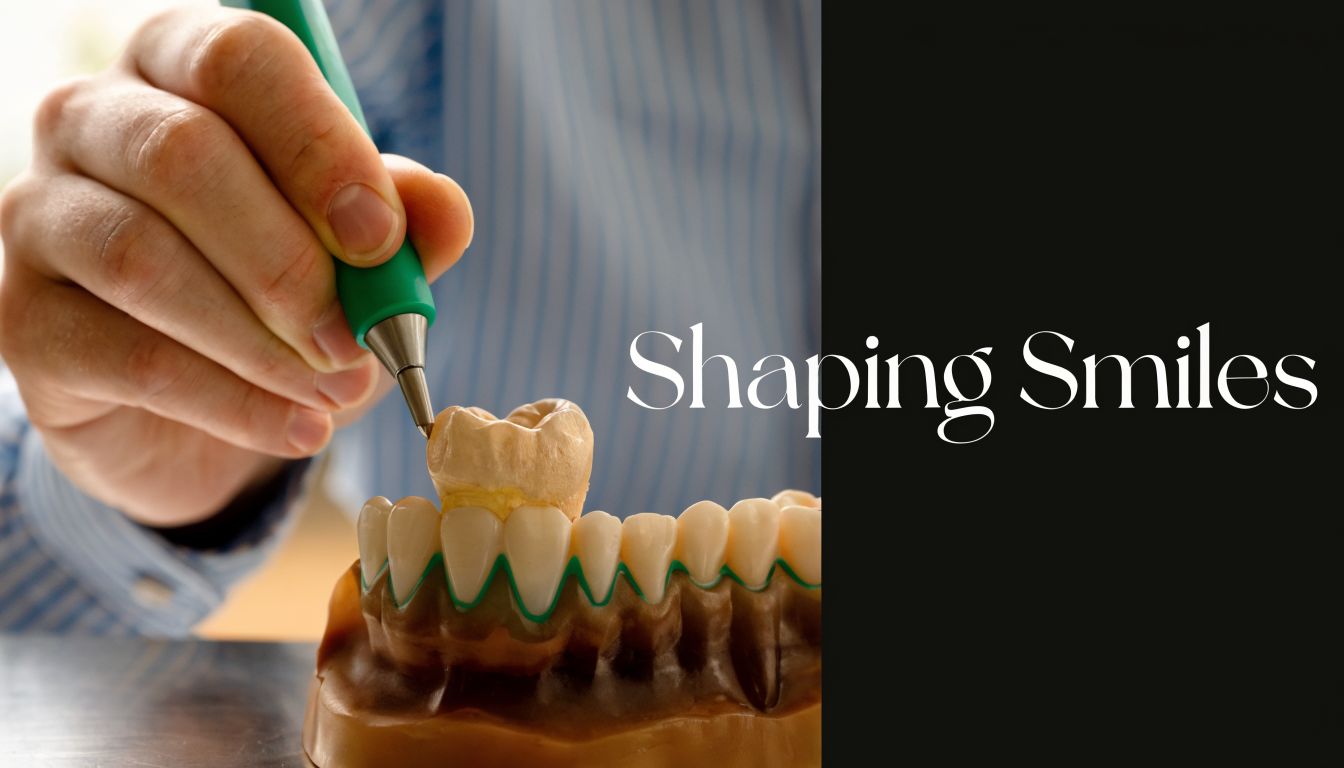
Composite veneers are thin additions of tooth-coloured resin placed over the front of a tooth to improve how it looks. The resin starts soft enough to shape, then hardens under a curing light. The Australian Dental Association explains that composite resin is commonly used for cosmetic bonding and reshaping because it can be matched closely to natural tooth colour (Australian Dental Association oral health information).
A simple way to picture the process is a dentist building form gradually, a bit like adding small amounts of clay rather than placing one solid cover. That gradual approach matters because a natural tooth is not one flat block of white. It has lighter and darker areas, some translucency near the edge, and tiny contours that catch the light.
The material in plain language
Composite resin is a blend of resin and very small filler particles. Those fillers help give the material strength and polish. The result is a surface that can look natural when it is shaped carefully and finished well. The British Academy of Cosmetic Dentistry notes that composite bonding relies on adding and contouring resin directly on the tooth surface to improve shape, colour, and symmetry (British Academy of Cosmetic Dentistry guide to composite bonding).
Dentists usually place composite in small increments, then harden each one with a blue curing light. Layering gives better control over colour, thickness, and final shape. It also helps avoid the bulky look that people worry about when they hear the word veneer.
How it bonds to the tooth
The resin does not sit on the tooth like a sticker. The tooth surface is cleaned first, then treated so the bonding material can attach properly. After that, the composite is added, shaped, cured, and polished.
Here is the basic sequence:
- The front of the tooth is cleaned and prepared so the bond has a suitable surface.
- A bonding liquid is applied to connect the tooth and the resin.
- Composite is placed in small layers to build the planned shape.
- A curing light hardens each layer before the next one is added.
- The surface is refined and polished so it feels smooth and looks more like enamel.
Small details make a big difference here. If the bite is heavy, the edge is built too long, or the finish is rough, a veneer may chip, stain, or feel awkward sooner than expected.
That point matters in a regional area like Tamworth. Patients who chew ice, play contact sport, grind their teeth, drink several coffees a day, or spend long hours on the road grabbing takeaway can put more wear on composite than a city guide may assume. So the question is not only, "Will it look good on the day?" It is also, "How well will it hold up in real life, and what maintenance will it need over the next few years?"
Direct and indirect composite veneers
There are two broad ways composite veneers can be made.
Direct composite veneers are built by the dentist directly on the teeth during the appointment. This is the version many people mean when they ask about composite veneers. It is popular because it is usually quicker, easier to repair, and lower in upfront cost.
Indirect composite veneers are made outside the mouth, then bonded onto the teeth later. According to StatPearls' review of veneer techniques, indirect restorations are fabricated separately before cementation, while direct composite options are placed chairside and can preserve more tooth structure in suitable cases (StatPearls overview of veneers).
For many Tamworth families, the practical difference is cost over time. Direct composite often costs less at the start and can be repaired locally if a corner chips. Indirect composite may involve more lab work and a higher starting fee. Neither is automatically the better choice. The right option depends on your teeth, your bite, your habits, and how much upkeep you are comfortable budgeting for.
The Single-Visit Smile Makeover Procedure

One of the biggest reasons people choose direct composite veneers is convenience. In many cases, the smile change can be done in a single appointment, which suits working adults, parents, and anyone who doesn’t want multiple visits for a cosmetic treatment.
The process is usually calmer and more methodical than people expect.
What happens on the day
A typical appointment moves through a few stages:
- Consultation and planning
- Gentle preparation
- Etching and bonding
The part people usually find most interesting
The smile begins to take shape.
The dentist adds the composite gradually, layer by layer, then sculpts it to improve the tooth’s contour and colour. Small changes matter here. A fraction too wide, too square, or too opaque can make a front tooth look unnatural. Good composite work is part science and part visual judgement.
After the shaping is complete, each layer is cured with a light, then the final surface is refined and polished.
- Edges are adjusted so the teeth don’t look bulky
- The bite is checked so the veneers aren’t taking unwanted pressure
- The surface is polished to create a smooth finish that reflects light more naturally
> A well-made composite veneer shouldn’t look like something stuck on top. It should look like the tooth always had that shape.
For patients who’ve worried the process would be uncomfortable or drawn out, this is often the point where things feel reassuringly straightforward.
Composite Veneers vs Porcelain Veneers
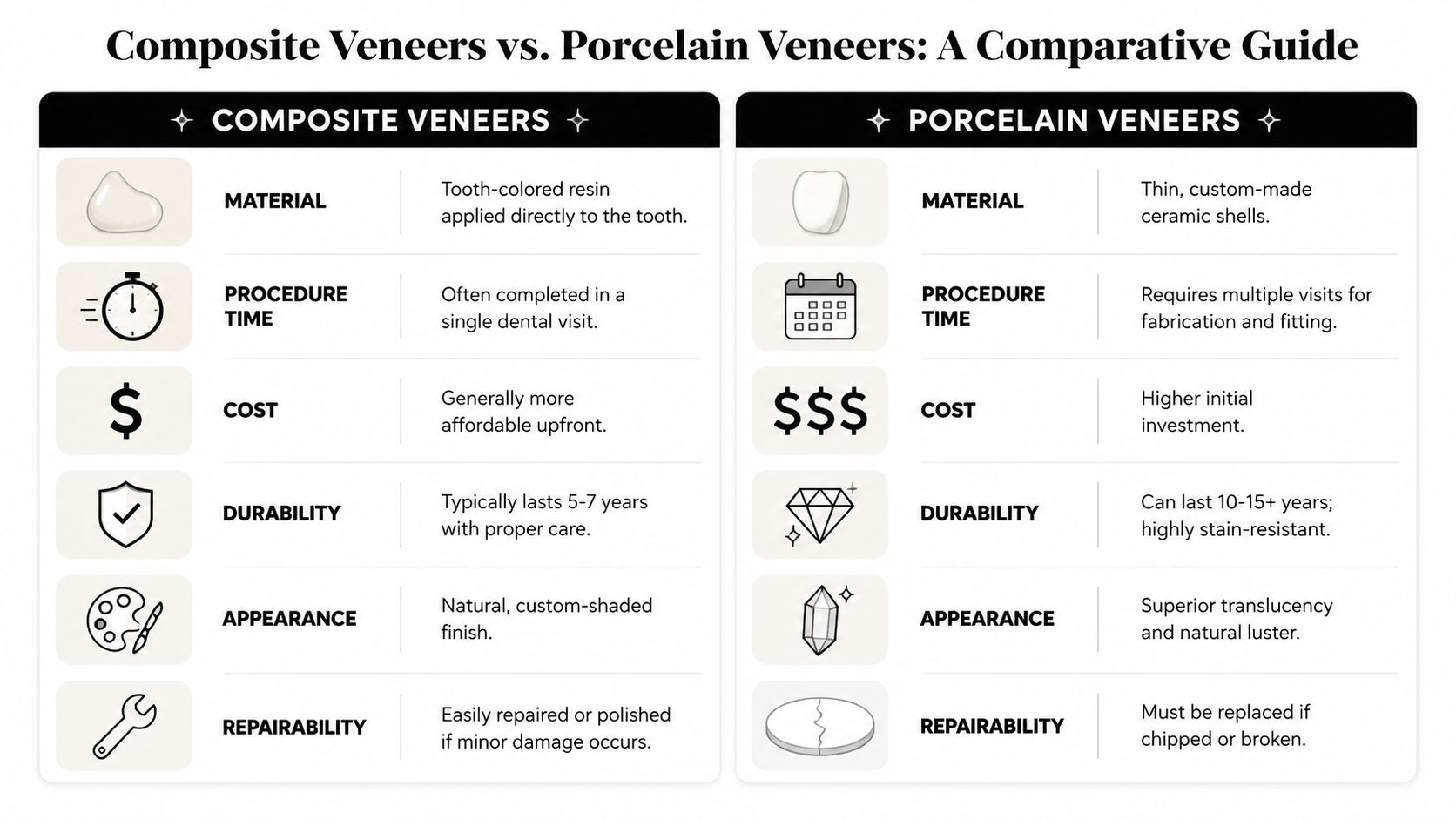
A common conversation in a Tamworth dental chair goes like this. Someone wants to fix chips, worn edges, or uneven front teeth, but they also want to know what the choice will mean in three, five, or ten years.
That is the primary comparison.
Composite and porcelain can both improve a smile. The better option depends less on marketing terms and more on how you live, how much maintenance you are comfortable with, and whether you want the lower starting cost or the longer service life.
A simple side-by-side view
| Feature | Composite Veneers | Porcelain Veneers | |---|---|---| | Material | Tooth-coloured composite resin | Thin ceramic shells | | Procedure time | Often completed in one visit | Usually requires multiple visits | | Upfront cost | Lower | Higher | | Lifespan | Commonly shorter | Commonly longer | | Repairs | Often easier to repair or polish | Usually replacement is needed if damaged | | Best fit | Minor to moderate cosmetic changes, budget-conscious patients | Patients prioritising longevity and stain resistance |
Why some patients choose composite first
Composite works a bit like careful sculpting directly on the tooth. It gives the dentist room to adjust shape, close small gaps, and improve symmetry without the bigger upfront spend that often comes with porcelain.
That makes it a sensible option for people who want a meaningful cosmetic change now and understand that upkeep is part of the deal.
In a regional area, that practical side matters. If you drink plenty of coffee, tea, or red wine, work outdoors in dust and heat, or grind and clench, composite can pick up stains and wear faster than many city-based guides suggest. It is still a good option for the right person. It just needs honest expectations.
Why porcelain often lasts longer
Porcelain has the stronger long-term reputation for durability and stain resistance. It is a harder, more stable material, so it usually keeps its polish and colour better over time.
A 2015 systematic review published in the *Journal of Dentistry* found that laminate veneers generally showed good survival over time, with porcelain veneers performing more predictably long term than direct resin alternatives discussed in the review. That matches what many dentists see in practice. Porcelain usually asks for more money upfront, but less frequent touch-ups later.
The trade-off is flexibility. If a composite veneer chips, it can often be repaired directly. If porcelain chips or fractures, replacement is more common.
What this means in day-to-day life
For a family comparing options, it often helps to think about veneers the way you would think about flooring in a busy home. One option costs less to install but may need more patching and polishing. The other costs more at the start but usually holds its finish for longer.
Neither choice is automatically right.
Composite may suit you if you want:
- A lower initial cost
- A faster cosmetic improvement
- An option that is easier to adjust or repair
- Treatment for small to moderate changes in shape, edges, or spacing
Porcelain may suit you if you want:
- Better stain resistance
- A longer-lasting result in many cases
- Fewer maintenance appointments over time
- The strongest long-term material performance for cosmetic veneers
> The best choice is the one that still makes sense after you factor in maintenance, repairs, and replacement, not just the day-one price.
That is especially true for Australian patients outside major cities. Travel time, work schedules, sport, dehydration, clenching, and everyday habits all affect the true cost of ownership. Composite is not "cheap porcelain". It is a different treatment with different strengths, limits, and long-term costs.
Analysing the Lifespan and Costs in Australia
For many Australian families, the most important question isn’t just “How much do composite veneers cost?” It’s “What will this choice cost me over time?”
That’s the right question.
Composite veneers are often the more accessible place to start. According to Grand View Research’s dental veneers market report, composite veneers typically range from $250 to $1,500 per tooth, while porcelain veneers range from $800 to $2,500 per tooth. That lower entry cost is a major reason people consider composite first.
Upfront cost versus long-term value
A lower starting price doesn’t always mean lower lifetime cost. Composite veneers generally need more maintenance and earlier replacement than porcelain. If you choose them, it helps to think like you would with a car purchase. The sticker price matters, but so do servicing, wear, and how long you expect it to last.
That’s especially relevant in regional Australia, where lifestyle can be hard on front teeth. Frequent coffee, tea, red wine, dusty outdoor work, dehydration, heat, and habits like clenching can all affect how composite looks and wears over time. Those factors don’t mean composite is a poor choice. They just mean maintenance matters.
What to budget for mentally
It helps to go in with a realistic view of ownership:
- Initial placement cost matters, but it’s only the beginning
- Polishing and review appointments help maintain the finish
- Touch-ups or repairs may be needed if edges stain or chip
- Replacement down the track should be expected, not treated as a surprise
A person who wants a practical cosmetic improvement for an upcoming life stage may be very happy with composite. Someone who wants a longer-term, lower-maintenance result may decide porcelain represents better value for them, even with the higher starting fee.
That’s why the smartest question isn’t “Which is cheaper?” It’s “Which suits my budget over the years I plan to keep it?”
Are You a Good Candidate for Composite Veneers
A common Tamworth scenario is this. Someone likes the general look of their smile, but one front tooth is chipped, another looks a bit short, and a small gap has started to bother them in photos. In that kind of case, composite veneers can make a lot of sense.
They usually suit people who want to improve the appearance of front teeth without making a dramatic change. Composite is often best for smaller cosmetic concerns, such as minor chips, slight spacing, uneven edges, mild wear, or teeth that look a little out of balance. It works a bit like careful sculpting. Your dentist adds and shapes the material by hand, so the result can be conservative and personalised.
The best candidates also tend to have healthy teeth and gums to begin with. Composite sticks to the tooth surface, so the foundation matters. If the tooth is heavily filled, cracked, or weakened, or if gum disease is active, your dentist may suggest treating those problems first.
Signs you may suit composite well
You may be a good candidate if:
- Your concerns are mainly cosmetic rather than large structural problems
- Your front teeth are reasonably healthy and not heavily broken down
- Your bite is fairly stable and you do not place excessive force through the front teeth
- You want a lower upfront cost and understand that maintenance is part of the deal
- You like the idea of a treatment that can often be repaired or adjusted if small chips or wear occur
That last point matters more in a regional area than many people expect. If you work outdoors, drink a lot of coffee during long days, get a dry mouth in the heat, or clench when stressed, composite may need more polishing, touch-ups, or earlier replacement. That does not make it a poor option. It means the right candidate is someone comfortable with the actual total cost of ownership, not just the starting fee.
Situations where caution matters
Composite is not the right fit for every smile.
Patients who grind or clench, chip fillings often, or bite hard objects with their front teeth face a higher risk of edge chipping and faster wear. The American College of Prosthodontists notes that habits such as bruxism and heavy bite forces are important factors in planning veneer treatment. In plain terms, if the front teeth are under a lot of pressure, a more delicate cosmetic material may need extra protection or a different treatment plan.
You should also pause and ask more questions if you want the whitest possible result, a major colour change, or a shape change that is quite dramatic. Composite can do a lot, but it has limits. Porcelain may be a better match for some of those goals.
A good consultation should feel honest, not salesy. Your dentist should check your bite, examine the condition of the teeth underneath, ask about grinding and daily habits, and explain what maintenance is likely in your situation. For many Tamworth patients, the right answer is not merely, "Can composite look good?" The better question is, "Will composite still suit my bite, budget, and routine a few years from now?"
Care Tips and Your Consultation in Tamworth

A lot of patients reach this point with the same question. “If I spend less upfront, will I end up paying more over time?”
That is a fair question, especially in a regional area like Tamworth where people want treatment that looks good but also fits real life. Composite veneers can be a sensible option, but they usually need more upkeep than porcelain. In areas like Tamworth and New England, the lower starting cost of composite veneers, often around $400 to $1,200 AUD per tooth, needs to be weighed against their shorter lifespan and the chance of future polishing, repairs, or replacement.
Composite works a bit like a well-finished timber surface. It can look beautiful, but it stays looking its best with regular care. If you drink a lot of coffee or tea, work outdoors, get a dry mouth, or snack on hard foods while driving between jobs or properties, the surface can lose shine or pick up stain sooner. Those local lifestyle factors do not rule composite out. They are relevant when you are planning the true long-term cost.
Simple habits that help
- Brush gently with a non-abrasive toothpaste so the surface stays smooth
- Rinse or drink water after coffee, tea, or red wine to reduce staining
- Avoid biting hard items like ice, fingernails, pens, and food packaging
- Keep regular check-ups and cleans so small chips, rough spots, or staining can be picked up early
- Ask about professional polishing if the veneers start to look dull
Home care matters, but so does the consultation. A mirror shows shape and colour. It does not show how your bite comes together, whether you clench in your sleep, or whether the tooth underneath has enough healthy structure to support a veneer.
A good consultation should feel clear and honest. Your dentist should examine the teeth, check your bite, talk through your habits, and explain what maintenance is likely in your case. For a Tamworth family balancing school fees, sport, fuel, and day-to-day bills, that practical discussion matters just as much as the before-and-after photos.
If you’d like clear, pressure-free advice about composite veneers, Oasis Smiles Dental can help. The clinic has served Tamworth and the New England region for over 20 years and is located near Northgate Shopping Centre at Shop 15/1 Piper Street. The team sees adults, teens, and families, offers flexible payment options, and accepts major health funds, Medicare, and DVA. Book a consultation to find out whether composite veneers, porcelain veneers, or another cosmetic option is the right fit for your smile.