

7 Porcelain Veneers Before and After Transformations: 2026
A patient in Tamworth often starts a veneer consult with a very specific frustration. One front tooth looks darker than the rest. A small chip keeps catching the light in photos. The edges have worn down enough that the smile looks older, even though the teeth are still healthy.
That is usually the right starting point.
At Oasis Smiles Dental, porcelain veneers are planned around the detail a patient notices first, then the wider picture of tooth shape, bite, gum line, and facial balance. Some people need whitening first. Others have staining or wear that will not respond well enough to professional teeth whitening treatment alone. Veneers can solve colour, shape, minor spacing, and small alignment issues at the same time, but only if the foundation is sound and the plan is precise.
Local patients rarely ask for a smile that looks manufactured. They usually want their teeth to look healthier, more even, and more in proportion with the rest of their face. That is where the behind-the-scenes work matters. Digital scans with Trios, shade assessment, smile design, and in-house CEREC technology all help us test the result before porcelain is bonded, so the before and after change feels believable, not overdone.
The seven cases that follow reflect the concerns we see regularly in Tamworth. Staining from years of coffee or red wine. Chipping after sport. Short teeth, gummy smiles, worn edges, older bonding that no longer matches, and teeth affected by trauma. Each transformation depends on different decisions, and the trade-offs matter just as much as the final photo.
1. Case 1 Severe Discolouration to a Brilliant White Smile
A patient walks in saying the same thing many Tamworth patients say in different words. Their teeth are sound, but the colour makes the whole smile look older and duller in photos, at work, and out with friends. That is a different problem from decay, and it needs a different kind of planning.
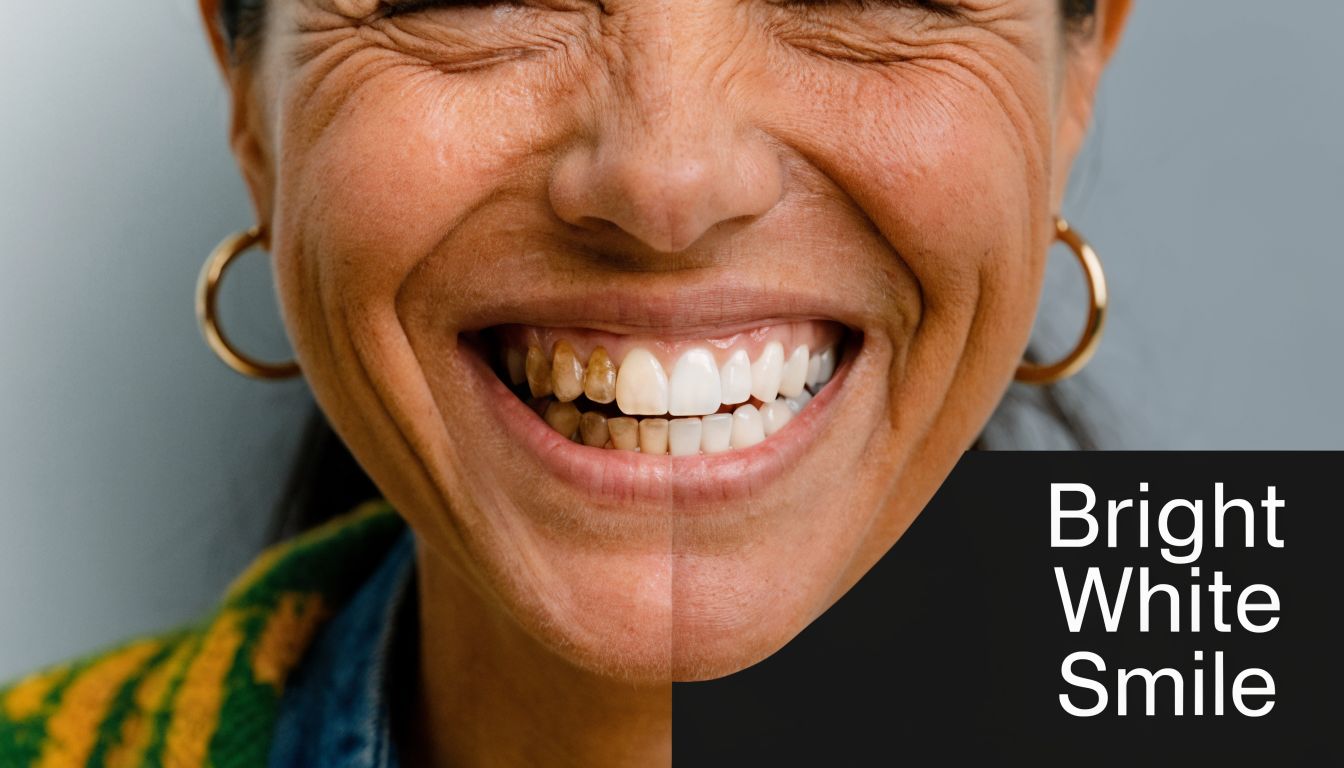
In this kind of case, the first question is simple. Are we looking at surface stain, or colour that sits deeper within the tooth? Coffee, tea, red wine, ageing fillings, previous trauma, and some developmental marks can all create discolouration, but they do not behave the same way. Some teeth improve with cleaning or professional teeth whitening options. Others stay patchy, grey, or uneven, even after whitening is done properly.
That difference changes the whole treatment plan.
If the shape of the teeth is already good and the colour can improve predictably, veneers may be unnecessary. If the colour is stubborn and the edges are worn, uneven, or out of proportion, porcelain can solve several problems in one treatment. It masks the discolouration, but it also provides crucial refinement of width, length, and symmetry so the result looks intentional rather than solely whiter.
At Oasis Smiles Dental, this planning happens before any porcelain is made. Trios scans give us a precise starting point. CEREC technology helps us test the proposed changes against the patient’s bite, facial proportions, and the amount of brightness they want. That matters because “white” means different things to different people. A bright smile that suits one face can look flat or harsh on another.
Shade choice is usually where sound clinical judgement resides. Patients often arrive focused on the lightest possible result. In practice, the best veneer cases usually land a step short of obvious. A little translucency at the edge, the right surface texture, and a shade that matches the person’s complexion will age better than an opaque block of white porcelain.
There is also a trade-off to explain clearly. Veneers can hide deep staining very well, but they do not make heavy grinding disappear or fix untreated gum inflammation. If the patient clenches, the bite has to be managed. If the gums are uneven or inflamed, that comes first. Good cosmetic work lasts longer when the foundation is stable.
For local patients with severe discolouration, the strongest before and after results rarely come from pushing brightness as far as possible. They come from choosing a believable shade, correcting the small shape problems that make stained teeth stand out more, and building the porcelain around how that person smiles.
2. Case 2 Correcting Minor Misalignment and Chipping
A common Tamworth veneer consult starts with a smile that is already healthy enough to function well, but not quite harmonious. One front tooth sits slightly behind the others, a corner has chipped after years of wear, and a narrow gap shows up every time the patient smiles in photos. Those are the cases where porcelain veneers can make a visible difference without turning the smile into something that looks manufactured.
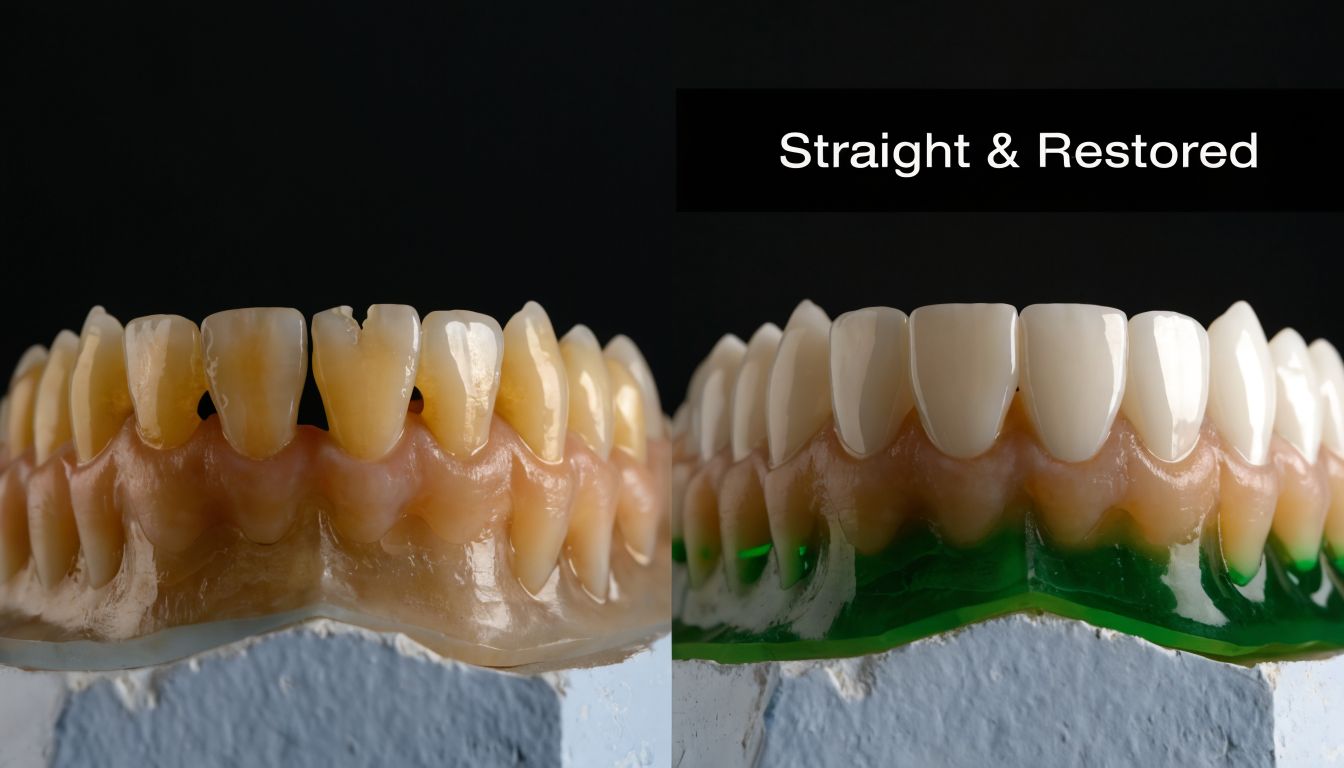
Small spaces and minor edge damage are often well suited to veneers because the goal is not dramatic change. The goal is balance. Closing a slight gap, rebuilding a chipped edge, and adjusting the visible line of the front teeth can make the whole smile read as straighter and more even.
The planning stage matters more than many patients expect.
At Oasis Smiles Dental, the Trios scanner helps us show the problem clearly before any porcelain is designed. Patients can see whether the specific issue is spacing, edge wear, uneven widths, or a tooth that sits just far enough out of line to draw the eye. That usually leads to a better decision, because “straighter” can mean different things. Some people want a very uniform look. Others want the chips gone and the smile softened, while still keeping a bit of natural character.
Veneers can create the appearance of alignment, but they do not move teeth through bone. That distinction matters. If the tooth position is only mildly off, veneers may be the conservative cosmetic answer. If rotation is more obvious, or if the bite places too much pressure on the front teeth, a staged plan often makes more sense. In those cases, starting with Invisalign treatment planning can create better tooth position first, then veneers can be used in a more restrained way to refine shape, close any remaining space, and restore chipped edges.
There is a trade-off here. Speed is attractive, but hiding misalignment with porcelain alone can add width or thickness if the case is pushed too far. That is where poor veneer work starts to look bulky. Good planning keeps the contours light, the incisal edges believable, and the final result in proportion with the face.
For minor misalignment and chipping, the strongest before and after cases usually do not look dramatic in isolation. They look settled. The teeth reflect light more evenly, the edges stop catching attention for the wrong reasons, and the smile fits the patient better than it did before.
3. Case 3 Fixing a Gummy Smile and Short Teeth
A common Tamworth presentation is the patient whose teeth look fine close up, then seem to vanish in a full smile. In photos, the gums dominate. In conversation, the upper teeth can look stubby or hidden. That usually comes down to proportion, not just shade.
Short-looking teeth can have a few different causes. Natural tooth shape is one. Wear is another. A higher lip line, extra gum display, or uneven gingival levels can exaggerate the problem. Veneers can help, but only if the case is planned around the full smile, not a single tooth viewed in isolation.
Building a longer, more balanced smile
In the right case, porcelain veneers can add modest length and improve width-to-length proportions so the upper front teeth show more naturally when the patient smiles and speaks. Small changes matter here. Even a restrained increase at the incisal edge can shift the balance of the smile and reduce the visual dominance of the gums.
At Oasis Smiles Dental, this is the sort of case where digital planning earns its keep. Trios scans let us assess tooth display, edge position, and symmetry without messy impressions, and the CEREC workflow helps us test proposed shapes with more precision before finalising the porcelain. Patients usually stop asking for “whiter” once they see how much better the smile looks when the teeth are the right length.
Veneers are not always the whole answer. If the gum line is uneven or there is too much tissue covering the teeth, minor gum recontouring may need to happen first. If wear has shortened the teeth significantly, some patients also need stronger posterior support with restorative crowns for damaged or heavily worn teeth so the front veneers are not carrying more bite pressure than they should.
A few planning points decide whether this type of result looks natural or overdone:
- Tooth length must suit the face. Longer centrals can look fresh and balanced, but pushed too far they look artificial.
- The gum margins need to line up. Good porcelain cannot disguise uneven gingival architecture.
- Lip movement matters. A smile that shows a lot of gum at full expression needs different planning from a smile that only reveals the tooth edges.
- The bite has to allow the new length. If the lower teeth hit the veneers too heavily, edge length that looks good in photos may chip in real life.
Celebrity reference photos are often a poor guide for this kind of case. The better target is a smile that fits the patient’s age, lip dynamics, and facial proportions. Done well, the teeth do not look obviously bigger. They look as though they were always meant to be there.
4. Case 4 Full Mouth Rehabilitation for Worn Dentition
Some smiles need more than a cosmetic refresh. Years of grinding, acid wear, broken restorations, or bite instability can leave teeth looking short, flat, and patchy. In those cases, porcelain veneers before and after photos only tell part of the story because the bigger change is often functional.
A useful Australian case example comes from a full mouth rehabilitation reported by ArtSmiles. The patient had failed composite veneers across the upper and lower arches that repeatedly chipped and debonded. The treatment replaced them with high-strength e.max porcelain veneers and crowns, with a digitally planned 3 mm increase in vertical bite height before preparation, as outlined in this five-year full mouth rehabilitation follow-up.
Why full mouth cases are different
In a simple cosmetic case, the dentist is mainly refining appearance. In a rehabilitation case, the bite has to be rebuilt in a way the jaw can tolerate. That means checking joint health, wear patterns, muscle habits, old restorations, and which teeth need veneers versus full coverage.
This is where CBCT imaging, digital smile design, and provisional restorations matter. A patient may love the look of a proposed smile, but if the bite position isn’t stable, the final work won’t last as well as it should.
> Clinical insight: Temporary restorations are not just placeholders. They let the patient test speech, comfort, edge length, and bite before the final porcelain is bonded.
At Oasis Smiles Dental, these cases often involve a staged plan and a discussion about when dental crowns are the better option for heavily loaded or heavily damaged teeth. Veneers preserve more natural structure when the tooth is suitable. Crowns are sometimes the safer choice when the tooth isn’t.
The honest trade-offs
Full mouth rehabilitation takes commitment. It involves more appointments, more testing, and more decision-making than a straightforward smile makeover. It can also be emotionally bigger than patients expect because they’re not just changing colour or shape. They’re relearning what a healthy bite feels like.
The payoff is that these cases can restore both appearance and day-to-day comfort. They’re especially valuable for patients who’ve spent years managing repeated repairs on older composite work or teeth that keep chipping because the underlying bite problem was never properly addressed.
5. Case 5 Restoring Teeth After Dental Trauma
Trauma cases are different again. There’s usually a clear before. A football knock, a fall, an accident at work, or an old fracture that was patched years ago and now stands out every time the patient smiles.
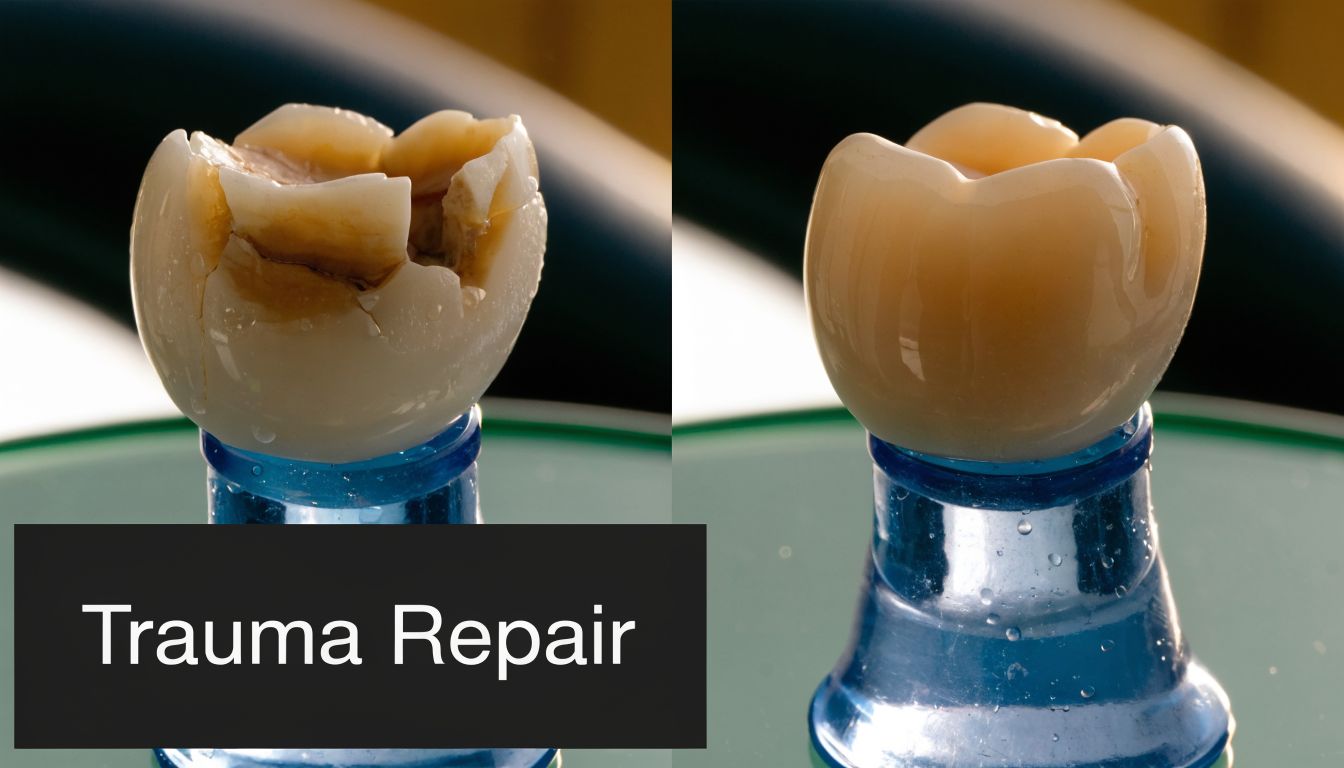
When the injury affects the front teeth, people often want two things at once. They want the tooth to look normal again, and they want to stop thinking about it every time they laugh or speak. Veneers can be a good option when the underlying tooth remains structurally appropriate and the main need is rebuilding the visible front surface.
Matching one tooth is harder than improving many
Single-tooth or limited-trauma cosmetic work is some of the most exacting dentistry we do. It’s often easier to make several front teeth look harmonious than to make one injured tooth disappear beside natural neighbours.
That’s why photographs, digital shade analysis, and close assessment of translucency matter so much. A good trauma repair doesn’t just match “white”. It matches the character of the surrounding enamel, the edge effects, and how light passes through the tooth.
Patients also need a realistic conversation about material choice. If the trauma created deep cracks, large old fillings, or substantial structural weakness, a veneer may not be the right restoration. A crown or another restorative option may protect the tooth better long term.
Protecting the result afterwards
In active families, trauma restoration shouldn’t end with the cosmetic fix. If sport caused the problem, a custom mouthguard needs to be part of the aftercare discussion. If a previous repair failed because the bite hits too heavily on that tooth, the occlusion has to be adjusted.
- Bring old photos if you have them: Pre-injury photos can help guide shape and length.
- Act early after new trauma: Prompt assessment gives the dentist more options.
- Don’t assume every chip needs porcelain: Smaller injuries may still be better managed more conservatively.
The strongest cosmetic result after trauma is one that looks natural and functions unobtrusively. The patient stops checking it in the mirror. That’s usually a clear sign the case was handled well.
6. Case 6 Upgrading from Composite Bonding to Porcelain
A common Tamworth scenario is the patient who liked their composite bonding at first, then slowly fell out of love with it. The smile still looks better than it did before treatment, but the finish is no longer as crisp, the colour has shifted, and small repairs keep returning to the same few teeth.
That does not mean the original treatment was a mistake. Composite bonding can be a very sensible choice, especially when someone wants a conservative option, a lower upfront cost, or a way to test changes in shape before committing to porcelain. The trade-off is maintenance. Over time, composite is more likely to pick up stain, lose gloss, and need polishing or patching.
In this type of case, the primary question is not "porcelain or composite?" in the abstract. It is whether the current material still suits the patient’s priorities.
At Oasis Smiles Dental, that review starts with the existing work. Old bonding often hides useful clues. We check where it has chipped, where margins have stained, whether the bite is overloading one side, and whether the original tooth shape underneath still supports a veneer approach. A Trios scan helps show symmetry and edge position clearly, and the digital records make it easier to compare what the patient has now with what they want next.
Patients rarely ask for a material by name. They usually describe a daily frustration. One tooth keeps needing repair. The front edges feel uneven. Photos show patchiness that was not obvious a few years ago. In those situations, replacing tired bonding with porcelain can give a more settled result, especially for patients who want fewer maintenance appointments and a surface that keeps its polish more reliably.
Some patients are still better served by refreshing what they have. Others are ready to move on from repeated repairs and consider a longer-term option after reviewing the pros and cons of composite bonding and cosmetic repair options.
The before-and-after change in these cases is often subtle in the best way. Teeth look cleaner, brighter, and more even, but not obviously "done". Good porcelain should not erase character completely. It should remove the distractions that made the smile look patched together.
The technical side matters here. Upgrading from bonding to porcelain is not a simple swap. Existing composite has to be assessed carefully because bonding lines, hidden staining, or uneven underlying tooth reduction can affect the final design. In-house CEREC planning and close shade assessment help, but material choice still depends on enamel quality, bite forces, and how much refinement the patient wants.
Porcelain can improve colour stability, surface texture, and light reflection. It also asks more of the planning stage. Patients need to understand that once they move from repair-based maintenance to porcelain, the goal shifts from "touch this up again" to "design this properly and protect it well."
7. Case 7 Correcting Visible Wear and Bite Collapse
A common Tamworth presentation goes like this. A patient is not asking for a whiter smile first. They are saying their teeth look shorter in photos, the edges keep chipping, and their bite no longer feels settled when they chew.
That combination usually points to more than cosmetic wear. The front teeth lose length, the back teeth lose shape, and the whole bite can close down over time. Patients often notice the change in small ways before they have words for it. Their smile looks flatter. Their face looks more strained. Meals can feel harder on the jaw.
At Oasis Smiles Dental, these cases need a full assessment before any porcelain is designed. Trios scans, photos, and bite records help show whether the problem is limited to the visible teeth or involves the whole chewing system. If the back teeth are no longer giving proper support, veneers alone can make the smile look improved while leaving the bite unstable.
Rebuilding a worn smile takes full bite planning
Visible wear is often the end result of several factors acting together. Night grinding is common, but it is not the only cause. Acid exposure, older fillings, missing teeth, and years of uneven loading can all contribute to shortening and bite collapse.
The treatment plan has to match that reality. Some patients need porcelain veneers on the front teeth along with crowns or bonded restorations further back to rebuild support. Some need the bite tested first with provisional changes before final porcelain is approved. This planning stage matters because comfort, speech, and tooth display can all change once lost height is added back.
In our clinic, digital planning helps here. CEREC and Trios technology allow the proposed length and bite changes to be reviewed with more precision before the final ceramics are made. That does not remove the need for judgement. Material choice, enamel condition, jaw habits, and budget still shape the plan.
What makes these cases succeed long term
Wear cases need stricter maintenance than a simple cosmetic refinement. If clenching or grinding caused the original damage, the new restorations are entering the same environment unless the habit is managed.
Three points usually decide whether the result stays stable:
- Find the cause of wear: Grinding, acid erosion, old dental work, and missing support each need a different response.
- Trial the new bite where needed: Temporary restorations or staged changes can confirm that the new position feels natural before porcelain is finalised.
- Protect the ceramics: Review visits and a night guard are often part of the plan, especially for patients with heavy bite forces.
The before-and-after change in this type of case is often more functional than patients expect. Teeth look longer and healthier, but the bigger win is that the bite feels supported again. For many local patients, that is the moment the treatment starts to feel worthwhile.
Before & After: 7 Porcelain Veneer Cases
A local veneer case rarely starts with, “I just want whiter teeth.” In Tamworth, patients usually come in with a more specific problem. A wedding photo they keep avoiding. An old chip that catches the light in every meeting. Front teeth that have shortened over time and now make the whole smile look tired. The before and after matters, but the reason behind it matters more.
At Oasis Smiles Dental, these seven case types come up again and again. The visible result is only part of the story. The planning behind each one, including scans, mock-ups, bite checks, and material choice, is what decides whether the final veneers look convincing and hold up well.
| Case | What changed | Planning points at Oasis Smiles Dental | Likely trade-offs and tips | |---|---|---|---| | Case 1: Severe Discolouration to a Brilliant White Smile | Deep staining was masked with porcelain that gave a cleaner, brighter shade while keeping the smile believable | Shade planning matters more than patients expect. Trios scans and close-up photos help us match neighbouring teeth and avoid a flat, opaque look. Some cases need a little more reduction to block darker underlying colour | Very white is not always the most natural choice. The best result usually balances brightness with translucency | | Case 2: Correcting Minor Misalignment and Chipping | Veneers refined tooth position visually and rebuilt chipped edges without full orthodontic treatment | This suits small rotations, uneven edges, and minor spacing. Digital previews help show whether veneers alone can create symmetry or whether orthodontics would be the safer first step | Veneers can improve the look of alignment, but they do not correct every bite problem. Conservative preparation matters here | | Case 3: Fixing a Gummy Smile and Short Teeth | The smile line was improved by changing tooth proportions, sometimes with gum contouring before veneers were placed | Tooth length, lip movement, and gum levels must be assessed together. CEREC and digital smile planning help us test proportions before final porcelain is made | Longer teeth can look excellent, but only if the new length suits the face and speech. Overlength veneers tend to look obvious | | Case 4: Full Mouth Rehabilitation for Worn Dentition | Worn teeth were rebuilt to restore appearance and support a more stable bite | These cases often need staged treatment, temporary restorations, and careful review before final ceramics. Veneers may be part of the answer, but some teeth are better protected with crowns | The cosmetic change is significant, but the bigger issue is function. Treatment takes longer, costs more, and needs stronger long-term maintenance | | Case 5: Restoring Teeth After Dental Trauma | Fractured or damaged front teeth were rebuilt to blend back into the smile | Trauma cases rely on good records, shade assessment, and checking whether the tooth is still healthy enough for a veneer. Some need root canal treatment or internal whitening first | Speed matters to patients after an accident, but rushing the final design can compromise the match. Staging is often wiser | | Case 6: Upgrading from Composite Bonding to Porcelain | Old bonding that had stained, chipped, or lost shape was replaced with porcelain for a cleaner finish | Removal has to be careful. The aim is to preserve enamel while correcting the shape problems that made the composite look tired in the first place | Porcelain usually lasts better and keeps its polish longer, but it is less easily adjusted chairside than composite | | Case 7: Correcting Visible Wear and Bite Collapse | Lost tooth height and worn edges were rebuilt so the smile looked healthier and the bite felt more supported | These are planning-heavy cases. We often use scans, bite records, and provisional testing to confirm the new height before the final ceramics are fitted | Patients often focus on appearance at first, but adaptation and comfort are just as important. A night guard is commonly part of the final plan |
These case summaries work best when they are documented clearly. Teams that want to turn testimonials into case studies often find that the strongest stories are the ones that explain the patient goal, the clinical decision, and the reason one option was chosen over another.
That is the difference between a generic before and after gallery and a useful local case review. In a Tamworth clinic, the primary value is seeing how treatment choices were shaped by the patient’s teeth, bite, timetable, and priorities, then supported by tools such as Trios scanning and CEREC workflow where appropriate.
Your Smile Transformation Key Takeaways and Your Next Step
A Tamworth veneer case usually starts with a very ordinary moment. Someone catches their reflection in the ute mirror, avoids smiling in a family photo at the Tamworth Country Music Festival, or gets tired of hiding one front tooth in conversation. The photo at the end matters, but the essential work is in identifying why that smile changed and what will hold up well in daily life.
Across these seven cases, the pattern is clear. Porcelain veneers can solve very different problems, but the planning should never be one-size-fits-all. Deep staining calls for a different approach from chipped edges after trauma. Short teeth with a gummy smile need different sequencing from worn teeth that have lost height. In some patients, veneers are the right answer. In others, whitening, orthodontics, bonding, crowns, or gum treatment will protect more tooth structure and give a better long-term result.
Generic before and after galleries miss that part. A polished photo does not show whether gum levels had to be adjusted first, whether the bite needed testing before final ceramics, or whether an older restoration was failing because the underlying forces were never addressed. Those decisions shape longevity as much as colour and shape do.
At Oasis Smiles Dental in Tamworth, digital tools help make those decisions clearer for both the dentist and the patient. Trios scans can show the starting point in detail. CEREC and in-house 3D printing can help with mock-ups, temporaries, and planning stages. CBCT imaging can add useful information when roots, bone, or previous trauma need a closer look. Technology improves accuracy and communication, but it does not replace judgement. The scan is only useful if the treatment plan fits the person's enamel, bite, habits, and goals.
Candidacy still matters most.
Veneers tend to work well when gums are healthy, home care is reliable, and the patient wants changes that porcelain handles predictably, such as masking stubborn discolouration, refining shape, closing small spaces, or rebuilding worn front edges. They are less suitable as a shortcut for untreated grinding, active gum disease, unstable bites, or major tooth position problems that would be better handled another way first.
Durability is one reason porcelain remains a popular option, but no material succeeds on neglect. As noted earlier, long-term outcomes can be very good when veneers are planned carefully, bonded well, and reviewed regularly. In regional areas such as Tamworth, that review schedule matters. Small issues are easier to correct early, before a chip, debond, or bite problem turns into a larger repair.
Three questions usually help patients make sense of their options. What exactly do you want to change? Why has that problem developed? Which treatment fixes it with the least unnecessary drilling and the best chance of lasting well? Those answers often narrow the choices quickly.
The best cosmetic result also looks believable. Veneers should suit the face, age, lip line, and personality of the person wearing them. Very white, very flat, overly uniform teeth can look striking on a screen and out of place in real life. Most patients in our part of New England want a smile that looks healthy, fresh, and natural in daylight, at work, and in family photos.
If you’re ready to explore your options in Tamworth, a consultation is the sensible next step. Oasis Smiles Dental is one local option for patients who want a detailed assessment, digital planning, and recommendations that consider function as well as appearance. If you’d like to keep researching related enamel care topics as well, Mouthology's guide to nHa benefits offers additional background on remineralisation-focused oral care.
If you’re considering veneers, whitening, bonding, crowns, or a full smile rebuild, Oasis Smiles Dental in Tamworth can help you understand what suits your teeth, bite, and long-term goals. Book a consultation to discuss your options with a team that provides general, cosmetic, and restorative dental care for local families across Tamworth and the New England region.