

Are Veneers Worth It? Your 2026 Tamworth Guide
You catch yourself doing it in photos. Lips closed. Head turned slightly. Maybe you laugh with your hand near your mouth, or you smile wide for family but hate seeing that one chipped tooth, the stains that won’t lift, or the small gaps that seem bigger every year.
If that sounds familiar, you’re not being vain. A smile sits right in the middle of your face. When you don’t feel good about it, it can affect how relaxed you feel at work, at dinner, or even chatting to someone at the shops.
Considering a Smile Makeover? Let's Talk Veneers
A lot of people asking “are veneers worth it” aren’t chasing perfection. They just want to stop noticing their teeth all the time. Often, they’ve already tried whitening toothpaste, maybe a whitening treatment, and they still feel their smile looks tired, uneven, or older than they feel.

That interest isn’t niche. The global veneers market is valued at over $1.8 billion in 2026, and over 68% of cosmetic dentistry patients prioritise improving their overall smile appearance, according to 2026 veneer market and patient motivation data. The same source notes that patients often report a confidence boost and smile more in social and work settings after treatment.
That doesn’t mean veneers are right for everyone. It does mean many people see value in changing a smile that has bothered them for years.
Why this question matters so much
Veneers sit in an unusual category. They’re cosmetic, but the decision feels intensely personal. You’re weighing appearance, confidence, cost, maintenance, and the fact that this isn’t the same as buying a new shirt you can return next week.
For some people, veneers are worth every cent because they solve several problems at once. Colour. Shape. Small chips. Minor spacing. For others, a simpler option is the better fit.
> A good veneer decision starts with one question. “What exactly is bothering me when I smile?”
If you’re exploring a broader cosmetic plan, it helps to understand how veneers fit into a full smile makeover approach. Sometimes they’re the main treatment. Sometimes they’re only one part of the answer.
Understanding Dental Veneers What They Are and How They Work
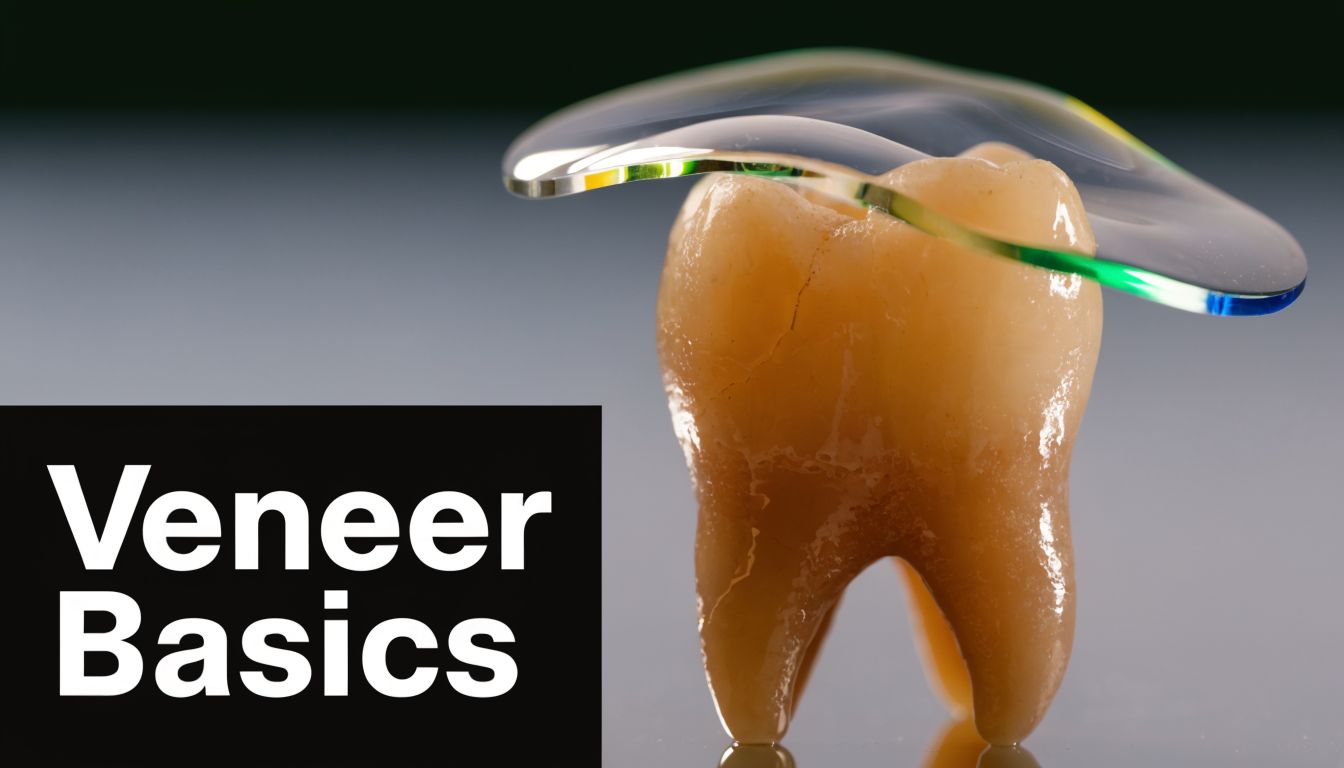
Veneers are custom-made shells bonded to the front of your teeth. They are used to change what shows when you smile, such as colour, shape, length, or small irregularities. Your natural tooth stays underneath. The veneer covers the visible front surface.
That distinction matters because veneers are often misunderstood. They do not rebuild the whole tooth the way a crown does, and they are not something you remove at home. They are a fixed cosmetic treatment designed for specific changes on teeth that already have a healthy foundation.
What veneers can change
Veneers are usually used for concerns you notice in the mirror rather than problems deep inside the tooth. Common examples include:
- Deep staining that does not respond well to whitening
- Small chips or worn edges
- Gaps between teeth
- Mild unevenness in shape or size
- Minor crookedness where the concern is appearance rather than major bite correction
A simple way to judge their role is this. Veneers are best at improving what the eye sees on the front of the tooth. They are less suitable when a tooth is weak, heavily filled, or needs major repositioning.
The main materials
You will usually hear about two veneer materials.
| Type | What it is | Usual strength | Common reason people choose it | |---|---|---|---| | Porcelain | A ceramic material made in a lab or with advanced in-house systems | Strong, stain-resistant, very natural-looking | Best for long-term appearance and durability | | Composite resin | Tooth-coloured filling material shaped directly or indirectly | More affordable upfront, but less durable | Best for smaller cosmetic touch-ups |
Porcelain is the option many patients in Tamworth ask about when they want the most polished and stable cosmetic result. It holds colour well and reflects light in a way that can look very natural. Composite can still be a good choice if the changes are minor, the budget is tighter, or you want a more conservative first step.
The local practical difference is often timing as well as cost. At clinics with in-house CEREC technology, some porcelain veneers can be planned, designed, and made much faster than the traditional lab process. That does not make them right for everyone, but it can make treatment more convenient if you are weighing time off work, travel across Tamworth, or multiple appointments.
How they stay on the tooth
For a veneer to fit well, the front of the tooth is usually prepared very lightly so the final result does not look bulky. The surface is then treated so the adhesive can bond strongly, and the veneer is placed and refined until it feels comfortable and blends with the surrounding teeth.
Good veneers should suit your face, your bite, and the character of your smile. A natural result is rarely about making teeth extremely white or perfectly uniform. It is usually about getting the details right so the teeth look balanced and believable up close, not just in a photo.
One point often surprises patients. Veneers change appearance well, but they do not fix every dental problem. If the underlying tooth or gums are unhealthy, that needs attention first.
Are You a Good Candidate for Veneers?
The essential inquiry is not “do veneers work?” but “do veneers make sense for your mouth?”
Some people are ideal candidates. Others would get a better result, or a safer one, from doing something else first. I always encourage patients to think of veneers as a health and planning decision first, cosmetic second.
Signs veneers may suit you well
You’re usually a stronger candidate if:
- Your teeth and gums are generally healthy. Veneers need a stable foundation.
- You have enough enamel on the front of the teeth for bonding.
- Your concerns are mainly cosmetic such as colour, minor chips, small gaps, or uneven shape.
- Your expectations are realistic. Veneers can improve a smile dramatically, but they don’t make every tooth issue disappear.
- You’re happy to maintain them with brushing, flossing, and check-ups.
Someone with healthy front teeth but stubborn discoloration and a few worn edges is often a classic veneer candidate. Someone with active gum disease or teeth breaking down from untreated grinding is not ready yet.
When veneers may not be the first step
Veneers might not be the right starting point if you have:
- Active decay
- Inflamed or bleeding gums
- Major bite issues
- Severe crowding or significant tooth position problems
- Very little enamel
- A habit of clenching or grinding that hasn’t been assessed
That last point matters more than many people realise.
Bruxism matters more than most people think
Bruxism, or grinding and clenching, can compromise a veneer plan. The Australian Dental Association data referenced here reports that 30% to 40% of adults experience bruxism. The same source states that internal data from Oasis Smiles Dental found untreated grinders had a 25% higher veneer failure rate within 5 years, while a custom night guard fitted with a Trios digital scanner can extend veneer life by 50%.
That doesn’t mean grinders can’t have veneers. It means they need proper planning.
> If you grind your teeth, the question isn’t “Can I get veneers?” It’s “How do we protect them before they go in?”
A simple example. If your front teeth are already flattening, chipping, or you wake with jaw tightness, placing veneers without dealing with the force behind those symptoms is like repainting a wall without fixing the leak inside it.
What a careful assessment should include
A good veneer assessment should look beyond the shade chart. It should consider:
- Your bite
- Signs of wear
- Gum health
- Imaging and scanning when needed
The right candidate isn’t always the one who wants them most
Sometimes the best veneer consultation ends with “not yet.” That can still be a good outcome. Treat the gum inflammation. Stabilise the bite. Start a night guard. Straighten the teeth first if alignment is the primary problem.
That’s not a rejection. It’s good dentistry.
The Veneer Journey From Consultation to Final Smile
The process is usually much less mysterious once you see it step by step. Most anxiety comes from not knowing what happens, how long it takes, or whether the final result will feel natural.
Here’s the practical version.
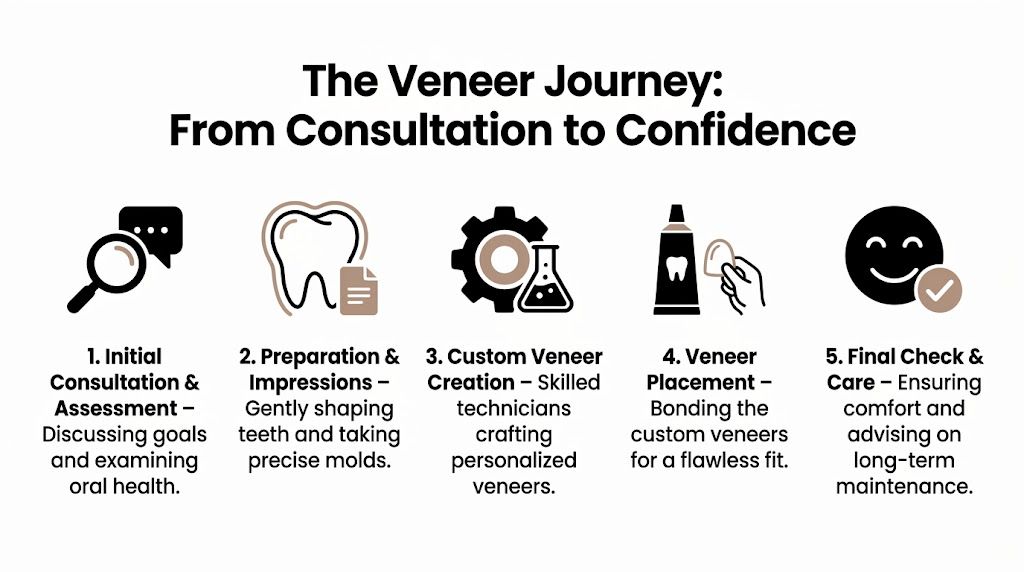
Step 1 starts with planning, not drilling
At the first appointment, the dentist talks through what bothers you and what you want changed. Some patients want a brighter smile. Others want to fix one chipped front tooth that keeps drawing the eye. Those are different goals, and the plan should reflect that.
This stage also includes checking oral health, bite, and whether veneers are the right treatment at all.
Step 2 uses digital records to design the result
Modern practices often use digital scans rather than old-style trays. A Trios scanner can create a precise digital model of your teeth, and some clinics use this for digital smile design so you can preview shape and proportion before treatment moves ahead.
You can learn more about tools such as digital scanning, CBCT and same-day systems on this dental technology page.
Step 3 involves tooth preparation
This is the part many people worry about most. In many cases, a small amount of enamel is removed from the front of the tooth so the veneer can fit naturally rather than looking bulky.
That enamel removal is usually minimal, but it matters because it makes the decision an ongoing one. Veneers aren’t like whitening, where you can stop and return to the exact starting point.
> Some veneer cases need only subtle preparation. Others need more design work. The right amount depends on tooth position, thickness, and the final shape being created.
Step 4 is making the veneers
Once the design is approved, the veneers are made to match your smile plan. In some clinics, that means they’re crafted externally. In others, in-house systems such as CEREC can produce restorations more quickly, which may reduce the number of visits.
The detail here matters. Shape, edge profile, surface texture, and colour layering are what make a smile look natural rather than flat or artificial.
Step 5 is the try-in and bonding appointment
At this visit, the veneers are checked on the teeth before final bonding. The dentist looks at fit, shade, bite, and symmetry. Tiny adjustments at this stage can make a huge difference.
When everything looks right, the veneers are bonded into place. After that, the bite is refined so your new smile feels comfortable when you talk and chew.
What the first days feel like
Quick adaptation is common, but your lips and tongue may notice the new contours at first. That’s normal. The goal isn’t just that veneers look good in a mirror. They should also feel like they belong in your mouth.
A final review helps confirm that:
- The bite feels even
- You can clean around the veneers properly
- No edge feels rough or catches
- You understand how to protect them long term
The process sounds technical, but from the patient side it often feels like a series of small, manageable appointments with a lot of planning behind the scenes.
Weighing Your Options The Pros Cons and True Lifespan of Veneers
If you’re still asking “are veneers worth it”, this is the section that usually tips the scale one way or the other. Veneers can be excellent. They also come with real trade-offs.
A balanced answer looks at both.
The upside
Veneers can do several jobs at once. They can improve colour, reshape worn edges, close small gaps, and create better symmetry across the front teeth. That’s a big reason patients see them as worth the investment. One treatment can address multiple cosmetic concerns in a coordinated way.
Porcelain also holds its appearance well. It resists staining from everyday drinks far better than natural enamel tends to, which appeals to people who are tired of chasing the same whitening result again and again.
There’s also the emotional side. When someone no longer worries about a dark tooth, a chipped edge, or uneven front teeth, they often smile more freely. That change can feel much larger than “cosmetic”.
The downside
Veneers are not a casual purchase.
First, they require planning and precision. Second, tooth preparation means the decision is usually irreversible. Third, they don’t last forever. At some point, even well-made veneers may need repair or replacement.
Here are the main drawbacks in plain language:
- They cost more upfront than simpler cosmetic options.
- They commit you to maintenance and future dental care.
- They aren’t ideal for every mouth, especially if there’s untreated grinding, decay, or gum disease.
- They can chip or debond, even if that’s not common in well-managed cases.
- They may solve the wrong problem if alignment or bite issues are the true cause of concern.
The lifespan question
Veneers take on significance beyond a cosmetic discussion. Longevity changes the value equation.
According to clinical durability data on porcelain veneers, 96% of porcelain veneers remain functional after five years, around 95% at 10 years, and about 83% at 20 years. That’s why porcelain veneers are often viewed as a predictable long-term option compared with treatments like bonding or whitening, which usually need more frequent upkeep.
Those numbers don’t guarantee what will happen in any one mouth. They do show that well-made porcelain veneers can serve patients for a long time.
> Key point: Veneers often look expensive when you compare them to one whitening treatment. They look different when you compare them to years of repeat touch-ups and replacement work.
What helps veneers last
Good veneers don’t survive on luck. They last when the basics are handled well.
| Helps longevity | Why it matters | |---|---| | Daily brushing and flossing | Keeps the supporting teeth and gums healthy | | Regular check-ups | Catches wear, bite problems, or edge issues early | | Managing grinding | Reduces the risk of chipping and overload | | Smart habits | Avoiding hard object chewing protects the veneer edges | | Thoughtful case selection | The best cosmetic design still needs a healthy foundation |
Veneers compared with crowns
People often mix up veneers and crowns. They’re not the same thing. Veneers cover the front surface. Crowns wrap around much more of the tooth and are often used when a tooth needs more structural support.
If a tooth is heavily broken down, a dental crown may be more suitable than a veneer. That’s one reason a proper exam matters. A beautiful plan that ignores strength won’t stay beautiful for long.
So, are they worth it?
They can be. Especially when your goal is long-term improvement in the visible front teeth, and your mouth is healthy enough to support the treatment. They’re usually less worth it when a simpler option could solve the problem, or when the health issues underneath haven’t been stabilised first.
The Real Cost of Veneers in Tamworth
Cost is often the point where people stop reading general advice and want a straight answer.
Here it is. The price of porcelain veneers in Australia typically ranges from $1,500 to $2,500 per tooth, according to Australian veneer cost data referenced here. The same source notes that many health funds have annual caps of $2,000 to $3,000, that in-house technology such as CEREC can reduce costs by 20% to 30%, and that overseas low-cost veneers are linked to a 40% regret rate due to higher repair needs.
Why quotes vary so much
Two veneer quotes can look very different because they may include very different levels of planning and complexity.
A final fee can be influenced by:
- How many teeth are being treated
- Whether porcelain or composite is used
- How much design work is needed for shape and symmetry
- Whether scans, bite analysis, or other preparatory care is required
- Whether extra treatment is needed first, such as cleaning up gum inflammation or protecting against grinding
The cheapest quote isn’t always the cheapest treatment over time. If the design is poor, the fit is rough, or the bite is ignored, repair costs can pile up quickly.
The Tamworth factor
For families in Tamworth and the New England region, local access matters. Travelling to a metro specialist can add cost, time off work, accommodation planning, and the hassle of follow-up visits being far from home.
That’s why in-house technology can matter financially, not just clinically. If a clinic can scan, design, and produce certain restorations more efficiently, that may reduce both appointment load and travel friction.
How to think about affordability
Rather than asking only “What’s the total?”, ask:
- What problem am I solving?
- What maintenance costs might I avoid?
- Will my health fund contribute?
- What happens if I need repairs later?
Payment support and caution around bargains
Some patients may be able to use health fund benefits, and eligible patients may have support pathways through Medicare or DVA for related dental needs or protective appliances depending on their circumstances. The exact out-of-pocket amount depends on the treatment plan and eligibility, so it’s worth checking before making assumptions.
The biggest financial mistake I see is chasing a bargain without looking at the follow-up risk. If veneers are too aggressive, too bulky, or poorly matched to the bite, they can become expensive very quickly.
> A sensible veneer budget includes the treatment itself, the check-ups after, and any protective steps needed to help it last.
Beyond Veneers Exploring Your Smile Makeover Alternatives
Sometimes veneers are the best answer. Sometimes they’re not even close.
If your main issue is tooth colour, whitening may be enough. If it’s one tiny chip, bonding may be the cleaner solution. If your teeth are noticeably crooked, moving them may be smarter than covering them.
Veneers vs alternatives at a glance
| Treatment | Best For | Typical Lifespan | Pros | Cons | |---|---|---|---|---| | Veneers | Multiple front-tooth cosmetic concerns such as colour, shape, small gaps, minor unevenness | Long-term, with lifespan varying by case and maintenance | Can change several aspects of a smile at once, natural-looking, especially in porcelain | Irreversible in most cases, higher upfront cost, not ideal for every bite | | Teeth whitening | General staining or yellowing | Needs ongoing upkeep | Conservative, simple, lower upfront cost | Won’t change shape, chips, gaps, or alignment | | Dental bonding | Small chips, edge repairs, minor reshaping, isolated cosmetic fixes | Shorter-term than porcelain options | Usually more affordable, conservative, can be done quickly | More prone to wear and staining, may need touch-ups | | Orthodontics | Crowding, spacing, bite issues, clearly crooked teeth | Long-term once teeth are aligned and retained properly | Treats the position of the teeth rather than covering it | Takes longer, doesn’t change tooth colour or shape on its own | | Crowns | Teeth needing more structural support | Long-term, case dependent | Stronger option for damaged teeth | More tooth coverage than veneers, not the first choice for a healthy front tooth |
When to choose something else
A few examples make this clearer.
If your teeth are healthy and you only dislike the colour, whitening is usually the first thing to consider. It’s more conservative and keeps your natural tooth structure untouched.
If one front tooth has a small chip from an old accident, dental bonding can be an excellent conservative repair. It may give you exactly what you need without committing multiple teeth to veneers.
Orthodontics first, cosmetics second
When teeth are significantly twisted, protruding, or crowded, veneers can become a workaround for a movement problem. That’s not always ideal. In many of those cases, orthodontics creates the better foundation, and any cosmetic finishing can be far more conservative afterward.
> The best cosmetic treatment is often the one that solves the real problem with the least sacrifice of healthy tooth structure.
This is why a good consultation shouldn’t begin with “Which veneer package do you want?” It should begin with “What are we trying to improve, and what’s the most sensible way to do it?”
Your Next Steps and Frequently Asked Questions
By this point, the question probably feels more specific. Not “are veneers worth it in general?” but “are veneers worth it for me?”
That’s the right way to look at it. A good decision usually comes down to three things:
- Your goal
- Your oral health
- Your budget and maintenance mindset
Quick questions patients often ask
Do veneers ruin your teeth
Not in the simplistic way this question often gets framed, but veneers usually do involve changing the front surface of the tooth. That’s why treatment planning matters. The aim is to improve appearance while preserving as much healthy structure as possible.
Do veneers look fake
Bad veneers can. Good veneers shouldn’t. The best ones suit your face, lip line, age, and natural tooth proportions. They don’t need to be blindingly white to look beautiful.
What if a veneer breaks
A veneer can sometimes chip or come loose and may need repair or replacement. That risk is one reason bite assessment and grinding management matter before treatment, not after a problem appears.
Are veneers painful
Most patients cope well with the process. The preparation and bonding stages are usually manageable, and dentists can use options to keep you comfortable during treatment.
How do I know if veneers are worth it for me
Ask yourself two plain questions. “Will this solve the problem that bothers me most?” and “Am I choosing veneers because they’re the best option, not just the fastest-sounding one?”
If the answer to both is yes, veneers may be a very good investment.
A personalised consultation is still the best way to decide. That’s where your smile, bite, gum health, grinding habits, and goals can be assessed together instead of guessed from photos online.
---
If you’d like clear, local advice about whether veneers are the right fit for your smile, Oasis Smiles Dental offers a welcoming, patient-centred approach in Tamworth. The team uses advanced tools including digital scanning, CBCT imaging, CEREC same-day technology and in-house 3D printing to plan treatment carefully and explain your options in plain English. Whether you’re comparing veneers with whitening, bonding, crowns or orthodontics, they can help you make a decision that suits your teeth, your budget and your long-term oral health.