

How Long Do Implants Take? Your 2026 Timeline Guide
The dental implant process in Australia can generally be expected to take 3 to 9 months from start to finish. For many straightforward cases, that means a few appointments, one healing phase that does most of the heavy lifting, and then your final tooth.
If you’re reading this in Tamworth or elsewhere in the New England region, you’re probably weighing up one simple question: how long do implants take, really? Not the ideal version. Your version. The answer depends on what your jawbone looks like now, whether the tooth is already missing, whether grafting is needed, and how your body heals.
That uncertainty is what worries many. They’re not usually afraid of one appointment. They’re trying to work out how this fits around work, family, school drop-offs, travel, and the awkward thought of living with a gap while everything heals. The good news is that implant treatment usually follows a clear sequence, and once you understand why each stage exists, the timeline starts to make sense.
Your Dental Implant Journey An Overview
A dental implant isn’t one long procedure. It’s a staged treatment where each part has a job to do. One visit checks whether an implant is right for you. Another places the implant itself. Then your bone needs time to lock onto that implant before the final crown goes on.
That’s why the overall time can sound longer than people expect. Most of that waiting isn’t delay. It’s healing.
For many patients, the process feels easier once it’s broken into a calendar rather than a mystery. If you’re trying to organise work leave, family commitments, or transport for appointments, a good medical appointment booking system can also make the whole process feel more manageable because you can see the treatment as a sequence of planned steps rather than a moving target.
What the journey usually includes
In plain terms, the implant process often looks like this:
- Assessment first: Your dentist checks your teeth, gums, bite, and bone support, often with digital scans or 3D imaging.
- Preparation if needed: Some people can move straight to implant placement. Others need a tooth removed first or need extra bone support.
- Implant placement: The titanium implant is placed into the jawbone.
- Healing time: Your bone gradually fuses to the implant.
- Final restoration: A connector and crown are fitted so the tooth looks and works properly.
> The longest part of the process usually happens after surgery, not during it.
Why the timeline varies
Two people can both ask, “how long do implants take?” and get different answers without either answer being wrong. A healthy single-tooth case with strong bone is very different from a complex case involving bone loss or several missing teeth.
What matters most is getting a stable result. An implant should be planned carefully, placed precisely, and given enough time to heal. Done properly, it’s one of the most predictable ways to replace a missing tooth.
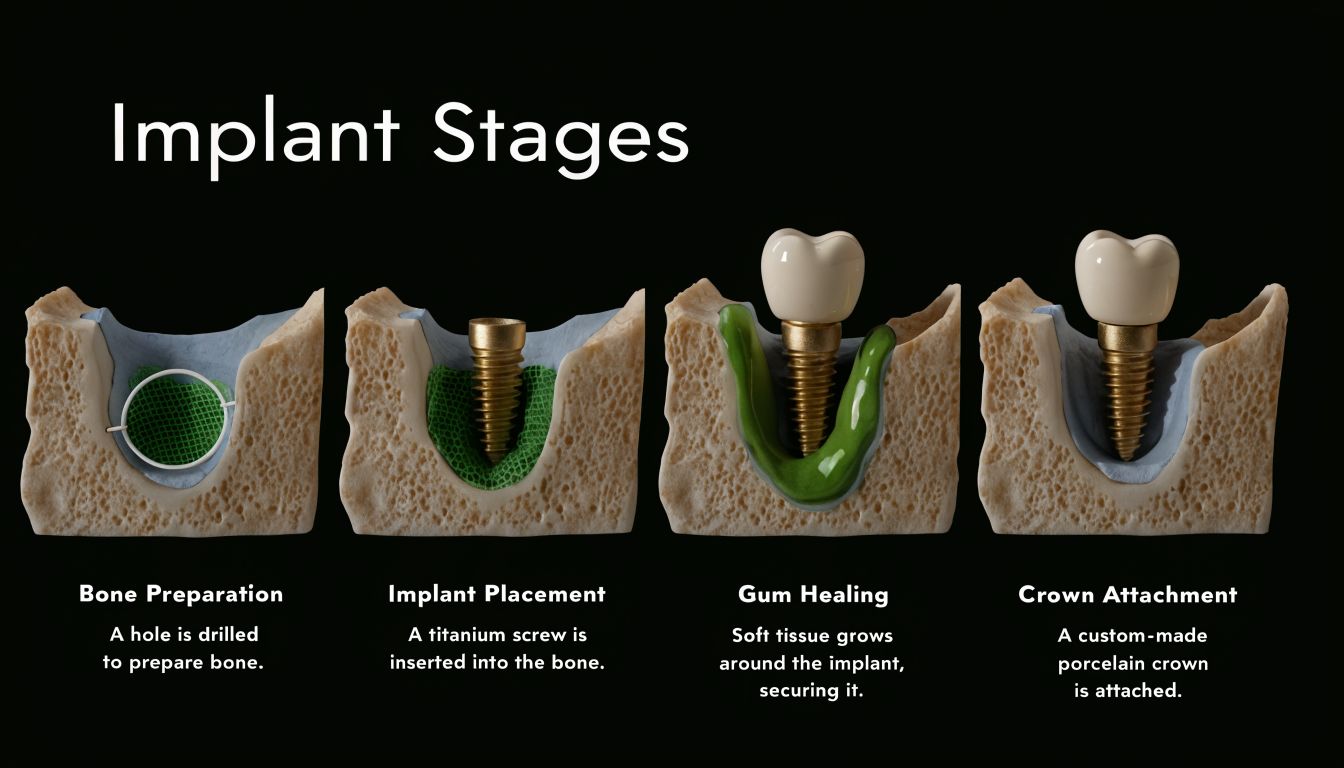
The Four Main Stages of a Dental Implant
A simple way to think about implants is to compare them to building a house. You don’t start with the roof. You start with the plans, then the foundation, then the structure, then the finishing touches.
Planning and assessment
This is the blueprint stage. Your dentist examines the area, checks your bite, reviews your health history, and uses scans to see the shape and density of your jawbone. Good planning matters because the implant has to go in the right position for both strength and appearance.
If you’d like a plain-language overview of what implant treatment involves clinically, this guide to dental implants is a useful companion read.
Implant placement
This is the foundation stage. A titanium implant is placed into the jawbone where the missing tooth root used to be. It sits under the gum and acts as the anchor for the future tooth.
The surgery itself is only one part of the story. What happens after placement is what determines whether the implant becomes strong and long-lasting.
Osseointegration
This is the structural stage, where the bone bonds to the implant. In Australia, the standard timeline for implant treatment is 3 to 9 months, and osseointegration takes 3 to 6 months in 85 to 95% of cases according to Australian implant timeline data. The same source notes that a 2022 audit of over 5,000 implant cases in rural clinics found 72% of patients without bone grafting completed treatment within 4 to 6 months.
Final restoration
This is the finishing stage. Once the implant is stable, an abutment connects the implant to the crown, and the final tooth is fitted. That’s the point where the treatment starts to feel complete to most patients, because you can finally see the result in your smile.
> Practical rule: The implant appointment is important, but the healing phase is what turns a metal post into a functioning tooth replacement.
A Detailed Dental Implant Timeline Breakdown
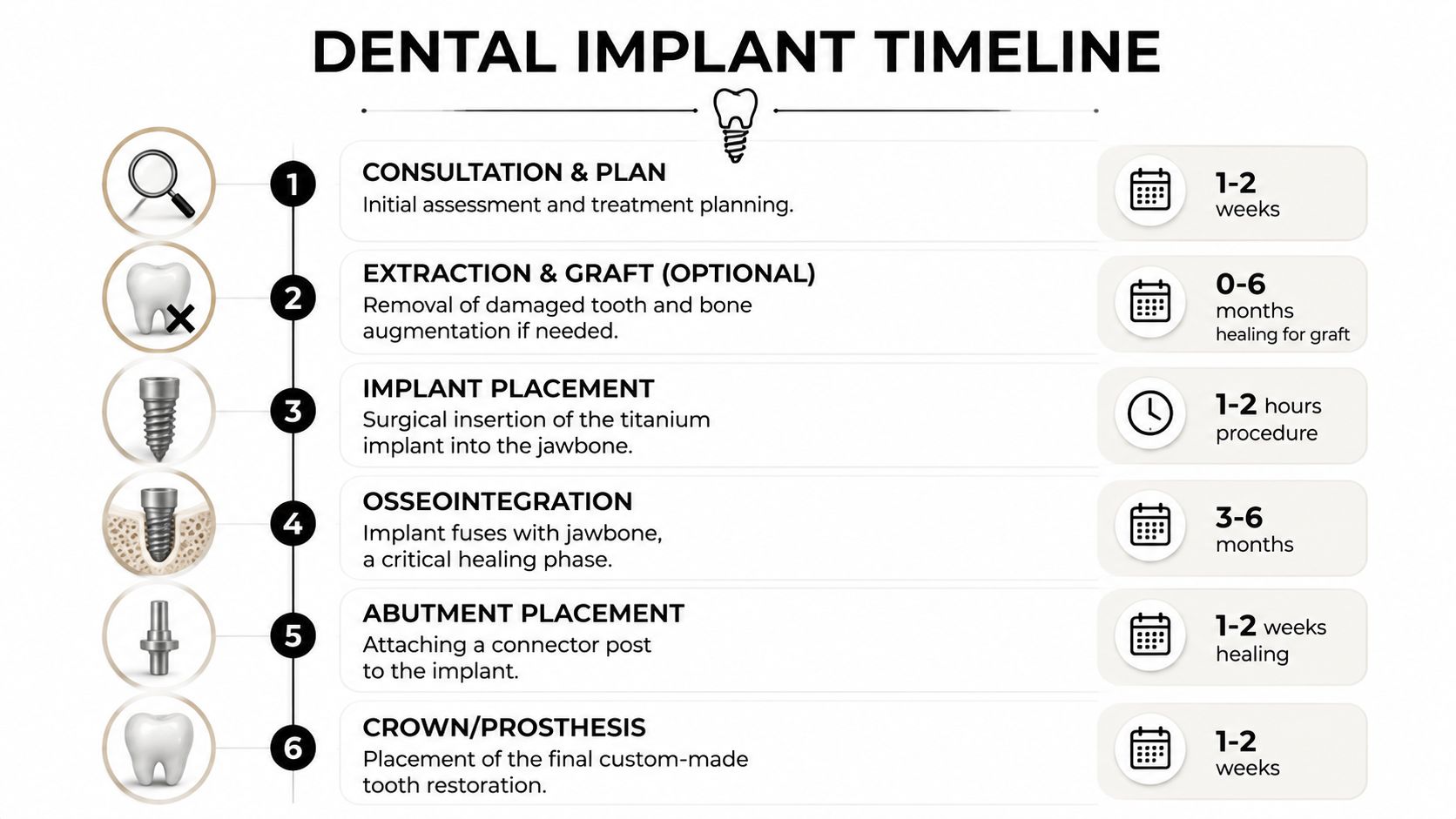
When people ask how long do implants take, they usually want a calendar answer. Fair enough. Here’s the practical version.
Early planning and preparation
The first phase is diagnosis and planning. This can include your examination, digital scans, and deciding whether the site is ready for an implant or needs extra preparation first. Some people move through this phase quickly. Others need a little pre-treatment, such as allowing an extraction site to settle.
The key point is that planning should answer two questions clearly:
- Is the bone ready now
- If not, what has to happen before implant placement
Surgery and the wait that matters
The implant placement appointment itself is usually much shorter than the full treatment timeline. After that comes the slow but necessary part: healing. In the New England North West region, including Tamworth, 68% of implant patients reach full restoration within 5 months when immediate loading protocols are used, according to regional NSW implant data. The same source says this reflects a 25% timeline reduction since 2015, linked to digital workflows such as CEREC same-day crowns.
That doesn’t mean every patient gets a same-day final tooth. It means modern planning and restoration systems can reduce delays for suitable cases and help treatment move more efficiently.
What a real-world schedule can look like
A common implant journey may include:
- Consultation and records
- Any preparatory treatment
- Implant placement
- Healing period
- Abutment and crown
> In straightforward cases, the timeline often feels long on paper but short in terms of actual chair time. Most of the calendar time is your body healing between visits.
Why some Tamworth patients finish sooner than expected
Digital tools such as CBCT and CEREC help in different ways. CBCT gives detailed 3D information before treatment starts, which reduces guesswork. CEREC can speed up the restoration side for suitable patients because the crown workflow is more efficient.
That’s why two implant cases that look similar at first glance can finish on different schedules. The anatomy matters. The planning matters. The restoration method matters too.
How Different Scenarios Change Your Timeline
A single missing tooth in strong bone follows one path. Several missing teeth or reduced bone volume follow another. In these instances, expectations need to be realistic.
The biggest source of surprise is bone grafting. Many people assume the implant goes in as soon as they decide to proceed. Sometimes it does. Sometimes the site needs rebuilding first, and that changes the timeline completely.
Estimated Dental Implant Timelines by Scenario
| Scenario | Typical Timeline (Start to Finish) | Key Considerations | |---|---|---| | Straightforward single implant | Often within the standard 3 to 9 month range | Strong bone and uncomplicated healing can keep treatment moving steadily | | Single or multiple implants with immediate loading suitability | Some patients may reach restoration sooner | Digital planning and CEREC-based workflows can reduce delays for suitable cases | | Implant case needing bone grafting | Often extended by several extra months | Bone needs time to heal before the implant can be placed or restored | | Complex case with significant bone loss or multiple missing teeth | Can extend beyond 12 months | Extra surgical stages and longer healing can be necessary |
When bone grafting changes everything
Existing content on implants often skips over this, but it matters. Approximately 40 to 60% of implant patients require some form of bone augmentation, and that can add 3 to 6 months or more, potentially pushing complex cases beyond 12 months, according to bone augmentation timeline guidance.
That extra time isn’t wasted time. A graft gives the implant enough support to sit in bone that’s strong enough and thick enough.
Multiple teeth and implant dentures
If several teeth are missing, the plan may involve more than one implant or a broader restoration approach. In those cases, the sequence can become more complex because your dentist is balancing support, bite, appearance, and healing across a larger area.
Patients exploring larger replacement options often compare single implants with implant dentures, especially when multiple teeth are missing. The best choice depends on bone support, function, and how fixed you want the final result to feel.
> A longer timeline doesn’t automatically mean a problem. It often means the treatment is being staged properly for a more durable result.
Factors That Speed Up or Slow Down Your Treatment
Some timeline factors come from your mouth. Others come from how the case is planned. A few come from how comfortable you feel about dental treatment in the first place.
Factors that can slow things down
Healing doesn’t happen on a stopwatch. Several things can make treatment less predictable:
- Bone quality: Softer or reduced bone may need a slower, staged approach.
- Gum condition: Healthy gums support better healing and cleaner implant sites.
- General health: Some medical conditions and medications can influence planning and recovery.
- Smoking and oral hygiene: These affect how well tissues heal and how well the implant is maintained over time.
- Missed reviews: Skipping check-ups can delay the handover from healing to restoration.
Factors that can help treatment move smoothly
Technology can remove unnecessary delays even though it can’t remove biology. CBCT helps the dentist assess the bone in 3D before surgery. CEREC can simplify crown fabrication in appropriate cases. Digital scanning also helps with fit and communication.
There’s also a factor patients often overlook: anxiety. Fear can delay decisions, lead to cancelled visits, and make aftercare harder to follow.
According to sleep dentistry and implant timing guidance, sleep dentistry can reduce treatment abandonment by 40% and can reduce the perceived time burden of the procedure for anxious patients. That matters because when patients feel calm enough to attend treatment and follow post-operative instructions well, the whole process tends to run more predictably.
What this means in practice
If you’re healthy, organised, and your bone is suitable, the process can feel very straightforward. If your case is more complex, the treatment may take longer, but the extra time usually exists for a good reason.
> The fastest implant is not always the best implant. The best implant is the one placed in the right position, in the right bone, with enough healing time.
Understanding the Critical Healing Phase
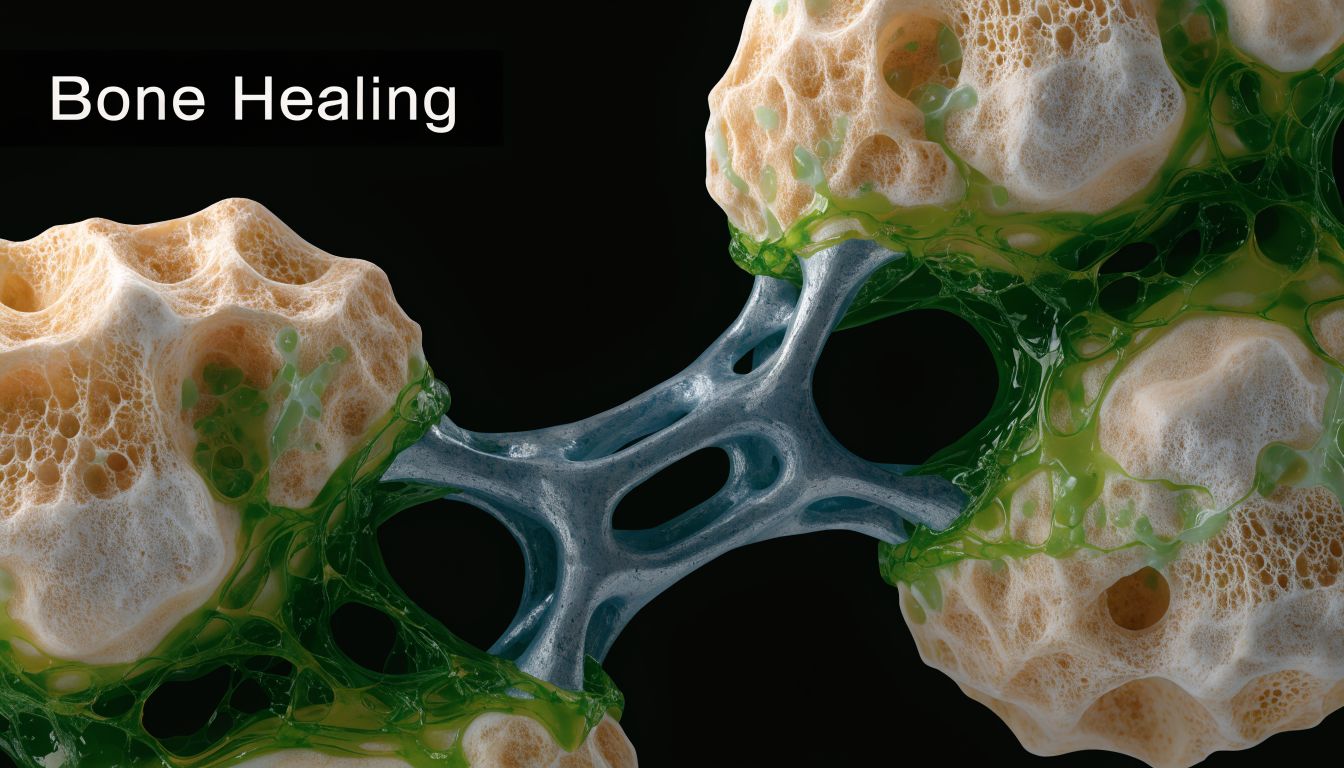
The longest stage is also the most important. This stage is called osseointegration, which means the implant is bonding with your jawbone.
What’s happening under the gum
After the implant is placed, your body starts a repair process around it. The early stage involves stabilising the area and laying down new bone. Then that early bone is replaced and strengthened over time.
According to osseointegration guidance with CBCT planning details, this process follows a recognisable pattern: woven bone forms during weeks 2 to 6, followed by lamellar bone maturation during months 2 to 6. The same source notes that in-house CBCT imaging can help predict integration time with up to 90% accuracy because it allows precise bone density measurement.
Why waiting is worth it
Patients sometimes feel nothing is happening during this period. In reality, this is the point where the implant becomes useful. Before osseointegration, it’s just been placed. After osseointegration, it can function as a stable anchor for a crown.
If you’re curious about the tools dentists use to judge this more accurately, modern dental technology such as CBCT makes planning and follow-up much more precise than old two-dimensional methods.
Common Questions About the Implant Timeline
Will I have a gap while the implant heals
Not always. It depends on the tooth position, your bite, and how much load the area can safely handle during healing. In visible areas, dentists often discuss temporary options so you’re not left feeling self-conscious.
How soon can I go back to work
That depends on the procedure and your job. Many people take a short recovery period after implant placement, especially if the work is physical or involves a lot of talking. Your dentist can give more personalised guidance once the treatment plan is set.
Does a longer timeline mean something has gone wrong
Usually, no. Often it means your case needs more groundwork, especially if bone support needs to be improved first. A longer path can be the safest path.
Does the timeline affect cost
It can. More stages usually mean more appointments, more planning, and sometimes more preparatory treatment. What matters is understanding the full plan upfront rather than comparing one implant quote with another without looking at what’s included.
For practical patient questions beyond timing alone, it’s worth browsing a broader set of dental FAQs so you know what to expect before, during, and after treatment.
---
If you’re thinking about replacing a missing tooth and want clear advice specific to your mouth, book a consultation with Oasis Smiles Dental. The team has served Tamworth and the New England region for over 20 years, combining advanced technology with a calm, family-friendly approach to help you understand your options and your likely timeline.