

After Hours Dental Emergency: A Tamworth Patient's Guide
It's 9:30 at night, your child is crying, or you've just felt a sharp crack in a tooth while eating dinner. Your lip is numb with panic before your mouth is numb with pain. That's normal. What matters now is doing the right thing first, not doing everything at once.
An after hours dental emergency feels bigger in the dark. People often either underreact and wait too long, or overreact and head straight to hospital for something a dentist should handle. A calm plan fixes both problems.
What To Do When a Dental Emergency Strikes After Hours
If you're reading this with a swollen cheek, a broken tooth, or a mouth full of blood after a procedure, slow down. Sit upright. Turn on a light. Find clean gauze, a glass of water, and your phone. Most dental emergencies are manageable in the short term if you take the first few steps properly.
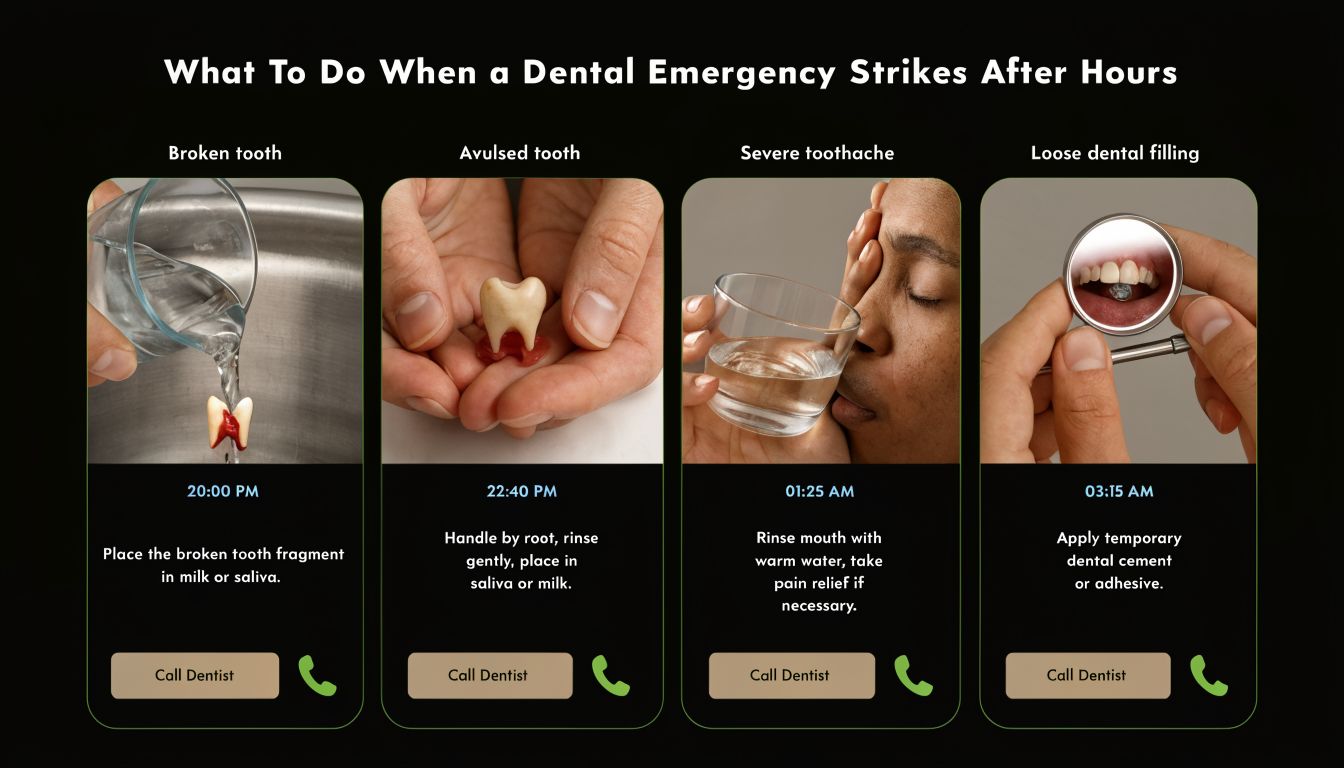
This isn't rare. While Australian figures are limited, US reporting notes about 2 million emergency department visits each year for non-traumatic dental conditions, with visits 40 to 50 per cent more likely outside standard working hours, especially from 5 PM to midnight according to reporting on after-hours dental demand. The pattern makes sense. Pain often worsens at night, and people finally stop long enough to notice it.
Start with three checks
Before you do anything else, work out which of these you're dealing with:
- Pain only. Severe toothache, pressure, sensitivity, or a cracked tooth.
- Bleeding. Especially after an extraction or trauma.
- Injury. Broken tooth, knocked-out tooth, facial swelling, or a blow to the mouth.
If you're not sure whether your problem counts as urgent, review these common symptoms of a dental emergency. Don't guess if the pain is escalating, the swelling is spreading, or a child has had a fall.
> If you can breathe normally, swallow normally, and control the bleeding, you usually have time to use first aid properly before travelling.
What not to do in the first few minutes
People make the same mistakes after hours. Don't put aspirin on the gum. Don't hold heat on a swollen face. Don't keep checking a bleeding socket every few minutes. And don't scrub a knocked-out tooth.
Good first aid protects the tooth, the gum, and your options in the chair the next morning.
First Aid for Pain, Bleeding, and Broken Teeth
The right home care can get you through the night. The wrong home care can turn a repairable problem into an extraction. Keep it simple.
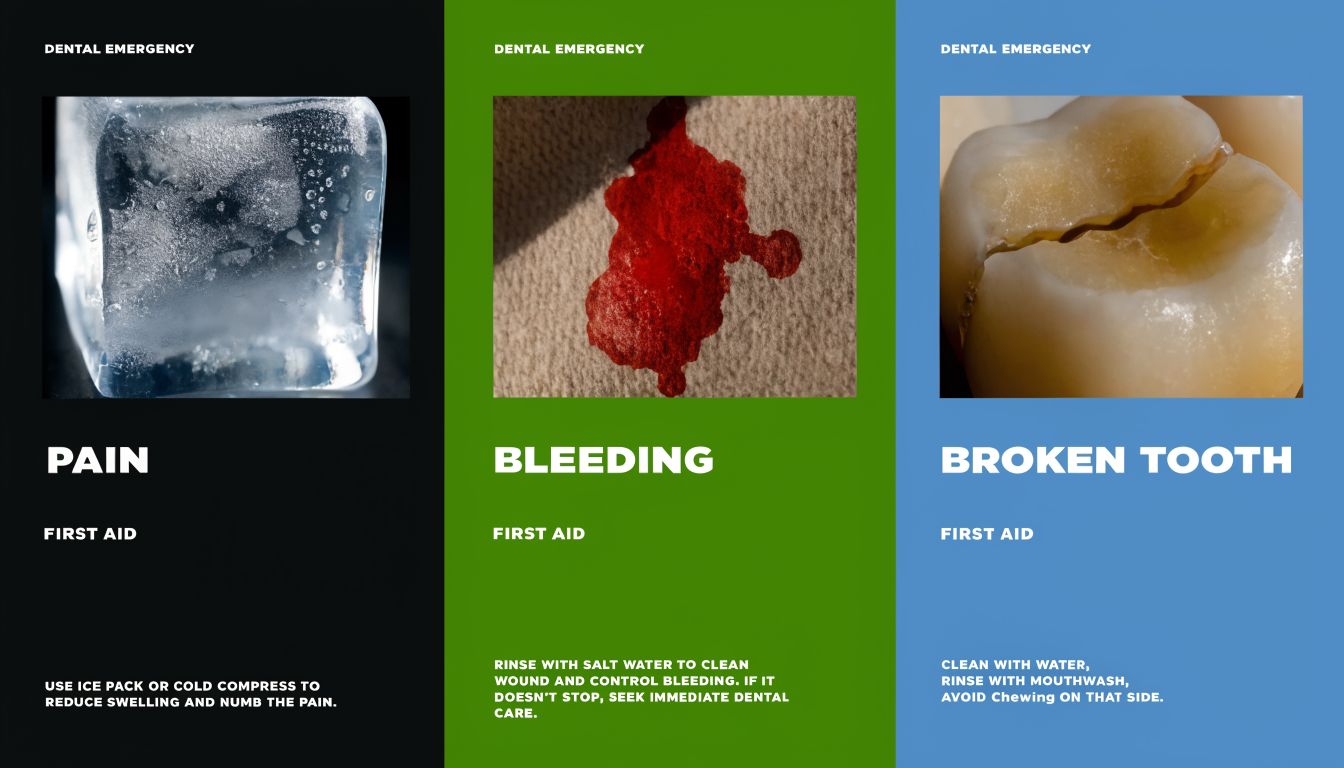
Severe toothache
A strong toothache usually means inflammation, infection, a crack, or food packed into a damaged area.
Do this first:
- Rinse gently with warm salty water. This clears debris and can settle irritated tissue.
- Floss the area carefully. Food trapped between teeth can create intense pressure.
- Use a cold compress on the outside of the face. That helps with swelling and can dull pain.
- Take pain relief as directed on the packet. If you want a practical overview of topical and over-the-counter options, this clinician's guide to pain relief is a useful general reference.
Don't lie flat if throbbing is severe. Prop yourself up. Blood pressure in the area often makes night pain worse.
Broken tooth or chipped tooth
A broken edge can cut your tongue, and a deeper fracture can expose the nerve.
Here's the priority:
- Save every piece you can find. Bring fragments to the appointment.
- Rinse your mouth with water. Don't scrub the tooth.
- Cover a sharp edge if needed. Sugar-free chewing gum can protect your cheek or tongue for a short time.
- Use a cold pack outside the mouth if there's swelling from trauma.
If the break happened around a crown or filling, keep the loose piece. Don't glue it back yourself. Superglue belongs nowhere near a tooth. If a restoration has come away, this guide on a lost filling or crown for Tamworth patients seeing a dentist will help you avoid making it worse.
Bleeding after dental treatment or trauma
People often panic and spit constantly in these situations. Avoid doing that. Spitting, rinsing hard, smoking, or sucking through a straw can restart bleeding.
> Practical rule: Bite on a firm gauze pack and keep steady pressure. Don't keep lifting it to inspect the area.
Australian protocols for post-procedural bleeding recommend firm pressure with a gauze pack soaked in tranexamic acid. If that isn't available, a damp tea bag can help temporarily because of its tannic acid. If the bleeding continues beyond a couple of hours despite these measures, professional help is required.
If a child is the patient
Children often can't describe what hurts. Look for drooling, refusal to eat, swelling, blood on the pillow, or holding the jaw.
Use this quick check:
| Problem | What you should do tonight | |---|---| | Baby tooth knocked out | Don't try to put it back in. Keep the child calm and arrange dental advice. | | Permanent tooth knocked out | Follow the tooth-saving instructions in the next section immediately. | | Facial swelling | Monitor breathing and swallowing closely. If either changes, go to hospital. | | Broken tooth with pain | Rinse, cold compress, save fragments, and arrange urgent dental review. |
How to Save a Knocked-Out Tooth
A knocked-out permanent tooth is one of the few dental emergencies where minutes matter. Don't wait to “see how it goes” in the morning.
According to Australian Dental Association guidance, the chance of successful replanting drops from 90 per cent within 20 minutes to 50 per cent after 60 minutes. Milk or saliva is the right temporary storage. Dry storage sharply reduces viability.
What to do straight away
Pick the tooth up by the crown, not the root. The crown is the part you normally see in the mouth. The root is the fragile part you need to protect.
If it's dirty, rinse it briefly and gently. Use saline or milk if you have it. Don't scrub it, don't use soap, and don't wrap it in tissue.
Then do one of these:
- If it's a permanent tooth and the person is cooperative, try placing it back into the socket the right way around.
- If you can't reinsert it, place it in milk.
- If milk isn't available, keep it in the person's saliva by placing it in a clean container with saliva.
> Hold the tooth like you'd hold a light bulb. Firmly enough not to drop it, gently enough not to damage it.
What not to do
Some mistakes kill the chance of saving the tooth:
- Don't touch or scrape the root
- Don't store it dry
- Don't put a baby tooth back in
- Don't delay because the bleeding looks dramatic
If a child has knocked out a tooth and you're not sure whether it's a baby tooth or a permanent one, get advice immediately. Replanting the wrong tooth causes harm. In school-aged children, front teeth are often permanent, so don't assume.
While travelling for care
Ask the person to bite gently on gauze if there's bleeding. Keep them upright. Bring the tooth with you even if you think it can't be saved. We occasionally have more options than patients expect.
When You Must Go to the Hospital Emergency Department
A dentist handles teeth. A hospital handles threats to your airway, major trauma, and uncontrolled medical risk. Know the difference.
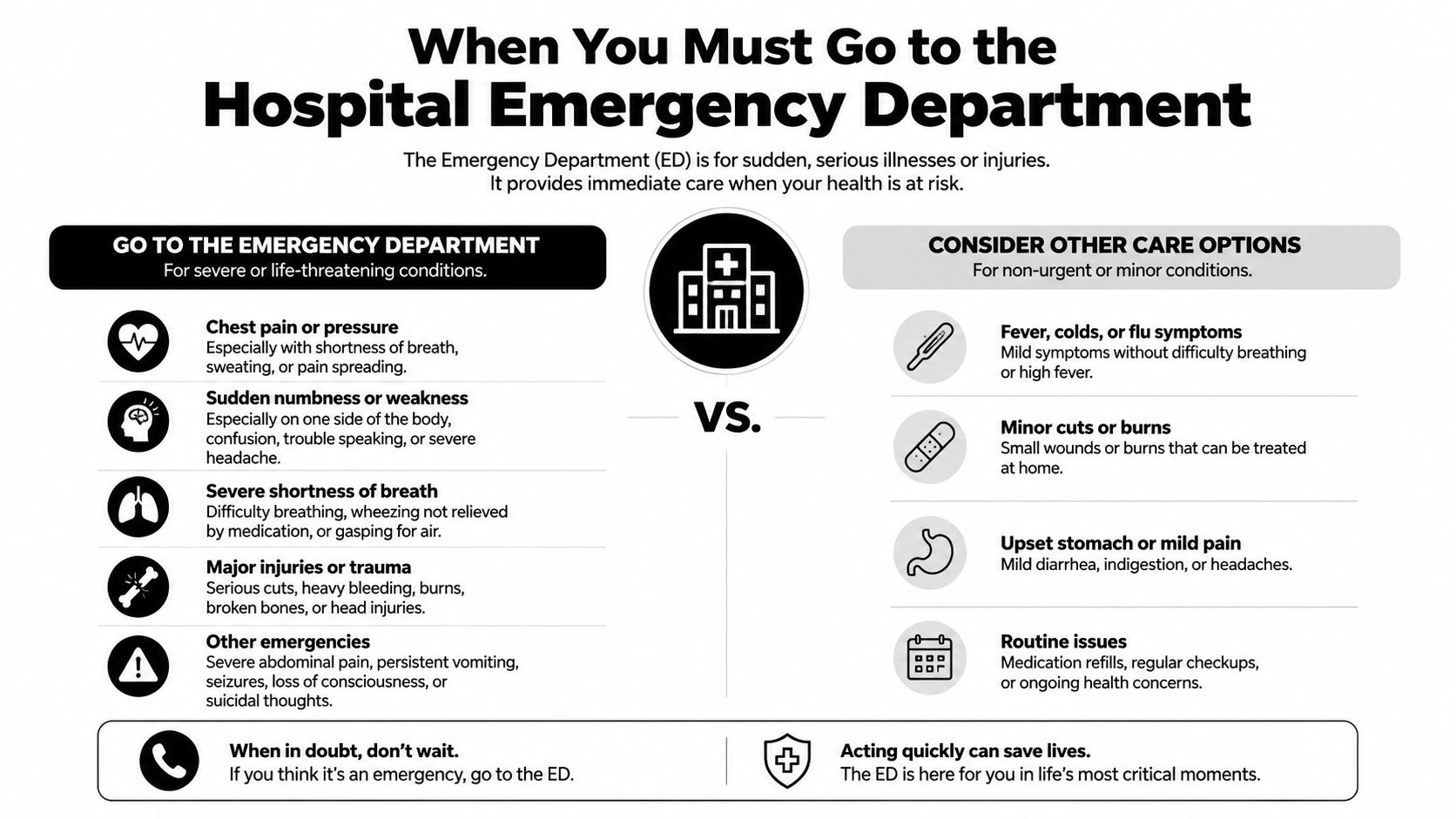
If you're in Tamworth and any of the red flags below are happening, go to Tamworth Base Hospital Emergency Department. Don't wait for a dental callback first.
Go to the emergency department now
- Trouble breathing or swallowing because of swelling in the mouth, jaw, or neck
- Rapidly increasing facial swelling, especially with fever or the person looking unwell
- Bleeding that won't stop despite firm pressure
- Suspected broken jaw or major facial injury
- Head injury, loss of consciousness, or neck injury along with dental trauma
- Severe trauma with deep cuts to the lips, tongue, or face
- A child who is becoming drowsy, difficult to rouse, or distressed with swelling
This usually needs a dentist, not hospital
- Toothache without breathing issues
- A broken filling, crown, or denture
- A chipped tooth without major facial injury
- A knocked-out tooth when the person is otherwise stable
- Mild swelling localised to the gum
- Jaw pain from clenching or a suspected cracked tooth
> Hospital staff can manage serious medical danger. They usually can't provide the full dental treatment that fixes the actual tooth.
That matters because people often lose time in emergency by going to the wrong place first. If the issue is pain, a damaged tooth, or a restoration that's come out, a dentist is the proper first call. If the issue is airway, major bleeding, or facial trauma, hospital wins every time.
Contacting Oasis Smiles and Preparing for Your Visit
When the immediate first aid is done, the next job is making the appointment easier and faster.
For urgent dental problems, the clearest option is to contact a clinic that offers emergency care and follow their after-hours instructions carefully. If you need prompt treatment, you can see the details for emergency dentistry in Tamworth. If you're calling during the day, don't leave it until late afternoon. Earlier calls give the team more room to help.
If you're calling after hours
Leave a voicemail that includes the facts a dentist needs:
- Your full name and best callback number
- What happened. Toothache, swelling, broken tooth, bleeding, knocked-out tooth
- When it started
- Whether swelling is spreading
- Whether there was trauma
- Any major medical issues or blood thinners
- Whether the patient is a child
Keep the message short and specific. “Severe pain lower right molar since 7 pm, swelling starting, no trouble breathing” is useful. “My tooth hurts, please call” isn't.
What to bring
Good preparation saves time in the chair.
Bring these if they apply:
- The knocked-out tooth or broken pieces
- Any crown, bridge, filling, or denture part that came loose
- A list of medications
- Health fund, Medicare, or DVA details
- Information about allergies
- Details of the accident, if sport, work, or school was involved
Cost worries stop people from getting help quickly. That's a mistake. In regional areas like New England, out-of-pocket costs can be higher because there are fewer after-hours providers. At Oasis Smiles, there's a focus on transparent fees, acceptance of all major health funds, Medicare and DVA, plus flexible payment options so patients can get care without extra financial stress.
One last point before you leave home
Eat only if you're sure you won't need urgent treatment that might be easier on an emptier stomach. Keep children calm, bring a spare top if there's been bleeding, and don't apply home repair kits unless a dentist has told you to.
Simple Tips to Prevent Future Dental Emergencies
Most after-hours problems don't come out of nowhere. They build gradually, then flare at the worst time.
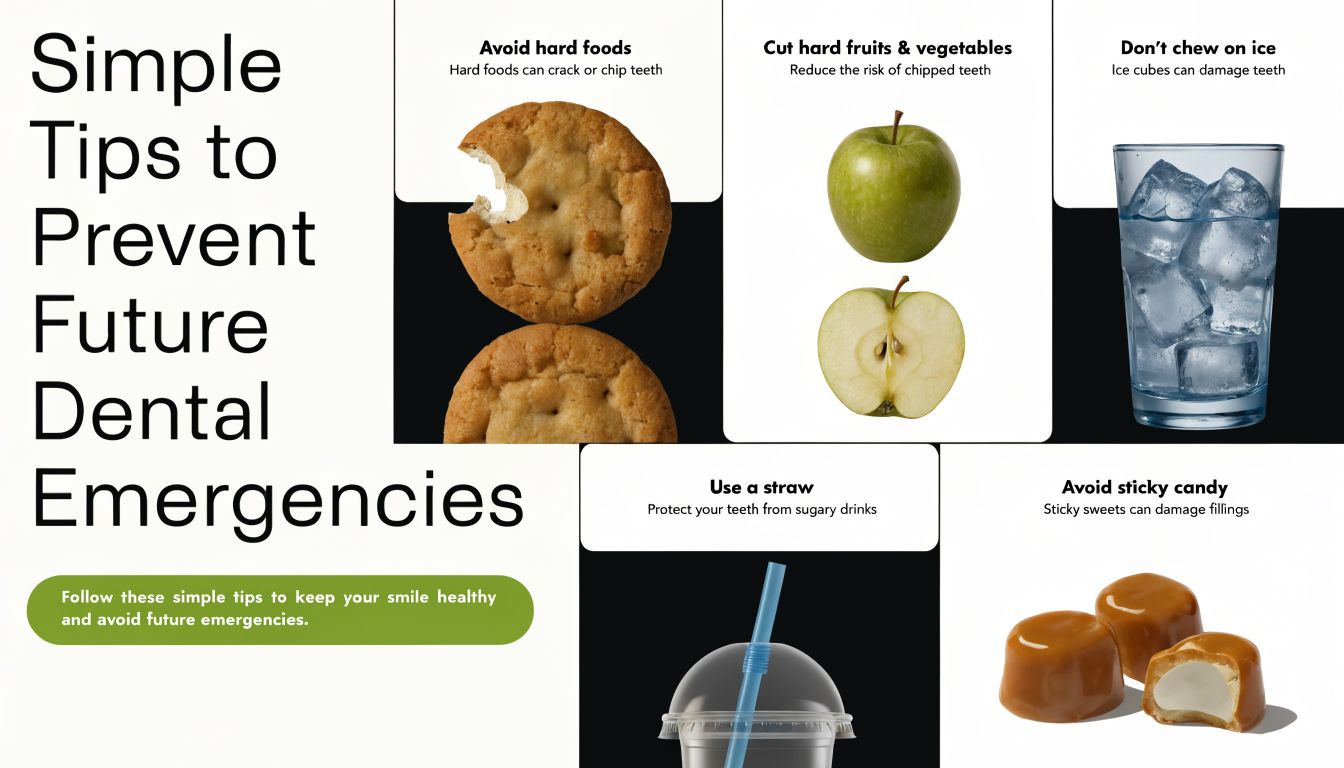
For families in regional NSW, prevention matters even more. The Australian Institute of Health and Welfare reports that children in regional NSW have a 28 per cent higher rate of potentially preventable hospitalisations for dental conditions than children in metro areas, with many happening outside business hours.
The habits that make the biggest difference
- Use a proper sports mouthguard. A custom-fitted guard protects far better than a boil-and-bite option. You can learn more about custom mouthguards for prevention.
- Fix small problems early. A sore tooth that comes and goes is still a warning.
- Don't chew ice, pens, or hard lollies. That's how sound teeth crack.
- Keep regular check-ups for children. Regional families often wait too long because life gets busy.
- Take night grinding seriously. Cracks and broken restorations often start there.
If you've had one after hours dental emergency, assume you're at risk of another until the cause is dealt with properly.
---
If you need calm, practical help from a local team, Oasis Smiles Dental is here for Tamworth and the New England region. Call as early as possible for urgent concerns, especially before 1 pm for same-day emergency availability, and bring any broken pieces, knocked-out teeth, medication lists, and health fund or DVA details with you.