

Emergency Tooth Extraction at Home: A Safety Guide
You're probably reading this because your tooth is throbbing, your face may be swelling, and you want the pain gone now. When that happens, “emergency tooth extraction at home” can sound like a practical fix.
It isn't. Pulling your own tooth is one of the fastest ways to turn a bad toothache into a far worse emergency.
What you need tonight is not a DIY extraction. You need a safe plan to control pain, limit damage, and get the right help quickly. In Australia, cost and access delays are a real issue. Roughly 11% of people delayed or avoided needed dental care because of cost in 2021–22, and about 77,000 hospitalisations for potentially preventable dental conditions were recorded in 2022–23, according to the Australian Institute of Health and Welfare figures cited here. That pattern matters because waiting too long is what often turns a manageable problem into an urgent one.
Why You Must Never Pull Your Own Tooth
If you take one thing from this article, take this. Never try to extract your own tooth.
A proper extraction isn't just “grab and pull”. A dentist checks the tooth, the root shape, the surrounding bone, the gum condition, and whether infection or fracture has already changed the area. Without that assessment, you can easily break the crown off and leave roots buried under the gum.
That's where a simple problem becomes a surgical one. A snapped root can keep hurting, keep bleeding, and keep a source of infection in your jaw.
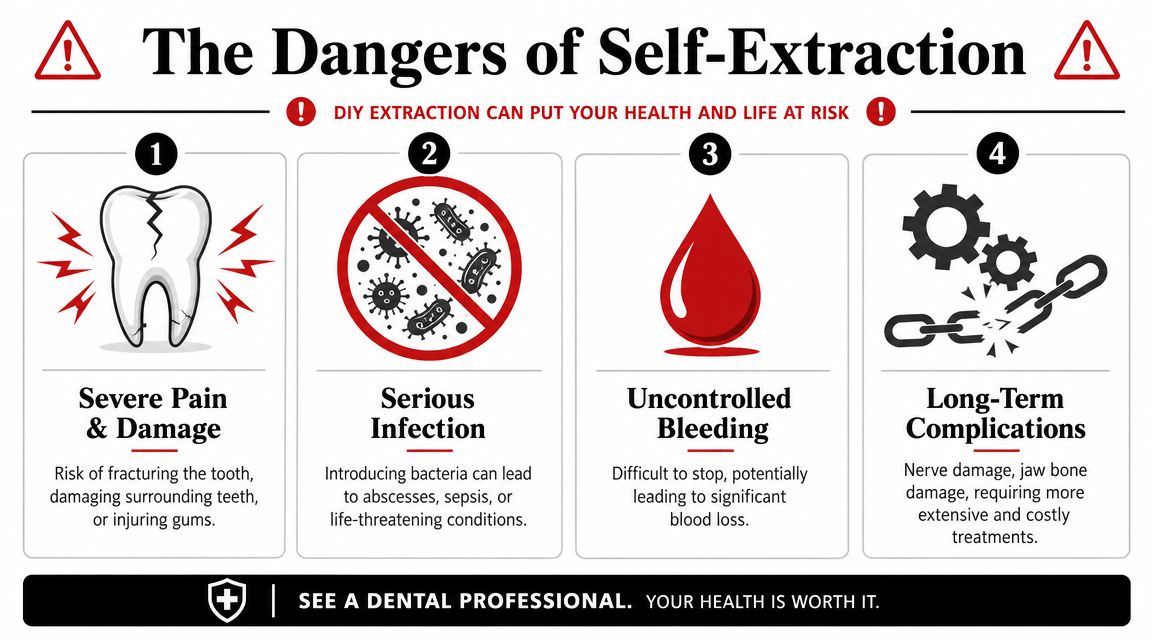
What goes wrong at home
The biggest risks are blunt and serious:
- Broken roots: You may remove only part of the tooth.
- Heavy bleeding: Mouth wounds can bleed far more than people expect.
- Bone and gum injury: Force can tear soft tissue and damage the socket.
- Infection spread: A painful tooth is often already infected. Rough handling can worsen that.
- Nerve injury: Some teeth sit close to important nerves. Damage can leave ongoing numbness or altered feeling.
The right response to a dental emergency at home is stabilisation, not extraction. NSW emergency dental guidance recommends gentle rinsing with warm water, an external cold compress, over-the-counter pain relief as directed, and specifically says to avoid trying to remove the tooth yourself because of fracture and infection risks, as summarised in this emergency dental guidance reference.
> Practical rule: If you're desperate enough to consider pliers, string, or “just wiggling it out”, the tooth already needs professional assessment.
Professional aftercare shows why DIY fails
Even after a dentist removes a tooth properly, the site still needs careful management. After a professional extraction, patients are told to bite on gauze for direct pressure, avoid straws, and avoid strenuous activity for 48–72 hours to protect the blood clot, as outlined in this tooth extraction aftercare guidance.
That blood clot is not a minor detail. It's what protects the socket while healing begins. If it breaks down or dislodges, you can end up with dry socket and prolonged pain.
At home, people usually don't have the anaesthesia, imaging, instruments, sterile setup, or post-operative control needed to do this safely. If you think the tooth may need to come out, the safest next step is to seek proper professional tooth extraction care.
Your First Aid Plan for Severe Tooth Pain
If you can't get to a dentist immediately, focus on calming the situation down. Don't poke the tooth. Don't test whether it's “ready”. Don't keep biting on it to check if it still hurts.
Use a simple first-aid routine instead.
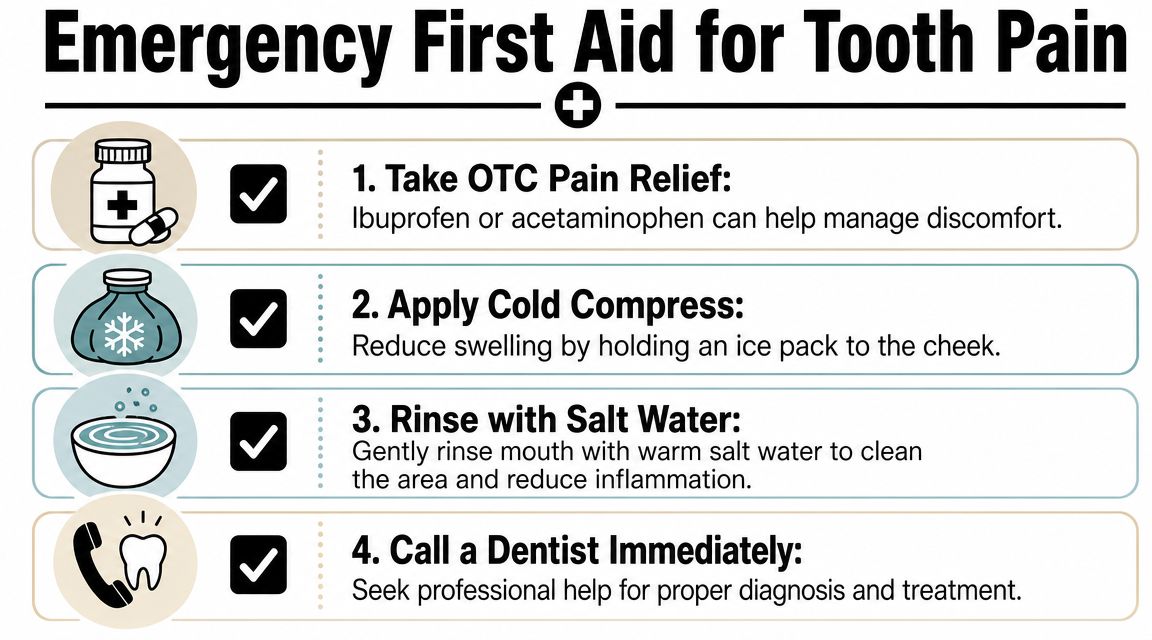
Do these steps now
- Rinse gently
Use warm water or warm salt water. Swish lightly, then let it fall out of your mouth. Don't rinse hard. You're trying to clean the area, not blast it.
- Apply a cold compress
Hold it on the outside of your cheek. This can help reduce swelling and make the area feel less angry.
- Take over-the-counter pain relief as directed
Follow the packet instructions or advice from a pharmacist. Don't place aspirin directly on the gum. That can irritate the tissue and make things worse.
- Keep pressure on bleeding
If the gum is bleeding, place clean gauze over the area and bite down with steady pressure.
- Avoid aggravating the tooth
Chew on the other side. Skip very hot, very cold, or hard foods. Don't keep touching the area with your tongue or fingers.
The NSW emergency guidance supports this exact kind of first aid: rinse gently with warm water, use a cold compress externally, take over-the-counter analgesics as directed, and do not attempt self-removal of the tooth, as noted in this practical emergency advice summary.
What not to do
People in pain often make the same mistakes:
- Don't use tools: No pliers, tweezers, string, or improvised instruments.
- Don't put aspirin on the gum: It can irritate the tissue and won't solve the cause.
- Don't press on swelling: A swollen face or gum needs assessment, not squeezing.
- Don't rely on the pain easing: Pain can dip temporarily while the underlying problem worsens.
> If you're searching for home relief because the inside of your mouth is sore in more than one spot, this guide to practical mouth ulcer treatment advice may help you sort out whether you're dealing with a tooth problem, a gum issue, or an ulcer that only feels like dental pain.
If the tooth has been knocked out
This is one time-sensitive exception where your actions really matter. Keep the tooth moist in milk or saliva and get urgent care ideally within 30 minutes, because viability drops quickly outside that window, based on this knocked-out tooth emergency benchmark.
If you're not sure whether your symptoms count as urgent, review these common signs of a dental emergency and act sooner rather than later.
Deciding Where to Go Dentist or Hospital
When you're in pain, decision-making gets foggy. Keep it simple. Most toothaches, broken teeth, lost fillings, and localised dental infections need an emergency dentist. A hospital is the right place when the problem affects your breathing, swallowing, bleeding control, or involves major trauma.
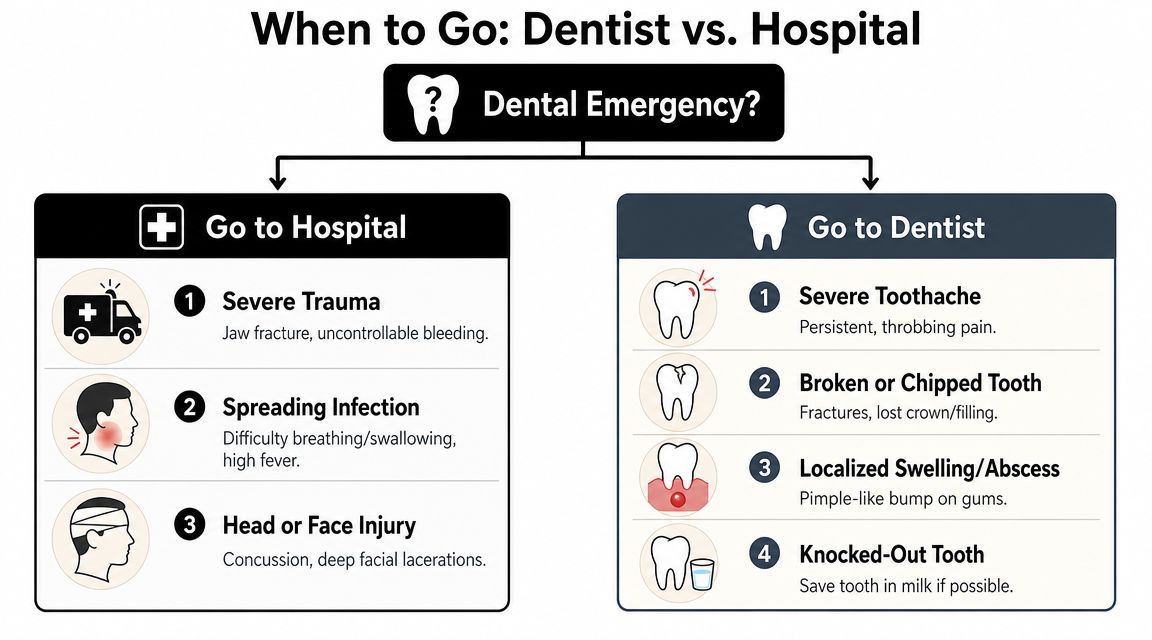
Go to a dentist urgently if you have
- Severe toothache: Constant throbbing pain, pain on biting, or a tooth that feels raised.
- Broken or cracked tooth: Especially if sharp edges are cutting your cheek or tongue.
- Localised swelling: A tender lump on the gum, or swelling around one tooth.
- A very loose adult tooth: Whether from trauma or advanced dental disease.
- A knocked-out tooth: Keep it moist and get seen urgently.
For these problems, an emergency dental appointment is the right destination.
Go to hospital now if you have
- Trouble breathing or swallowing
- Facial swelling that is spreading
- Fever with worsening dental infection symptoms
- Uncontrolled bleeding
- Major injury to the jaw, face, or head
- Pus with rapidly increasing swelling
> A dental infection is no longer “just a tooth problem” when swelling affects your airway or swallowing. That is a medical emergency.
This is the key triage point many people miss. You don't need a hospital for every bad tooth. But if the problem is moving beyond the mouth, stop trying to manage it at home.
How to Get Same-Day Help in Tamworth
Regional access can be patchy. That's part of why people end up searching for emergency tooth extraction at home in the first place. The AIHW reports that Australians in regional and remote areas are less likely to have timely dental visits, as referenced in this discussion of emergency dental access outside major cities.
That access gap is real, but it doesn't make DIY extraction safe. It just means you need a faster, clearer path to local treatment.

What to say when you call
Be brief and specific. Reception teams can triage better when you give the facts plainly:
- Where the pain is: Upper or lower, left or right.
- How severe it is: Constant, throbbing, sharp on biting, or waking you at night.
- Whether there's swelling or bleeding: Mention if it's getting worse.
- Whether there was trauma: Broken tooth, sports injury, fall, or knocked-out tooth.
- Whether you have fever, pus, or trouble swallowing: These are red flags.
If you're in Tamworth or the New England region, contacting a local clinic early in the day gives you the best chance of being seen quickly. You can use the Oasis Smiles Dental contact page to call and explain what's happening.
What to bring and what to expect
Bring your ID, health fund card if you use one, and a list of any medicines you take. If a tooth has been knocked out or a fragment has broken off, bring it in a clean container if possible.
Oasis Smiles Dental accepts emergency calls before 1pm for same-day appointments. The clinic also accepts major health funds, supports Medicare and DVA schemes, and offers flexible payment options. That matters because cost pressure is one of the big reasons people delay treatment and end up in worse pain than they needed to be.
> If cost is the only reason you're considering pulling your own tooth, ask about payment options before you do anything reckless. A difficult DIY extraction can become far more expensive than prompt treatment.
Your Emergency Dental Questions Answered
What if the tooth is already very loose
Leave it alone. A loose adult tooth can still have root attachment, infected tissue, or a fracture you can't see. If you force it out, you may tear the gum, leave part of the root behind, or trigger bleeding you can't control.
A dentist can tell the difference between a tooth that needs removal, a tooth that might be stabilised, and a tooth that is loose because of infection that needs a different treatment plan.
Can antibiotics fix the problem so I don't need treatment
No. Antibiotics don't remove a dead nerve, extract a broken root, or drain a source of pressure on their own. They may be part of treatment in some cases, but they aren't a substitute for proper dental care.
That's one of the biggest mistakes people make when they're trying to avoid an extraction. They chase temporary relief while the actual cause stays in place.
What if I can't get in straight away
Use the first-aid steps from above. Keep the area clean, use a cold compress, take over-the-counter pain relief as directed, and avoid trying to “help” the tooth along.
If you need help explaining symptoms clearly when you're stressed, this resource on how to get your concerns addressed is useful. The same principle applies when speaking to a dentist or receptionist in an emergency. Be direct about pain, swelling, bleeding, fever, and any trouble swallowing.
Will a professional extraction hurt
Dentists remove teeth with local anaesthesia and proper instruments. That is a completely different situation from trying to pull a tooth in your bathroom while inflamed tissue, fear, and poor visibility work against you.
If anxiety is part of what's stopping you, say that upfront when you book. Many practices can talk you through pain control and sedation options. Fear is common. Self-extraction is still the wrong answer.
Is there ever a safe version of emergency tooth extraction at home
No. The safe at-home version is first aid only. Stabilise. Reduce pain. Protect a knocked-out tooth properly if that's what happened. Then get professional help.
That's the honest answer.
---
If you're in Tamworth or the New England region and you need urgent dental care, Oasis Smiles Dental offers same-day emergency appointments for calls made before 1pm, along with flexible payment options, major health fund support, and a calm, patient-focused team that can help you deal with the pain safely.