

Emergency Dentist Appointment Cost in Australia (2026)
An initial emergency dentist appointment cost in Australia is typically $75 to $200, with X-rays often adding $50 to $200. That's usually far more affordable than going to a hospital emergency department for the same problem, especially when the issue is a toothache, broken tooth, swelling, or a lost filling.
If you're reading this with a throbbing tooth, a chipped front tooth, or swelling that's getting worse, the cost question usually sits right beside the pain. Patients don't just want to know, “Can this be fixed?” They want to know, “What will this visit cost me today?”
For patients in Tamworth and the New England region, that's a sensible question. Urgent dental care can be straightforward and reasonably manageable when the problem is assessed early. It can also become far more expensive if it's left to deteriorate, or if you end up in the wrong setting for dental treatment.
Why Seeing an Emergency Dentist Is Your Best First Step
A common local scenario goes like this. You wake up with sharp pain on one side, your cheek feels tender, and you're trying to decide whether to call a dentist, wait it out, or head to hospital. From a cost and treatment point of view, a dental clinic is usually the better first stop for a dental problem.
The Australian Dental Association reports that an emergency department visit for dental pain costs around $749 on average without hospitalisation, and those visits cost about three times as much as seeing a dentist. The same ADA page also notes annual emergency department spending on dental care reaches roughly $1.6 billion, which shows how often people end up in a high-cost setting for problems dentists are better equipped to treat (ADA emergency department referrals for dental pain).
Why the cheaper option is often the better clinical option
A hospital can help if you have a medical emergency linked to the mouth or face, such as severe swelling affecting breathing, major trauma, or uncontrolled bleeding. But for most dental emergencies, hospital staff usually focus on pain relief, temporary support, or referral. They generally don't provide the definitive dental procedure that solves the cause.
A dentist, by contrast, can examine the tooth, take the right imaging, identify whether the issue is decay, infection, fracture, trauma, or a failed filling, and then move toward actual treatment.
> Practical rule: If the problem starts with a tooth, filling, crown, gum infection, or bite pain, your first call should usually be a dentist, not the emergency department.
What that means when you're in pain
People often delay because they hope the pain will settle by morning. Sometimes it does. Often it doesn't. A minor crack can become a deeper fracture. A small infection can spread. A loose crown can expose the tooth underneath and turn a repair into a more involved restorative job.
If you're unsure whether your situation counts as urgent, this guide to common symptoms of a dental emergency can help you judge how quickly to seek care.
For most patients, the best first step isn't just the fastest option. It's the option that's more likely to treat the problem properly and avoid extra cost later.
Breaking Down the Initial Appointment Cost
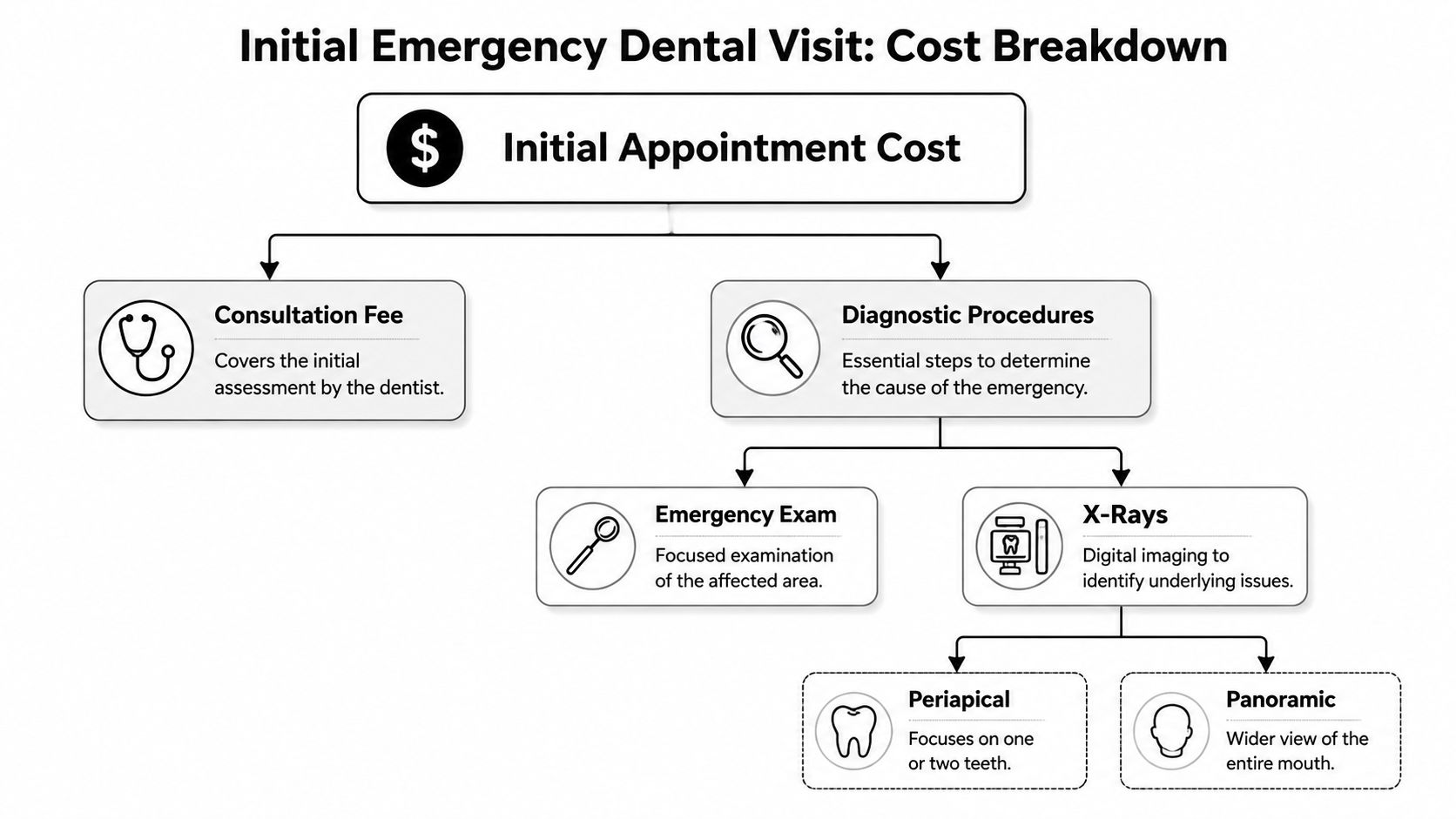
The first bill in an emergency visit usually has two parts. There's the consultation or emergency exam, and there may also be diagnostic imaging if the dentist needs to see what's happening below the surface.
In Australia, publicly listed emergency practice fees show an initial emergency examination commonly around AUD $75 to $200, while X-rays add about AUD $50 to $200 depending on the imaging required. If care happens after hours, practices may add an after-hours surcharge of roughly AUD $100 to $300 (Australian emergency dental cost breakdown).
What the first fee usually covers
The consultation fee generally covers the urgent assessment itself. That means the dentist listens to your symptoms, examines the painful or damaged area, checks surrounding teeth and gums, and works out what needs attention first.
If the problem could involve infection, a crack extending below the gumline, trauma, or a tooth nerve issue, imaging often becomes part of the appointment. That can include simple periapical films or wider imaging depending on what needs to be ruled in or out.
A practical way to think about the initial emergency dentist appointment cost is this:
- Examination cost covers the dentist's time and clinical assessment
- Imaging cost helps confirm the diagnosis
- Treatment cost is separate if something needs to be done that day
Why timing matters to your bill
After-hours care usually costs more because it involves staff availability outside normal operating hours and urgent scheduling pressure. If you can be seen during the day, the financial side is often more predictable.
For local patients, booking during standard clinic hours can make a real difference to out-of-pocket costs. Information on payment and financial options at Oasis Smiles Dental is useful if you want to understand how fees, rebates, and payment arrangements may work before you attend.
> A same-day slot during normal hours can sometimes save you from paying an after-hours surcharge for the exact same clinical problem.
That's why it helps to call early. The sooner the problem is triaged, the easier it is to contain both discomfort and cost.
Key Factors That Influence Your Final Bill
Once the examination is done, the final amount depends less on the emergency booking itself and more on what the dentist finds. Many patients are frequently caught off guard. The appointment fee may be modest, but the required procedure can vary from a simple repair to a more involved restorative sequence.
The treatment itself is usually the biggest cost driver
A patient with a lost filling may only need a relatively small restoration. Another patient with the same pain level may have a cracked tooth that needs root canal treatment and a crown. To the patient, both feel like “toothache.” To the treatment plan, they're very different.
The main variables are usually:
- Severity of the problem. A small cavity is different from a deep infection or a fractured cusp.
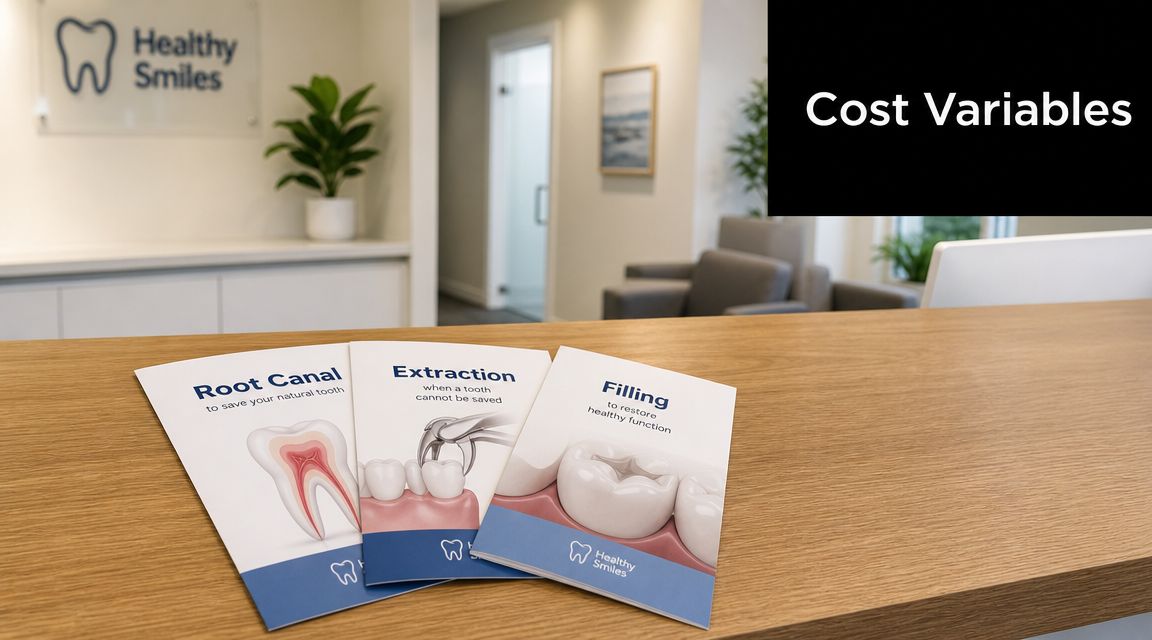
- Procedure type. Filling, extraction, abscess management, root canal treatment, and crown work all involve different materials, time, and complexity.
- Number of steps required. Some emergencies can be stabilised in one visit. Others need staged care.
- Timing of care. Standard hours are usually less expensive than late-evening urgent treatment.
- Technology used. Digital imaging, CBCT 3D scans, intraoral scanning, and same-day restoration systems can change how quickly treatment is delivered.
Where technology can save time, not always money
Modern systems don't automatically make care cheaper. What they can do is reduce delay, improve accuracy, and sometimes avoid extra visits. If a damaged tooth can be assessed precisely and restored more efficiently, that can lower disruption for the patient and shorten the treatment pathway.
For example, same-day crown systems such as CEREC can be useful when a tooth is damaged enough to need full coverage after emergency stabilisation. The financial value isn't that the crown becomes universally “cheap.” It's that some patients avoid temporary stages, repeat appointments, and extra time off work.
> The lowest invoice on day one isn't always the lowest overall cost. Definitive treatment done promptly can stop a small emergency from turning into a long series of appointments.
If you're trying to compare urgent care costs more broadly, this article on urgent care pricing for insured vs uninsured is a useful reference for how out-of-pocket differences can change depending on the setting and coverage. The same principle applies in dentistry. The sticker price matters, but the care pathway matters just as much.
What doesn't work well
Waiting for repeated pain flare-ups rarely saves money. Neither does patching the issue with temporary products for too long. In practice, the most cost-effective emergency visits usually have three features: early assessment, clear diagnosis, and a treatment plan that deals with the cause instead of only the symptoms.
Common Emergency Procedures and Their Typical Costs
Once a dentist has identified the problem, the fee range usually becomes much clearer. Nationally, emergency dental services in Australia can range from $75 to $3,000 depending on the procedure. Within that range, extractions typically cost $75 to $300 per tooth, root canals about $500 to $1,500, and crowns about $800 to $3,000 (typical Australian emergency dental procedure costs).
That wide spread is the reason there's no single answer to “How much does an emergency dentist appointment cost?” The urgent booking may be the start of the bill, but the clinical solution determines most of the total.
Typical cost ranges for common emergencies
| Emergency Procedure | Typical Cost Range (AUD) | |---|---:| | Emergency dental services overall | $75 to $3,000 | | Extraction per tooth | $75 to $300 | | Root canal treatment | $500 to $1,500 | | Crown | $800 to $3,000 | | Filling | $100 to $500 | | Abscess treatment | $150 to $500 |
How to use these ranges properly
These figures work best as planning guides, not exact quotes. They help you understand whether you're likely dealing with a lower-cost repair, a mid-range restorative procedure, or a more significant rebuild of the tooth.
A few examples make this clearer:
- Lost filling with mild pain may stay near the lower end if the tooth can be cleaned and refilled.
- Deep infection can move into root canal territory if the nerve is involved.
- Broken tooth with major structural loss may need crown work after the emergency pain is stabilised.
- Unsalvageable tooth may lead to extraction if restoration isn't predictable.
Why treatment decisions matter
Not every painful tooth should be extracted, and not every cracked tooth can be saved. Good emergency care balances three things: pain relief, long-term predictability, and cost. The cheapest immediate procedure isn't always the smartest option if it creates a bigger restorative problem later.
If you've been told you may need endodontic treatment, this page on root canal treatment options can help you understand what that pathway involves.
> A useful question to ask at the chair is, “What's the cost to stabilise this today, and what's the cost to complete the proper treatment plan?”
That question usually produces a much more practical answer than asking for one flat emergency price.
How Insurance and Payment Options Reduce Your Out-of-Pocket Cost
For most Australian families, the most important number isn't the total treatment fee. It's the amount they personally need to pay after any rebate, entitlement, or payment arrangement is applied.
That's where many cost guides fall short. They list prices, but they don't answer the main question patients ask at reception. “What will I be out of pocket today?”
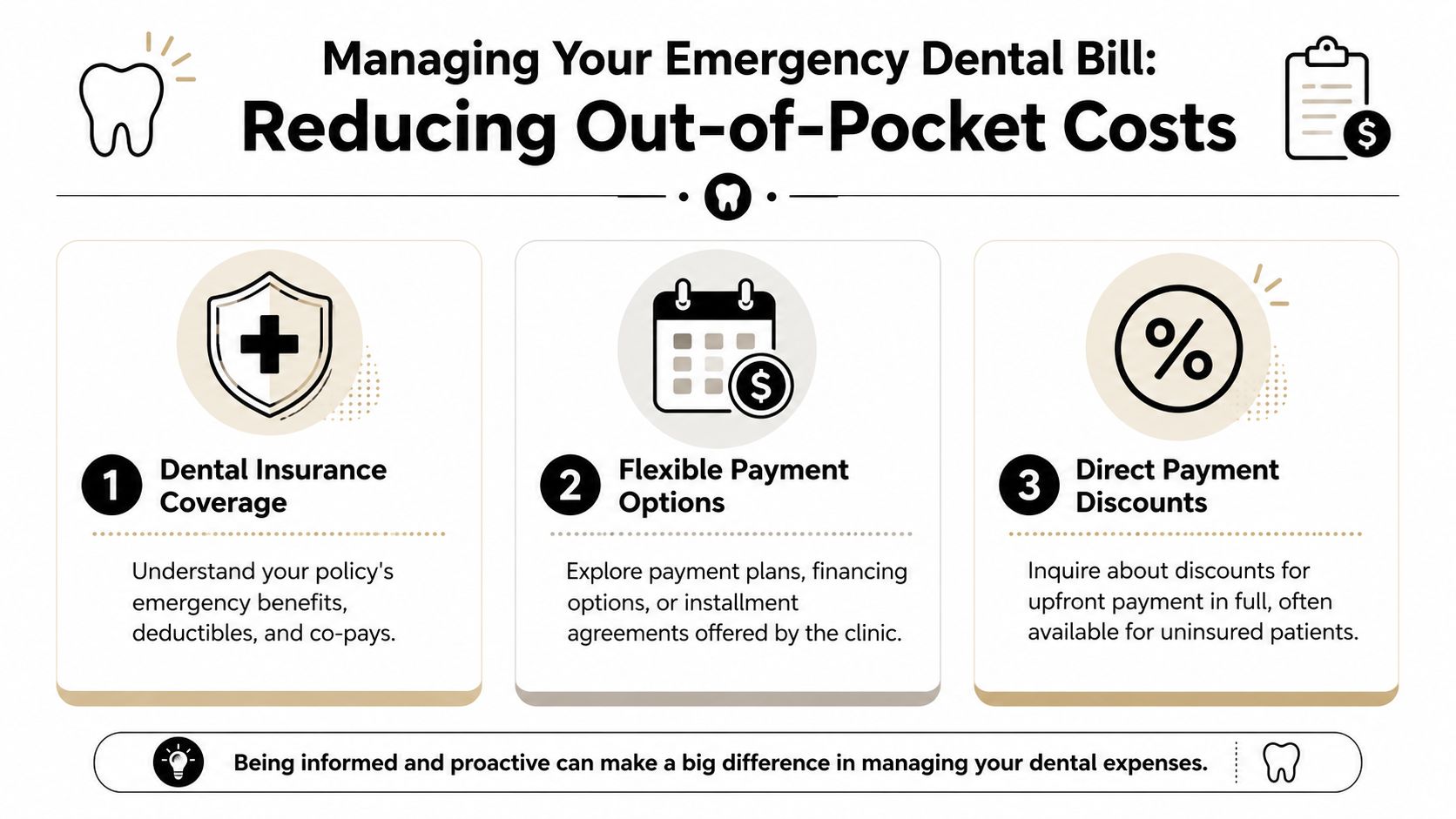
Many articles miss this point, yet it matters most because Medicare generally doesn't cover most dental care, so patients often need to rely on private health fund rebates, DVA eligibility, or payment plans to manage expenses (guidance on what is paid by the patient versus public support).
How different payment supports usually work
Private health insurance is often the first place to look. Depending on your level of extras cover, your fund may contribute to the exam, X-rays, and eligible treatment items. The amount varies by policy, annual limits, and whether waiting periods apply.
DVA support can help eligible cardholders, but cover depends on your entitlement category and the treatment item involved.
Medicare is more limited for dental care, so it generally isn't the fallback many people assume it is. If you do have an eligible programme or special category available to you, it's worth confirming that before treatment starts.
Practical ways to reduce what you pay upfront
The most useful approach is to sort the admin side early, ideally while the appointment is being booked.
- Check your fund details before you arrive. Bring your health fund card and ask whether on-the-spot claiming is available.
- Ask for the immediate versus staged cost. If treatment can be safely split, that may change your short-term outlay.
- Clarify DVA or Medicare eligibility in advance. Don't assume you're covered.
- Discuss payment options openly. Many patients are surprised how manageable urgent care becomes once the payment pathway is clear.
A helpful consumer resource on spotting errors on explanation of benefits can also make it easier to understand insurer paperwork and question anything that doesn't look right.
For local patients, payment options at Oasis Smiles Dental provide a practical starting point for understanding accepted health funds, Medicare, DVA, and flexible payment arrangements.
What usually works best
Patients tend to cope better financially when they focus on out-of-pocket cost, not just headline treatment fees. That means asking for clarity on rebates, asking whether care can be staged safely, and dealing with the underlying issue before it escalates into a larger restorative bill.
What to Expect During Your Emergency Visit at Oasis Smiles
The most stressful part of a dental emergency is usually the uncertainty. Once you know what will happen at the appointment, most of that tension drops.
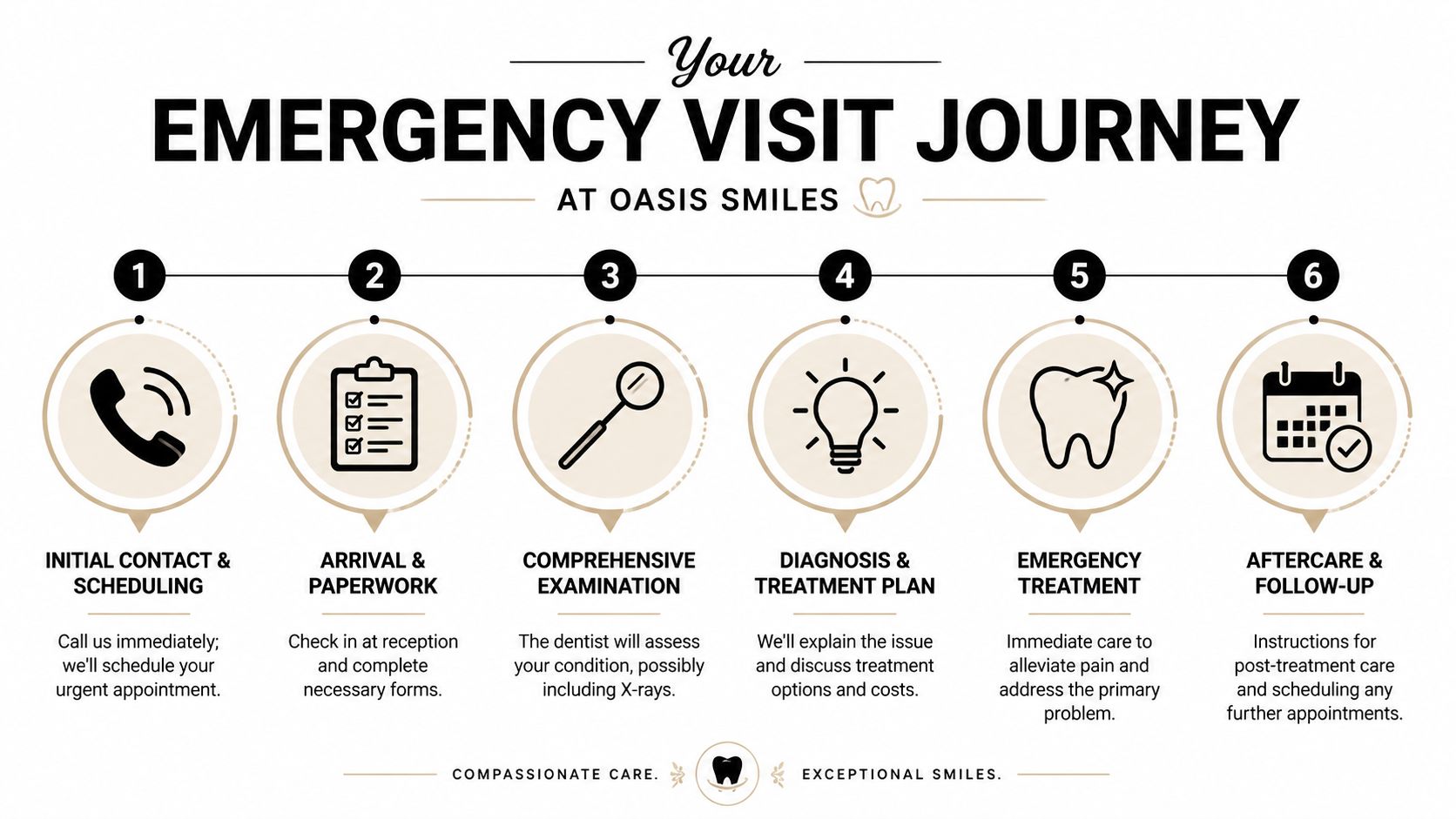
The process is typically straightforward. You call, describe the problem, and the team works out how urgently you need to be seen. If you're attending with swelling, trauma, a broken tooth, or significant pain, the initial goal is to identify the cause quickly and get you comfortable.
Step by step on the day
At the clinic, you'll usually check in, complete any required forms, and explain what's changed since you booked. The dentist then performs a focused examination and may use digital imaging if the diagnosis isn't obvious from visual inspection alone.
Technology matters here because it can shorten decision-making. Tools such as digital scanners and CBCT 3D imaging can help the dentist assess fractures, infections, and complex anatomy more precisely than guesswork ever could.
After that, you should expect a clear discussion about:
- What the problem appears to be
- What needs to happen today
- What can wait for a later visit, if anything
- What the likely fees and payment options are
Comfort and anxiety management
Many people in emergency appointments are not just in pain. They're frightened, exhausted, or embarrassed they left the problem too long. That's common, and a good emergency visit takes that seriously.
If you're especially anxious, sleep dentistry options can make treatment much more manageable. The point isn't only comfort. It's also making it possible to complete the necessary care safely and without the patient becoming overwhelmed.
> If you're nervous, say so early. Anxiety changes how people experience pain, information, and treatment decisions. Dentists can only plan around that if they know.
What happens after the immediate fix
Some emergencies are fully treated on the day. Others are stabilised first and completed in a later appointment. You'll usually leave with aftercare instructions, a plan for the next step, and a better sense of the full cost pathway rather than just the first invoice.
That clarity matters. When patients understand the sequence, they make calmer decisions and usually avoid the cycle of temporary relief followed by another crisis.
---
If you need urgent dental help in Tamworth or the New England region, Oasis Smiles Dental offers same-day emergency appointments for calls before 1pm, along with support for major health funds, Medicare, DVA, and flexible payment options. If you're in pain and worried about the bill, the best next step is to call early, explain what's happening, and ask what your likely out-of-pocket cost will be before treatment begins.