

Dental Pain Relief: A Guide to Fast-Acting Solutions
A bad toothache often starts at the worst possible time. Late at night. On a weekend. Halfway through dinner. Or when you're already juggling work, school pick-up, and the drive into town.
If you're in Tamworth or the wider New England region, that stress can feel even heavier because getting immediate dental help isn't always simple. What matters right now is knowing what you can do safely at home, what can ease pain for a short time, and when you need to stop waiting and get urgent care.
That Sudden Agony A Guide Through Dental Pain
Dental pain has a way of taking over everything. It can throb, stab, pulse with your heartbeat, or flare the moment something cold touches the tooth. Even mild pain can make it hard to eat, sleep, concentrate, or think clearly.
For regional families, there's another layer to it. Access isn't always straightforward. The Australian Institute of Health and Welfare reports that people in regional and remote areas are more likely to face access problems for dental care than residents in major cities, as noted in this discussion of managing dental pain while waiting for emergency care.
That's why the first question isn't just “How do I stop this pain?” It's also “Is this something I can steady at home for a few hours, or do I need urgent help now?”
> Tooth pain is a signal, not just a nuisance. Relief matters, but finding the cause matters more.
In practice, I see a common pattern. A patient thinks it's “just sensitivity” or hopes it will settle, then the pain ramps up fast because the underlying issue is decay, infection, a crack, or a failing filling. If you've had repeated niggles before this, it's also worth reviewing how decay starts and how to lower the risk in future with this guide to preventing tooth decay in Tamworth.
If you're hurting right now, take a breath. Start with simple first aid, use medicines carefully, and watch for the warning signs that mean home care isn't enough.
Immediate First Aid for Your Toothache
The first half hour matters. The aim isn't to “cure” the tooth at home. The aim is to calm the area, avoid making it worse, and buy yourself some time safely.
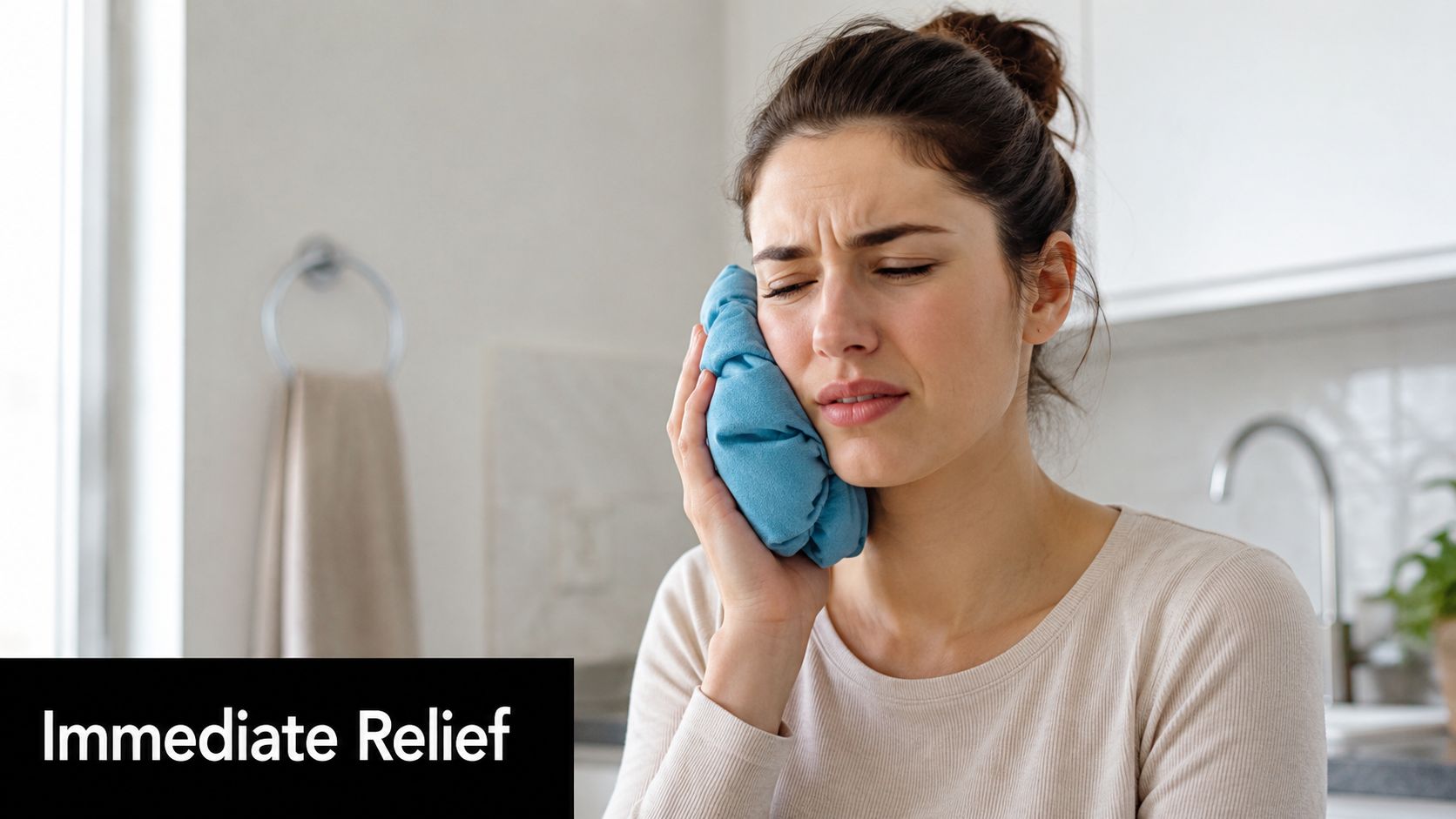
What to do first
- Rinse gently with warm salt water
- Check for trapped food
- Apply a cold compress to the cheek
What this first aid can help with
A quick home response can reduce irritation if the problem is being aggravated by pressure, swelling, or debris. It can also stop you accidentally stirring up the tooth further by chewing on it or probing it.
If your pain started after a crown or filling came loose, the approach changes slightly because the exposed tooth can become very sensitive. In that case, this practical advice for a lost filling or crown is useful while you organise an appointment.
What not to do in the first few hours
- Don't put aspirin on the gum
- Don't keep poking the tooth
- Don't use heat on a swollen face
> Practical rule: Cold on the outside, gentle rinsing inside, and as little disturbance to the tooth as possible.
If first aid reduces the edge of the pain, that's useful. It still doesn't tell you the problem has gone away.
Safe Over-the-Counter Dental Pain Relief
When patients ask what remedies work for dental pain relief, the answer in Australia is usually not opioids first. The evidence-based first step is a non-opioid combination.
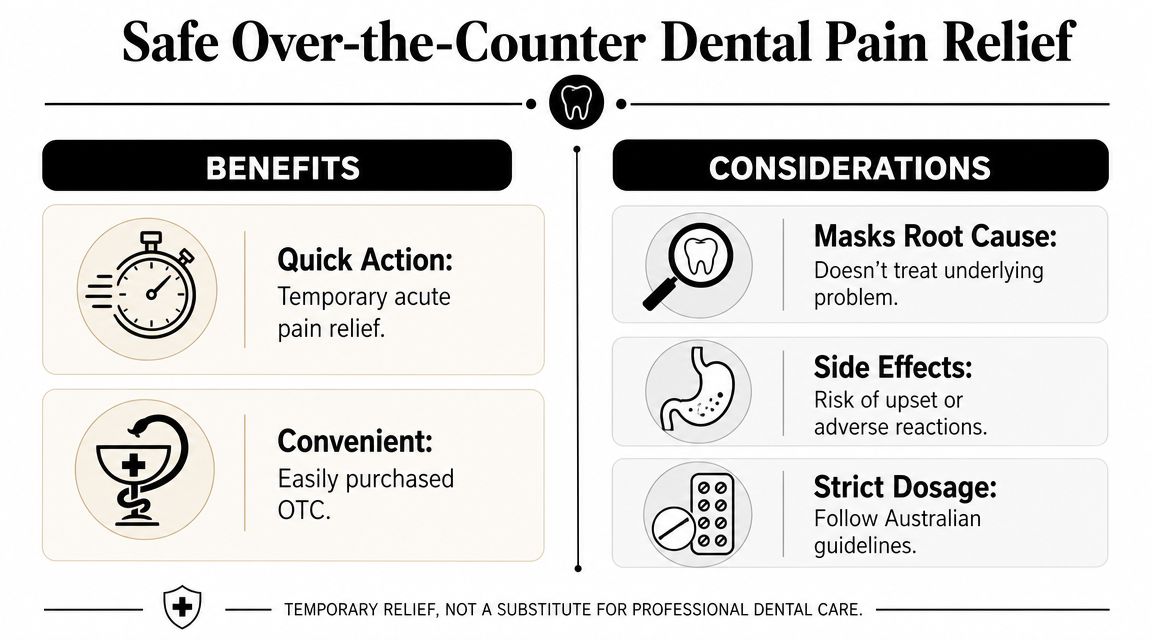
The standard approach used in Australia
The Australian Dental Association advises that NSAIDs are first-line therapy for acute dental pain and are more effective than opioids, and for moderate to severe pain recommends ibuprofen 400 to 600 mg with paracetamol 500 mg every 6 hours in adults, as outlined in its guidance on oral analgesics for acute dental pain.
> Recommended adult example: ibuprofen 400 to 600 mg plus paracetamol 500 mg every 6 hours for moderate to severe dental pain, where suitable.
That combination works well because dental pain is often driven by inflammation as well as nerve irritation. Ibuprofen targets inflammation. Paracetamol adds pain control through a different pathway.
Before you take ibuprofen
Ibuprofen isn't right for everyone. Be cautious and check with a pharmacist, GP, or dentist if you have:
- Kidney problems
- A history of stomach ulcers or significant reflux
- Bleeding risk or anticoagulant use
- NSAID allergy or asthma triggered by these medicines
- Pregnancy or other medical reasons you've been told to avoid anti-inflammatories
If any of those apply, don't guess. Ask.
How to use pain relief sensibly
A few habits make a big difference:
| Situation | Better approach | Poor approach | |---|---|---| | Pain has just started | Take medicine exactly as directed and monitor closely | Waiting until pain becomes overwhelming | | Pain is affecting eating or sleep | Use short-term relief while arranging dental care | Repeating doses without checking safety | | Pain persists | Book prompt assessment | Assuming tablets have fixed the tooth |
If you're comparing different anti-inflammatory options at the pharmacy, this plain-English guide to understanding Aleve vs Ibuprofen can help you understand the differences before you buy anything.
What over-the-counter tablets can't do
Medicines can take the edge off. They don't remove decay, drain infection, repair a crack, or replace a broken filling.
That's the trade-off. Good pain relief can help you function for a short time. It can also make it tempting to delay care. Don't mistake temporary control for a solved problem.
Understanding Your Pain and What to Avoid
Not every toothache feels the same because not every toothache has the same cause. Some pain is sharp and fleeting with cold. Some lingers after a hot drink. Some wakes you at night or hurts when you bite down. Those patterns can suggest decay, a cracked tooth, gum inflammation, an irritated nerve, or an abscess, but they don't replace an examination.
Untreated decay is also far from rare. The World Health Organization estimates that untreated tooth decay is the single most common health condition globally, affecting nearly 3.7 billion people, as referenced in the ADA summary of acute dental pain guidance. If you need treatment, you're not dealing with something unusual or embarrassing. You're dealing with a common health problem that needs proper care.
Clues your pain may be coming from
- Pain on biting can point to a crack, an inflamed ligament around the tooth, or a high filling.
- Lingering sensitivity to hot or cold can mean decay has reached deeper layers of the tooth.
- Sore, tender gums may come from local gum irritation or more established gum disease.
- A throbbing ache that seems to spread can suggest the nerve or surrounding tissues are inflamed.
If gum tenderness, bleeding, or swelling has been part of the picture for a while, it helps to understand how gum disease can contribute to discomfort and why it shouldn't be ignored.
What to avoid while the tooth is painful
> Try to protect the area, not test it.
- Very hot, cold, or sugary foods often trigger pain harder and longer.
- Chewing on the sore side can worsen a crack or inflamed tooth.
- Direct heat on the jaw can aggravate swelling.
- Hard foods like nuts, crusty bread, or ice can turn a small fracture into a larger one.
- Putting off care because the pain settled overnight is a common mistake. Dental pain can ease temporarily even while the problem continues underneath.
Red Flags That Require an Emergency Dentist
Some dental pain can wait until the next available appointment. Some can't. If certain warning signs are present, the question shifts from comfort to safety.
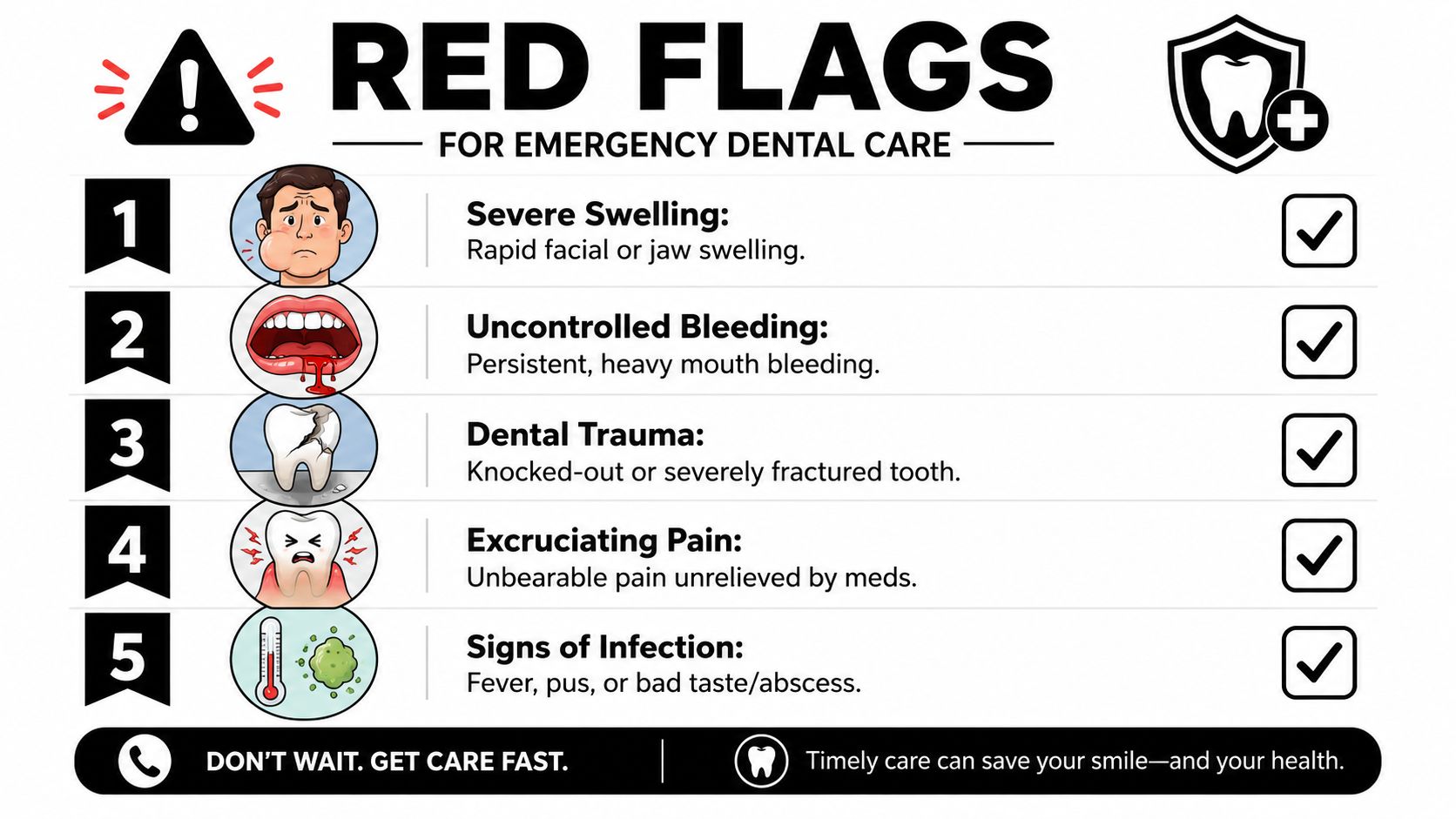
Get urgent help if you have any of these
- Rapid swelling of the face, jaw, or gums
- Fever, pus, or a bad taste in the mouth
- Difficulty swallowing or breathing
- Uncontrolled bleeding
- A knocked-out tooth or major fracture
- Pain so severe that medicine isn't touching it
Don't try to push through these symptoms
Severe infection can move beyond the tooth. Heavy bleeding won't sort itself out because you “sleep on it”. A badly fractured or displaced tooth usually worsens with delay.
If you're unsure whether what you're experiencing counts as urgent, this checklist of common dental emergency symptoms can help you decide faster.
> If swelling is spreading, you have fever, or swallowing becomes hard, stop relying on home care alone and seek urgent treatment.
For regional patients, that may mean calling an emergency dentist immediately, and in more serious situations going straight to hospital emergency care.
Lasting Relief at Oasis Smiles Dental in Tamworth
Temporary relief has its place. Lasting relief comes from finding the cause and treating it properly.

In Tamworth, one practical option is Oasis Smiles Dental, which offers same-day emergency appointments for calls before 1pm. For a patient in pain, that matters because speed changes what's possible. The earlier a dentist sees the problem, the easier it is to diagnose whether you need a dressing, a filling, root canal treatment, a crown, extraction, or urgent infection management.
What proper diagnosis changes
A painful tooth can look simple from the outside and be more complicated underneath. That's where tools such as CBCT 3D imaging and digital scanning are useful. They help identify hidden cracks, deeper infection, root problems, and bone changes that ordinary guesswork won't catch.
Once the cause is clear, treatment becomes more direct:
- Lost or broken restorations may need repair or replacement
- Deep decay may need a filling, crown, or root canal treatment
- A split or badly broken tooth may need stabilisation or removal
- Bite-related pain may improve once the pressure point is adjusted
For anxious patients who've been putting it off
A lot of adults don't delay because they're careless. They delay because they're frightened, embarrassed, or worried treatment will hurt. That's where sleep dentistry and sedation options can make treatment manageable for patients who've avoided care for years.
The practical point is simple. If fear has been the barrier, there are ways around it. The answer isn't to keep managing the pain with rinse, ice, and tablets for weeks.
Why access systems matter in real life
Regional clinics also need booking systems that can handle urgent cases without adding more frustration for patients already in pain. If you're curious how practices and other service businesses reduce back-and-forth when booking urgent appointments, this overview of boosting your business with scheduling tools gives a useful look at how organised scheduling supports faster response.
When a painful tooth is treated early, the visit is often simpler than people expect. When it's left to flare, settle, and flare again, treatment usually becomes more involved.
The shortest path to dental pain relief is often this. Calm it at home for the moment, recognise the red flags early, and get the tooth properly assessed before the situation grows.
---
If you've got tooth pain and need a clear next step, contact Oasis Smiles Dental to arrange prompt assessment in Tamworth. Short-term relief can help you cope today, but the proper fix is identifying the cause and treating it properly.