

How Often Should You Go to the Dentist in Australia
When people ask, "How often should I go to the dentist?" the answer they usually get is a simple "every six months." And while that's a fantastic rule of thumb for many Australians, it’s not set in stone. It’s better to think of it as a starting point, not a strict command, because the ideal schedule is really all about you and your unique oral health.
The Six-Month Check-Up Isn't a Universal Rule
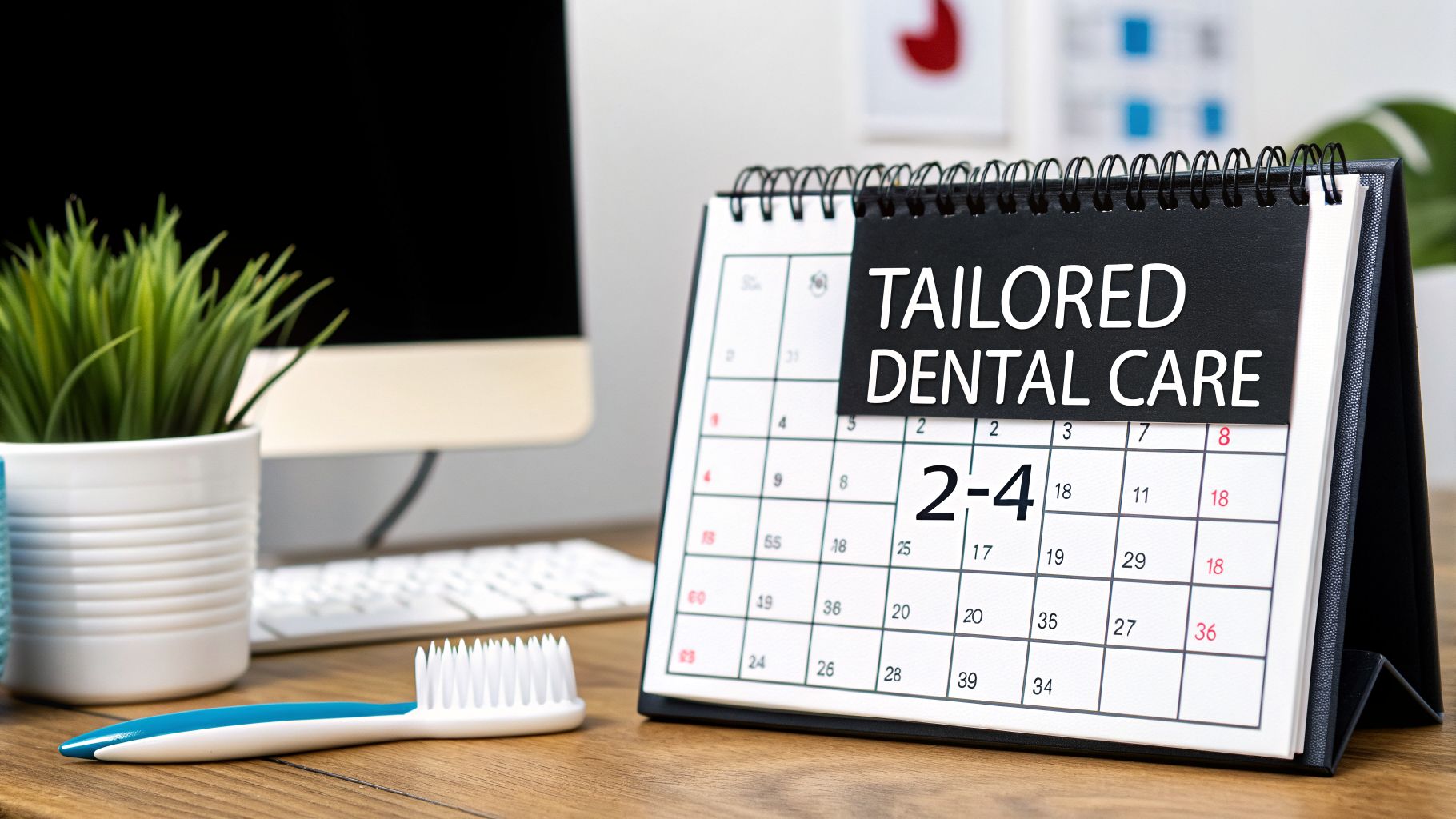
For decades, the twice-yearly dental visit was the gold standard for preventive care. That rhythm is great for catching common issues like cavities and plaque before they turn into bigger headaches. But we’ve come to realise that a one-size-fits-all approach doesn't quite cut it anymore, as modern dentistry is all about personalised care.
Your oral health is shaped by a whole host of factors that are entirely unique to you. So, what works perfectly for your neighbour or a family member might not be the right frequency for your smile. A good dentist will look at your specific situation to recommend a schedule that gives you the best possible protection.
Factors That Influence Your Dental Visit Frequency
So, what exactly determines your ideal check-up timetable? We look at a few key things to create a plan that keeps your teeth and gums in top shape.
- Your Oral Hygiene Habits: How well and how often you brush and floss at home makes a huge difference in keeping plaque and tartar at bay.
- Your Dental History: If you’ve had a history of frequent cavities, gum disease, or other recurring problems, we’ll likely want to keep a closer eye on things.
- Your General Health: Conditions like diabetes, heart disease, or autoimmune disorders can have a direct impact on your oral health, often needing more frequent attention.
- Your Lifestyle Choices: Habits such as smoking, a high-sugar diet, or even high stress levels can significantly increase your risk of developing dental issues.
> Think of your dental check-up schedule like a personalised fitness plan. While there are general guidelines, the best results always come from a program designed specifically for your body’s needs, goals, and current condition.
This shift towards risk-based care means some people truly benefit from seeing us more often—perhaps every three or four months. This is especially true for anyone with active gum disease or those going through complex dental work. These more frequent visits allow us to manage the condition properly and stop it from getting worse.
On the flip side, someone with excellent oral hygiene, no history of major dental work, and no underlying health concerns might be perfectly fine with a check-up just once every 12 months. After we do a thorough initial assessment to confirm you're in a low-risk category, this extended schedule can be a safe and effective way to maintain your brilliant smile.
The real goal is to find that "just right" balance for you. The best way to do that is to have a chat with your dentist to figure out a schedule that will keep you smiling for life.
Your Personal Dental Check-Up Frequency Guide
To make things a bit clearer, we've put together this simple guide. Use it as a quick reference to see where you might fit.
| Patient Profile | Risk Level | Recommended Visit Frequency | Common Reasons | | -------------------------------------------------------- | ---------- | --------------------------- | -------------------------------------------------------------------------------- | | Healthy Adult/Teen with good home care | Low | Every 12 Months | No history of major decay, excellent hygiene, no underlying health conditions. | | Most Adults & Children | Moderate | Every 6 Months | The standard for preventive care, catching issues early and maintaining health. | | Patients with Braces | High | Every 3-6 Months | Brackets and wires make cleaning difficult, increasing plaque and decay risk. | | Patients with a History of Gum Disease | High | Every 3-4 Months | Active management is needed to prevent disease progression and tooth loss. | | Smokers or Tobacco Users | High | Every 3-6 Months | Increased risk of oral cancer, gum disease, and staining. | | Pregnant Women | High | Every 3-6 Months | Hormonal changes can lead to "pregnancy gingivitis" and other gum issues. | | Patients with Diabetes or Other Health Conditions | High | Every 3-6 Months | Conditions can lower resistance to infection, making gum disease more severe. | | Patients with a History of Frequent Cavities | High | Every 3-6 Months | More frequent monitoring and preventive treatments (like fluoride) are needed. |
Remember, this table is just a guide. Your journey starts with a comprehensive assessment where we can work together to create the perfect plan for you.
Why Twice-Yearly Visits Are the Gold Standard
You’ve probably heard it a thousand times: see your dentist every six months. But why is this the magic number? Well, there's a good reason it's considered the gold standard in dental care. Think of it as essential maintenance for your smile, much like servicing your car to prevent a breakdown. These regular visits are all about getting ahead of problems before they have a chance to start.
The main culprits we’re trying to manage are plaque and tartar. Plaque is that sticky, colourless film of bacteria that builds up on your teeth every single day. If you don't clear it away with daily brushing and flossing, it hardens into tartar (also called calculus) in just a matter of days. Once that happens, your toothbrush is powerless against it—it can only be removed with a professional clean.
The Cycle of Plaque and Tartar
This hardened tartar creates the perfect home for harmful bacteria, which can lead to two big problems: tooth decay (cavities) and gum disease. The six-month interval is the sweet spot for stepping in. It gives us a chance to thoroughly remove any tartar that has built up, stopping these issues in their tracks and essentially hitting the reset button on your oral health.
This preventative approach saves you time, discomfort, and money in the long run. By keeping on top of things with regular cleans, you can avoid the need for more complex treatments like root canals, crowns, or even extractions. You can learn more about our process for routine check-ups to see exactly what’s involved.
> A professional clean every six months acts as a crucial reset for your oral health. It removes the stubborn tartar that home care can't manage, stopping the progression towards cavities and gum disease in its tracks.
The Power of Prevention
The difference between people who come for regular check-ups and those who only visit when something hurts is truly staggering. The data from Australia's National Study of Adult Oral Health paints a very clear picture. While just over half of Aussie adults (56.4%) see a dentist each year, the consequences for those who don't are serious.
The study found that people who only seek dental care for a specific problem are 6.8 times more likely to lose all their teeth and more than twice as likely to need dentures. That single statistic says it all.
Ultimately, figuring out how often you should go to the dentist isn't just about fixing things—it's about preventing them from ever breaking. Consistent, twice-yearly visits are a simple and powerful investment in keeping your natural teeth for life, so you can enjoy a strong, healthy smile for decades to come.
Finding Your Personal Dental Timetable
You’ve probably heard the old “visit the dentist every six months” rule your whole life. It’s a great guideline, but it’s not the whole story. Modern dentistry is far more personal, and the right schedule for you really depends on *your* unique situation.
Think of it like servicing your car. A high-mileage vehicle that does a lot of stop-start city driving needs more frequent oil changes and check-ups than a car that just does a quiet run on the weekend. The same logic applies to your oral health. We need to figure out what your personal needs are to create a dental visit schedule that keeps you smiling for life.
Defining Your Risk Profile
So, what determines your ideal schedule? It all comes down to whether you fall into a 'low-risk' or 'high-risk' category for developing dental problems like decay or gum disease. It’s not a scary label—it’s just a way for us to know how much support you need. A quick chat and check-up with your dentist is all it takes to find out where you stand.
High-risk individuals are people who we find benefit from more frequent visits, often every three to four months. This allows us to keep a closer eye on things and stay ahead of any potential issues. You might fit into this group if you:
- Smoke or use tobacco. This habit dramatically increases the risk of gum disease and oral cancer, so we need to be more vigilant.
- Have a history of frequent cavities. Some of us are just more prone to decay, and more regular visits help us catch it early.
- Are managing gum disease (like gingivitis or periodontitis). This is a condition that needs ongoing professional care to keep it under control.
- Are pregnant. Hormonal changes can cause what’s known as ‘pregnancy gingivitis’, making gums more sensitive and prone to bleeding.
- Live with certain health conditions, such as diabetes or an autoimmune disorder, which can affect your body's ability to fight off infections in your mouth.
This simple chart shows how different factors can influence how often you should pop in to see us.
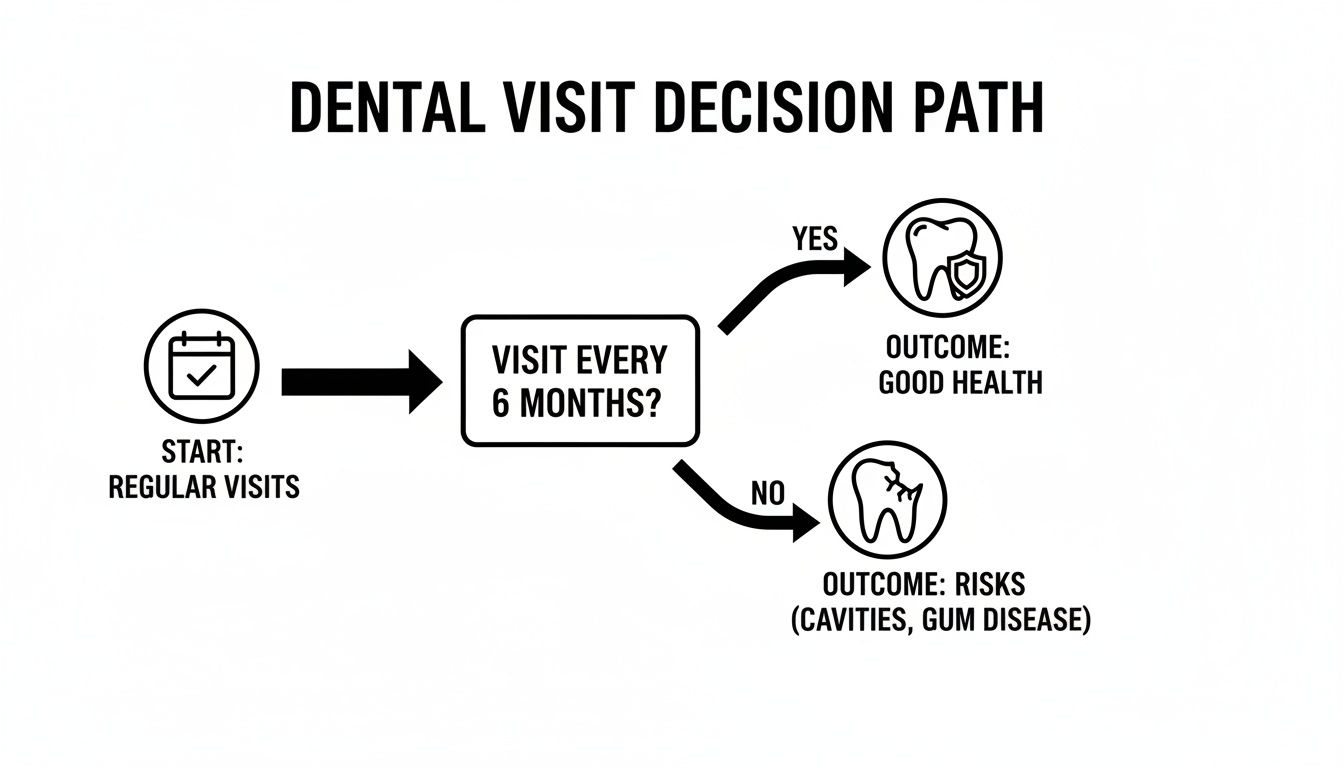
The simple truth is, if you have more things on that list, you’ll benefit from seeing us more regularly.
On the other hand, we have low-risk individuals. These are folks who typically have fantastic oral health, great brushing and flossing habits, and a clean bill of dental health in their history.
> If you’re in a low-risk category, coming in just once every 12 months could be perfectly fine after we’ve done an initial, thorough check to confirm everything is in top shape.
This isn’t a free pass to skip the dentist! It’s a testament to your excellent at-home care. It just means we’re confident an annual check-up is enough to keep your healthy smile on track.
Creating a Plan That Works for You
By understanding your own risk factors, you can come into your appointment ready for a proper conversation. It’s not about us telling you what to do; it’s a partnership. We combine your health history with what we see during your check-up to create a schedule that’s right for *you*.
The aim is simple: provide the right care at the right time. For some, that might be a deep clean every three months to manage gum disease. For others, it’s an annual scale and polish. Whatever the plan, it’s all about keeping your smile healthy, and you can learn more about our philosophy on tailored **preventive care** to see exactly how we achieve this for our patients.
Dental Check-Ups Through Every Stage of Life
Think of your dental health like any other part of your life—it simply changes as you get older. What a toddler needs is worlds away from the care a grandparent requires. That's why a one-size-fits-all approach to dental visits just doesn't work.
The real question of how often you should go to the dentist comes down to understanding your specific needs right now. At Oasis Smiles, we tailor our care to your stage of life, ensuring everyone in your family gets the right attention at the right time.
For Kids and Teens
Getting children comfortable with the dentist early on is one of the best things you can do for their long-term health. We like to see kids for their first visit around their first birthday, or whenever that first little tooth makes an appearance. These early appointments are always kept gentle, positive, and short, helping them see the dental chair as a friendly place.
As they grow, these regular check-ups become incredibly important. We get to: * Monitor Jaw and Tooth Development: We keep an eye on how their teeth and jaw are forming, allowing us to spot any early signs of crowding or bite problems that might need attention down the track. * Apply Preventive Treatments: Childhood is a high-risk time for cavities. We can give them an extra line of defence with things like fluoride treatments and dental sealants. * Educate on Proper Hygiene: From learning to brush properly to navigating the tricky business of flossing with braces, we guide kids and teens on building great habits. You can learn more about our gentle approach to children's dentistry right here.
For Adults
Once you’re an adult, the focus tends to shift from development to smart maintenance. For most adults, the standard six-month visit is the perfect rhythm. It gives us a chance to perform a professional clean to remove stubborn tartar that your brush can't handle and to screen for the earliest signs of trouble like decay or gum disease.
This is also the time when many people start thinking about the appearance of their smile. Whether you’re considering teeth whitening, veneers, or need restorative work like a crown, regular visits keep us on top of your smile’s health so it always looks its best.
For Seniors
Oral health takes on a new level of importance in our senior years. Life brings new challenges, and your dental health is no exception. We often recommend more frequent check-ups to stay ahead of them.
> Keeping a close watch on your oral health as you age is vital. Issues like dry mouth (a common side effect of medications) can significantly increase your risk of tooth decay, while regular oral cancer screenings become more important than ever.
We also spend time making sure any dentures, bridges, or implants are comfortable, functional, and well-cared for, helping you eat and smile with confidence.
The data from right here in Australia really drives this home. It’s a bit shocking, but patients who already have tooth decay receive 46% fewer professional cleans and 34% fewer protective remineralisation treatments than they should. For children, risk-based visits are proven to be highly effective, and studies suggest even for adults, the gap between check-ups shouldn't stretch beyond 24 months. You can read more about these Australian preventive care findings and see exactly why a personalised schedule is so critical.
Warning Signs You Need a Dentist Sooner
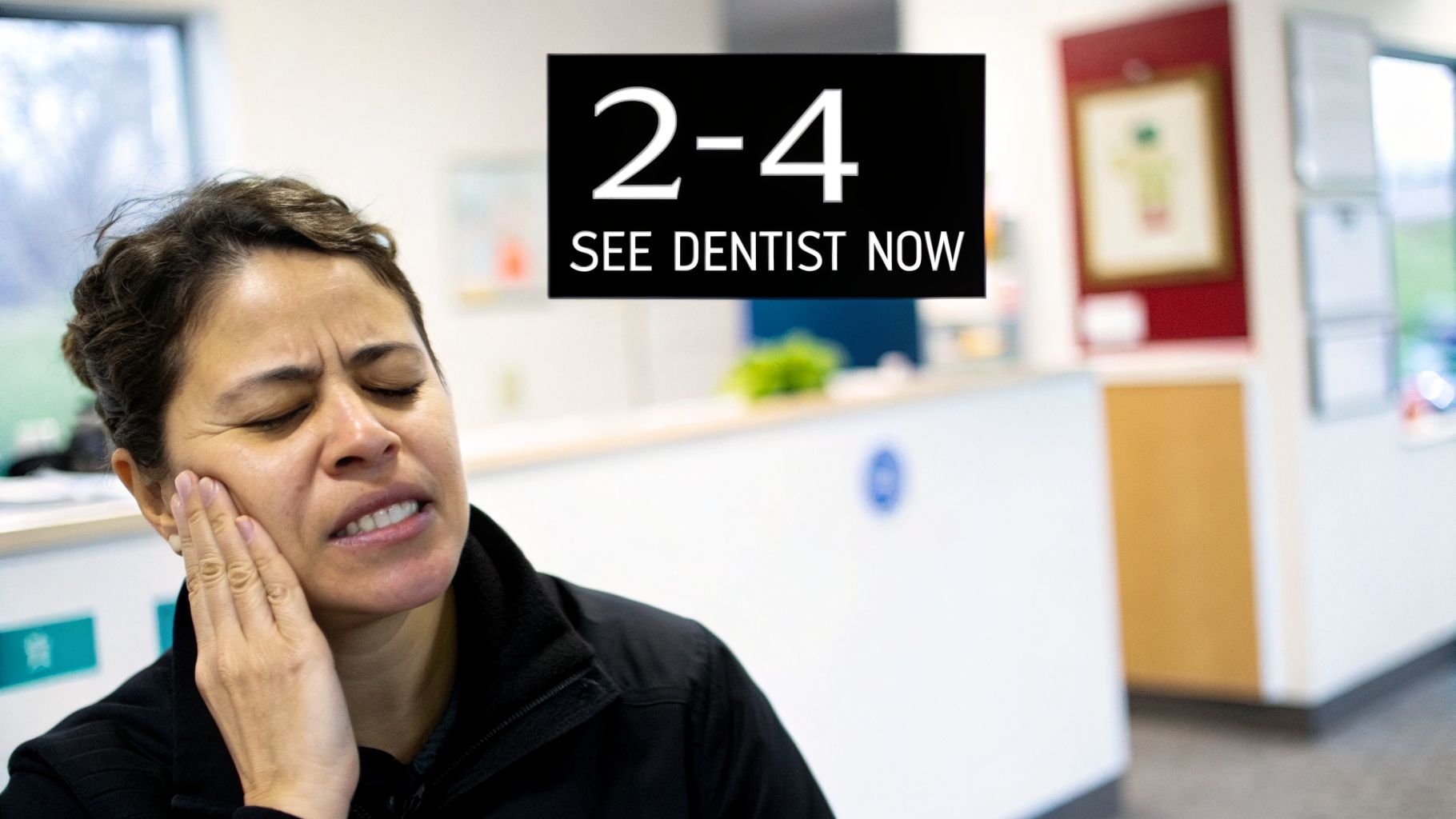
Your regular dental check-ups are essential, but sometimes your teeth just can't wait. Think of it like the check engine light in your car—ignoring it doesn't make the problem disappear. In fact, it almost always guarantees a bigger, more expensive headache down the road.
Learning to recognise your body's urgent signals can be the difference between a quick, simple fix and a much more involved procedure. It’s a fact backed by research right here in Australia. While most dental visits (62%) are for routine check-ups, the 27% of visits made to fix a specific problem often deal with more serious issues like major decay or advanced gum disease. You can explore the Australian dental health findings for yourself to see just how important it is to act fast.
Unmistakable Symptoms That Need Attention
Don't just tough it out until your next scheduled clean if you notice any of these issues. Give us a call, because it might mean we need to rethink how often you should go to the dentist.
- A Persistent Toothache: A dull, constant throb or a sharp, shooting pain is your mouth’s way of waving a red flag. This could point to a deep cavity, an infection, a cracked tooth, or even a failing filling.
- Bleeding or Swollen Gums: If you see pink in the sink every time you brush, it’s one of the first and clearest signs of gingivitis. The good news is that catching it early can often reverse the damage before it develops into serious gum disease.
- Sudden Sensitivity: Do you wince when sipping a cold drink or enjoying a hot soup? That sudden jolt of pain often means your tooth's protective enamel has worn thin, leaving the sensitive layer underneath exposed.
- A Chipped, Cracked, or Broken Tooth: Even if it doesn't hurt, a damaged tooth is a weak tooth. It’s far more vulnerable to further breakage and decay, so it's always best to get it assessed and repaired as soon as possible.
> Your body is an expert at signalling when something isn't right. A sudden toothache or bleeding gums isn't just an inconvenience; it's a direct request for professional help. Listening to these signs promptly is the best way to protect your long-term oral health.
Why You Shouldn't Ignore These Signs
The sooner you address these problems, the better. For instance, those bleeding gums are a classic symptom of gingivitis, which is the very first stage of periodontal disease. If we catch it now, it's often completely reversible with a professional clean and some adjustments to your home care routine. Our team can walk you through effective treatments for gum disease before it has a chance to progress.
Likewise, a lost filling or a dislodged crown leaves the inner, softer part of your tooth exposed to bacteria. This puts you at a much higher risk of decay and infection. Getting it fixed right away is a straightforward appointment that saves your tooth from much bigger problems later on.
Finding Your Partner in Lifelong Oral Health
Ultimately, the best person to answer "how often should I see a dentist?" is the dentist you trust. There’s no single, rigid rule—your ideal schedule is a personal plan we build together. Staying on top of your oral health with this kind of proactive, individualised care is genuinely the smartest way to keep your smile healthy and avoid complex, costly treatments down the road.
Finding the right dental practice is a bit like finding any trusted professional. You need a team that really listens to you but also has the right equipment to do the job properly, comfortably, and precisely. This is where modern dental technology really makes a world of difference for our patients.
What to Look for in a Modern Dental Practice
When you’re choosing a dentist here in the Tamworth area, it’s worth looking for a clinic that clearly invests in both your comfort and the quality of their clinical work. A great modern practice should offer:
- Advanced Diagnostic Tools: Things like CBCT 3D imaging and digital scanners give us an incredibly detailed picture of what’s going on in your mouth. This means we can make extremely accurate diagnoses and plan your treatment with a level of certainty that just wasn’t possible before.
- Solutions for Dental Anxiety: It's completely normal to feel nervous about a dental visit. A supportive practice will have options to help you relax, such as sleep dentistry, to make sure your appointment is as stress-free as it can be.
- Flexible and Accessible Care: Good dental health should be within everyone's reach. Look for practices that accept a range of health funds and offer flexible payment options to help you manage the costs without any added stress.
> The real goal is to feel confident and supported in your dental care. A true healthcare partner gives you clear information, uses advanced technology for better results, and approaches everything with a compassionate attitude, making it easier for you to look after your long-term health.
The best first step you can take is to simply book a consultation to chat about your health history, any concerns you have, and what you’d like to achieve. From there, we can put together a personalised health plan that works for you, ensuring your smile stays healthy and bright for years to come.
Your Dental Visit Questions, Answered
It's natural to have questions about dental visits, especially if it's been a while. We hear these all the time from our patients in Tamworth, so let's clear up a few of the most common ones.
Do I Really Need a Check-Up If My Teeth Feel Fine?
Yes, you absolutely do. This is probably the most important question we get asked. Many of the most serious dental problems—think early-stage decay, gum disease, and even oral cancers—don't cause any pain until they've become quite advanced.
Think of it like servicing your car. You don't wait for the engine to seize before you get an oil change. A regular dental check-up lets us spot trouble when it’s small, simple, and far less expensive to fix. It's truly preventive care for your mouth and your overall health.
What Happens During a Standard Check-Up and Clean?
A routine appointment is a two-part process. First comes the comprehensive check-up, where we carefully examine your teeth, gums, tongue, and the soft tissues of your mouth for any red flags. We might also take some diagnostic X-rays to get a clear picture of what’s happening with your jawbone and below the gum line.
Then, we move on to the professional clean. This is where we gently remove the hardened plaque, known as tartar or calculus, that builds up on teeth. No amount of brushing at home can shift it. We finish with a polish that not only leaves your teeth feeling incredibly smooth and bright but also makes it harder for new plaque to stick.
> The bottom line: A check-up and clean is far more than a quick polish. It's a vital health screening that removes harmful buildup and allows us to catch problems before you can even feel them.
I Get Very Anxious About Going to the Dentist. What Can I Do?
Feeling nervous about dental visits is incredibly common, so please know you're not alone. The most important thing you can do is tell us how you're feeling when you book your appointment. Honestly, just letting us know is the biggest step.
Modern dentistry has come a long way, and we're equipped to make your experience as comfortable as possible. For many people, a gentle, reassuring approach and clear communication are enough. For those with more significant anxiety, we can discuss options like sedation dentistry (sometimes called 'sleep dentistry') to help you relax completely. Our only goal is to help you get the care you need, free from stress.
---
Ready to create a personalised dental plan that keeps your smile healthy for life? The friendly team at Oasis Smiles Dental is here to partner with you on your oral health journey. Book your appointment with our Tamworth dentists today.