

What Is a Root Canal? Procedure and Costs
A bad toothache has a way of shrinking your whole day. You might be trying to work, get the kids sorted, or sleep through the night, and all you can think about is one tooth that won't let up. Then you hear the words “you might need a root canal”, and your stomach drops.
That reaction is common. Patients don't feel worried because they understand root canals too well. They feel worried because they've heard just enough half-true stories to make the procedure sound frightening.
The reassuring part is this. A root canal is done to stop pain and save the tooth, not to put you through more of it. If your pain feels sharp, throbbing, or impossible to ignore, it may help to learn the common signs of a dental emergency so you know when to get checked promptly.
That Sinking Feeling The Words 'Root Canal'
A patient might come in saying, “It started as sensitivity to cold, then I woke up at 2 am with a pulse in my jaw.” Another might feel fine for weeks, then suddenly notice pain when biting, or swelling around one tooth. Sometimes the shock isn't the pain. It's hearing that a tooth that looks mostly normal on the outside has a problem deep inside.
That's often where fear starts. People imagine drilling, nerve pain, or a drawn-out process. In reality, a root canal is a standard, tooth-saving procedure in Australia designed to avoid extraction, and treated teeth can do very well when they're properly restored. Research cited in the literature reports 98% survival at 1 year, 92% at 5 years, and 86% at 10 years after root canal treatment in a large claims-based study, as discussed in this clinical review of endodontically treated teeth.
> A root canal has a scary reputation, but the pain people fear usually comes from the infection before treatment, not from the treatment itself.
If you're anxious, you don't need to force yourself to be brave and stoic. You just need clear information. Once you understand what's happening inside the tooth, the idea of treatment usually becomes much less mysterious.
What most patients want to know first
- Will it hurt? The aim is to get you numb and comfortable before any treatment begins.
- Why can't the dentist just give me antibiotics? Because the problem is often inside the tooth, where medicine alone doesn't solve it.
- Is removing the tooth easier? Sometimes extraction is appropriate, but saving your natural tooth is often the better long-term outcome when the tooth can be restored.
Understanding What a Root Canal Really Is
The simplest answer to what is a root canal is this. It's a way of cleaning out an infected or inflamed space inside a tooth so the tooth itself can stay in your mouth.
To picture it, think of a tooth like a very small house. The outside is hard and protective. Under that is another layer that supports the structure. In the centre is the living part, called the pulp, where the tooth's nerve and blood supply sit.
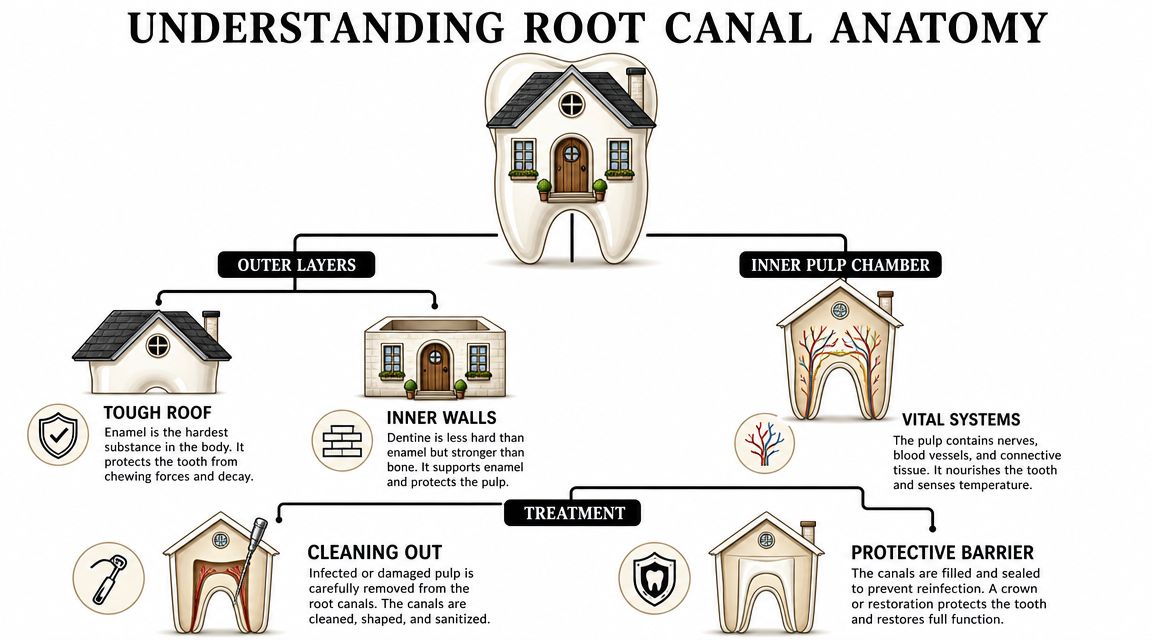
The tiny house inside your tooth
If the outer shell stays intact, the pulp is protected. But bacteria can get in when there's:
- Deep decay that reaches the inner part of the tooth
- A crack that opens a pathway inward
- Trauma or injury that damages the pulp
Once bacteria reach the pulp, the inner tissue can become inflamed or infected. That's often when pain becomes severe, unpredictable, or hard to settle. Some people feel heat sensitivity. Others feel pain on biting. Some only notice swelling or tenderness around the gum.
What the treatment actually does
The clinical reason for a root canal is when the pulp becomes inflamed or infected from bacteria. The procedure involves creating access, removing the infected pulp, disinfecting the internal canals, and sealing them with a biocompatible material called gutta-percha, as outlined in this root canal treatment overview from Cleveland Clinic.
That's why a root canal isn't a “patch-up” or a symptom cover. It removes the diseased tissue from inside the tooth.
Here's a plain-English version:
- The dentist makes a small opening in the tooth.
- The damaged tissue inside is removed.
- The narrow internal canals are cleaned and disinfected.
- The space is sealed so bacteria are less able to get back in.
> Practical rule: A root canal saves the outer tooth by treating the inside of the tooth.
This is the point that often clears up confusion. Patients sometimes think the “root canal” is a separate object or a dramatic surgical event. It isn't. The root canals are the tiny internal channels inside the roots of the tooth. The treatment is named after the part being cleaned.
The Root Canal Procedure Step by Step
Most anxiety drops once people know what will happen in the chair. Root canal treatment is methodical, not rushed. Each part has a purpose, and comfort comes first.
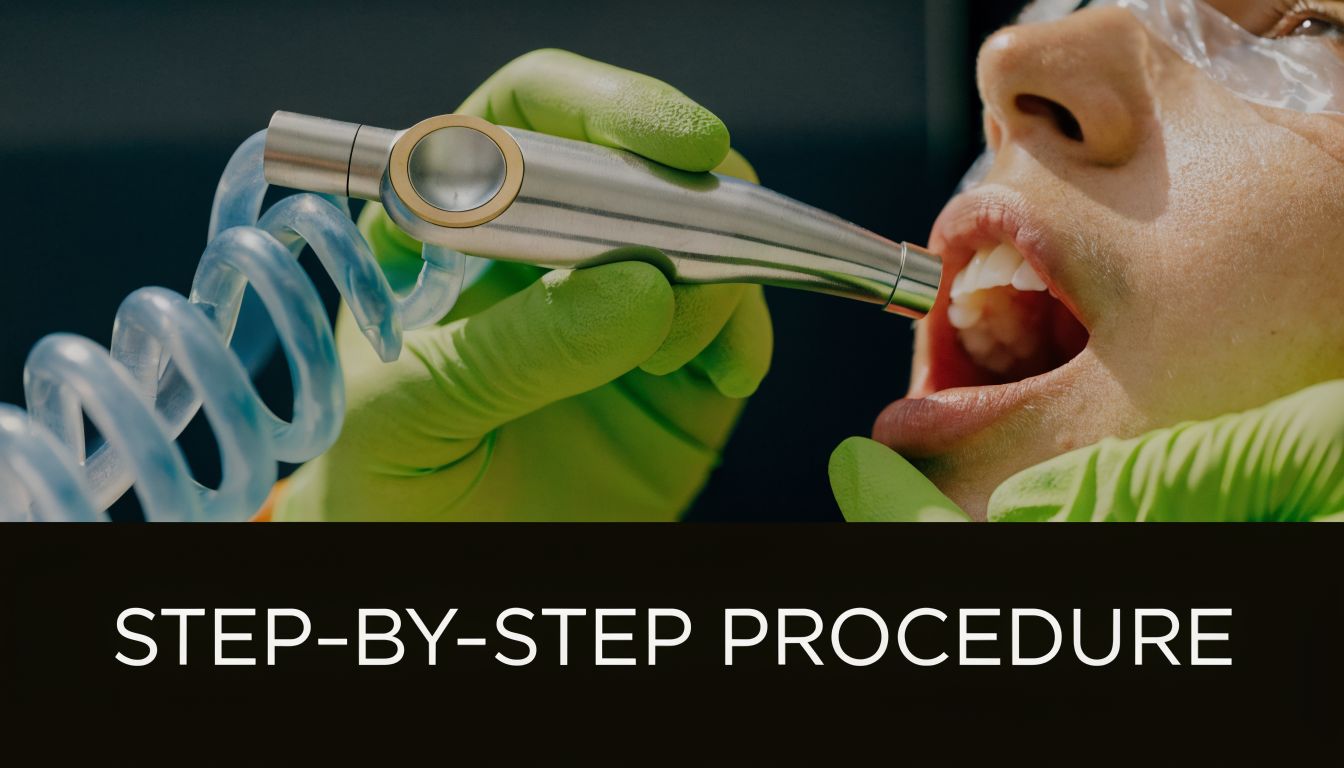
First the tooth is numbed
Before anything else, the area is anaesthetised. The goal is simple. You should feel pressure and movement, but not sharp pain. If you're very nervous, some clinics also offer sedation or sleep dentistry options to help you relax through treatment.
Then the tooth is isolated
A dental dam is usually placed around the tooth. This is a small protective sheet that keeps the area clean and dry. It also stops bacteria from saliva getting into the tooth while it's being treated.
For many patients, this is one of those details they've never heard of, but it matters a lot. Root canal treatment is about careful cleaning and sealing, so isolation helps make the process more predictable.
Then the inside is cleaned
The dentist creates a small opening in the tooth and gently removes the infected or inflamed pulp. Fine instruments are used to shape the canals, and disinfecting solutions are used to clean them.
This stage is why root canals can take time. A typical root canal can take about 90 minutes, but teeth with multiple or complex canals may need more than one visit, according to this step-by-step explanation of root canal treatment.
Finally the canals are sealed
After cleaning, the canals are filled with gutta-percha, a rubber-like material used to seal the prepared space. The tooth is then closed, often with a temporary or permanent filling depending on the treatment plan.
A final restoration, often a crown, is usually part of the full process because the tooth needs protection after the inside has been treated.
> If a tooth has curved roots, multiple canals, or signs of extensive infection, advanced scans can help the dentist see the shape of the tooth more clearly before and during treatment.
Clinics that use tools such as CBCT 3D imaging and digital workflows can make diagnosis and planning more precise. If you'd like to see what that looks like in practice, Oasis Smiles Dental outlines its dental technology including CBCT and digital scanning.
Recovery and Aftercare Protecting Your Tooth for the Future
Once the root canal is finished, patients often notice one big change. The deep, angry pain that sent them in is gone or settling. The tooth and surrounding area may still feel tender for a few days, especially when biting, but that's different from the original infection pain.
The key thing to understand is that the inside of the tooth has been treated. Now the outside needs protection.
What to expect after treatment
A tooth can feel a bit bruised after treatment, particularly when you chew on it. That doesn't mean the treatment has failed. It usually reflects the fact that the area around the root has been inflamed and now needs time to settle.
A few sensible habits help during recovery:
- Chew carefully on the treated side until your dentist says the tooth is fully restored
- Keep the area clean with normal brushing and flossing unless your dentist gives different instructions
- Pay attention to swelling or increasing pain and contact the clinic if symptoms feel like they're worsening rather than improving
If you're dealing with infection-related questions, this guide on recovering from a tooth abscess can be a useful plain-language companion to your dentist's advice.
Why the crown matters so much
Research shows the long-term outcome of a root canal depends heavily on what happens next. A Regenstrief and Indiana University analysis reported a median survival time of about 20 years for a treated tooth that received both a filling and a crown, compared with 6.5 years if no restorative work followed, as summarised in this tooth survival analysis after root canal treatment.
That's why dentists don't see the root canal as the whole job. They see it as the inside phase of saving the tooth. The crown is often the outside phase.
> Aftercare takeaway: The root canal removes the infection source. The crown helps the tooth keep doing its job.
For many patients, faster access to a well-fitting restoration is helpful because it shortens the period where the tooth is more vulnerable. If you already have a crown or will soon get one, these tips on how to care for dental crowns properly can help you protect it.
Alternatives Costs and Making the Right Choice
The practical question isn't only “what is a root canal”. It's “should I save this tooth, or remove it?”
That's a fair question. Extraction can sound simpler in the short term. The trouble is that removing a tooth often creates a second decision later. Do you leave the gap, place a bridge, or replace it with an implant?
Root canal and extraction compared
The Australian Dental Association explains that a root canal is done to save a tooth, and that it almost always needs a final restoration such as a crown to restore function and help prevent fracture. That matters when weighing it against the future consequences of losing the tooth, as reflected in this overview of root canal treatment and restoration needs.
Here's a simple side-by-side view:
| Factor | Root Canal + Crown | Extraction + Replacement (e.g., Implant) | |---|---|---| | Main goal | Save your natural tooth | Remove the tooth and later replace it | | What happens to the tooth | The tooth stays in place | The natural tooth is lost | | Follow-up care | Usually needs final restoration, often a crown | Usually involves planning for a replacement option | | Chewing and bite | Keeps your natural tooth in your bite | A gap can affect chewing until replaced | | Long-term decisions | Focus is on protecting the treated tooth | Focus shifts to whether and how to replace the missing tooth |
How patients usually decide
A balanced decision usually comes down to these points:
- How restorable the tooth is. If the tooth structure can still be predictably rebuilt, saving it is often worth serious consideration.
- How much treatment you're comfortable with. Some people prefer to preserve what they already have if the prognosis is sound.
- Your long-term plan. Extraction may feel more direct at first, but replacement treatment can be a bigger commitment later.
If a tooth can't be saved, removal may be the right call. In that situation, it helps to understand what's involved in dental extractions and when they're recommended.
A note on costs
Costs vary depending on which tooth is involved, how complex the canals are, whether a specialist is needed, and what type of final restoration is planned. Health fund rebates, Medicare eligibility in limited situations, DVA support, and payment options can also affect what you pay out of pocket. The most useful question to ask isn't just “what does the root canal cost?” It's “what's the full cost of saving versus removing and replacing this tooth?”
Gentle Root Canal Care at Oasis Smiles Dental
For anxious patients, the ideal root canal experience usually comes down to three things. Clear diagnosis, careful pain management, and a practical plan to finish the tooth properly.
That's where technology can make the journey feel less uncertain. CBCT 3D imaging helps with diagnosis and treatment planning when root anatomy is complex. Trios digital scanning can improve the way restorations are designed. CEREC same-day crowns can help complete the protective stage of treatment faster when a crown is needed.

Sleep dentistry also matters for people who've delayed care because of fear. If the thought of treatment makes your shoulders tense up before you even walk into the clinic, sedation options can change the experience from something you dread to something manageable.
For families in Tamworth and the New England region, practical access matters too. Same-day emergency appointments for pain, accepted health funds, and a straightforward restorative pathway all make it easier to act before a painful tooth becomes a bigger problem.
> Getting through a root canal comfortably usually isn't about “being tough”. It's about having the right diagnosis, the right anaesthetic, and the right follow-up restoration.
Frequently Asked Questions About Root Canals
Does a root canal hurt?
The procedure is done with local anaesthetic, so the aim is for you to be comfortable during treatment. What people often describe as “root canal pain” is the pain from the inflamed or infected pulp before treatment. Guidance for patients emphasises that treatment removes the infection source rather than masking symptoms, as explained in this patient-facing root canal guidance.
Can antibiotics fix the problem instead?
Usually, no. Antibiotics are not a substitute for definitive dental treatment for an irreversible pulp infection. If the infection source is inside the tooth, the tooth still needs treatment to remove the damaged tissue and clean the canals.
How many visits does it take?
It depends on the tooth and how complex the canal system is. Some teeth can be treated in one appointment, while others need more than one visit because the anatomy is harder to clean properly or the infection needs closer management.
Do I always need a crown afterwards?
Not every tooth is restored in exactly the same way, but many root canal treated teeth need a crown or other strong restoration. The reason is practical. The tooth often needs protection from fracture and a durable seal against leakage.
Is extraction ever the better option?
Yes, sometimes. If the tooth is too broken down, cracked beyond repair, or can't be predictably restored, extraction may be the sensible choice. The right answer depends on the condition of the tooth, not just the pain level on the day.
---
If you've been told you may need a root canal, or you're dealing with tooth pain that isn't settling, Oasis Smiles Dental can assess the tooth, explain your options clearly, and help you decide on the most appropriate next step with comfort-focused care.