
How to Know If You Need Braces in Tamworth
Ever wondered if your smile could be healthier or more comfortable? When people think about braces, the first thing that usually comes to mind is crooked teeth. But as a dentist, I can tell you the signs often go much deeper than what you see in the mirror.
Sometimes, the clues are subtle things you might not even connect to your teeth. A quick self-check at home can help you spot these potential issues and give you the confidence to chat with your dentist about what’s really going on.
Spotting the Signs: Your At-Home Braces Checklist
Most people come to us because they're unhappy with how their teeth look, and that’s a perfectly valid reason! But orthodontic treatment is about more than just aesthetics; it's about setting your smile up for long-term health. The real question isn't just "Are my teeth straight?" but "Do my teeth and jaw function properly?"
Think of this as a mini-investigation into your own oral health. While it's no substitute for a professional opinion, it's a great starting point.
What to Look For in the Mirror (and Feel Every Day)
First, the obvious stuff. Take a close look at your smile. Do you see teeth that are visibly twisted, overlapping, or crowded together? Are there noticeable gaps that you wish weren't there? These are the classic signs.
But now, think about how your mouth *feels* day-to-day. Function is just as important as appearance.
- Trouble cleaning: Is flossing a nightmare because some teeth are just too tight to get between? Do you constantly get food stuck in the same spots? This is a red flag for crowding, which can lead to plaque build-up, cavities, and gum disease down the line.
- Accidental biting: If you find yourself frequently biting the inside of your cheek or the roof of your mouth, it’s often because your teeth aren't meeting up correctly.
- Speech changes: Have you noticed a lisp or slight whistle when you speak? Sometimes, the position of your teeth can affect your pronunciation.
> Expert Tip: Braces are a health investment, not just a cosmetic one. A properly aligned bite makes cleaning easier, reduces wear and tear on your teeth, and contributes to better overall health.
To make it even clearer, here’s a quick summary of what to keep an eye out for.
Quick Guide: Signs You Might Need Braces
| Sign | What to Look For | Why It Matters | | :--- | :--- | :--- | | Visible Crookedness | Overlapping, crowded, or gappy teeth. | Beyond aesthetics, this can make teeth harder to clean, increasing the risk of decay. | | Bite Problems | An overbite (top teeth cover bottom teeth too much), underbite (bottom teeth stick out past top teeth), or crossbite (some top teeth sit inside bottom teeth). | A misaligned bite can cause uneven tooth wear, jaw strain, and chewing difficulties. | | Jaw Discomfort | Clicking or popping sounds, jaw pain, or frequent headaches. | These can be symptoms of a malocclusion (bad bite) putting stress on your jaw joints. | | Hygiene Issues | Difficulty flossing or constantly getting food trapped. | Crowding creates hiding spots for plaque that regular brushing and flossing can't reach. |
This table covers the most common indicators we see in our patients, but remember, everyone's smile is unique.
Don't Ignore Your Jaw
Sometimes, the most telling signs have nothing to do with your teeth and everything to do with your jaw. A bite that’s even slightly out of balance can put a lot of strain on the surrounding muscles and joints.
Pay attention to any clicking or popping sounds when you chew or open your mouth wide. Do you suffer from persistent jaw pain, sore facial muscles, or even headaches that seem to come out of nowhere? These can all be linked to a misaligned bite, which we call a malocclusion. While many things can cause these symptoms, it’s always worth exploring if your bite is the culprit during one of your regular dental checkups.
This flowchart can help you connect the dots between your symptoms and whether it’s time to see a professional.
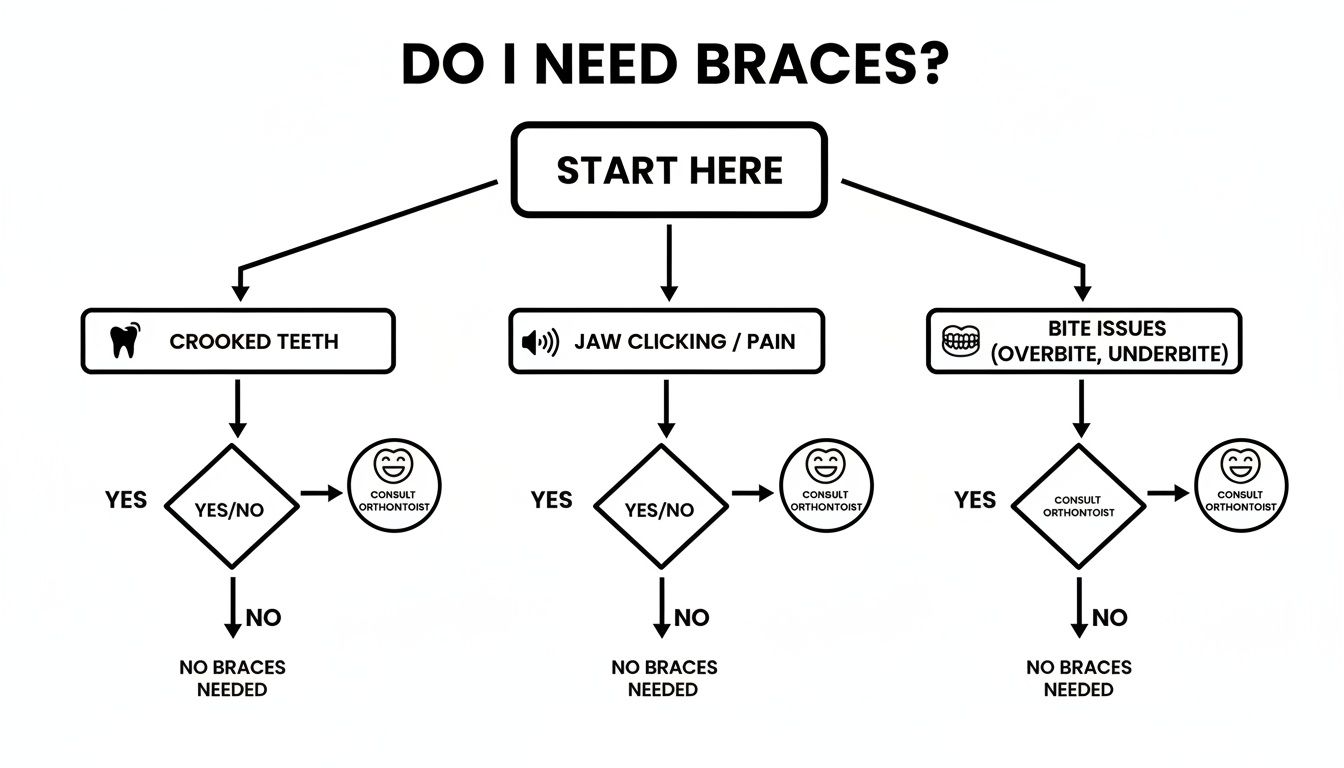
As you can see, things like crooked teeth, a clicking jaw, or trouble chewing are all good reasons to get a professional opinion. You’re not just being picky—you’re being proactive about your health.
Beyond Crooked Teeth: Understanding Bite Problems
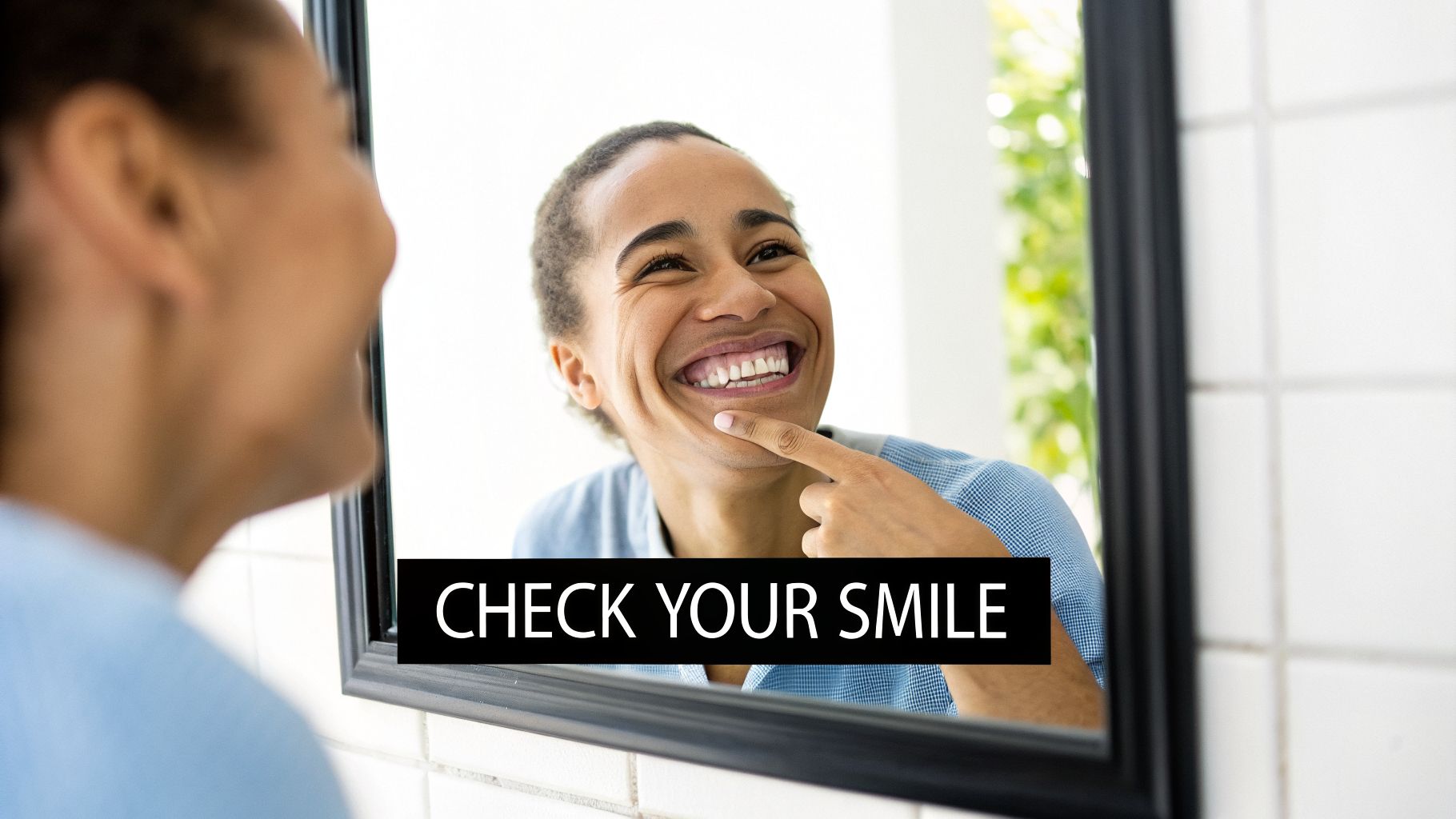
When people think about braces, they usually picture straightening a few crooked teeth. But as dentists, we know there's often a much bigger picture: how your teeth actually fit together. This relationship between your upper and lower jaw is what we call your ‘bite’, or occlusion.
When the bite is off, we call it a malocclusion. This is one of the most common, and important, reasons we recommend braces.
Think of it this way. If your teeth don't meet properly, it puts uneven pressure on them. Over time, this can lead to a whole host of problems—from premature tooth wear and chipping to persistent strain on your jaw muscles. It's about much more than just looks.
Common Types of Bite Problems
So, how can you spot a potential bite issue? It’s something you can check for right now. Just stand in front of a mirror and bite down gently on your back teeth. Now, take a close look at how everything lines up.
Here are a few of the most common bite problems we see in our practice:
- Overbite: Do your top front teeth cover your bottom ones by a lot? A little overlap is perfectly normal, but when it’s excessive, it can cause the lower teeth to bite into the roof of your mouth.
- Underbite: When you close your jaw, do your lower teeth jut out in front of your upper teeth? This can make chewing a real challenge and place a lot of stress on your jaw joints.
- Crossbite: Now look at your side and back teeth. Do any of your upper teeth sit *inside* your lower teeth when you bite? That’s a crossbite, and it can lead to lopsided jaw growth and uneven wear.
- Open Bite: Is there a noticeable gap between your top and bottom front teeth even when your back teeth are touching? An open bite often affects speech and can make it nearly impossible to bite into a sandwich cleanly.
Fixing a bite problem isn't just cosmetic; it's a critical part of maintaining your long-term oral health. You can see how we approach these issues by exploring our orthodontic services and how they help.
> A well-aligned bite distributes pressure evenly across your teeth, protecting them from excessive wear and tear. It’s like ensuring your car's tyres are properly aligned to prevent them from wearing out too quickly.
Why a Healthy Bite Is So Important
A misaligned bite can create a domino effect on your oral health. For instance, teeth that are crowded or don't meet properly are notoriously difficult to keep clean, creating perfect hiding spots for plaque.
This is a real worry, especially for kids. In Australia, roughly 25% of children aged 6-12 already show signs of malocclusion. When teeth are crooked, brushing and flossing become much less effective, which can dramatically increase the risk of cavities. For our local families in Tamworth, spotting these signs early is a key part of preventative dental care.
Ultimately, investing in a straight smile and a healthy bite is one of the most valuable things you can do for your lifelong health.
What a Clicking Jaw or Headaches Can Tell You
Ever notice a persistent click in your jaw when you chew? Or maybe you're dealing with nagging headaches that just won’t quit. It's easy to blame stress, but these could actually be your body's way of telling you something is off with your bite.
Most people don't connect these issues to their teeth, but there's a strong link. When your teeth don't line up correctly, your jaw muscles have to work overtime to bring them together. This constant strain can cause inflammation and a whole host of problems you might never guess are related to your smile.
The Link Between Bite, Jaw, and Headaches
Think of your jaw as a finely-tuned machine. For it to work smoothly, all the parts—muscles, joints, and teeth—need to be in harmony. A misaligned bite, like an overbite or crossbite, throws that balance completely off-kilter.
Every time you chew, talk, or even just close your mouth, your jaw is forced into an awkward, unnatural position. This constant effort can lead to some surprisingly common symptoms:
- Popping or clicking sounds when you open your mouth wide or eat.
- Chronic headaches, especially those nagging tension headaches you feel around your temples.
- Soreness or tenderness in your face, jaw joint area, neck, and even your shoulders.
- Trouble or discomfort when chewing your food.
> That clicking sound isn't just a minor annoyance. It's a clear sign that your temporomandibular joint (TMJ) is under duress. Getting your bite aligned can relieve that pressure and often silence the click for good.
How Braces Can Offer Relief
By carefully moving your teeth into their proper positions, braces help your upper and lower jaws meet the way they were designed to. This takes the enormous strain off your jaw muscles and joints, which can significantly reduce—or even eliminate—the pain you've been feeling.
Jaw pain is a huge red flag that you might need braces. In fact, studies show that right here in rural parts of Australia like Tamworth, 15-20% of adolescents struggle with temporomandibular joint (TMJ) issues tied directly to a bad bite. These reports highlight that things like overbites or underbites are major contributors, and if left untreated, can lead to chronic pain in 10% of cases.
We see the difference it makes every day. I've had patients who suffered from weekly migraines for years. After we used braces to correct a deep overbite, they were amazed to find their headaches practically vanished. By fixing the root cause—the misaligned bite—we addressed a problem that pain medication could only ever mask.
If any of this sounds familiar, you can read more about how we diagnose and manage TMJ discomfort in our clinic.
What Happens During a Professional Orthodontic Assessment?
While checking your own smile in the mirror is a great first step, it’s impossible to see the whole picture. The only way to know for sure if you need braces is to have a professional take a look. An expert assessment digs much deeper, uncovering the root cause of any alignment issues and giving you a clear path forward.
Here at our Tamworth clinic, we want you to feel comfortable and informed from day one. Our whole approach is about taking the mystery out of orthodontics, so you understand your options and feel confident in your decisions.
Your First Visit: More of a Conversation Than an Exam
Think of your initial consultation as a chat, not a high-pressure sales pitch. The first thing we'll do is sit down and listen. We want to hear about your concerns, what you’d like to change about your smile, and any symptoms you've noticed—whether it's crowded teeth, jaw soreness, or difficulty chewing.
Once we understand your goals, one of our experienced dentists will perform a thorough clinical examination. They’ll be looking at a few key things:
- How your teeth line up and bite together.
- The health of your gums and jawbone.
- The way your jaw moves and any signs of stress on the joints.
This hands-on check gives us a baseline, but the real story is often hidden beneath the surface.
> An orthodontic assessment isn’t just another check-up. It's a deep dive that combines a physical exam with advanced imaging to build a complete 3D picture of your teeth, jaw, and facial structure.
Seeing the Full Picture With Advanced Diagnostics
To get that complete picture, we use some incredible technology. This is what allows us to plan treatment with such a high degree of precision. And best of all? We’ve left those goopy, gag-inducing dental moulds in the past where they belong.
At Oasis Smiles Dental, your assessment will probably involve a couple of key tools:
CBCT 3D Imaging: This is a game-changer. Our Cone Beam Computed Tomography (CBCT) scanner creates a detailed, 3D image of everything—your teeth, bones, nerves, and soft tissue—all in one quick, comfortable scan. It’s how we spot impacted teeth, analyse your jaw structure, and plan tooth movements safely.
Trios Digital Scanners: Instead of messy impressions, we use a small, comfortable intraoral scanner to create a perfect digital model of your teeth. The Trios scanner captures thousands of pictures per second to build an exact 3D replica of your mouth. We can even use this model to show you a simulation of your potential new smile right then and there!
Turning Scans and X-Rays Into a Clear Plan
By combining the hands-on exam with the data from X-rays and digital scans, we create a complete blueprint of your oral health. This detailed map allows us to accurately diagnose the specific type of malocclusion you might have, like an overbite, crossbite, or crowding.
Most importantly, it lets us answer your biggest questions: "Do I actually need braces?" and "What are my best options?" We use this information to design a treatment plan that is 100% customised to you, ensuring the best and most predictable results. You’ll walk out of your assessment with no more guesswork—just a clear understanding of your smile and a confident plan for the future.
Braces for All Ages from Kids to Adults
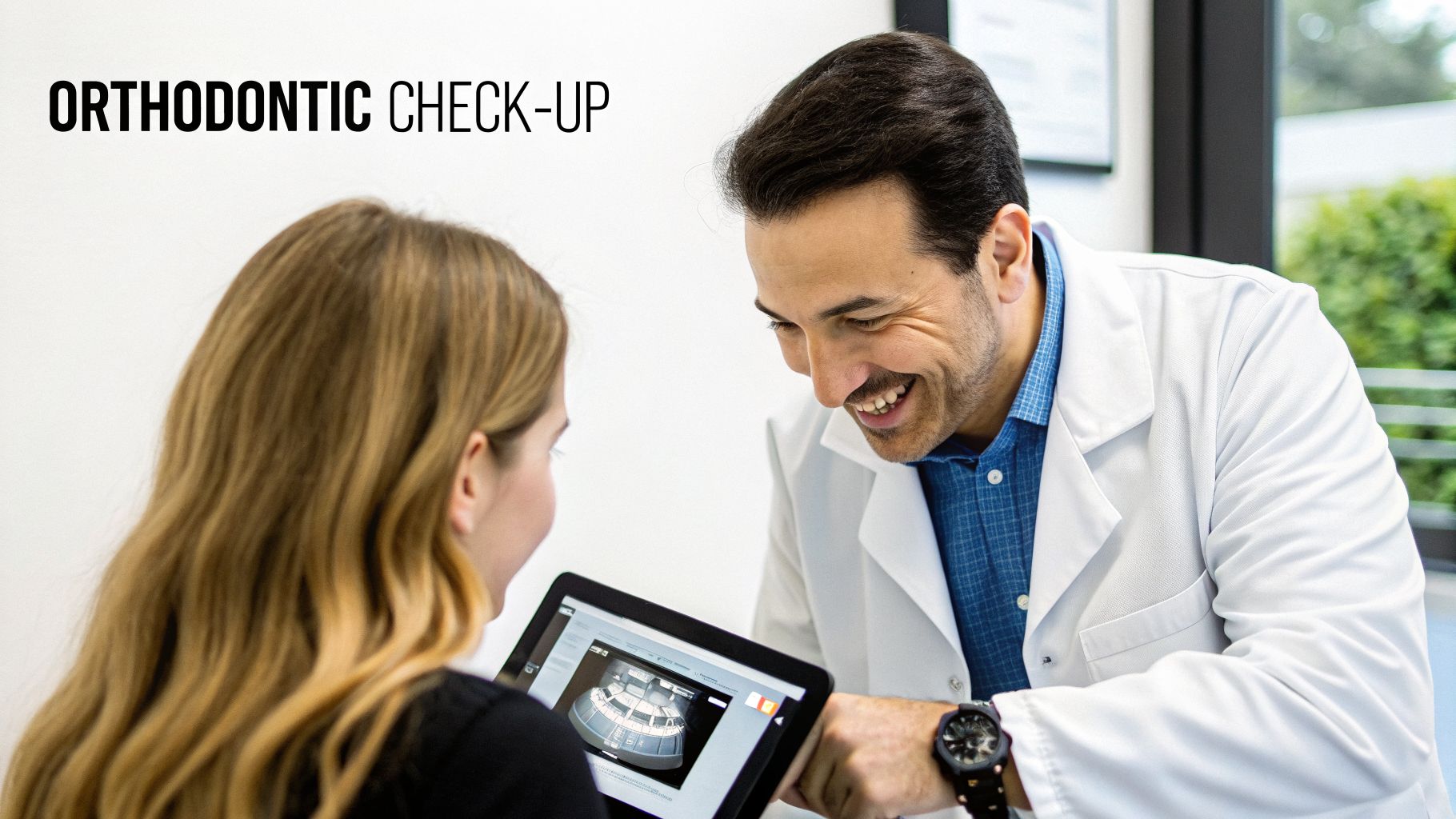
The question of "do I need braces?" looks different at every stage of life. What we look for in a seven-year-old is a world away from the concerns of a teen or the cosmetic goals of an adult.
But here’s the good news: it's never the wrong time to work towards a healthier, more confident smile. Modern orthodontics has fantastic solutions for everyone, from early intervention that prevents bigger problems down the road to discreet aligners for adults. Getting the smile you’ve always wanted is more achievable than you might think.
Early Signs in Children
When it comes to kids, our focus is on how their baby teeth are making way for the permanent set. The Australian Dental Association suggests a child’s first orthodontic visit around age seven, and we see the benefits of this every day. It's our best chance to spot issues while they’re still small and simple to guide.
A huge red flag is the early or late loss of baby teeth. These teeth should ideally fall out between the ages of six and twelve. Across Australia, statistics show that 16% of children lose their primary teeth outside this window, which can throw the alignment of their adult teeth completely off track. Here in the Tamworth and New England region, we see around 20% of kids develop crowding or gaps directly because of this timing issue. Catching this at Oasis Smiles Dental allows us to step in and guide the permanent teeth into their proper homes. You can find a great breakdown of how tooth eruption affects alignment on this detailed dental blog.
Other things to watch for in your child include: * Thumb-sucking or mouth breathing habits that continue past age five. * Noticeable difficulty chewing or biting their food. * Teeth that are visibly crowded or don’t seem to meet correctly when they bite down.
Common Concerns for Teenagers
The teenage years are the classic time for getting braces, and for good reason. It’s not just about straightening crooked teeth or fixing a noticeable overbite; teens are often worried about how treatment will impact their appearance and social life.
We get it. These are valid concerns, which is why we lay out all the options—from traditional metal braces to clear ceramic ones and Invisalign. Our goal is to find a solution that not only perfects their bite but also fits their lifestyle and helps them feel good about themselves throughout the journey.
> For many teens, braces are a rite of passage. But today’s options are far more comfortable and less noticeable than what their parents remember, making the experience much easier.
Orthodontic Treatment for Adults
Let’s clear up a common myth: braces aren't just for kids. A growing number of our orthodontic patients are adults, and they come to us for a few common reasons. Some had braces as a teen but have seen their teeth shift over the years. Others are finally in a position to invest in the smile they’ve wanted their whole life.
Typical signs we see in adults are: * Shifting Teeth: That common complaint of lower front teeth slowly becoming more crowded with age. * Jaw Pain or Headaches: A misaligned bite can put stress on the jaw, and this discomfort often worsens over time. * A Desire for Cosmetic Improvement: Sometimes, it’s as simple as wanting to feel more confident when you smile.
For adults, discreet options like Invisalign clear aligners are often the top choice. They fit seamlessly into a busy professional and social life without the look of traditional metal braces.
Your Next Steps to a Confident Smile in Tamworth
So, you've done your research. You can spot the signs that might point towards braces and you get that a properly aligned bite is about so much more than just looks. What’s the next move?
Deciding to explore orthodontic treatment is a big step, but it’s an exciting one. It’s really an investment in your future—one that leads to more comfortable chewing, easier brushing and flossing, and a smile that truly makes you feel confident.
Taking the First Simple Step
While a self-check is a great start, the only way to know for sure if you need braces is to have a chat with a professional. We've made this first step as easy and pressure-free as we possibly can.
Your initial consultation at Oasis Smiles Dental is simply a conversation. It's your chance to ask questions and our opportunity to listen to your concerns and give you clear, honest answers. You’ll find us at Shop 15/1 Piper Street, just near Northgate Shopping Centre, making it convenient for families all over Tamworth and the New England region to pop in.
> Booking a consultation isn't a commitment to treatment—it's a commitment to getting information. Our goal is to empower you with a clear understanding of your oral health so you can make the best choice for you or your child.
Making Treatment Accessible
We genuinely believe that financial worries shouldn't be a barrier to a healthy, confident smile. That's why we work hard to make orthodontic care accessible and affordable for our community.
Our team can walk you through a range of flexible payment options designed to fit your family’s budget. Here at our Tamworth clinic, we are proud to support our patients by:
- Accepting all major health funds to help you get the most out of your benefits.
- Welcoming patients through Medicare schemes where they apply.
- Honouring our veterans by accepting Department of Veterans' Affairs (DVA) plans.
Our friendly reception team is always on hand to help you figure out the financial side of things. We’re here to be your local Tamworth dental partner, providing care that you can trust and that fits into your life.
When you're ready to explore your options, you can easily contact our Tamworth clinic to book a consultation.