

Emergency Tooth Pull: A Guide for Tamworth Patients
A bad toothache often starts at the worst possible time. It wakes you at night, flares when you bite down, or sends a sharp pulse through your jaw when you drink something hot or cold. By the time you’re searching for an emergency tooth pull, you’re usually not comparing options calmly. You’re trying to stop the pain and work out whether this can wait until tomorrow.
That’s a reasonable question. Sometimes a painful tooth can be stabilised and saved. Sometimes it can’t. The important thing is not guessing for too long while swelling, infection, or a fracture gets worse.
That Unbearable Toothache Might Be an Emergency
One common pattern is this. A tooth has been sore on and off for weeks, then suddenly the pain changes. It becomes constant. Your gum feels tender. Your cheek looks puffy. Painkillers barely touch it, and lying down makes it throb harder.
That shift matters. A mild sensitivity problem usually doesn’t turn into intense swelling overnight without a reason. When pain becomes severe, especially with swelling or a bad taste in the mouth, the body is often signalling infection, advanced decay, or a crack that has reached the nerve.
This isn’t just an individual problem. In Australia, dental conditions accounted for 24% of all potentially preventable emergency department visits in 2018 to 2019, and in New South Wales there were about 45,000 dental-related ED visits in 2022, costing the public health system an estimated $75 million annually, according to the AIHW overview of dental and oral health in Australia. A hospital can help with pain and infection management, but it often can’t provide the definitive dental treatment a damaged tooth needs.
What makes it urgent
If the pain is stopping you from eating, sleeping, concentrating at work, or opening your mouth comfortably, it has already moved beyond “just a toothache”. Dental infections don’t always stay small. Pressure can build in the tooth or surrounding bone, and the pain can become relentless.
> Practical rule: Severe tooth pain with swelling is something to assess promptly, not something to “watch for a few days”.
For people trying to work out whether they need immediate help, tools that improve first-contact triage can make a real difference. Practices using systems like voice-based AI for medical practices can guide urgent callers more efficiently so the team can identify who needs fast review.
What to do right now
If you think you may need an emergency tooth pull, don’t put aspirin on the gum, don’t apply heat to facial swelling, and don’t keep chewing on the painful side to “test” it. Keep the area as undisturbed as possible and get examined. The decision isn’t based on pain alone. It depends on whether the tooth is restorable, whether infection has spread, and whether removing it is the safest way to get you out of trouble.
Key Signs You Need an Emergency Tooth Pull
Some teeth hurt badly and still can be saved. Others are too damaged, too infected, or too loose to keep. The signs below don’t diagnose the problem on their own, but they do tell you not to delay.

Signs that need prompt attention
- Constant throbbing pain that doesn’t settle, especially if it keeps you awake or returns quickly after pain relief wears off.
- Visible swelling in the gum, jaw, or cheek. Swelling usually means the problem isn’t staying localised.
- A gum boil or pimple near the tooth. That can be a sign that infection is draining.
- Bad taste or unpleasant breath coming from one area, particularly if pressure on the gum makes it worse.
- Pain when biting that feels sharp or deep, which can happen with a cracked tooth or infection around the root.
- A tooth that is broken below the gumline or very loose, especially after trauma or advanced gum disease.
- Difficulty opening your mouth or chewing because the area feels tight, inflamed, or intensely sore.
Why people in this region should take these signs seriously
In rural parts of Australia such as New England, residents had 2.5 times higher dental ED rates in 2022, at 150 per 10,000 population, compared with urban centres. The same AIHW reporting notes that periapical abscesses account for 42% of dental ED cases and severe caries for 28%, both of which can lead to emergency tooth pulls, as outlined in the AIHW summary on potentially preventable hospitalisations.
That local context matters in Tamworth. People often try to push through pain because of work, travel time, school pickups, or the hope that antibiotics alone will fix it. They usually don’t fix the reason the tooth is failing.
When waiting usually makes things harder
A tooth that’s severely decayed, cracked through the root, or surrounded by active infection rarely improves with delay. What often happens instead is this:
- Pain becomes less predictable.
- Swelling starts or returns.
- Eating shifts to the other side.
- The tooth structure breaks down further.
- Treatment options become narrower.
> If the tooth is already beyond repair, waiting doesn’t save it. It usually just adds more pain to the same outcome.
A manageable toothache might come and go, respond to avoiding triggers, and have no swelling. A true dental emergency usually feels more forceful than that. If your instinct says something has changed for the worse, it’s worth listening.
Exploring Your Alternatives to Extraction
The biggest fear many patients have isn’t the procedure. It’s losing the tooth. That fear is understandable, and it’s why a good emergency assessment shouldn’t jump straight to removal.
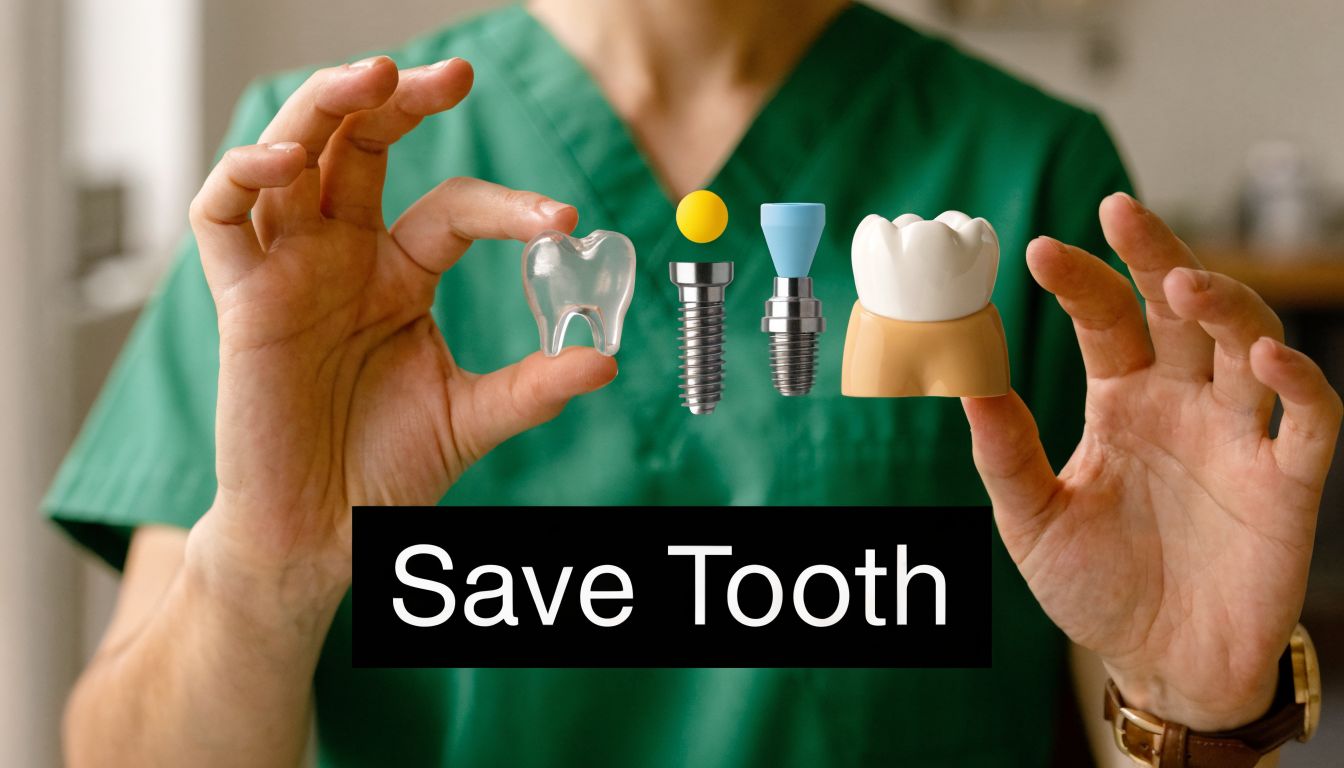
Extraction isn’t always the first answer
Many emergency dental pages online focus on taking the painful tooth out because that sounds simple and decisive. In practice, the better question is whether the tooth can function well long term if it’s treated properly.
Advanced imaging helps answer that. As explained in guidance on emergency dental decision-making, CBCT imaging can show root structures and infection levels in far more detail, which helps a dentist decide when a tooth may be better treated with root canal therapy rather than removed. Preserving a natural tooth can help maintain jaw structure and avoid the later need for a bridge or implant.
A practical decision framework
An extraction is more likely when the tooth is: - Broken in a way that can’t be restored - Split into the root - So heavily decayed that there isn’t enough healthy tooth left - Very loose from advanced gum disease - Associated with infection that can’t be predictably managed while keeping the tooth
A tooth may still be savable when: - there’s enough healthy structure above or just below the gumline - the root is sound - the surrounding bone support is reasonable - the infection is around the nerve but the tooth can be cleaned, sealed, and restored
That’s where treatment such as root canal therapy becomes part of the discussion. If the tooth can be disinfected internally and rebuilt well, keeping it is often the better long-term choice.
The trade-offs patients should know
Saving a tooth is worthwhile when the result is predictable. It isn’t worthwhile if the tooth is so compromised that you’re likely to face repeat infections, repeated breakage, or ongoing pain.
Here’s the practical balance dentists weigh every day:
| Option | What it helps with | Main limitation | |---|---|---| | Root canal and restoration | Keeps the natural tooth and chewing function | Not suitable if the tooth is structurally beyond repair | | Temporary stabilisation | Buys time if the pain source can be controlled safely | It doesn’t solve a hopeless tooth | | Extraction | Removes the source of pain and infection quickly | Leaves a gap unless replaced later |
> A rushed extraction on a tooth that could have been saved is a loss. Trying to save a tooth with no realistic future is also a loss.
If you’re younger, if the tooth is important for chewing or appearance, or if there’s a good restorative path, tooth preservation deserves a proper look. If the tooth is hopeless, honesty matters more than false reassurance. The right emergency decision is the one that gets you out of pain without creating a bigger problem later.
The Emergency Tooth Pull Procedure Explained
Uncertainty makes dental anxiety worse. Individuals cope much better once they know what happens during an emergency tooth pull.
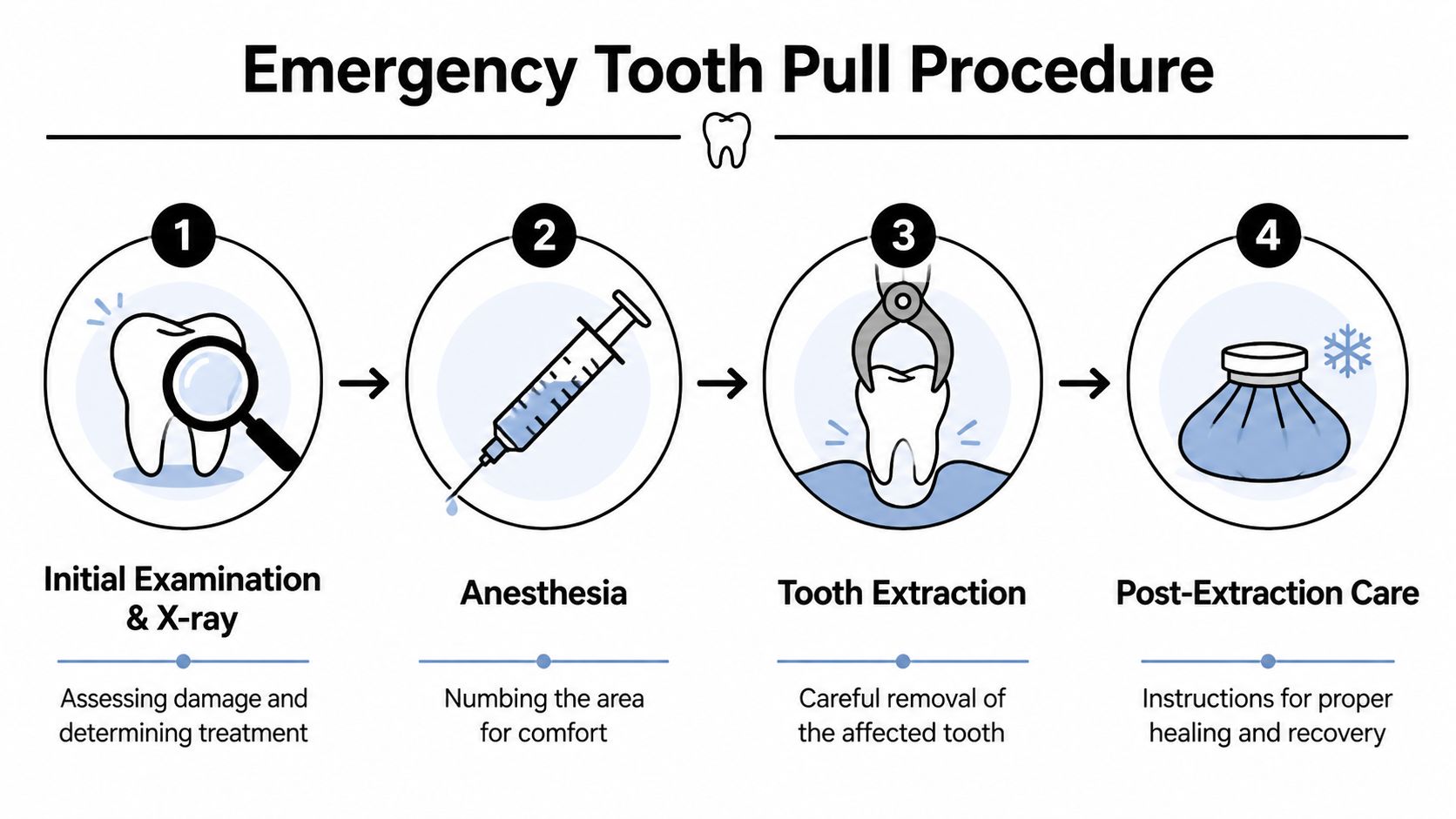
First the tooth is assessed
The appointment starts with an examination and imaging. The dentist checks the tooth itself, the gum around it, the level of swelling, and how easy or difficult the extraction is likely to be. The key question is simple. Is this tooth restorable, or is removal the safest option?
Sometimes the answer is clear immediately. Sometimes the X-ray or 3D imaging changes the plan because the roots are curved, the tooth is cracked in a way that isn’t visible from above, or the infection has tracked further than expected.
Then the area is numbed properly
This part matters more than patients realise. A rushed injection into inflamed tissue is one reason people remember bad dental visits. A careful approach aims for profound local anaesthesia, which means the area is fully numb enough that you feel pressure but not pain.
The standard expectation during an extraction is not “I felt everything but got through it”. It’s that the tooth is removed while the area remains completely numb. If the tooth is still painful when force is applied, more anaesthetic or a different technique may be needed before continuing.
> You should expect pressure, pushing, and movement. You should not expect sharp pain.
How the tooth is actually removed
The gentlest extractions don’t begin with forceps alone. Procedural guidance in the Merck Manual explanation of emergency tooth extraction technique describes first loosening the tooth with a dental elevator. Used correctly, this can reduce the force needed by up to 50% compared with forceps alone, which helps minimise trauma to the surrounding bone. The same guidance notes that proper elevation technique can reduce the risk of dry socket from over 20% to less than 5%.
That sounds technical, but the patient experience is straightforward. The tooth is gently mobilised in stages before it is lifted out. Controlled movement is kinder to the socket than forceful pulling.
If the tooth is broken down badly, the dentist may need to remove it in parts. If roots are awkwardly shaped or the tooth is fragile, a more surgical approach may be needed. That doesn’t mean something has gone wrong. It means the tooth needs a more precise method.
For some patients, reviewing the details of dental extractions beforehand helps remove some of the fear because it replaces mystery with facts.
What happens immediately after
Once the tooth is out, the site is checked and cleaned as needed. Gauze is placed over the socket so you can bite down and help a blood clot form. That clot is important. It protects the bone and nerves underneath while healing begins.
You’ll then get aftercare instructions. They matter just as much as the extraction itself. A technically good removal can still lead to a rough recovery if the clot is disturbed in the first day or two.
What usually doesn’t happen
A common fear is that the dentist will “yank” the tooth out quickly while you’re in agony. That’s not how a proper extraction is done. Good technique is measured, controlled, and based on anatomy, not brute force.
Another fear is that everyone needs to be put to sleep. Most emergency tooth pulls can be done comfortably with local anaesthetic alone. Sedation is useful for some people, but it isn’t automatically necessary.
Ensuring a Comfortable and Pain-Free Visit
Fear keeps a lot of people away longer than pain does. By the time they come in, they’re exhausted, embarrassed, and bracing for the worst. Comfort isn’t a bonus in that situation. It’s part of the treatment.
Pain control is only one part of comfort
Local anaesthetic handles the physical pain when it’s delivered well and given enough time to work. But a comfortable visit also depends on pacing, communication, and whether the patient feels in control.
Some people are calm once they know what’s happening. Others stay tense even when fully numb. That tension can make every sound and every bit of pressure feel bigger than it is.
When sedation makes sense
For highly anxious patients, sleep dentistry or IV sedation can be an excellent option. It doesn’t replace local anaesthetic. It works alongside it by helping the patient relax, feel less aware of the procedure, and cope better with a stressful visit.
Sedation is especially helpful when: - Dental fear is severe and has caused treatment avoidance - The extraction is more involved than a simple loose tooth removal - A strong gag reflex makes treatment hard to tolerate - Multiple urgent procedures need to be completed efficiently
> Anxiety can turn a manageable procedure into an overwhelming one. Sedation can change that experience completely.
Small details matter more than people think
Physical setup affects comfort too. Positioning, support, and how stable you feel in the chair all shape the overall experience. There’s useful thinking around optimizing patient experience in dentistry, especially the idea that comfort comes from the whole treatment environment, not just the injection.
If you’re nervous, say so early. A good dental team would rather know before they begin. That allows them to slow down, explain less or more depending on what helps you, and build a plan that matches your level of anxiety instead of pretending everyone copes the same way.
Your Essential Recovery and Aftercare Plan
Recovery is where busy patients usually have the most questions. Not “What is dry socket?” but “Can I go back to work tomorrow?” and “What can I eat if I’ve got meetings and kids to manage?”
The answer depends on the difficulty of the extraction, your pain level, and what your day usually involves. The first goal is simple. Protect the clot.
The first day
For the first hours after an emergency tooth pull, keep the gauze in place as directed and bite with steady pressure. Rest as much as you can. Eat only when the numbness has worn off enough that you won’t bite your cheek or tongue.
Avoid anything that creates suction or force in the mouth. Don’t rinse hard, spit repeatedly, use a straw, smoke, or poke the socket with your tongue.
Days two and three
This is often when people feel well enough to do too much. Mild soreness, stiffness, and some swelling can be normal. What helps most is staying gentle with the area while keeping the rest of the mouth clean.
Choose foods that are soft and easy to chew. Keep them lukewarm or cool if heat aggravates the site. Drink plenty of water, but sip normally.
> Recovery rule: If an action might dislodge the clot, skip it.
Returning to work in real life
Desk-based work is often easier to return to sooner because it doesn’t increase pressure and jarring in the same way. If your job involves lifting, bending, outdoor heat, or long hours of talking, you may need more caution because activity can restart bleeding or increase throbbing.
A practical perspective:
- Office or admin work
- Manual labour or farm work
- Customer-facing roles
For general instructions, medication advice, and follow-up details, it helps to review the clinic’s patient information carefully once you get home.
Post-extraction do's and don'ts
| Do | Don't | |---|---| | Bite gently on gauze as instructed to help the clot form | Don't spit forcefully or rinse hard in the early recovery period | | Eat soft foods that won’t scrape the site | Don't chew on the extraction side until the area settles | | Rest and keep activity light if bleeding or throbbing increases | Don't do heavy lifting or strenuous exercise too soon | | Take medicines exactly as prescribed | Don't stop or double up medication without checking | | Keep the rest of your mouth clean while being gentle near the socket | Don't poke the site with fingers, tongue, or objects | | Contact the dentist if pain worsens instead of improves | Don't assume severe delayed pain is “normal healing” |
Warning signs that need a call
Call the dentist if bleeding keeps restarting, swelling is worsening rather than easing, or pain becomes more intense after an initial improvement. Also get in touch if there’s a bad taste, increasing difficulty opening your mouth, or anything about the recovery feels wrong rather than just sore.
The best recoveries are usually the boring ones. The area clots, settles, and improves steadily. If your recovery is moving in the opposite direction, don’t wait it out.
Get Same-Day Emergency Care at Oasis Smiles Dental
If you’re in Tamworth and you need urgent help, keep the next step simple. Call early. Emergency appointments are available the same day for calls made before 1pm.
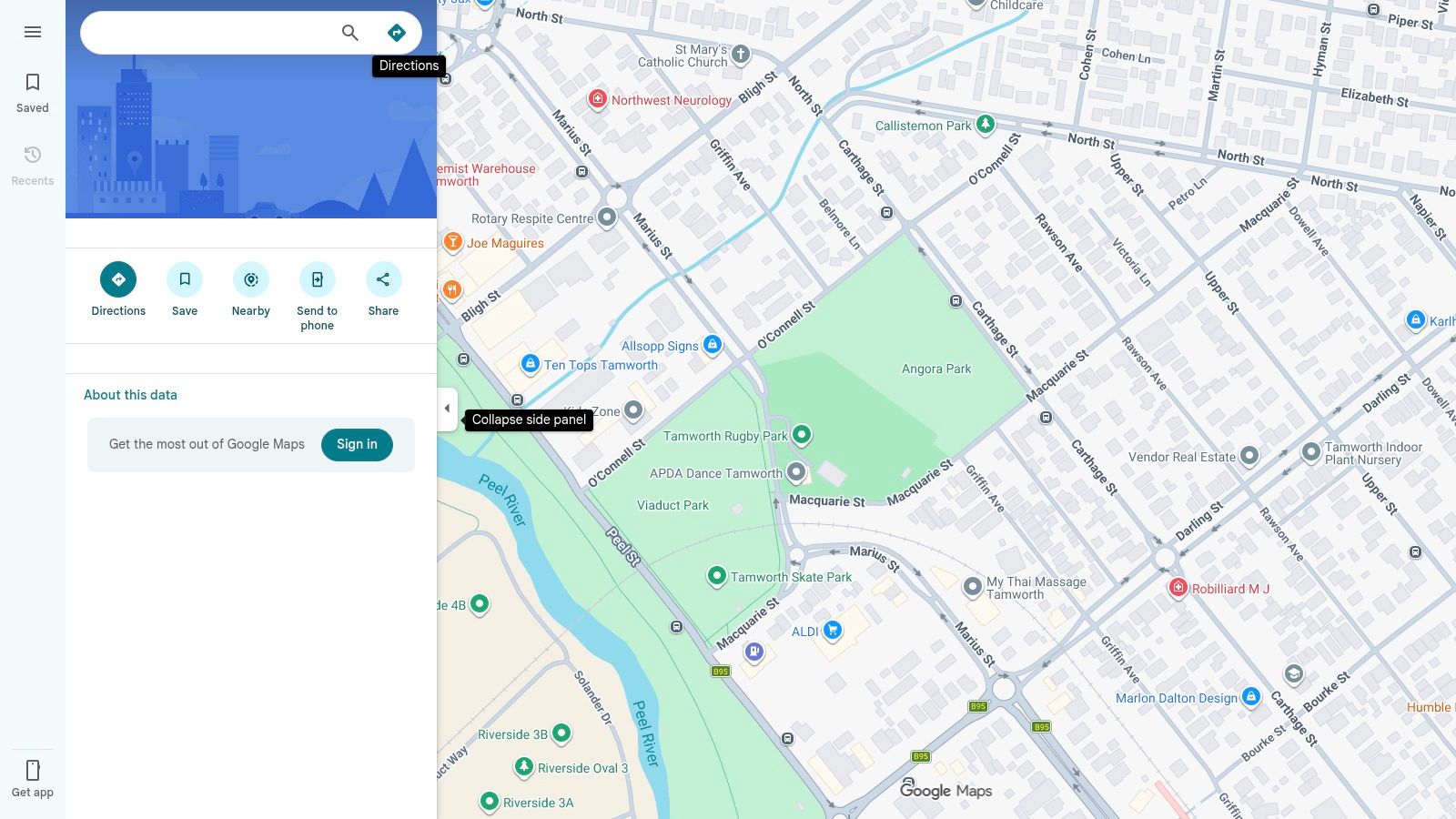
The clinic is located at Shop 15/1 Piper Street, Tamworth, near Northgate Shopping Centre, which makes it straightforward to find when you’re already dealing with pain.
What to have ready when you call
- Your symptoms such as swelling, broken tooth, severe pain, or bad taste
- When it started and whether it’s getting worse
- Any medicines you’re taking
- Your availability today, especially if you’re trying to arrange transport or time away from work
Practical details that help
The practice is open Monday to Friday. It accepts all major health funds, along with Medicare and DVA, and offers flexible payment options. If you need directions, appointment help, or a way to get in touch quickly, use the Oasis Smiles Dental contact page.
If you’re reading this while holding your jaw and hoping the pain settles on its own, don’t leave the decision to chance. A prompt exam can tell you whether the tooth can be saved, whether you need an emergency tooth pull, and how to get comfortable as quickly as possible.
---
If you need calm, experienced help with severe tooth pain, swelling, or a possible emergency tooth pull, contact Oasis Smiles Dental. The team provides same-day emergency appointments for calls before 1pm, with modern diagnostics, gentle care, and clear aftercare for Tamworth and the New England region.