

How Long Does a Dental Bridge Last? A 2026 AU Guide
A missing tooth usually becomes a bigger problem than people expect.
At first, you notice the gap when you smile in a photo or catch your reflection in a shop window. Then the practical issues start. Food catches there. Chewing on one side feels awkward. The teeth next to the space can begin to do more work than they should. If the gap is near the front, a lot of people also feel self-conscious talking or laughing.
That’s often when people ask the same question. How long does a dental bridge last?
The short answer is that a bridge can last a long time, but there isn’t one single number that fits everyone. Your bridge’s lifespan depends on the type of bridge, the material used, how well it fits, how healthy the supporting teeth and gums are, and how you care for it day to day.
Considering a Dental Bridge to Complete Your Smile
A common local scenario goes like this. Someone loses a tooth after a crack, an old filling gives way, or gum problems make that tooth impossible to save. They want something fixed in place, natural-looking, and simple to live with. A bridge often becomes one of the main options.
A dental bridge has been a trusted way to replace missing teeth for generations. It fills the gap so you can chew more evenly, helps keep nearby teeth from drifting, and restores the look of a complete smile. If you’re comparing options, this overview of dental bridges gives useful background on how the treatment works.
For lifespan, the most practical benchmark is this. In Australian dental contexts, bridges typically last 5 to 15 years on average, and well-maintained bridges can exceed 20 years, according to this guide on how long dental bridges last.
That range can feel wide, and that’s where people get confused. They hear one person say, “Mine lasted ages,” and another say, “Mine needed replacing sooner than I expected.” Both can be true.
> A bridge is a bit like a real bridge over a creek. The structure matters, but the ground underneath and the traffic going over it matter too.
A well-made bridge in a healthy mouth can serve you for years. A bridge placed into a high-pressure bite, with grinding or poor gum health, usually has a tougher job from day one.
What Exactly Is a Dental Bridge
A dental bridge does what its name suggests. It bridges a gap.
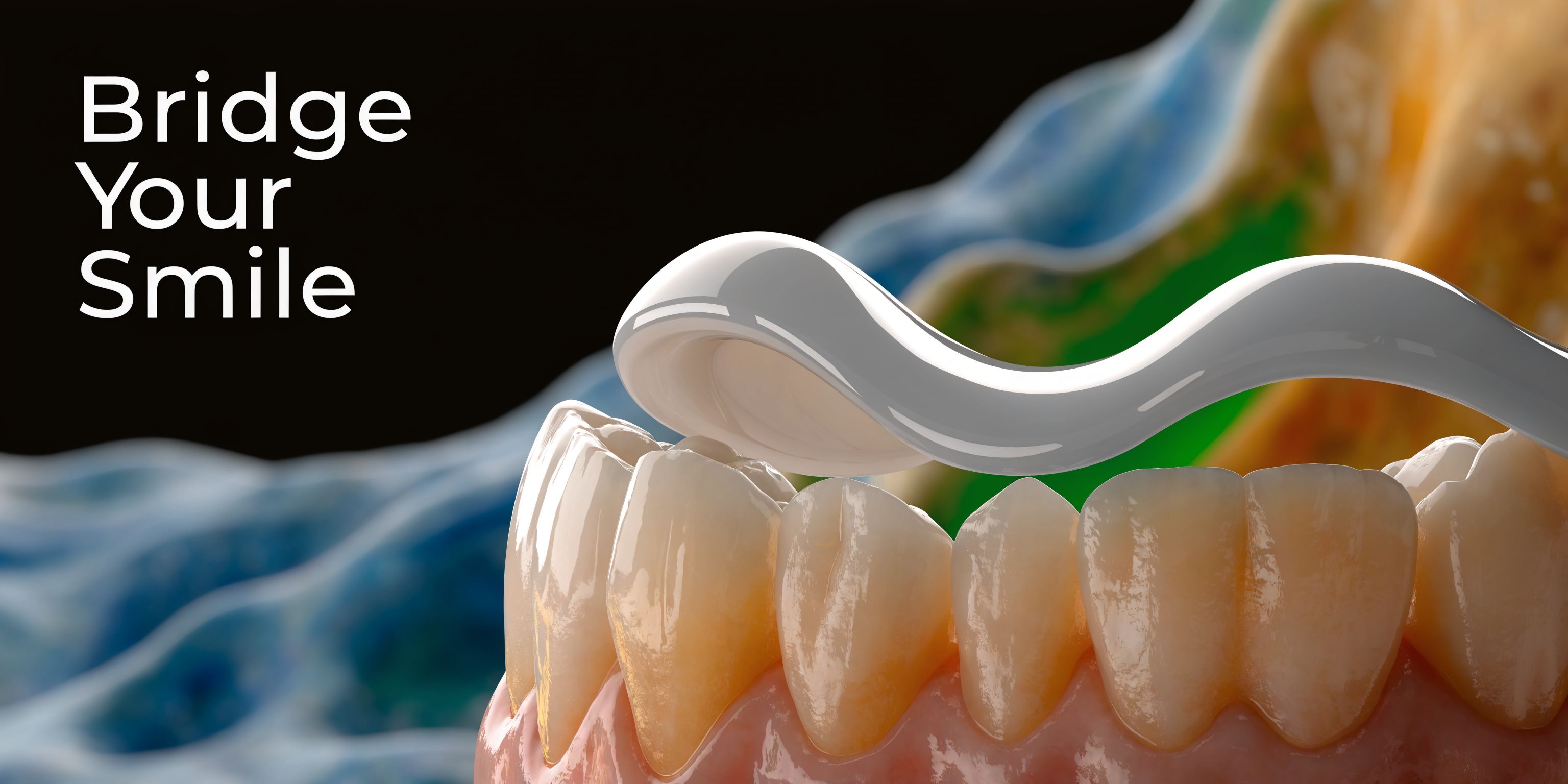
Consider a small road bridge. There’s open space in the middle, and something solid on either side holding everything up. In your mouth, the replacement tooth in the gap is called a pontic. The teeth or implants supporting it are called abutments.
How the bridge stays in place
If you’re missing one tooth, the simplest way to picture it is this:
- a replacement tooth sits in the gap
- support comes from the teeth beside it, or from implants
- the whole design is made to look and function like part of your natural smile
The reason this matters is simple. A bridge isn’t just a tooth-shaped ornament. It has to handle pressure every time you bite, chew, clench, or grind.
The main types of dental bridge
There are four common designs.
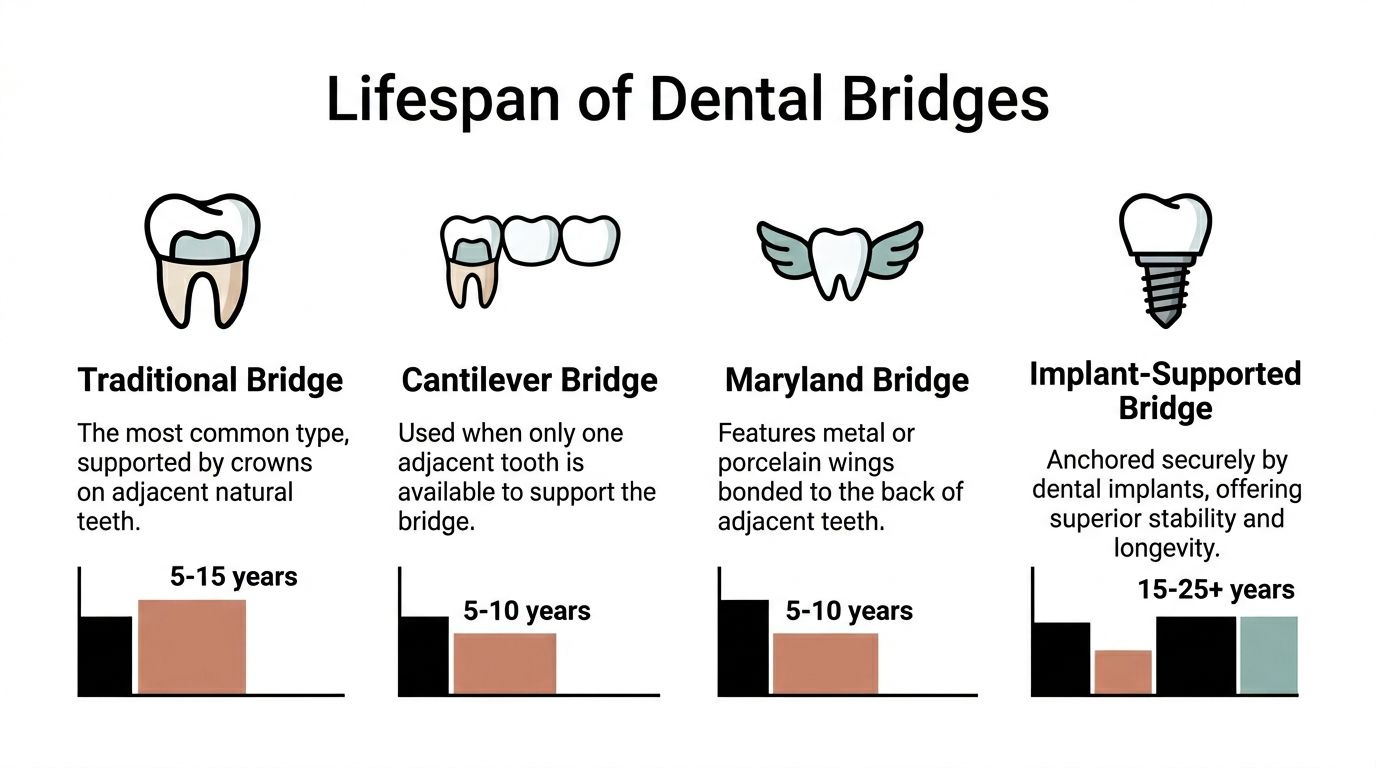
| Type | How it works | When it may suit | |---|---|---| | Traditional bridge | Uses crowns on the teeth beside the gap to support the replacement tooth | Common when neighbouring teeth already need crowns or have large restorations | | Cantilever bridge | Supported on only one side | Used in selected situations when only one adjacent tooth is available | | Maryland bridge | Uses small wings bonded to the back of nearby teeth | Often considered for front teeth where biting forces are lower | | Implant-supported bridge | Supported by dental implants instead of natural teeth | Often chosen when strong long-term support is the goal |
Traditional bridges are often what comes to mind when one hears “dental bridge”. They’re stable and familiar, but they rely on the supporting teeth being strong enough for the job.
Cantilever bridges are more specialised. Because they lean on one support point, they’re not right for every area of the mouth.
Maryland bridges are more conservative because they usually need less reshaping of the neighbouring teeth. They can be a good option in the right front-tooth case, but they aren’t always ideal where chewing forces are heavy.
Implant-supported bridges are different because the support comes from implants placed in bone rather than from adjacent natural teeth.
> Practical rule: The best bridge isn’t the one with the fanciest name. It’s the one that matches the gap, your bite, and the health of the teeth and gums around it.
The Typical Lifespan of Different Dental Bridges
Individuals often seek a direct answer, so here it is first. Traditional fixed bridges usually last 5 to 15 years on average, while implant-supported bridges can last much longer in the right circumstances.
That average doesn’t mean a bridge suddenly fails on a birthday. It means bridges age like any other dental restoration. Some keep going well beyond the average. Some need attention earlier because the supporting tooth, gum, or bite conditions change.
The benchmark most dentists use
A strong long-term reference point comes from a large general practice study. It found that conventional bridges had a 72% survival rate at 10 years, according to this PubMed summary of the bridge survival study.
That’s useful because it gives a realistic “real world” benchmark, not a best-case promise.
If you’re weighing a bridge against implants, this page on dental implants helps explain why implant-supported options are often discussed as a longer-term alternative.
Lifespan by material
Material matters because different materials handle wear, pressure, and chipping differently.
| Material | Typical pattern | |---|---| | Porcelain or ceramic | Often chosen for appearance. Complementary dental literature in the verified data notes these average 5 to 7 years in many cases. | | Gold or metal alloy | Less common for visible areas, but very durable. Verified data notes these can last over 15 years with good care. | | Porcelain fused to metal or zirconia | Often used to balance strength and appearance. Longevity depends heavily on fit, bite forces, and maintenance. |
People sometimes hear “ceramic” and assume it’s fragile. That’s too simple. Modern ceramics can be very strong, but strength is only one part of the story. A beautifully strong bridge can still fail early if the tooth underneath develops decay or the gums become unstable.
Lifespan by bridge type
The type of support changes the long-term outlook.
- Traditional bridges often sit in the middle range because they depend on natural teeth.
- Cantilever bridges can have a shorter practical life in some positions because the force isn’t shared as evenly.
- Maryland bridges can work well in selected front-tooth cases, but they may be more prone to debonding in the wrong bite.
- Implant-supported bridges usually offer the longest service life because they don’t load neighbouring natural teeth in the same way.
> A bridge’s lifespan is never just about the bridge itself. It’s also about the mouth it lives in.
Key Factors That Determine Your Bridge's Longevity
Two people can receive bridges made from similar materials and get very different results. The reason is that the bridge lives in a changing environment. Saliva, plaque, bite pressure, gum health, diet, and habits all play a role.
Oral hygiene around the bridge
A bridge can’t get decay, but the teeth supporting it can.
That catches people out. They think, “It’s artificial, so it won’t have problems.” The weak point is often the edge where the bridge meets the natural tooth. If plaque sits there, decay can start under the margin. If plaque and tartar build up near the gumline, gum inflammation can follow.
The area under the false tooth is another trap. Food and bacteria collect there more easily than around a single natural tooth, so cleaning has to be more deliberate.
If the gums around the supporting teeth aren’t healthy, the whole foundation becomes less reliable. That’s why ongoing gum care matters so much. Patients who want to understand that side of the picture can learn more about gum disease and its effects.
Bite pressure and grinding
This is one of the biggest hidden reasons bridges fail early.
An Australian study reported that bridges in patients with untreated bruxism fail 2.3 times faster, as noted in this article on how long a dental bridge can last. Bruxism means clenching or grinding, usually during sleep, sometimes during the day.
Many people don’t even know they do it. They come in with jaw tightness, headaches, flattened teeth, or a bridge that keeps taking a heavy load.
Here’s the simple version. If your bridge is a small structure crossing a gap, grinding turns ordinary chewing traffic into heavy truck traffic all night.
The health of the supporting teeth
A bridge is only as good as its abutments.
If the teeth supporting it have old cracks, large fillings, root issues, or reduced bone support, the bridge has less stable foundations. Even if the bridge itself looks fine from the outside, trouble can start underneath.
This is why assessment matters before treatment. Dentists aren’t being fussy when they check the roots, gums, bite, and bone levels. They’re checking whether the “bridge pylons” are strong enough to carry the load.
Food and everyday habits
Some habits shorten a bridge’s life faster than people realise.
- Chewing ice: Hard, sudden pressure can chip porcelain or stress the supporting teeth.
- Sticky lollies: These can tug on margins and encourage plaque build-up if they lodge around the bridge.
- Using teeth as tools: Opening packets or biting fingernails puts awkward force through the restoration.
- Skipping check-ups: Small issues often stay small only if someone catches them early.
> Small daily habits usually decide whether a bridge lasts near the lower end of the range or the upper end.
How to Maximise the Life of Your Dental Bridge
A bridge doesn’t need complicated care. It needs consistent care.
Patients often find it helpful to approach bridge care similarly to maintaining a good pair of boots or a reliable ute. You don’t wait until something breaks badly. You do the small maintenance jobs that keep everything working.
Your daily routine
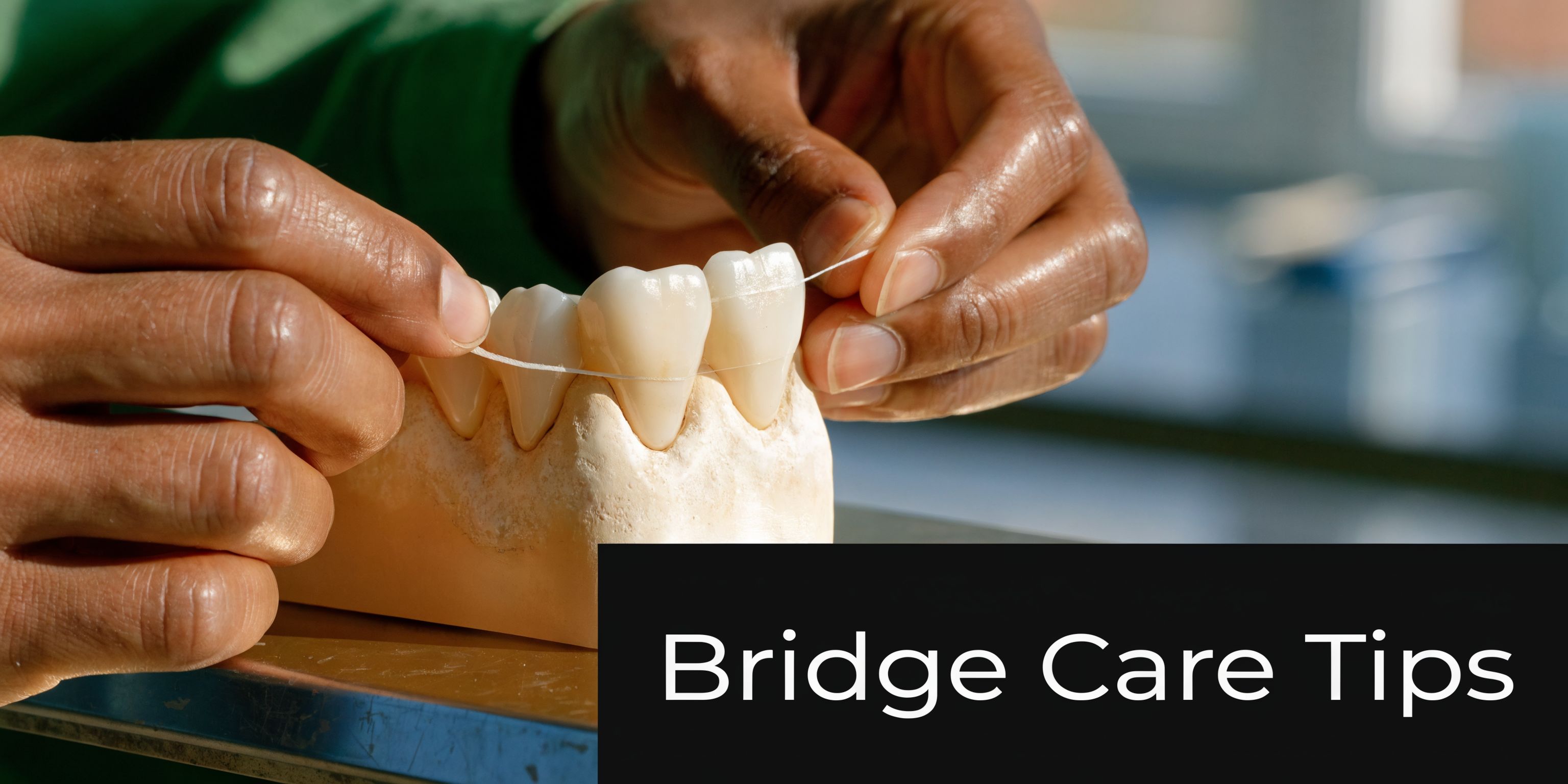
Start with a soft toothbrush and clean along the gumline carefully. The supporting teeth matter as much as the bridge itself.
Then clean under the pontic. This is the step many people miss.
Useful tools include:
- Floss threaders: These let you guide floss underneath the false tooth.
- Superfloss: Handy for cleaning broad spaces under bridges.
- Interdental brushes: Helpful if your dentist says the space and shape are suitable.
- Water flosser: A practical option for people who struggle with threaders or dexterity.
If you’ve never cleaned under a bridge before, it can feel fiddly for a week or two. After that, patients typically master the technique quickly.
What to be careful with at meals
You don’t have to eat nervously forever. You just need common sense.
Try to avoid repeated biting on very hard foods with the bridge area. If something is especially tough, cut it smaller. If a food is sticky enough to pull at dental work, treat it as an occasional food rather than a habit.
A simple guide is:
| Better habits | Habits to limit | |---|---| | Cutting firm foods into smaller pieces | Chewing ice | | Alternating sides when chewing | Crunching hard kernels | | Cleaning soon after sticky foods | Pulling at sticky lollies | | Wearing a nightguard if prescribed | Ignoring grinding or clenching |
Professional maintenance matters
Home care does a lot, but it can’t replace professional review.
Regular preventive visits help a dentist check the fit of the bridge, the health of the margins, your gum condition, and whether your bite is putting too much force on one area. Preventive support is one of the best ways to protect restorative work, and this overview of preventive dental care explains why.
> “If you can clean it well and your dentist can review it regularly, you give your bridge its best chance.”
If your dentist recommends a nightguard, take that seriously. It isn’t an optional extra for many grinders. It’s protection for the bridge, the supporting teeth, and your jaw joints.
Signs Your Bridge Needs Replacing and Your Options
Bridges rarely fail without warning. Most give signs first.
Sometimes the signs are obvious, like a visible crack or the bridge feeling loose. Sometimes they’re subtle, like a change in bite, food trapping more than usual, or a dull ache when chewing.

Warning signs to watch for
Contact a dentist if you notice any of these:
- Looseness: The bridge feels like it moves when you bite or floss.
- Pain: You feel tenderness, pressure, or sensitivity around the supporting teeth.
- Damage: You can see chipping, cracking, or wear.
- Gum changes: Bleeding, swelling, or persistent bad taste develops around the bridge area.
- Bite changes: Your teeth no longer meet the way they used to.
These signs don’t always mean the whole bridge is finished. Sometimes the issue is a cement problem, a bite adjustment issue, or a treatable problem in a supporting tooth. The earlier it’s checked, the more options you usually have.
Replace the bridge or move to implants
If a bridge does need replacement, there are usually two broad paths.
Option one is another bridge. This can be a sensible choice when the supporting teeth already need crowns, when you want a fixed option without implant surgery, or when the overall case suits a bridge design well.
Option two is an implant-supported solution. This is often the longer-term option if you want support that doesn’t rely on adjacent natural teeth.
The long-term numbers are strong. An Australian analysis found that implant-supported bridges had 98.2% survival at 10 years and 92.4% at 20 years, with survival 25 to 30% higher than traditional bridges, according to this article on dental bridge lifespan and implant-supported options.
How to choose between them
The decision usually comes down to a few practical questions:
| Question | Bridge may suit if | Implant may suit if | |---|---|---| | What supports the replacement? | Nearby teeth already need restoration | You want to avoid loading adjacent natural teeth | | How long are you planning for? | You want a familiar fixed option | You want the strongest long-term durability available | | What is the condition of neighbouring teeth? | They’re already part of the treatment plan | They’re healthy and better left untouched |
> If a bridge is failing, don’t assume the only answer is “start over the same way”. Sometimes the best next step is a different design.
Planning Your Smile Restoration at Oasis Smiles Dental
A dental bridge can be a very good solution. For many people, it restores chewing, appearance, and confidence in a way that feels natural and straightforward. The key idea is simple. Longevity is a partnership between careful planning, precise treatment, and the way you look after it afterwards.
That matters even more when you’re making a practical decision for your family budget. For patients in Tamworth and the New England region, private bridge replacement can average AU$3,500 to AU$6,000, while health fund support, Medicare eligibility, and 100% DVA coverage for eligible cardholders can reduce out-of-pocket costs, according to this overview of dental bridge replacement costs and coverage.
Cost is only one part of the decision, though. Fit matters. Bite balance matters. Clear imaging matters. Ongoing reviews matter. Technology such as Trios digital scanners, CBCT 3D imaging, CEREC same-day crowns, and in-house 3D printing can help dentists plan and produce restorations with more precision and comfort for patients.
That’s especially helpful if you’ve been putting treatment off because you feel anxious. A calm team, clear explanations, and options like sleep dentistry can make a big difference to whether people move ahead with the care they need.
If you’re wondering how long does a dental bridge last in your specific case, the honest answer comes from an exam, not from a generic average. Your bite, the gap, the condition of nearby teeth, and your cleaning habits all shape the right plan.
---
If you’d like clear advice about replacing a missing tooth, the team at Oasis Smiles Dental can help you compare bridges, implants, and other restorative options in a practical, pressure-free way. They’ve cared for Tamworth and New England families for over 20 years, offer advanced digital technology, welcome health funds, Medicare and DVA, and can create a treatment plan that fits both your smile and your budget.